Borneo vol. 3 (Aug 2026)
Lupa Masa
Sabah
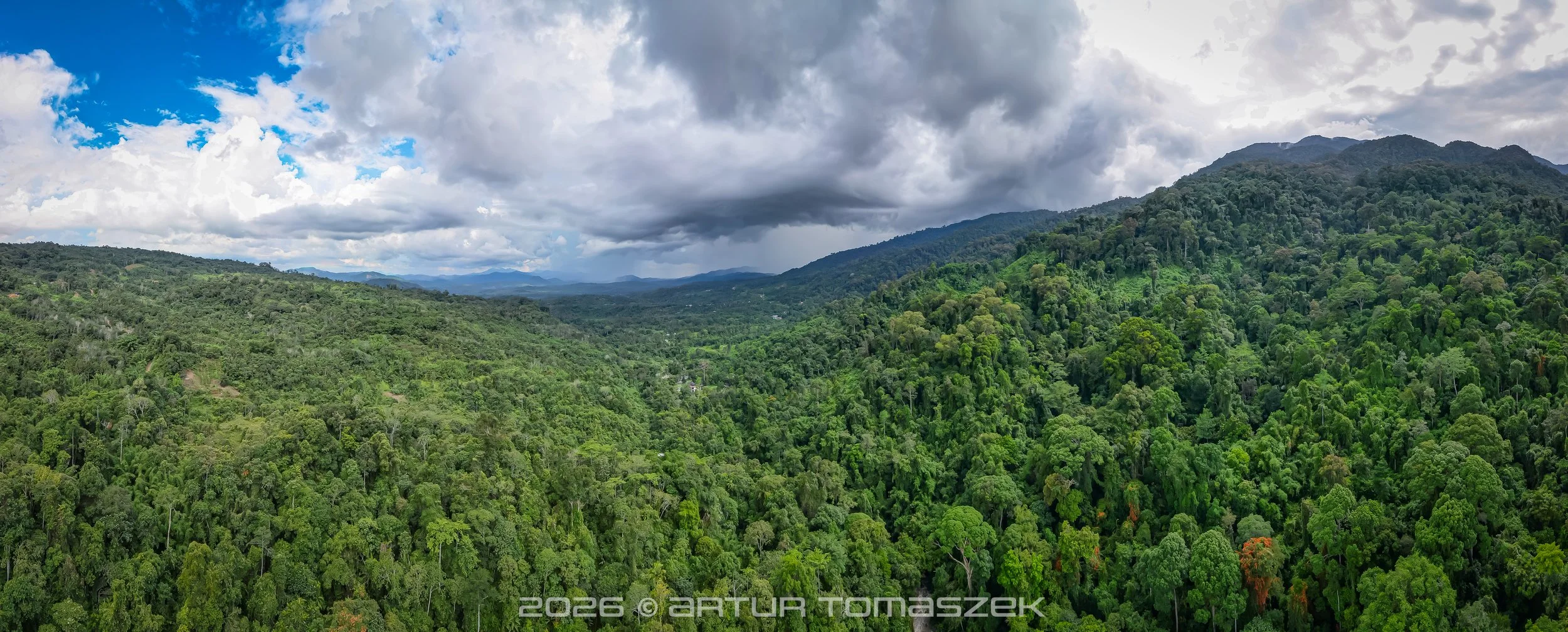
Malaysia is a country divided into two very different parts, Peninsular Malaysia to the west, and Sabah with Sarawak on the island of Borneo. Although separated politically between Malaysia, Indonesia and Brunei, Borneo functions as one enormous biological world. Lowland dipterocarp forest, cloud-covered mountains and countless rivers support an extraordinary concentration of endemic reptiles, amphibians, mammals, birds and invertebrates.
This trip was entirely focused on Malaysian Borneo. We had visited Sabah before, but we wanted to revisit some of our favourite places, enjoy relaxing night walks and see whatever the forest decided to show us. Naturally, a few animals were still sitting quietly at the back of Artur’s mind.
After saying goodbye to Jesse and Agus at the end of our Indonesian adventure, we continued alone. We flew to Kota Kinabalu, rented a car and headed straight into the mountains.
Mt Kinabalu
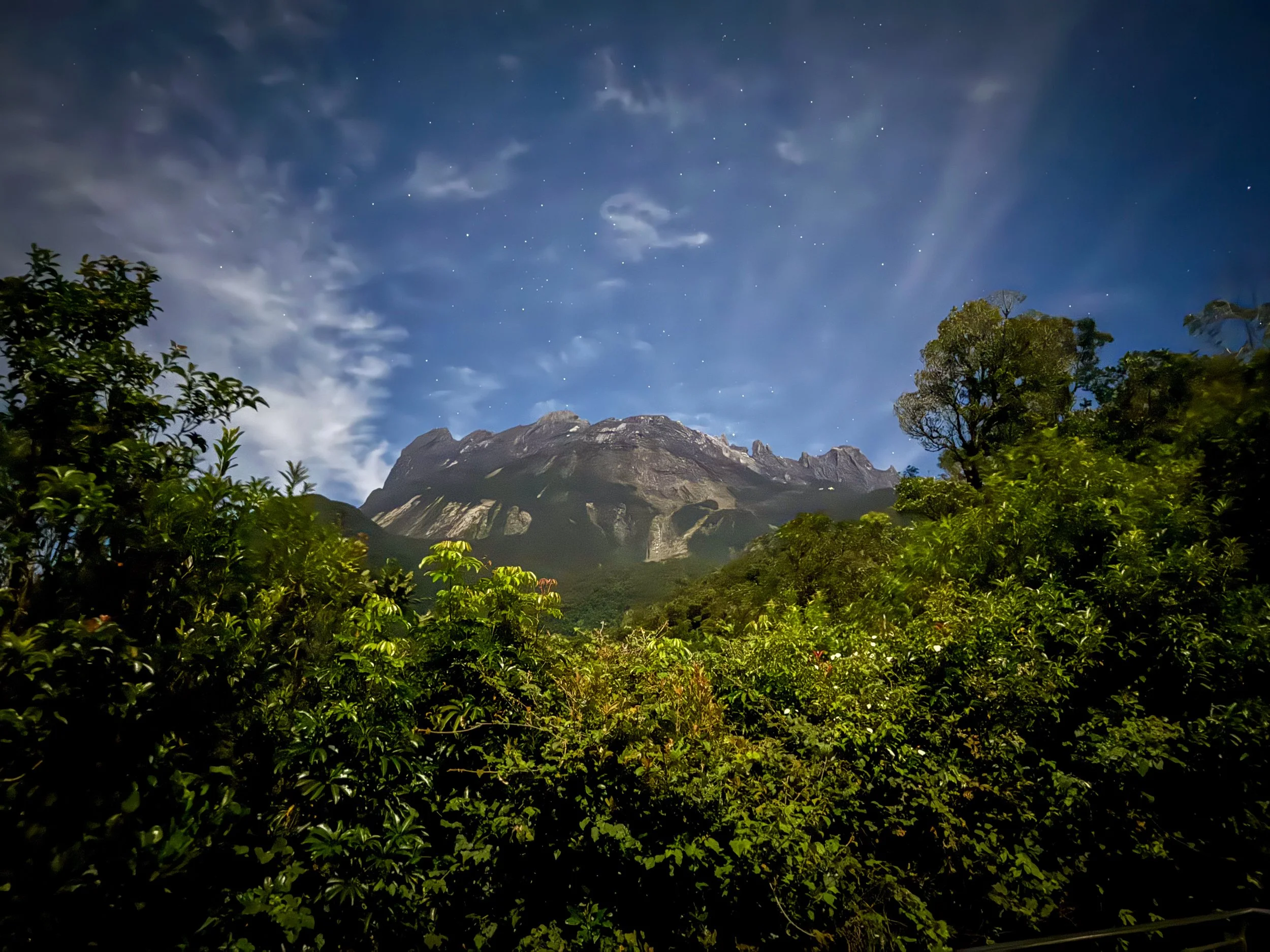
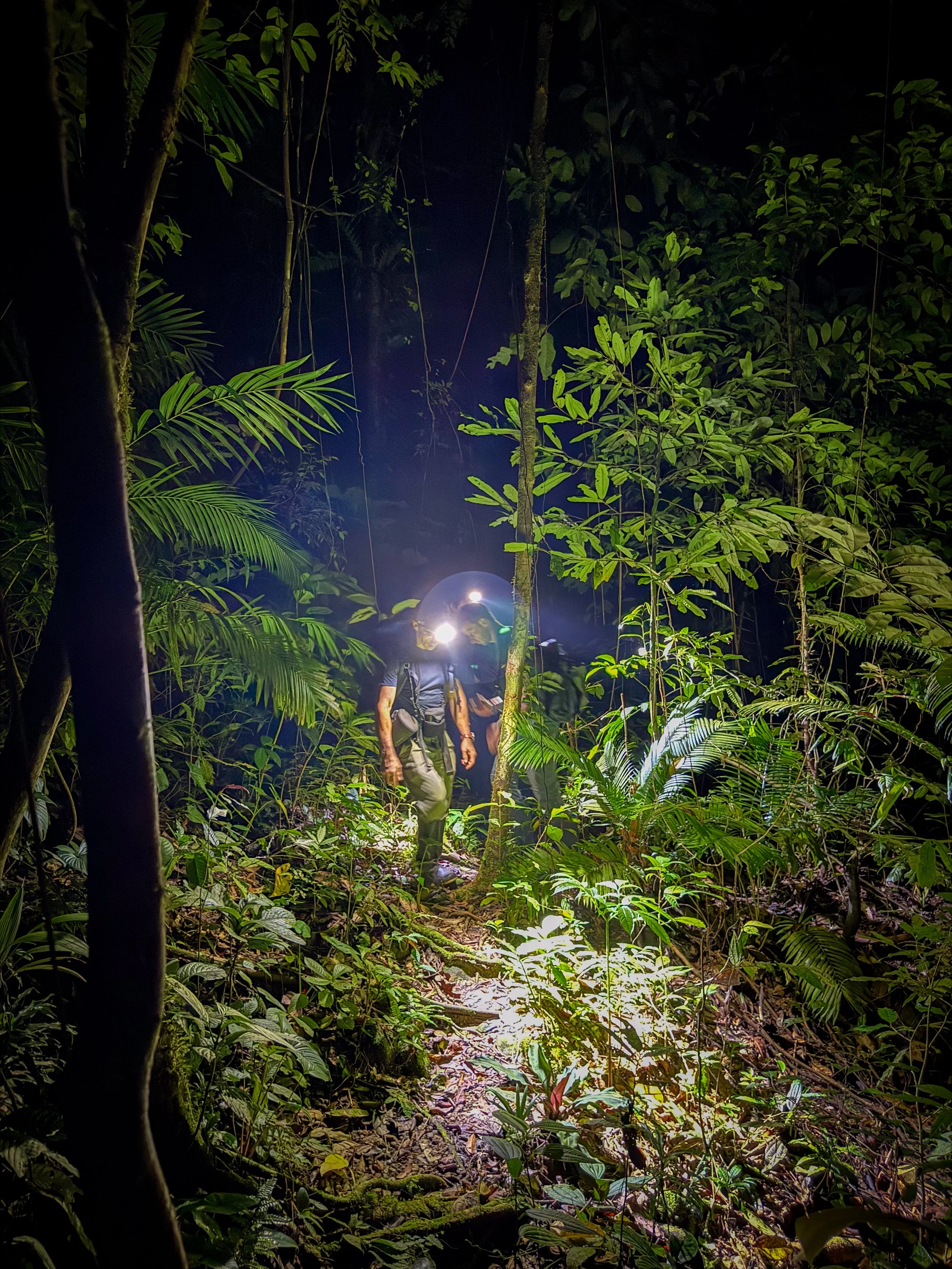
Mt Kinabalu at night
We checked into our favourite hotel, Mile 36 Lodge, and almost immediately headed up to Kinabalu Park for some herping. We didn’t have any particular list of targets, but Malcolm’s pit viper and Kobayashi’s horned frog are always nice to see. Our guide told us that nobody had seen Malcolm’s pit vipers for quite a long time, so our chances did not look particularly promising…
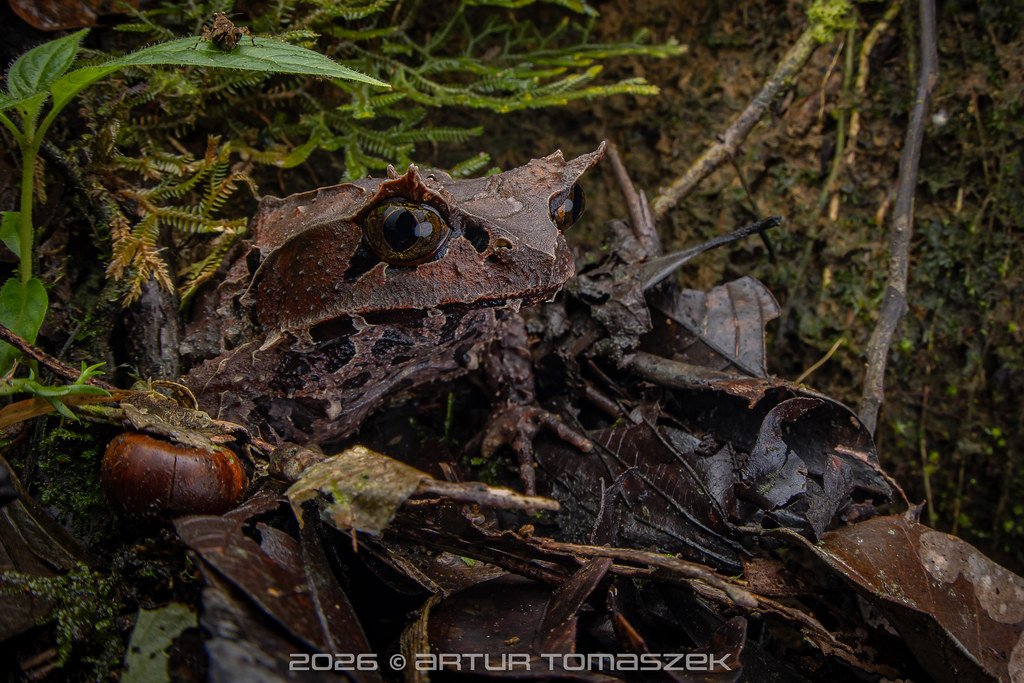
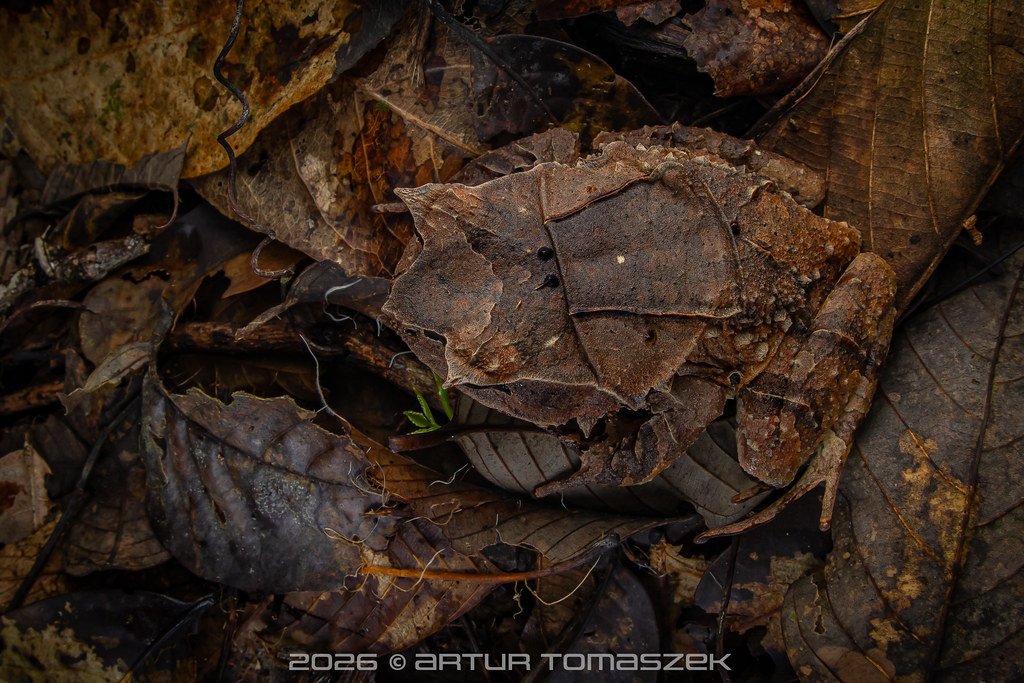
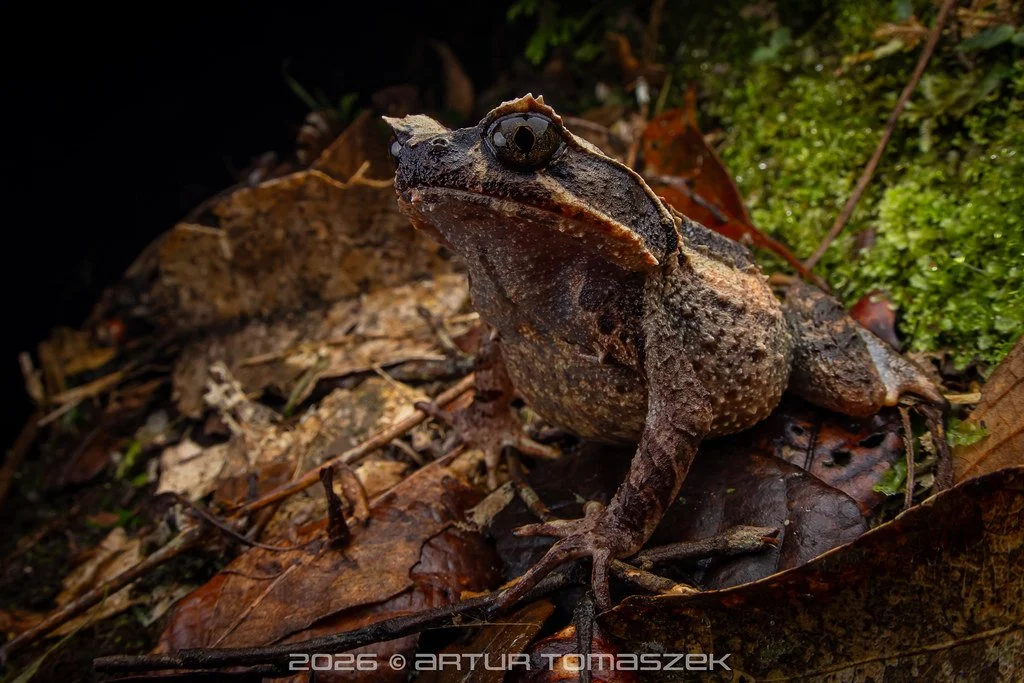
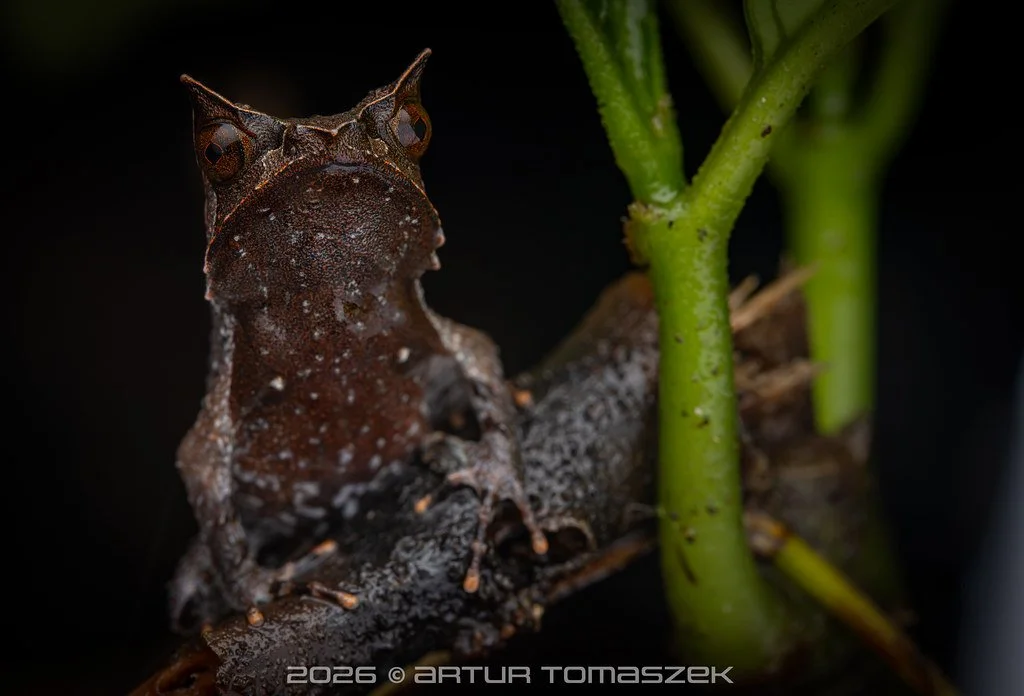
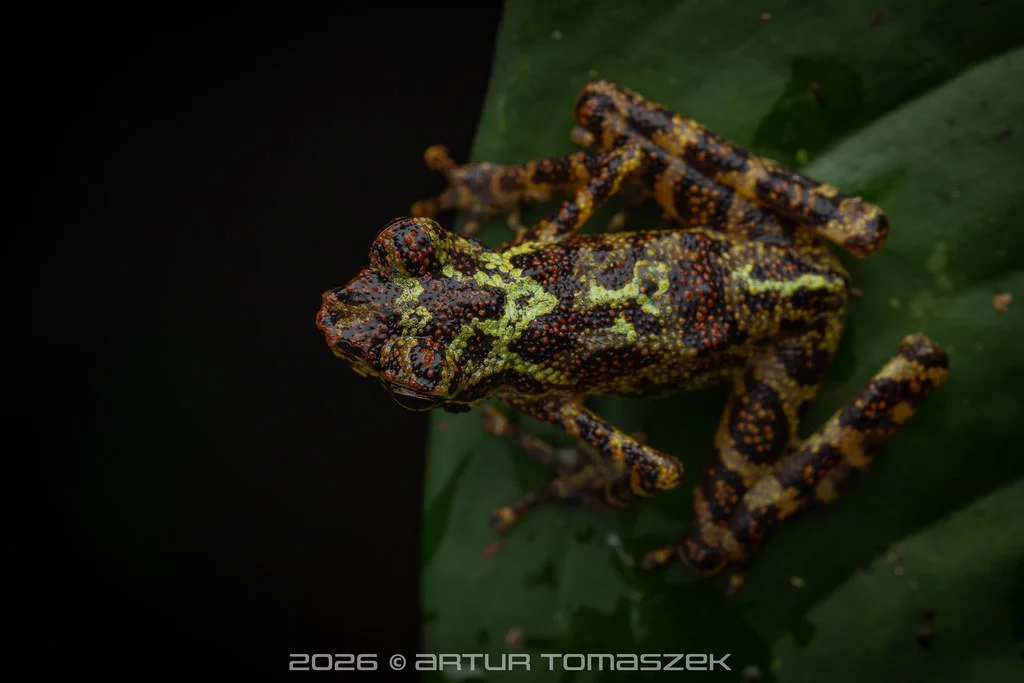
First came a Kobayashi’s horned frog (Pelobatrachus kobayashii). Artur had unfinished business with this frog. The last time he saw one, he nearly fell off a slippery bridge while trying to photograph it. This time the encounter was considerably less dramatic, and he finally managed to take the photographs he wanted.
Kobayashi’s horned frog is endemic to Sabah, where it is known from the montane forests of Mount Kinabalu, the Crocker Range and Mount Trus Madi. Its pointed snout, angular body and leaf-like colours allow it to disappear against the forest floor. A stunning amphibian!
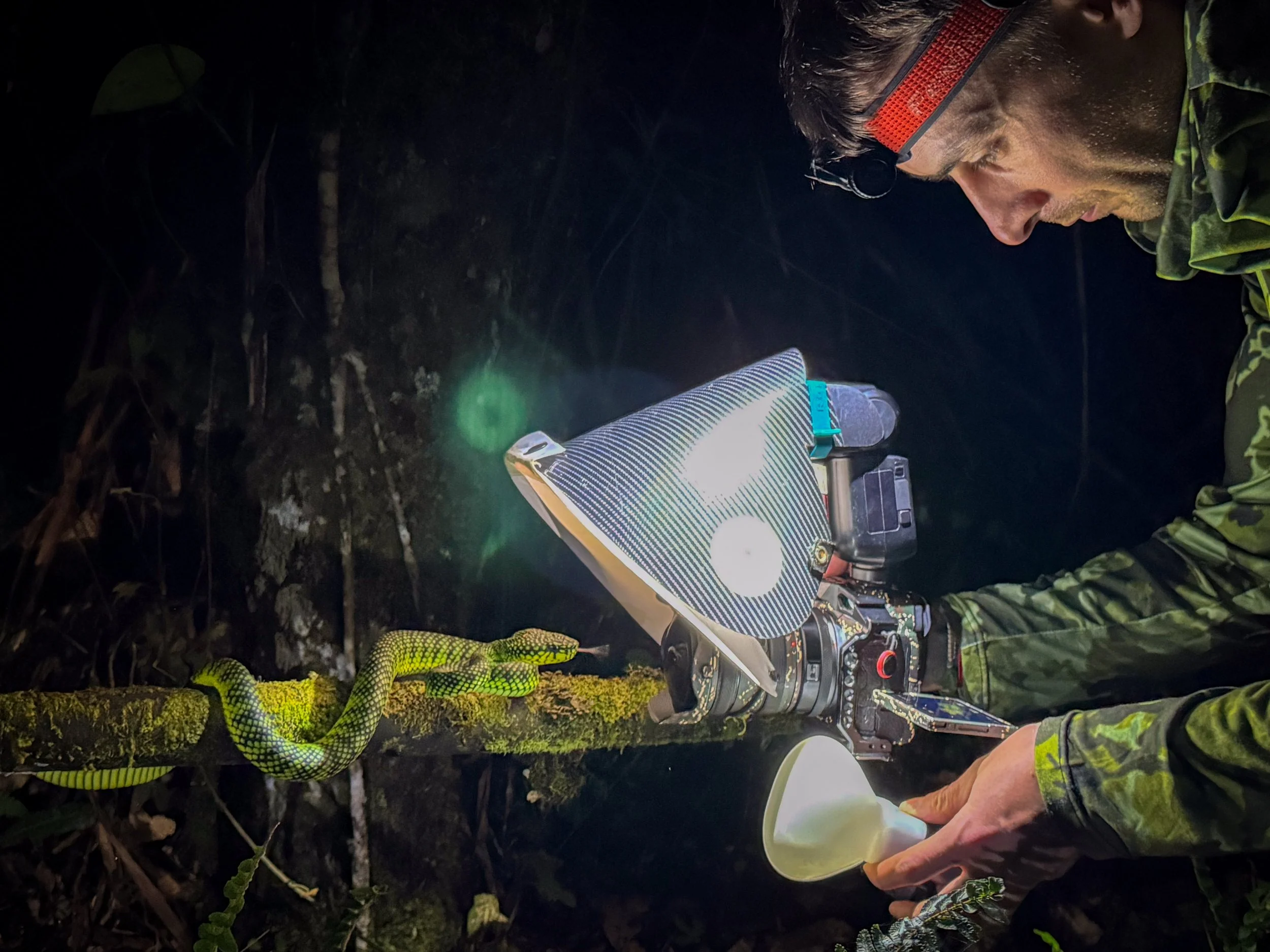
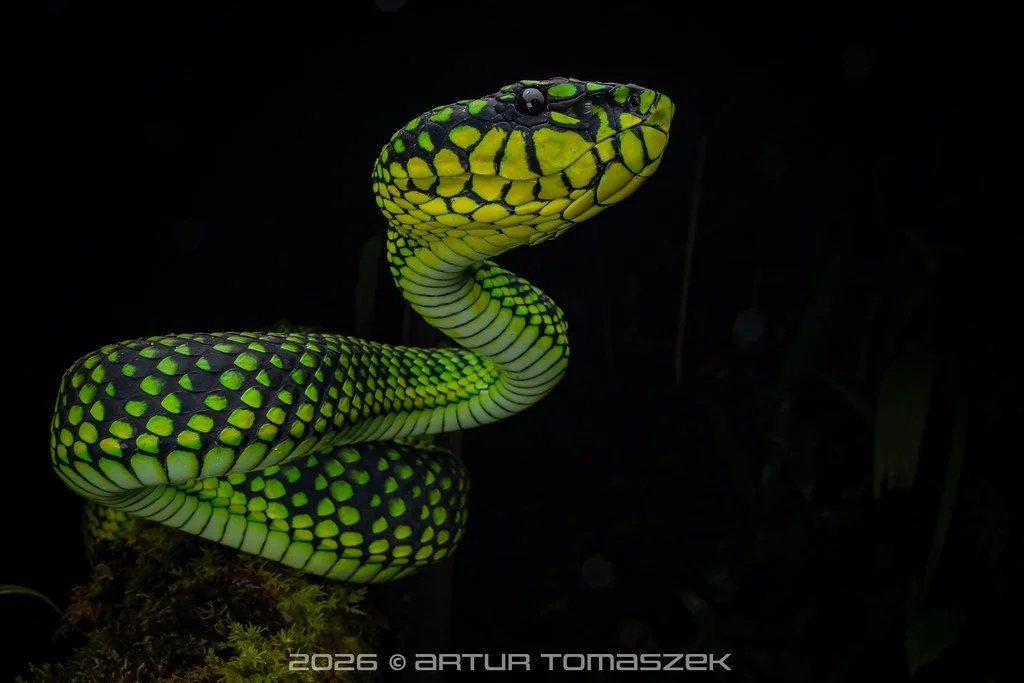
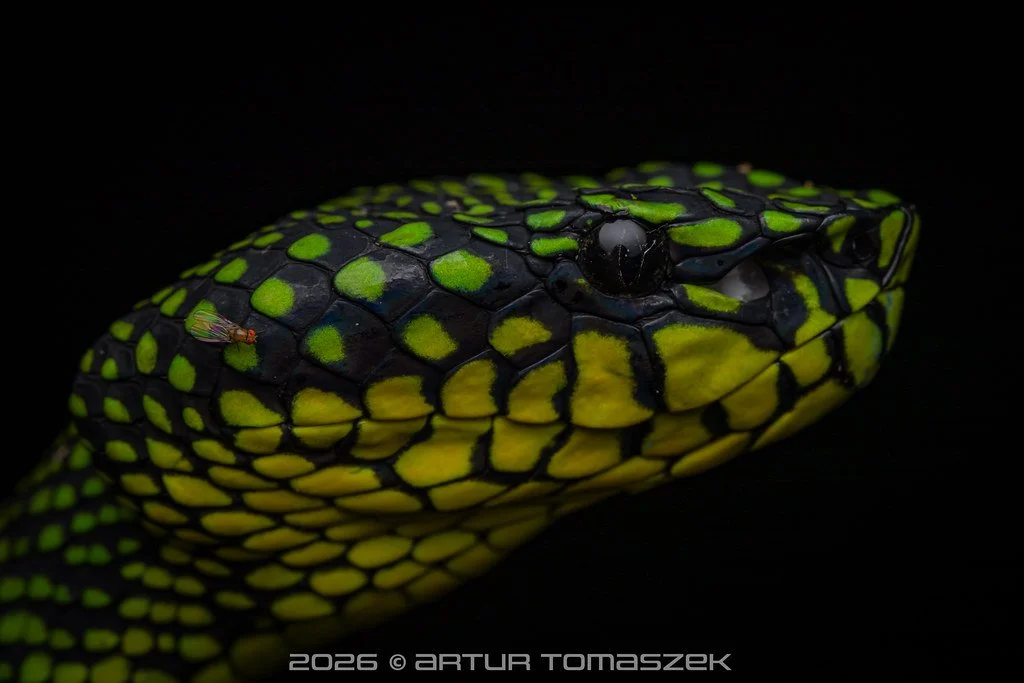
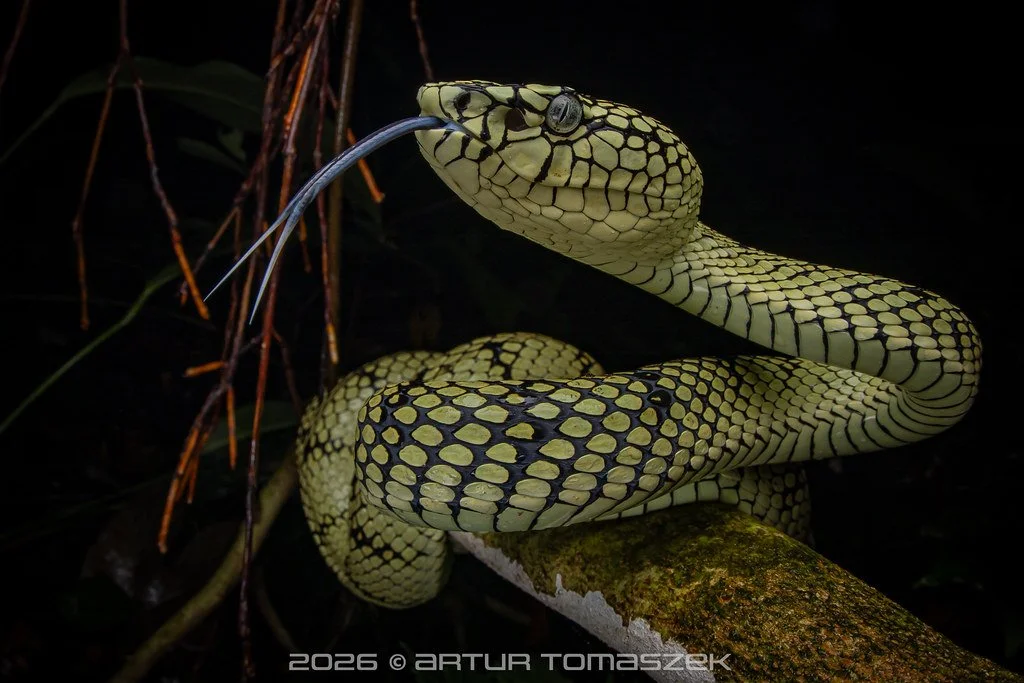
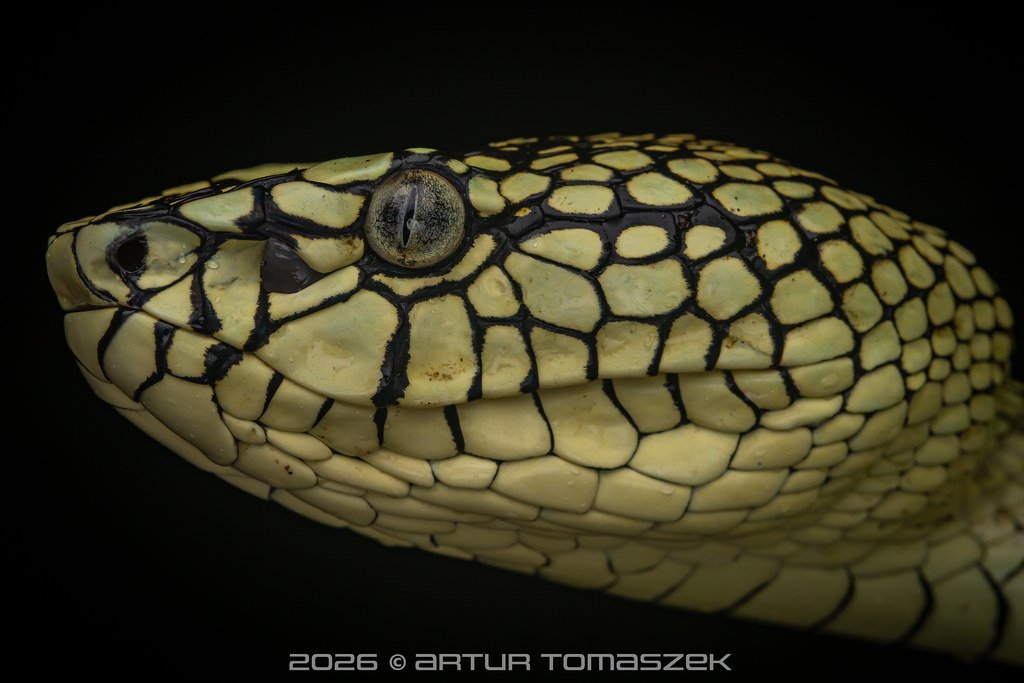
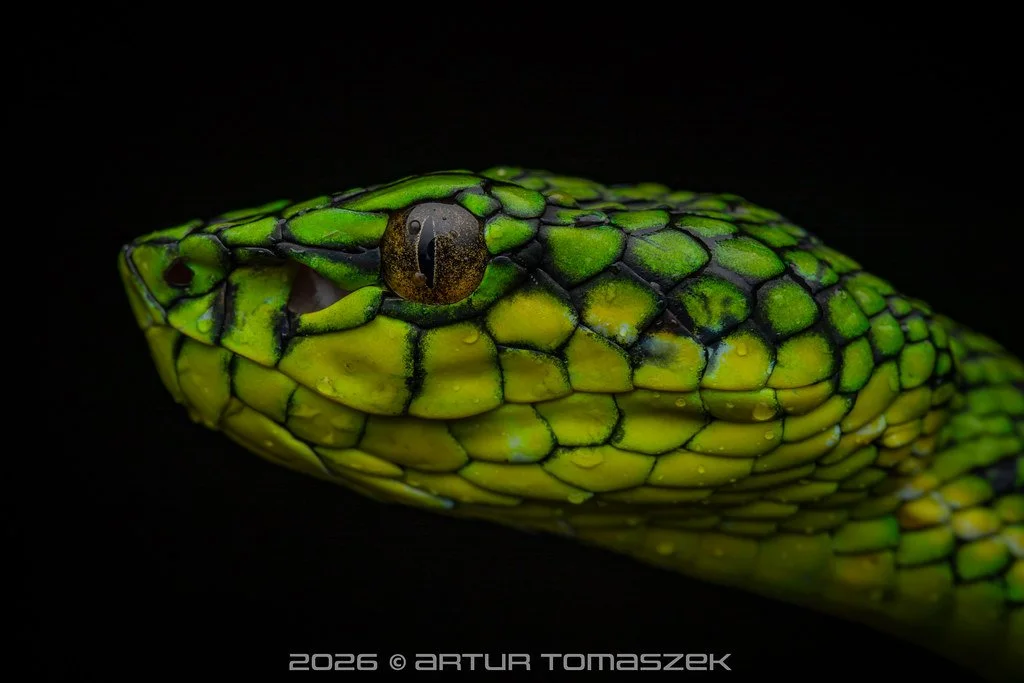
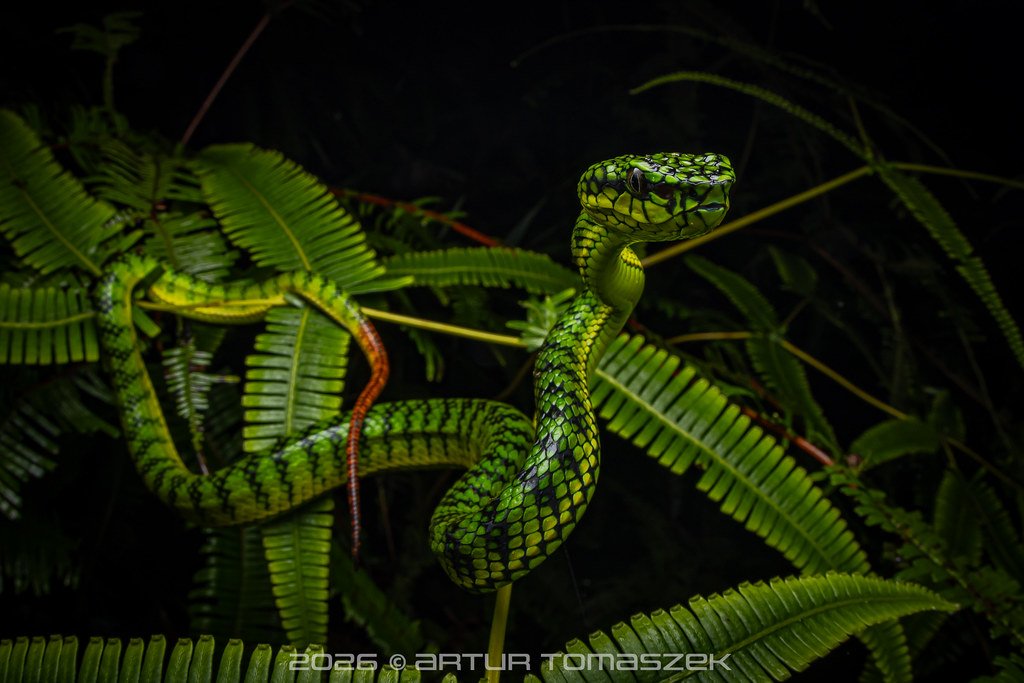
Not long after, Karolina spotted a large female Trimeresurus malcolmi on a slope. We had seen this species before, but that did not make the encounter any less impressive. Malcolm’s pit viper, also known as the Kinabalu pit viper, is a montane Bornean species associated with cool highland forests. It was originally described from the Mount Kinabalu area and occurs at elevations of roughly 1,000–1,600 metres. Unlike many other arboreal Asian pit vipers, it is oviparous, laying eggs rather than giving birth to live young. These are spectacular, beautifully patterned snakes that blend perfectly into wet montane vegetation. Every time we see one, we struggle to believe just how beautiful they are.
With one female found, we continued downhill with no pressure and no particular target in mind, a genuinely relaxed herping walk for once. Then, BANG. A second big female T. malcolmi. Crazy! We had been warned that the weather conditions were not favourable at all, and yet we found two during one evening when we were barely trying.
We spent our second night concentrating more on frogs and simply enjoying a quiet walk around the park. The next morning, we left the cool mountain air and headed towards Lupa Masa in the lowlands.
Lupa Masa
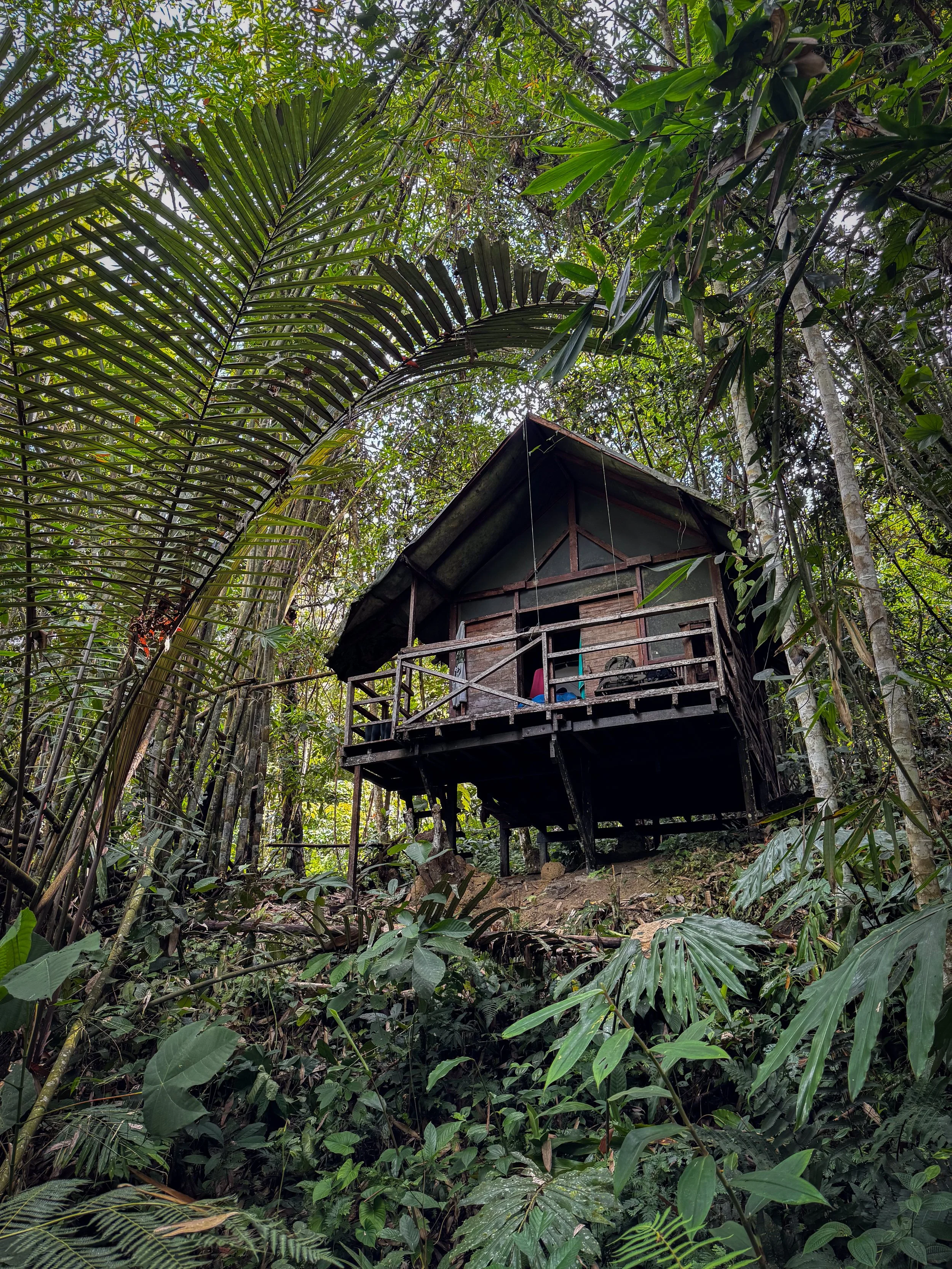
When we first visited Lupa Masa years ago, the place had not even officially opened yet, but over years it had become a busy and popular herping spot. We were lucky with our timing since apart from us, only a few Taiwanese herpers were staying there, so we effectively had the camp to ourselves.
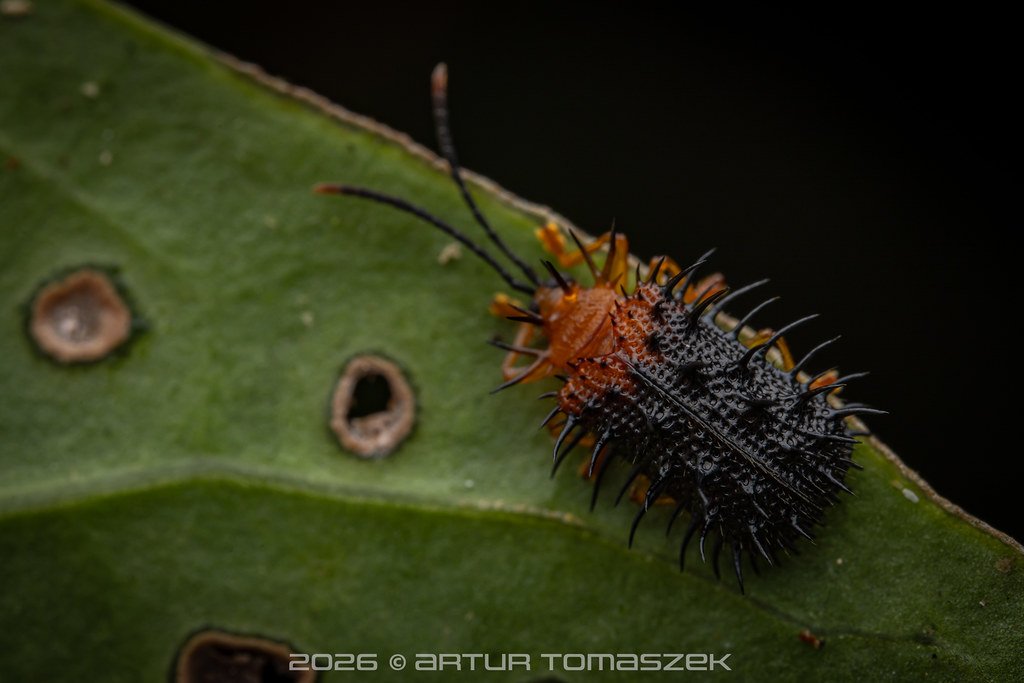
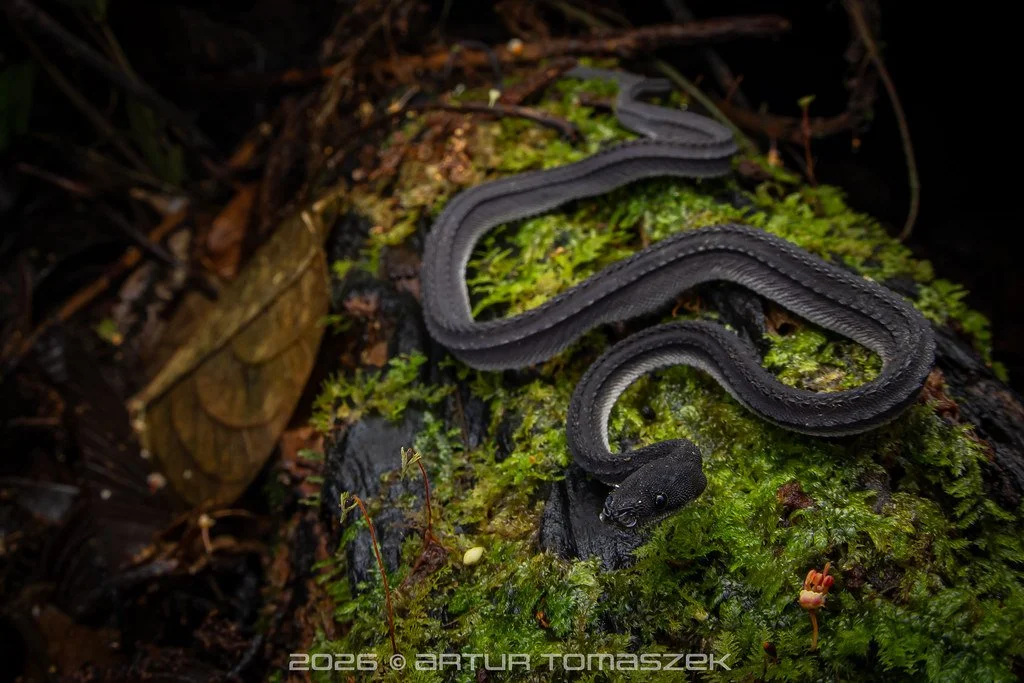
Almost immediately after arriving, we encountered a juvenile Naja sumatrana and the night brought a dragon snake (Xenodermus javanicus). It is funny how a species can seem impossible to find while you’re actively searching for it, and then, once you finally find one, they begin popping up everywhere.
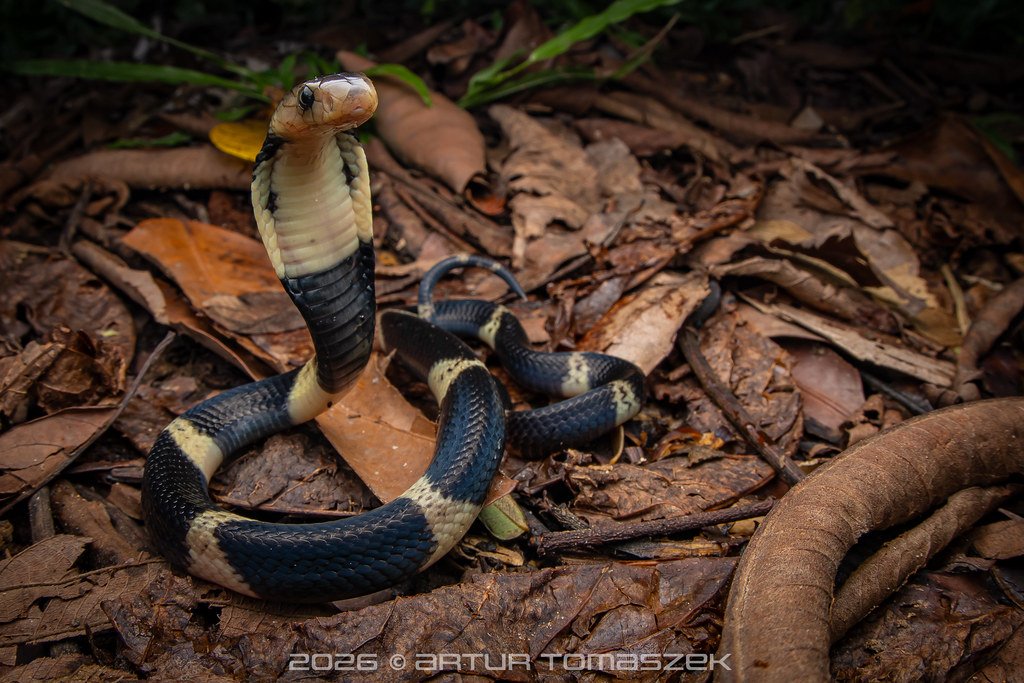
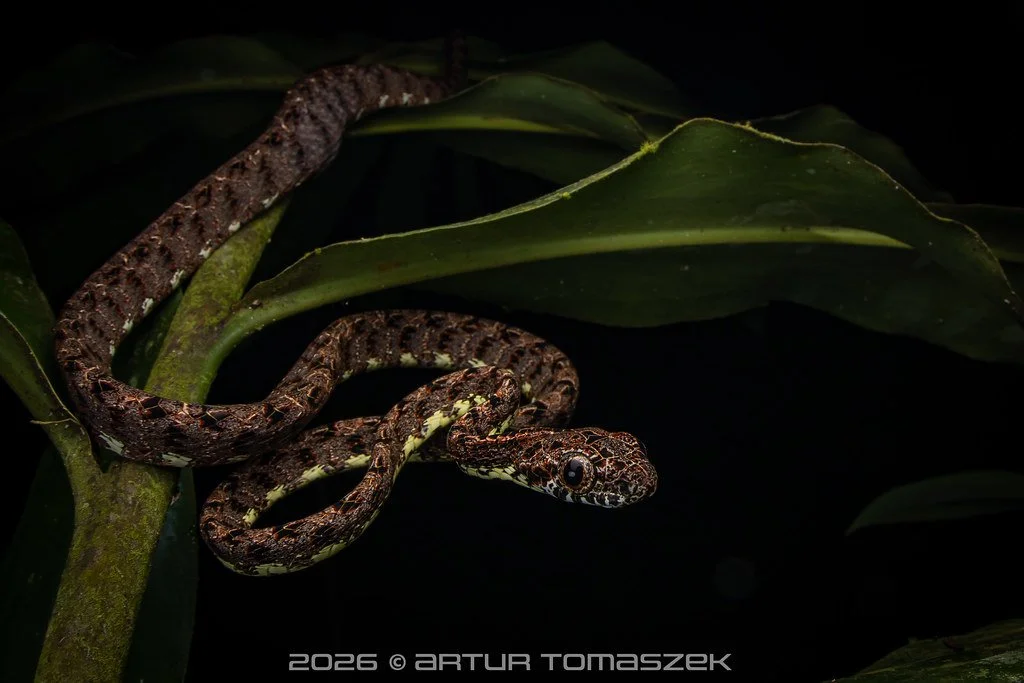
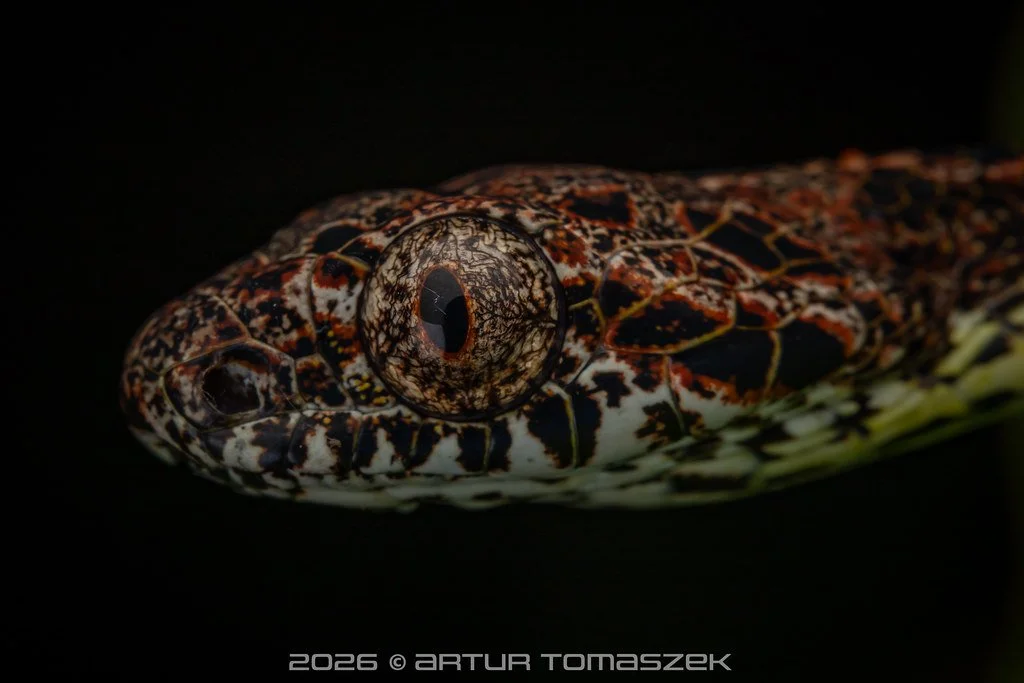
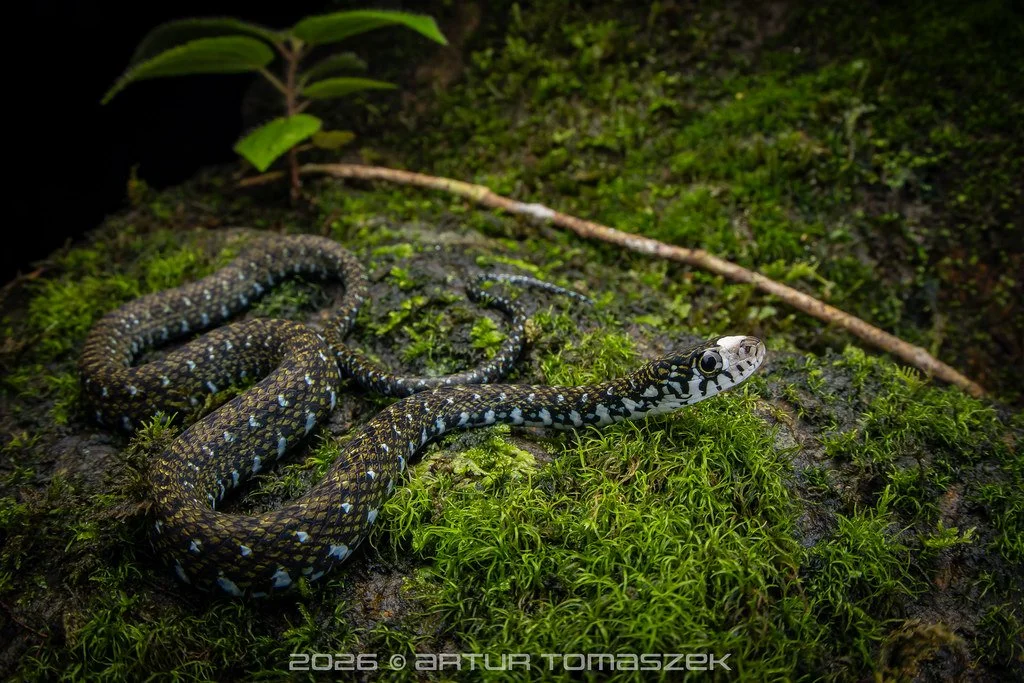
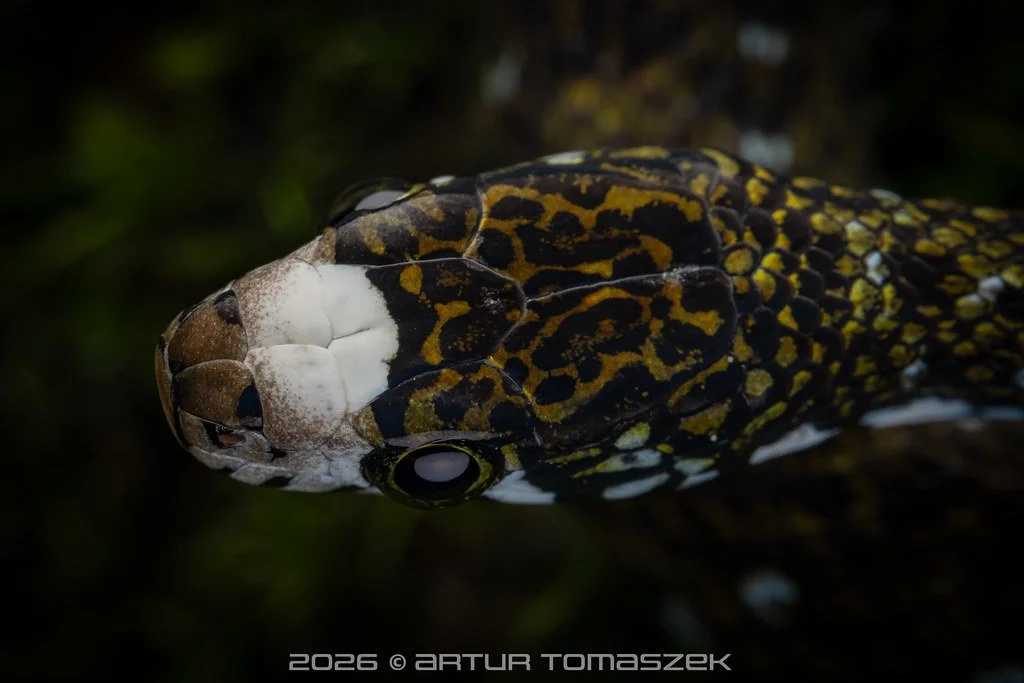
We also saw a Boiga jaspidea and a snake Artur had particularly wanted to see, Hebius flavifrons. In his completely unbiased opinion, it is the most beautiful Hebius of them all. As always, the forest provided plenty of frogs and invertebrates as well.
One of the most memorable non-animal discoveries came from Karolina, who found a cluster of bioluminescent Mycena chlorophos. In complete darkness, the tiny mushrooms produced their own ghostly green glow without the support of any ultraviolet light. Their glow is generated by a chemical reaction within the fungal tissue, with the caps and gills producing the most visible light. They were small and delicate, but bright enough for Artur to capture some enchanting photographs.
Mycena chlorophos
On the following night, Artur finally managed to photograph Staurois latopalmatus, the Bornean rock-skipper or Sabah splash frog. He had seen many before, but every attempt at a photograph had ended with the frog launching (quite literally, these frogs could easily win the Olympics with their massive and powerful thighs) itself into the stream and disappearing.
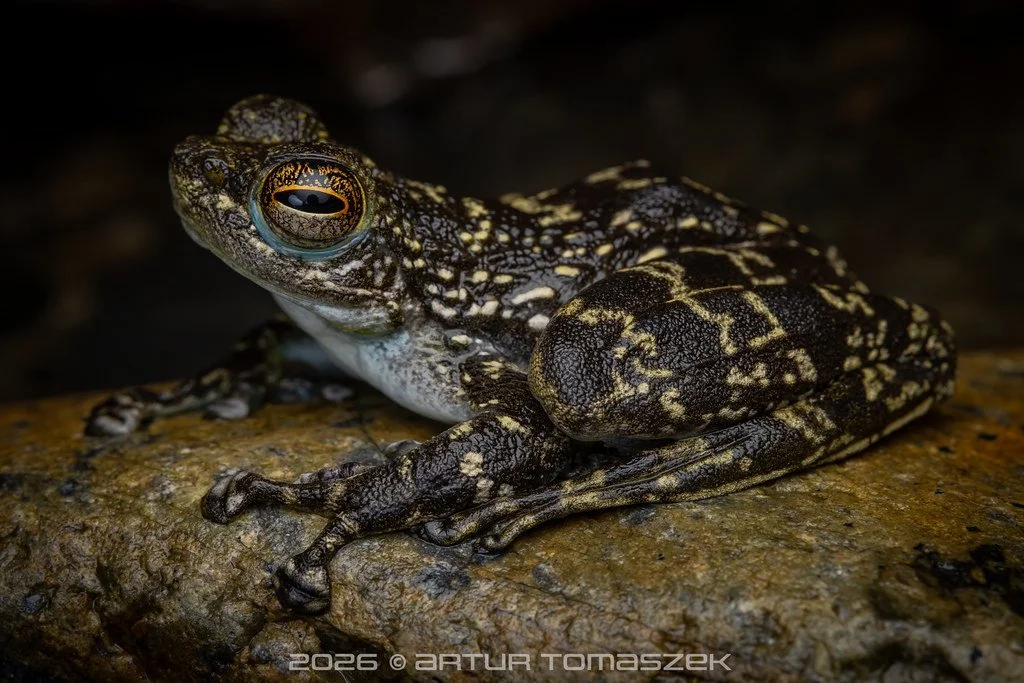
Staurois latopalmatus
Staurois latopalmatus live beside fast-flowing rainforest streams and waterfalls. It’s a beautiful habitat, but also an extremely noisy place. To solve this issue, males not only call but also provide visual signals, stretching and rotating their hind feet in conspicuous “foot-flagging” displays. They are well adapted to life around torrents and, as Artur already knew far too well, are masters of jumping and escaping.
The night itself began with torrential rain so heavy that we thought we wouldn’t be able to safely go on a walk. Fortunately, it eventually eased enough for us to head out, and what followed became one of the craziest nights of the Malaysian trip. Artur spotted an enormous Trimeresurus sumatranus from roughly thirty metres away. At that distance, he could see that something was there but could not figure out exactly what he was looking at. Only when he approached did the shape resolve into a snake, and what a snake it was! Absolutely massive.
Then, we encountered an Aeluroscalabotes felinus. The cat gecko, with its slender limbs, prehensile tail and slow, careful movements, has always been one of Artur’s favourite Bornean geckos.
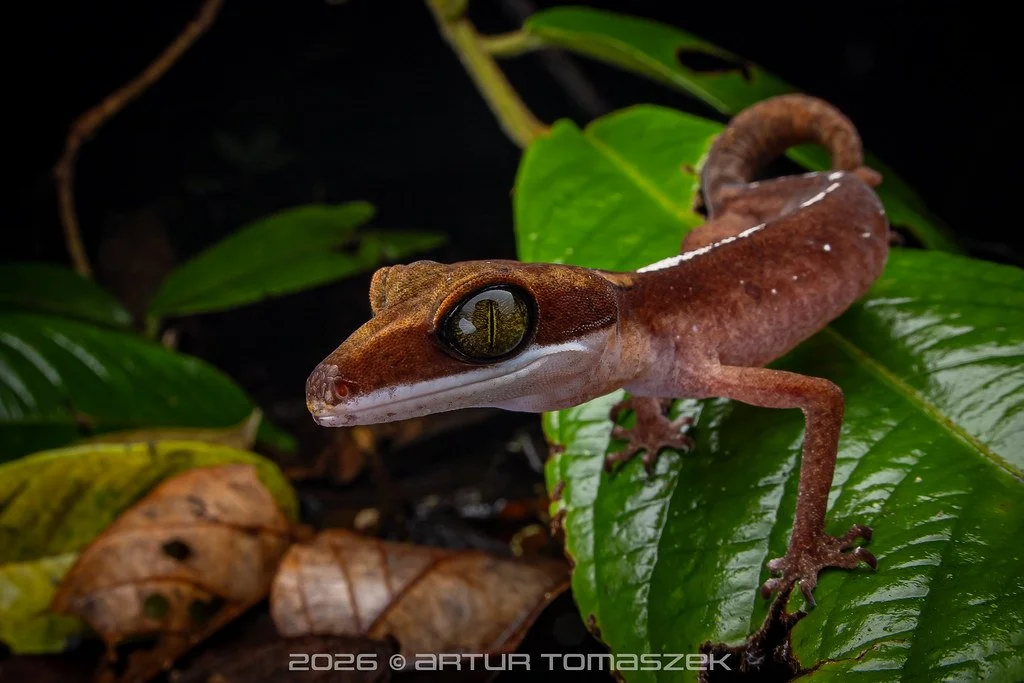
Aeluroscalabotes felinus
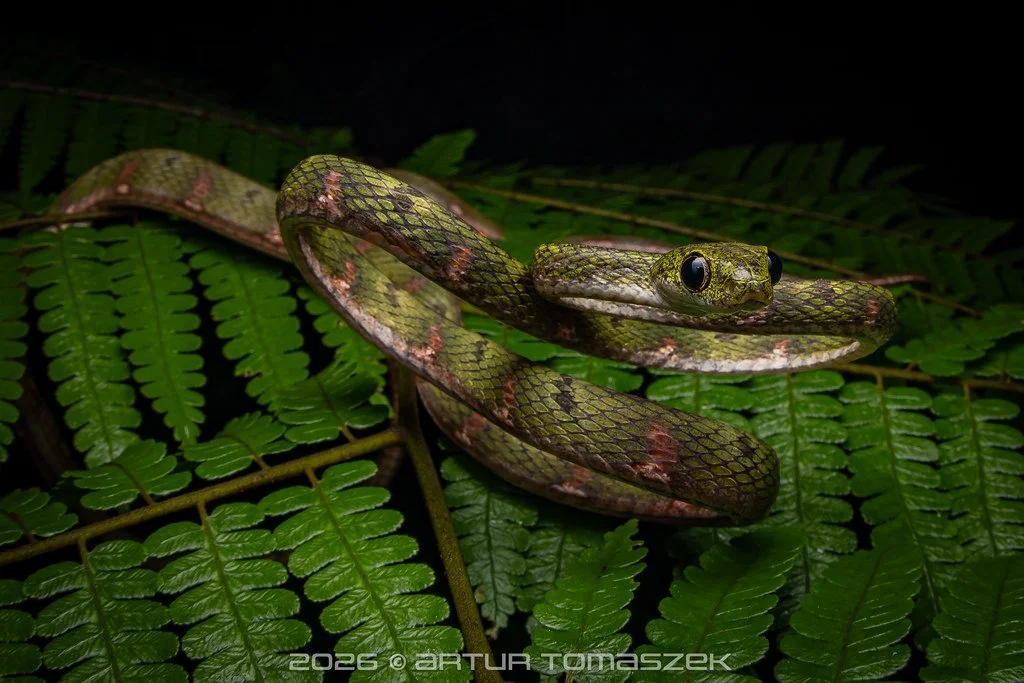
The strangest encounter of the night though involved a Bornean red-headed krait (Bungarus flaviceps baluensis)… about three metres up a tree! When you think about this species, “arboreal” is certainly not what comes to one’s mind. While Artur was photographing the supposedly terrestrial krait above his head, he noticed another snake slithering on the ground, a Craspedocephalus borneensis.
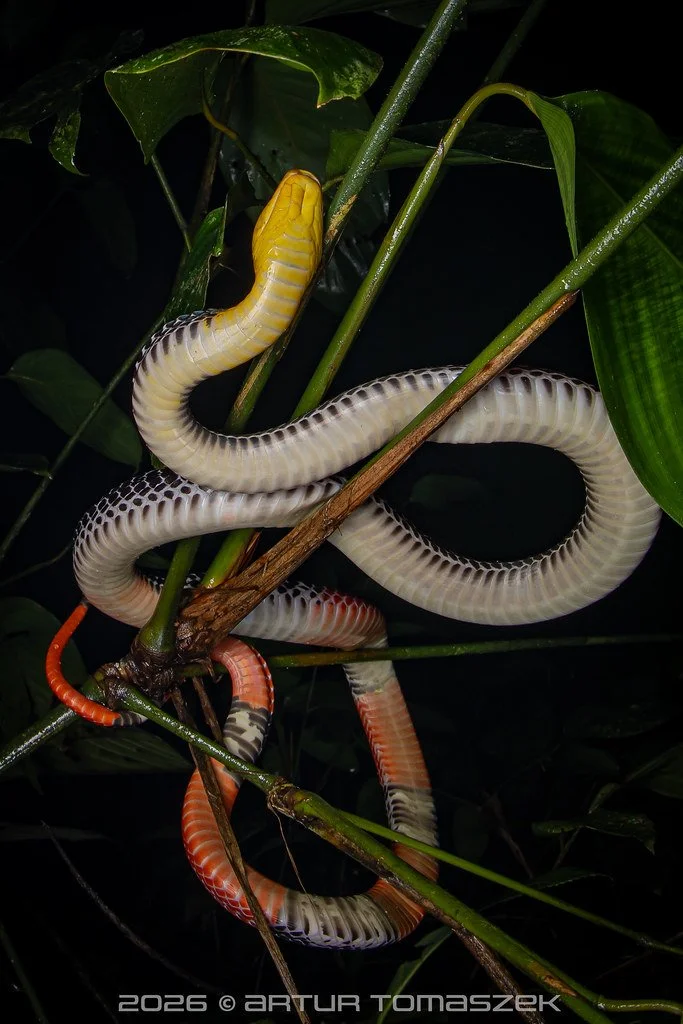
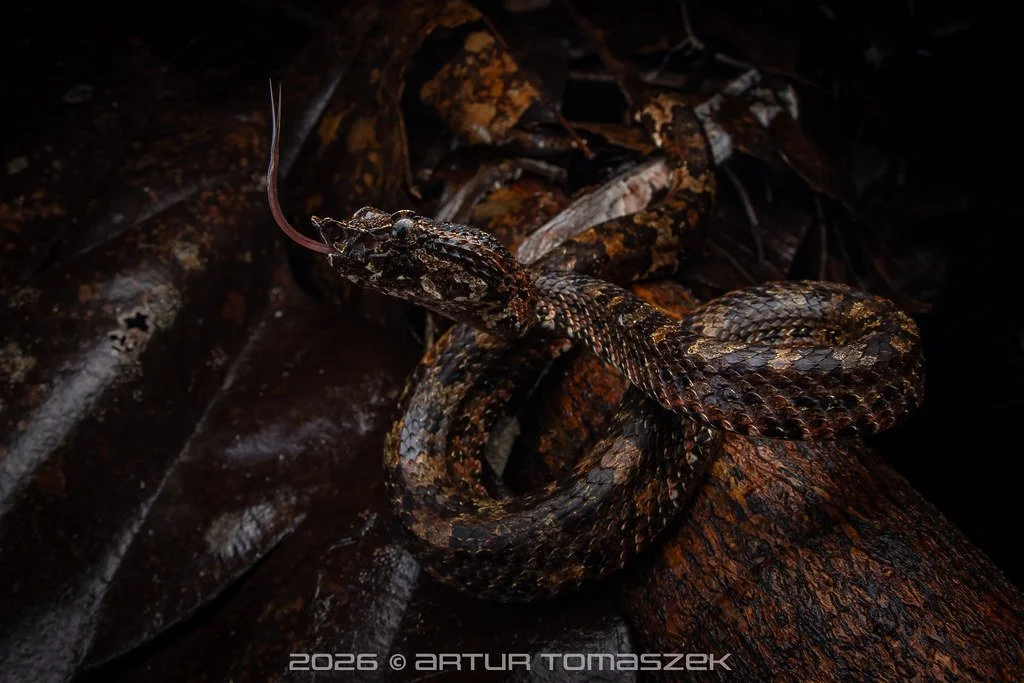
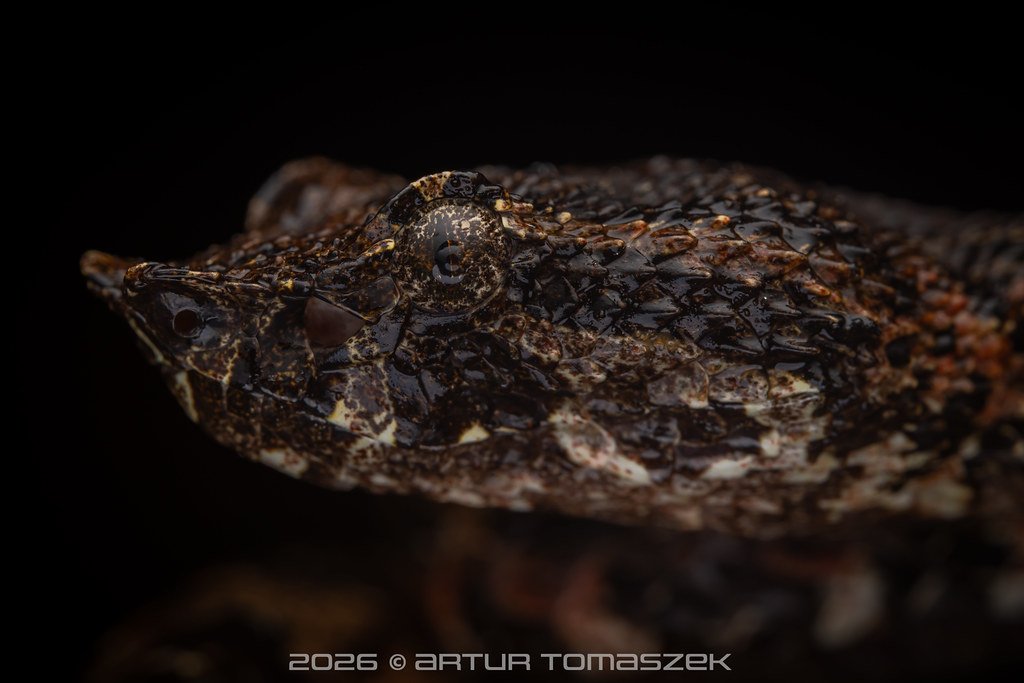
Apparently, they had mixed up their roles and swapped places. 😂 Who knows, maybe the krait was hunting the viper?
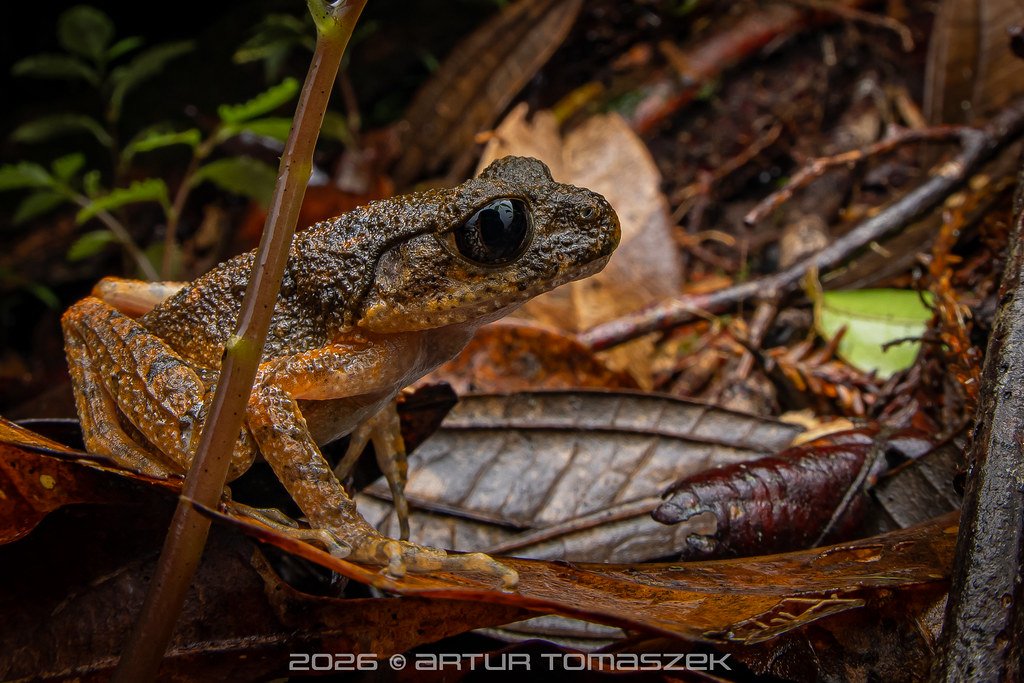
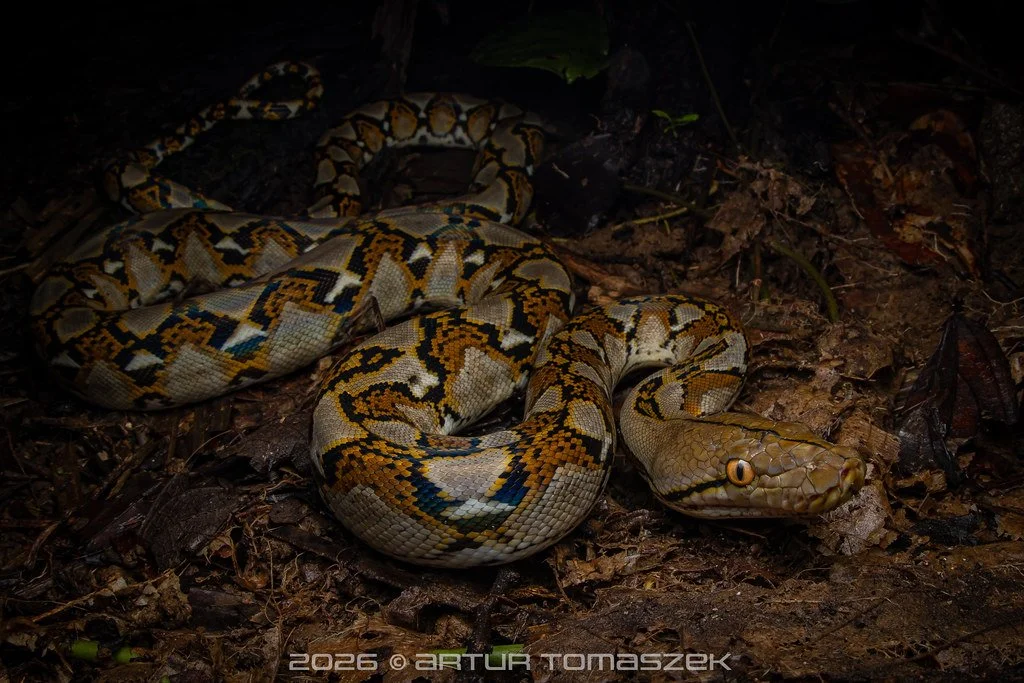
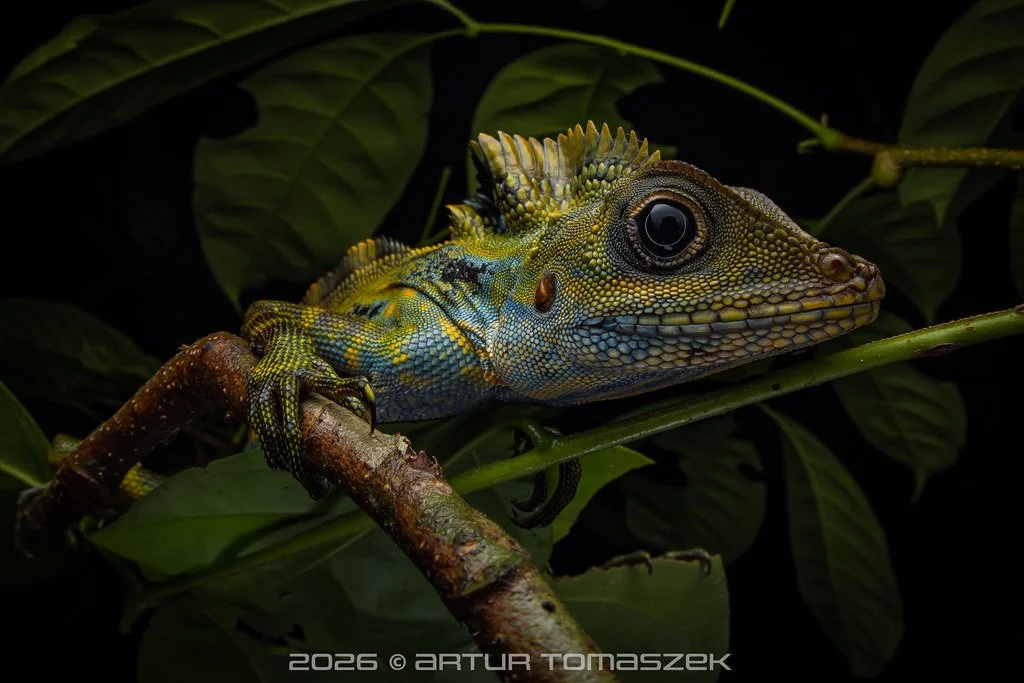
Our third night produced Karolina’s beloved Aplopeltura boa, a reticulated python (Malayopython reticulatus), another Boiga jaspidea and plenty of lizards and frogs. One of those frogs made Artur disproportionately happy.
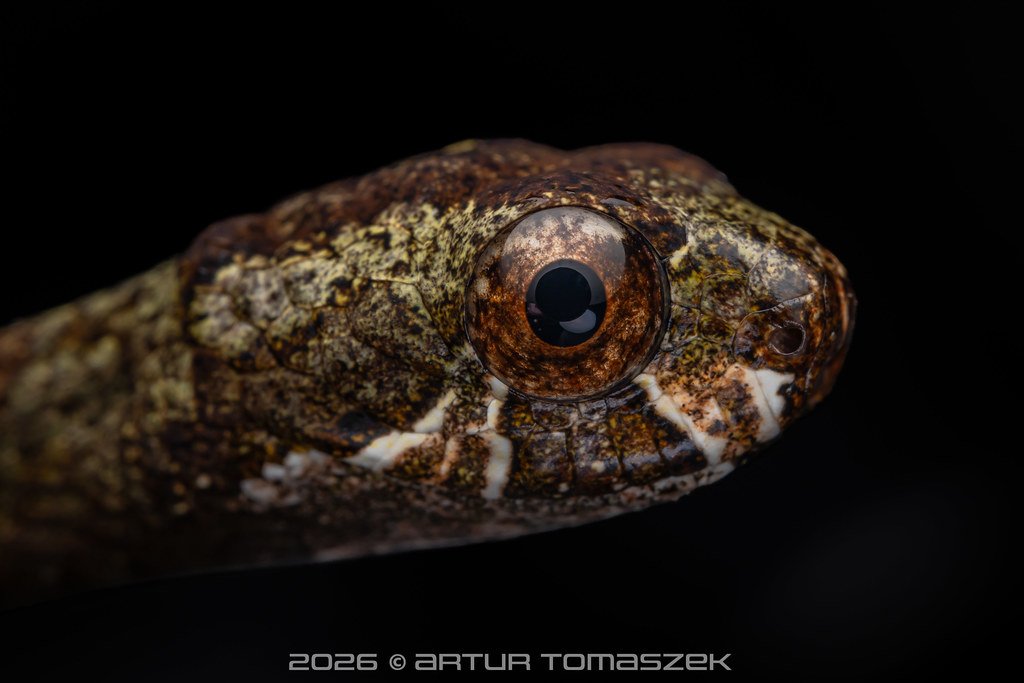
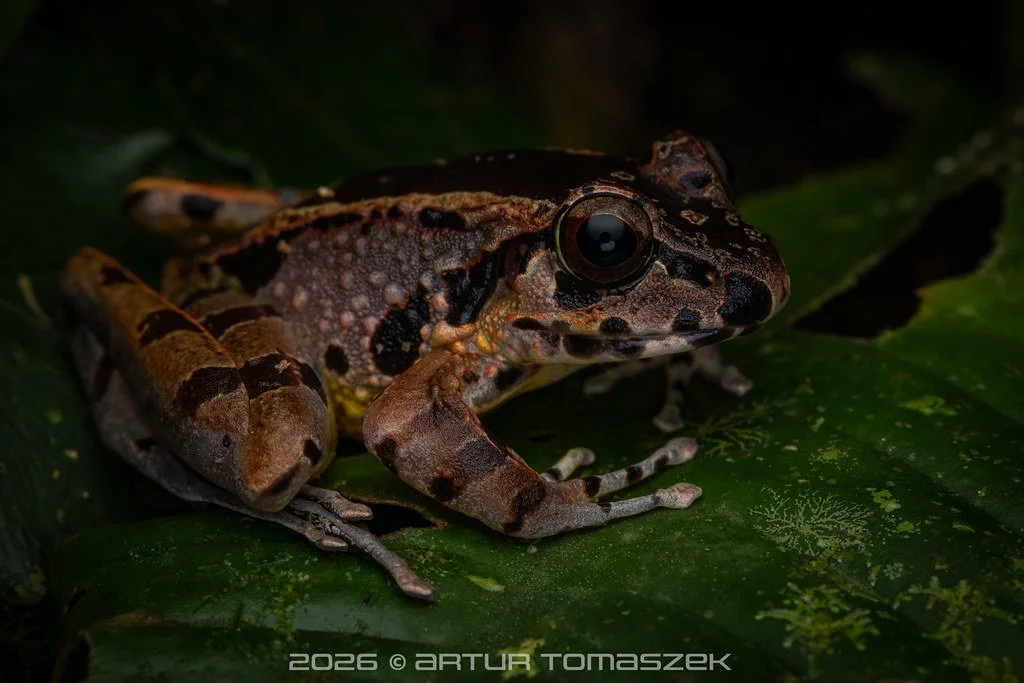
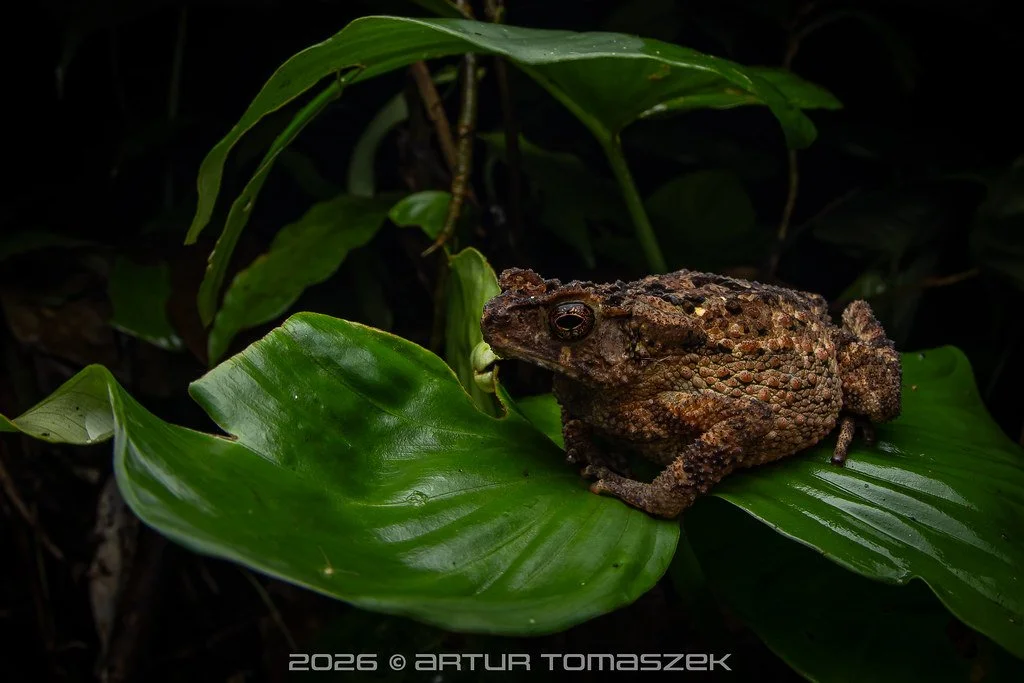
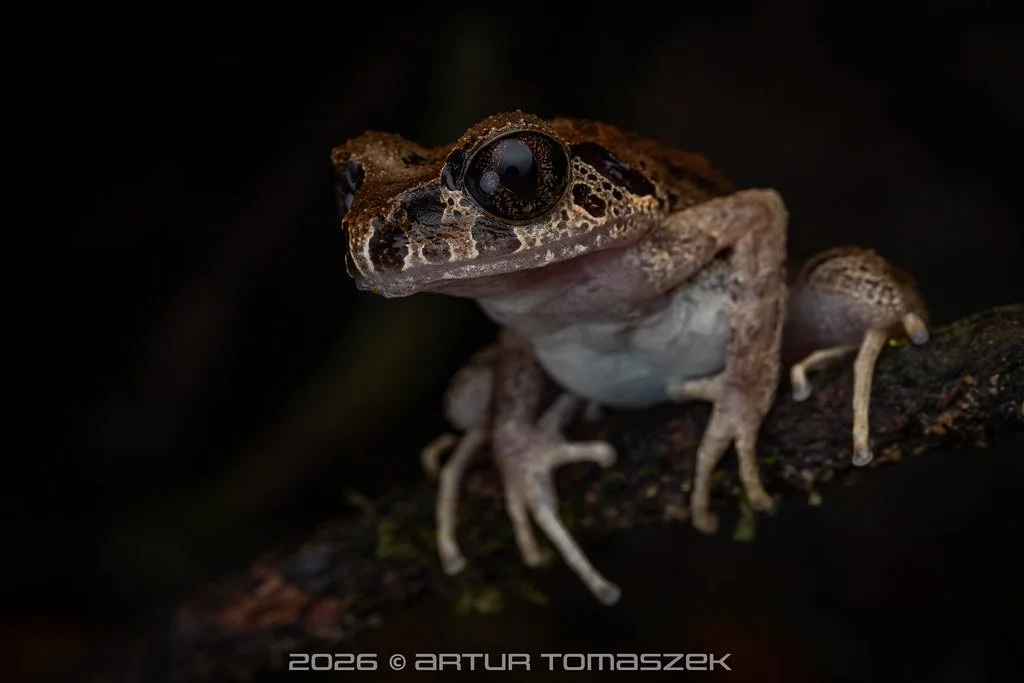
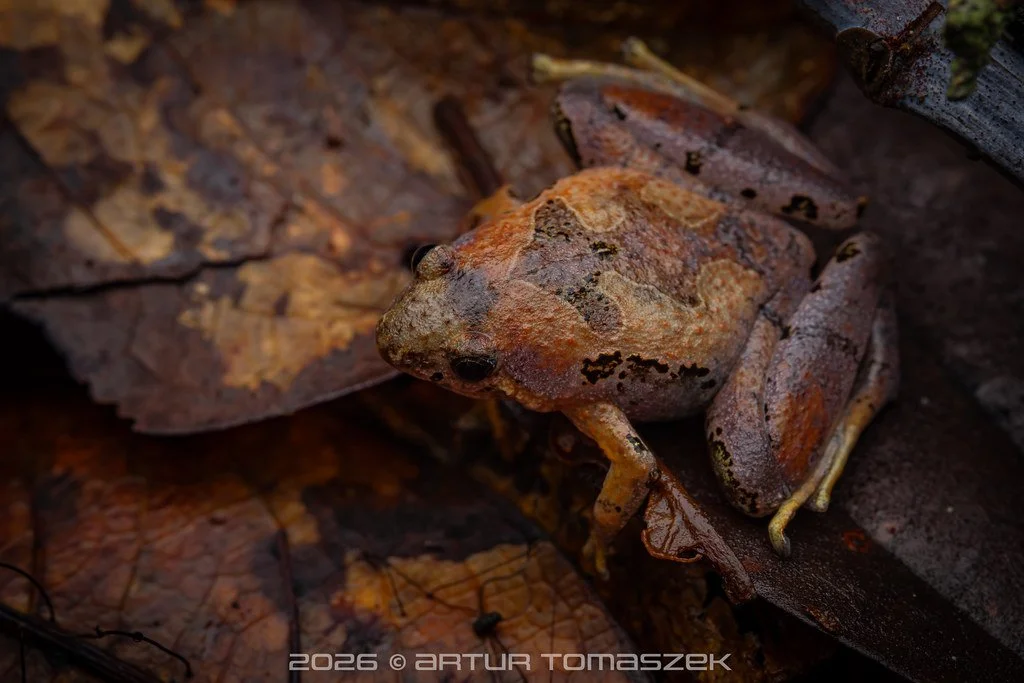
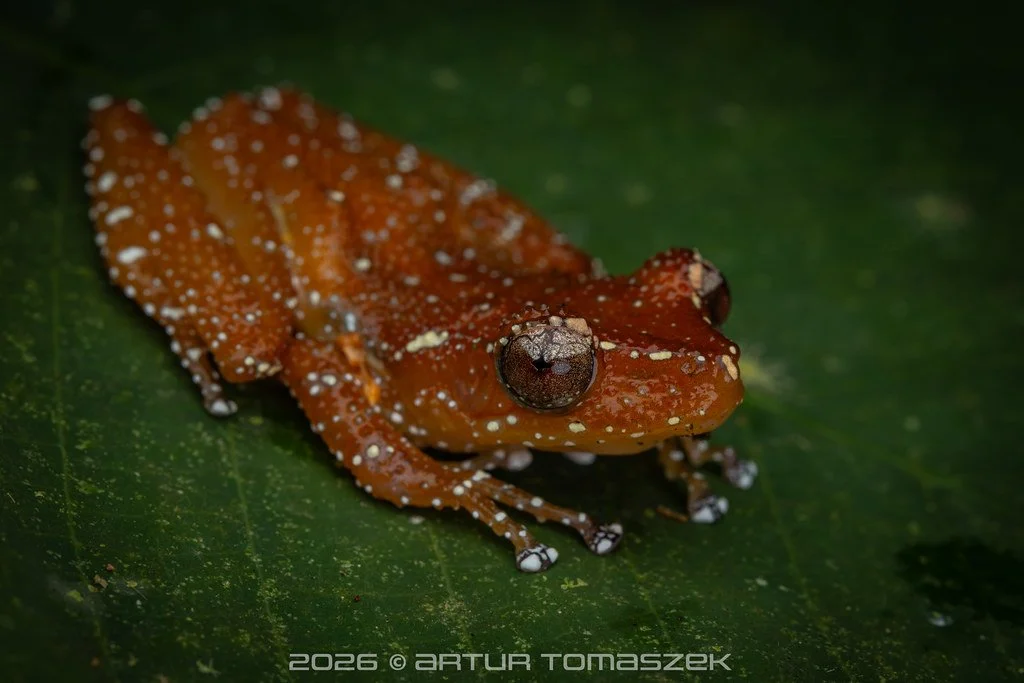
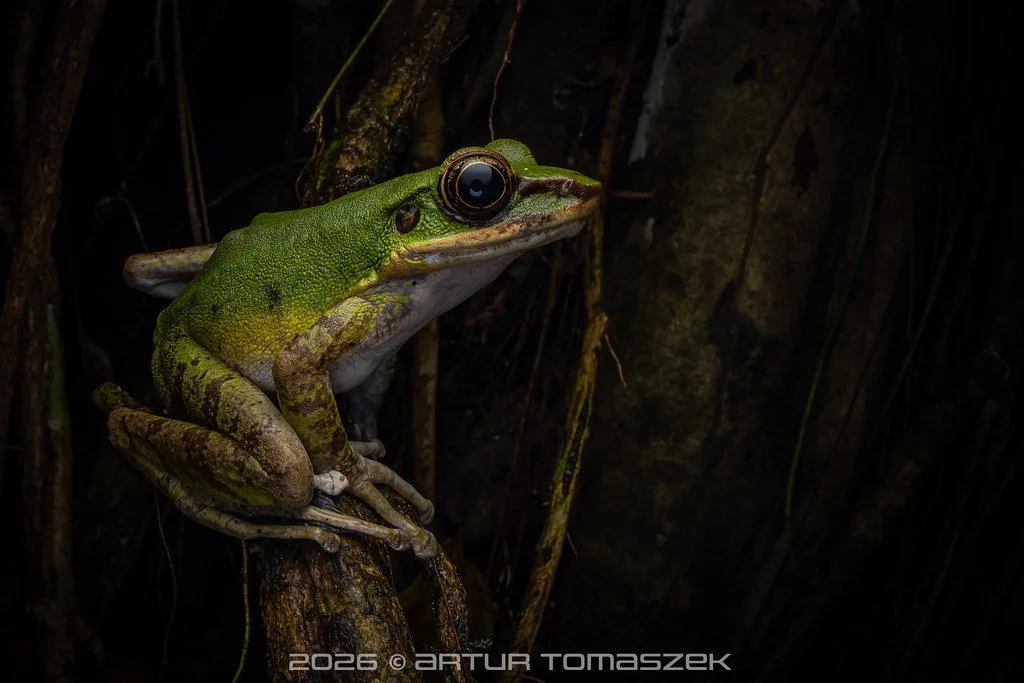
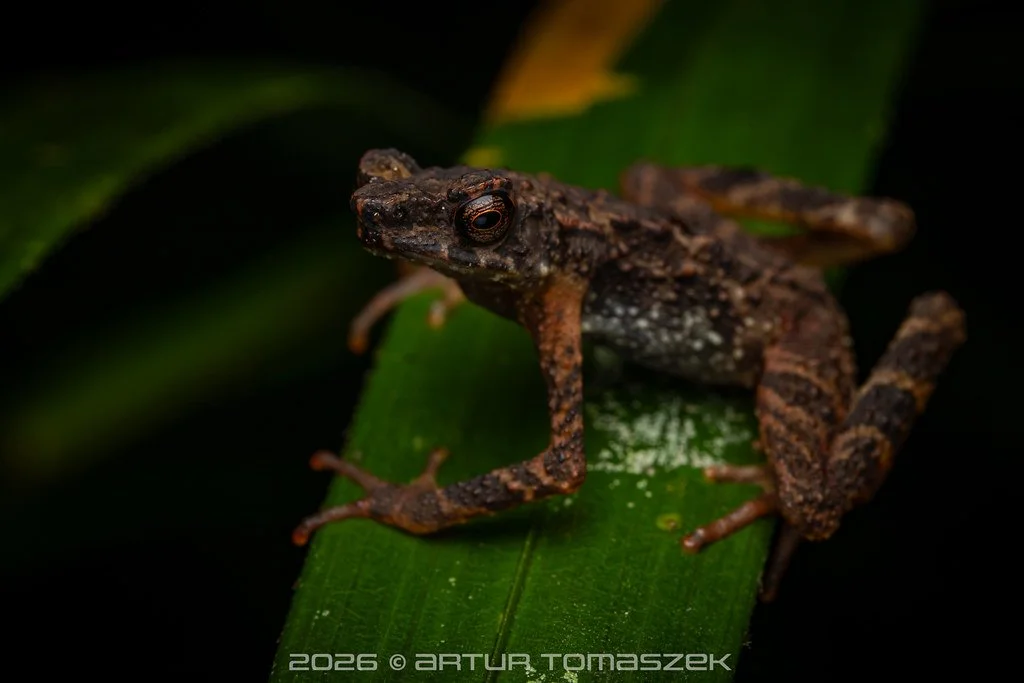
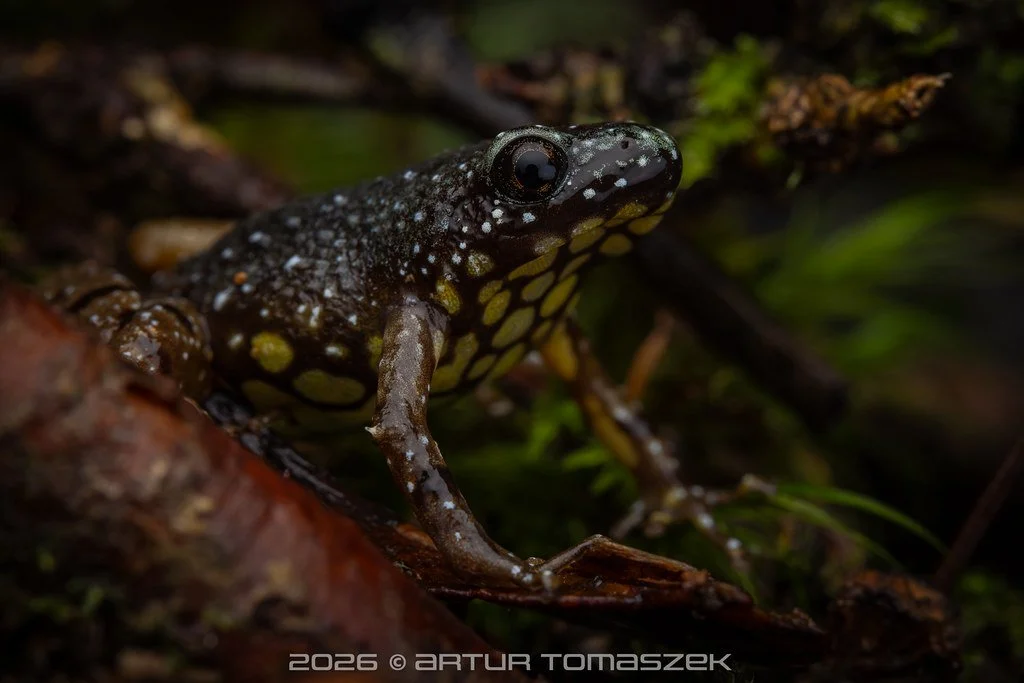
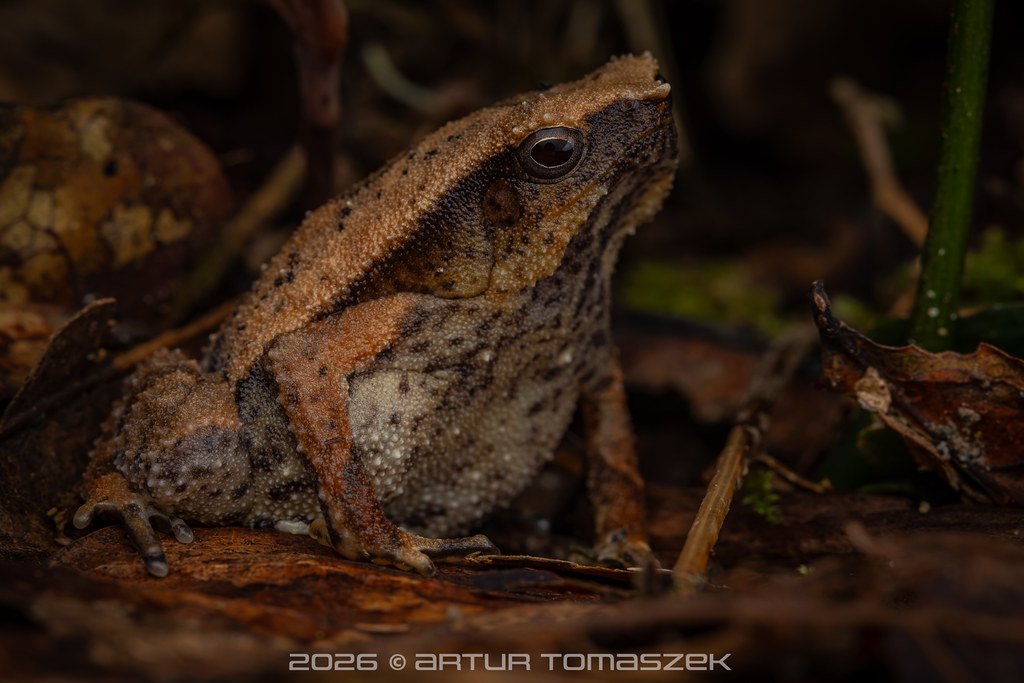
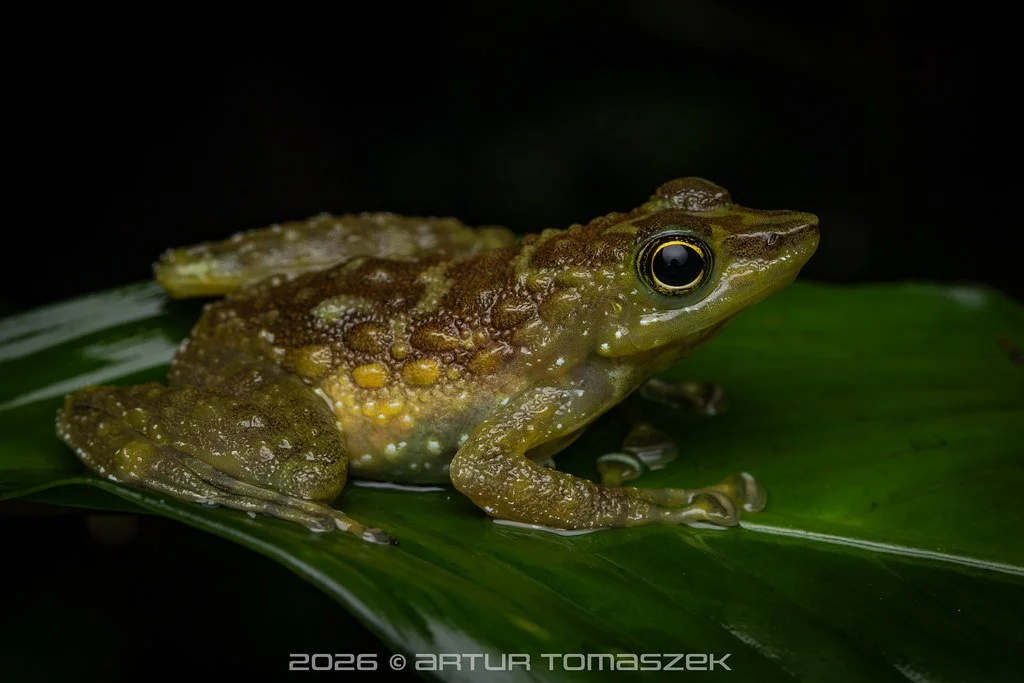
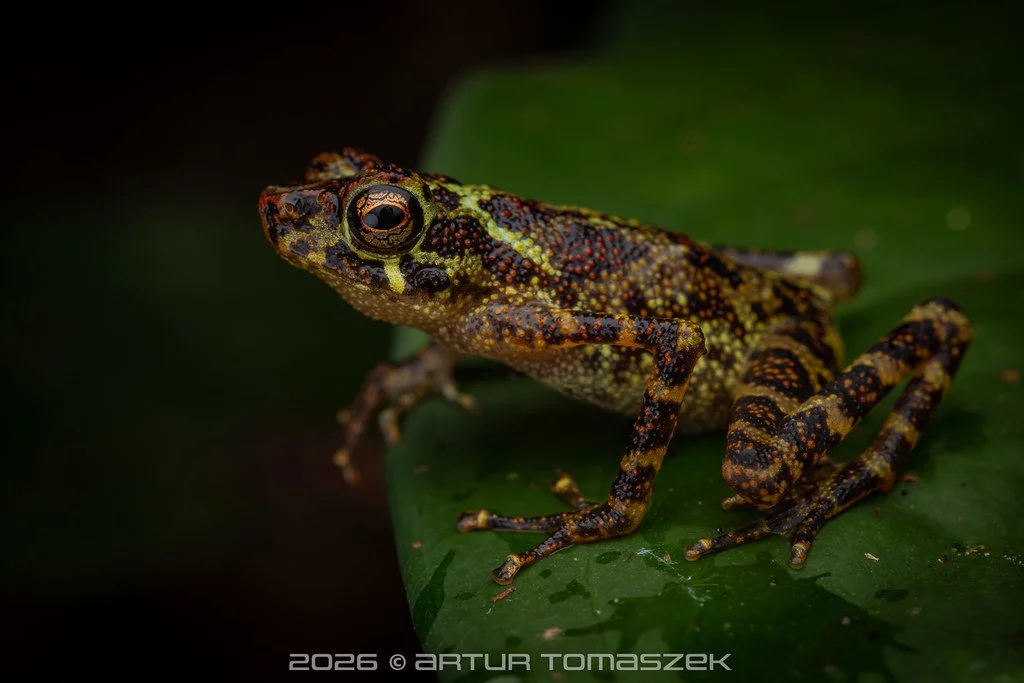
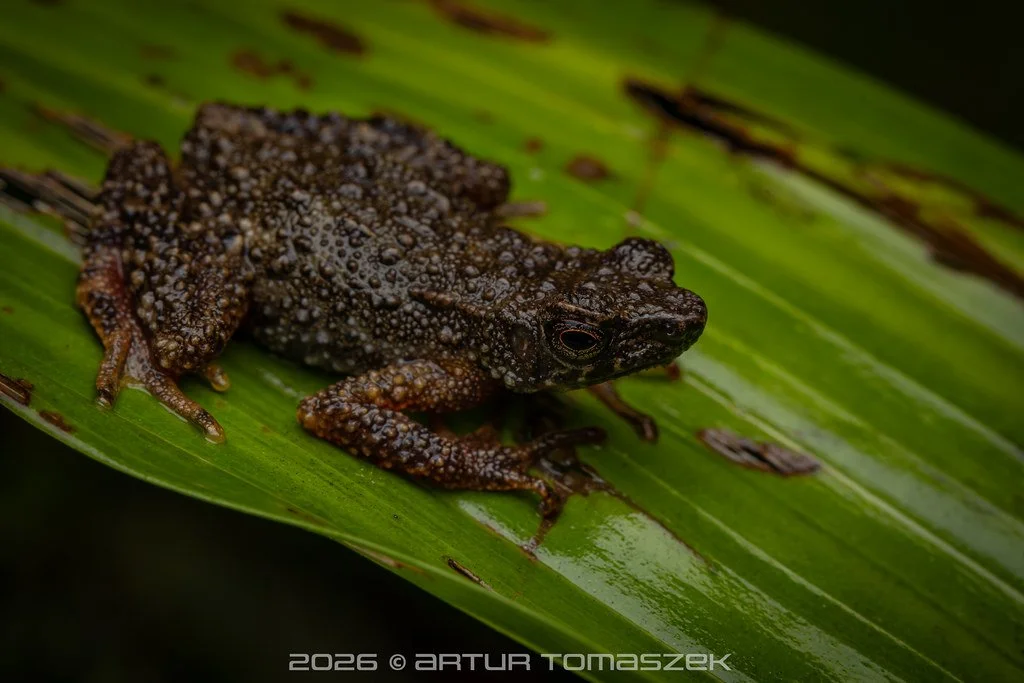
Sabahphrynus maculatus, a little-known toad is the sole species in the genus Sabahphrynus and is known only from western Sabah. It lives around small montane forest streams and may perch on rocks, logs and tree trunks above the ground. It is also sometimes called the Sabah earless toad because it lacks a visible tympanum and some of the associated middle-ear structures found in many other frogs. A rare and beautiful amphibian.
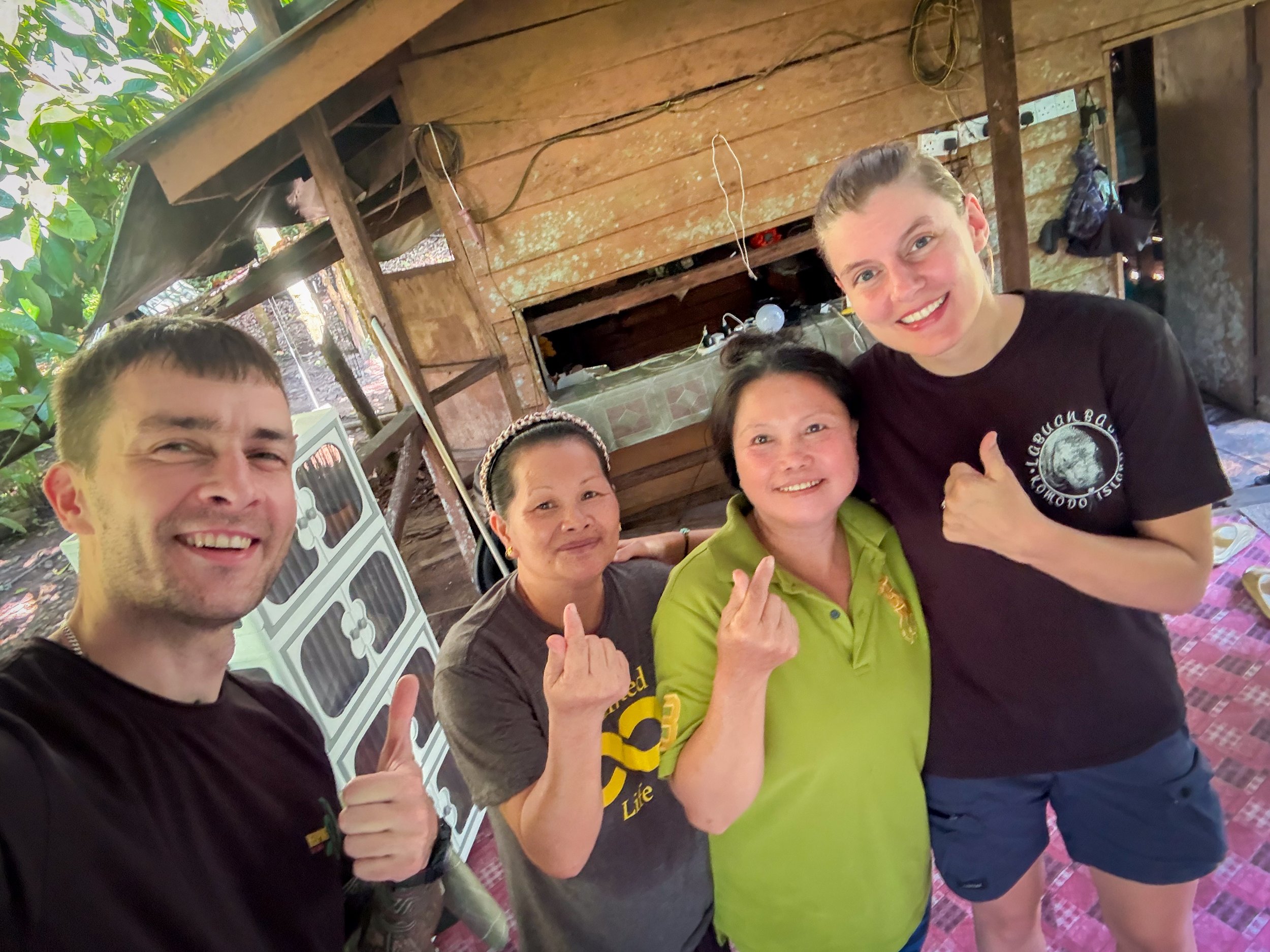
The following morning, we packed and began walking out of the camp. One of the aunties who worked there spotted a snake. The aunties were hilarious, completely comfortable spending a lot of time in the middle of the jungle, yet absolutely terrified of snakes.
Her discovery turned out to be a blue coral snake (Calliophis bivirgatus tetrataenius). A perfect “goodbye” snake in Lupa Masa!
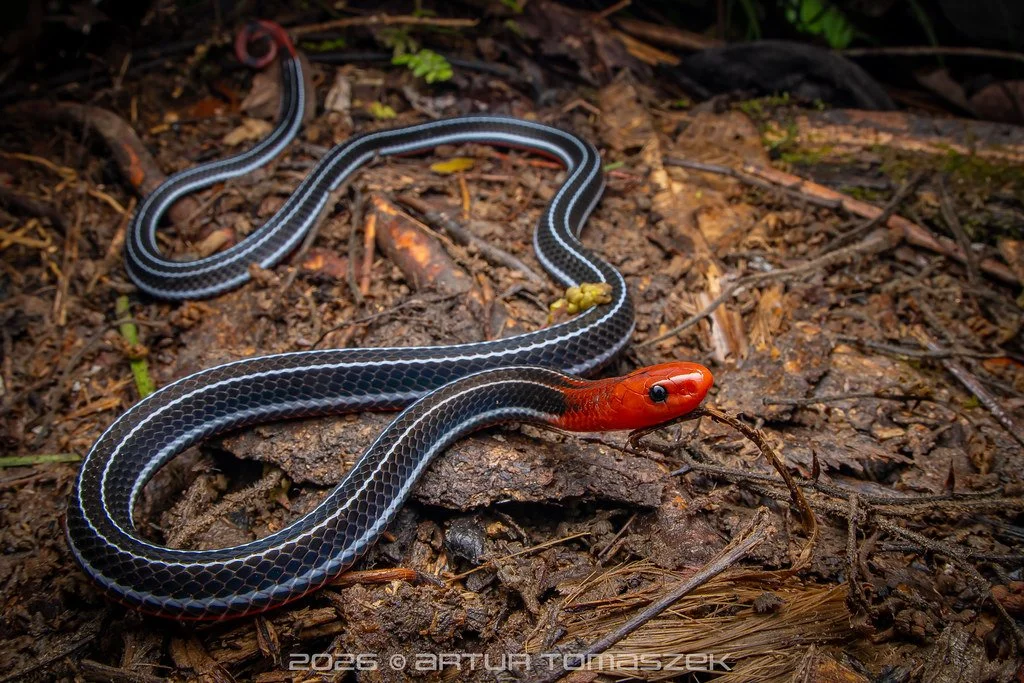
Calliophis bivirgatus tetrataenius
Kota Kinabalu
Back in Kota Kinabalu, Karolina sensibly chose sleep over herping. Artur headed alone to a new location, where our friend, Jeremy, joined him for a quick night walk.
They found two more Trimeresurus malcolmi, both much smaller than the females from Kinabalu Park, together with several interesting frogs. Four malcolmi during a visit when we had been told that our chances of seeing even one were very low… We could hardly complain.
And with that, we flew south-west to Sarawak.
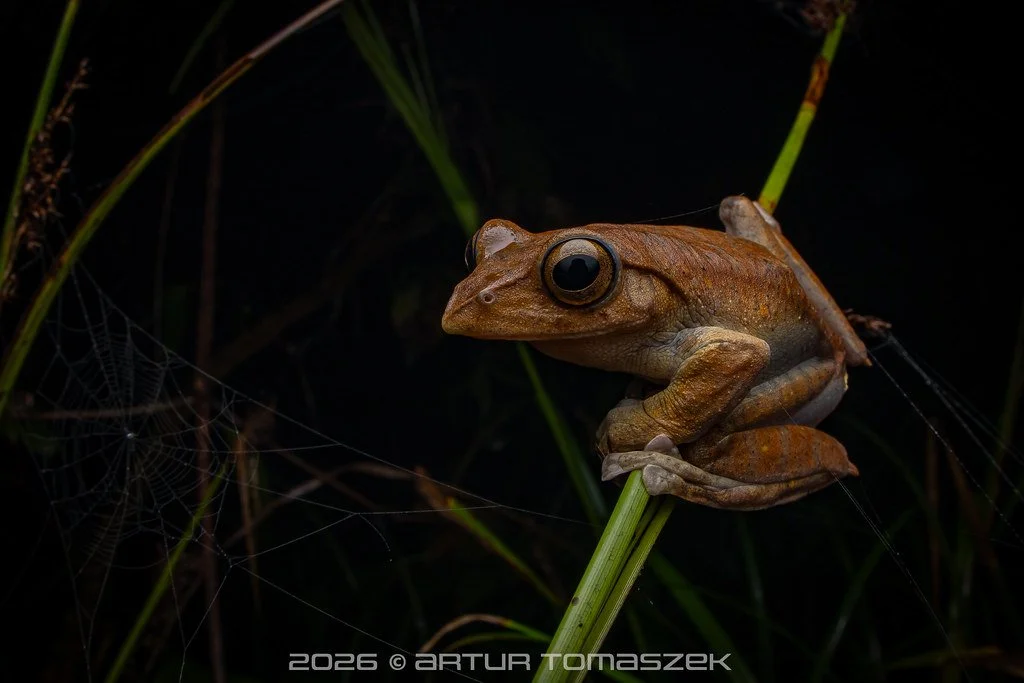
Sarawak
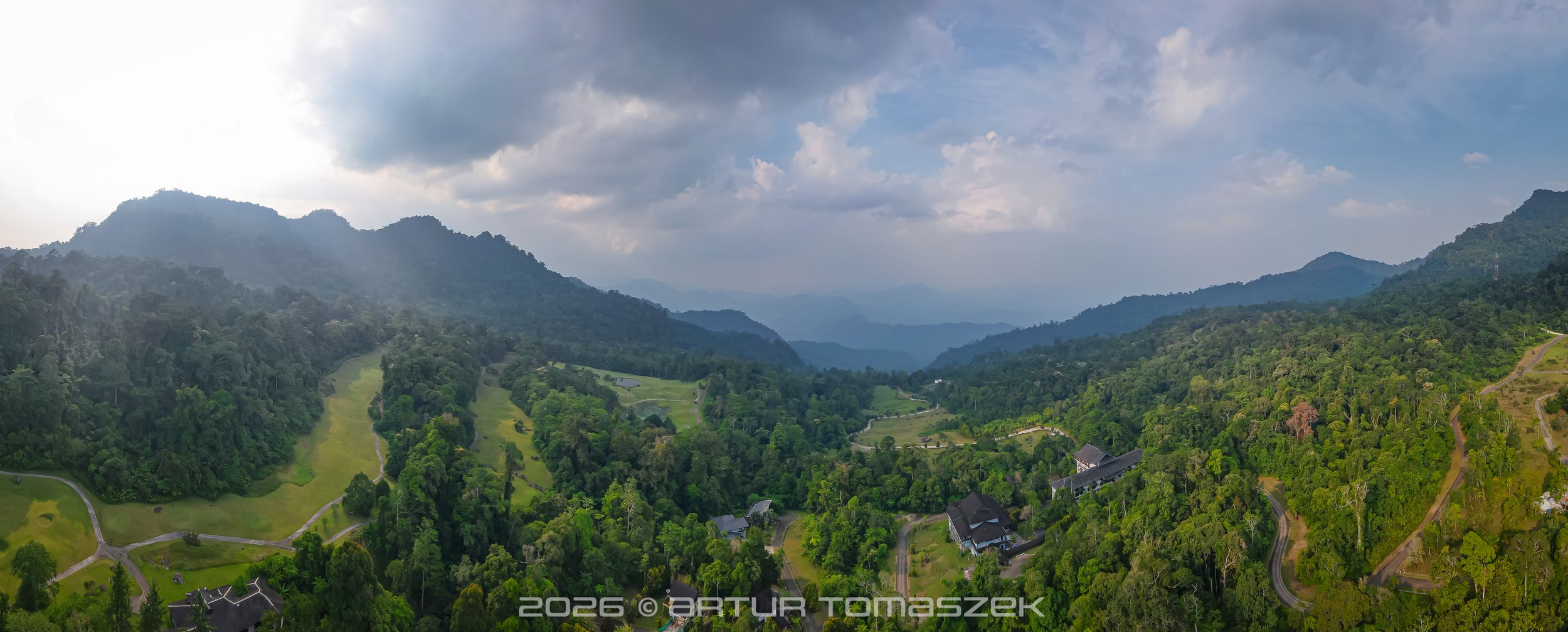
Borneo Highlands
Sarawak welcomed us with extremely hot and dry conditions.
We met with our friend, Chien, and were introduced to Gawen, with whom we got on well 🍻 immediately.
On our first night, we explored a forest near Kubah National Park. Wildlife activity was low in the dry weather but, as always, we still found a selection of interesting animals.
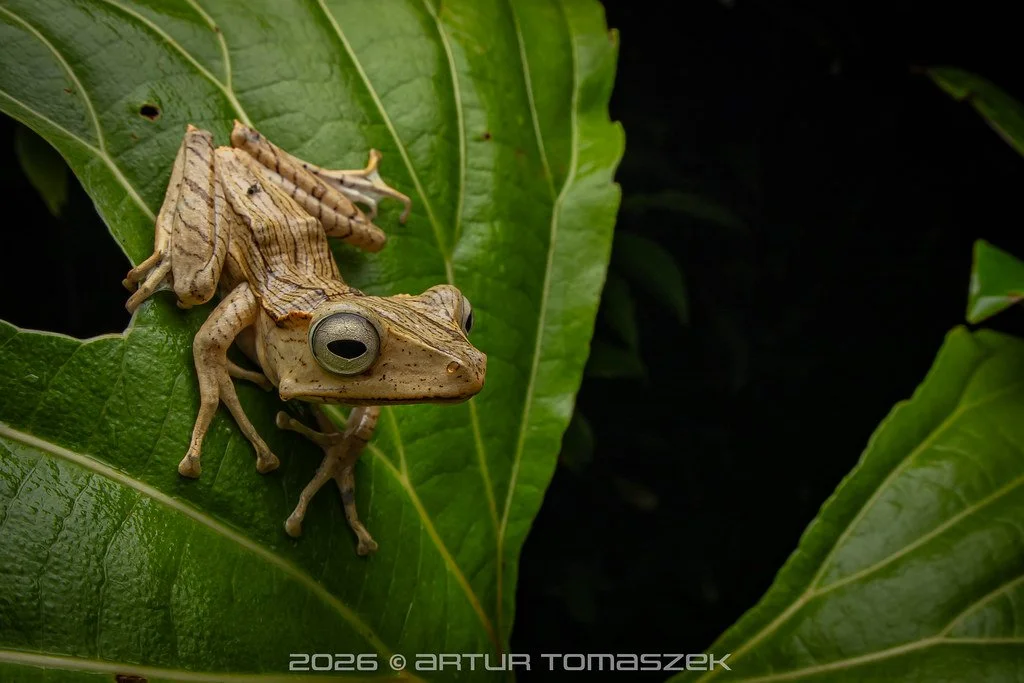
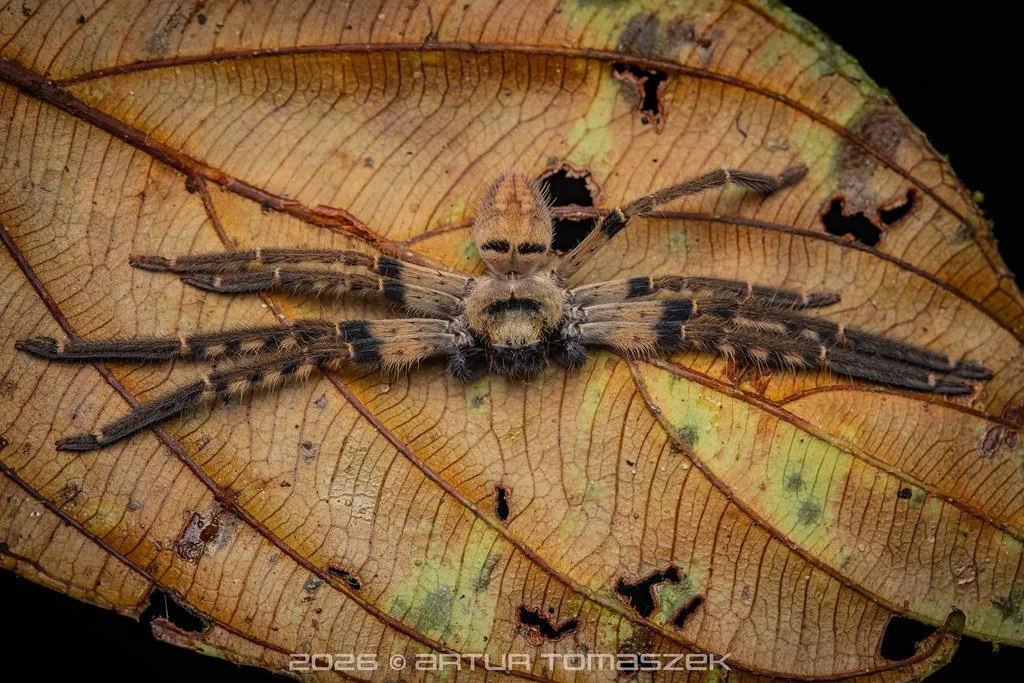
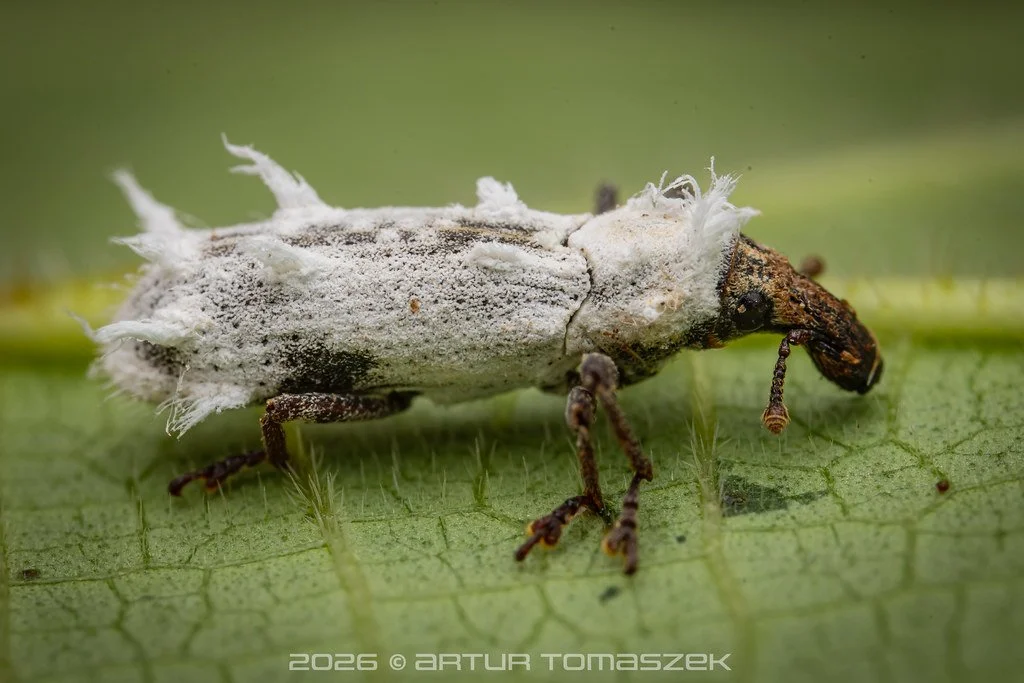
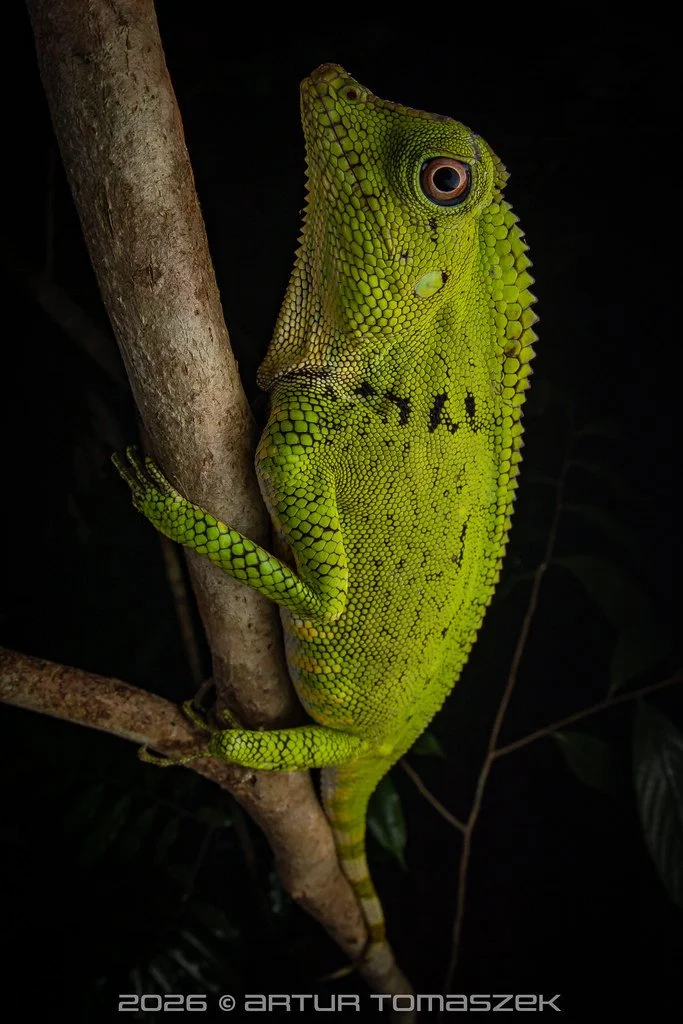
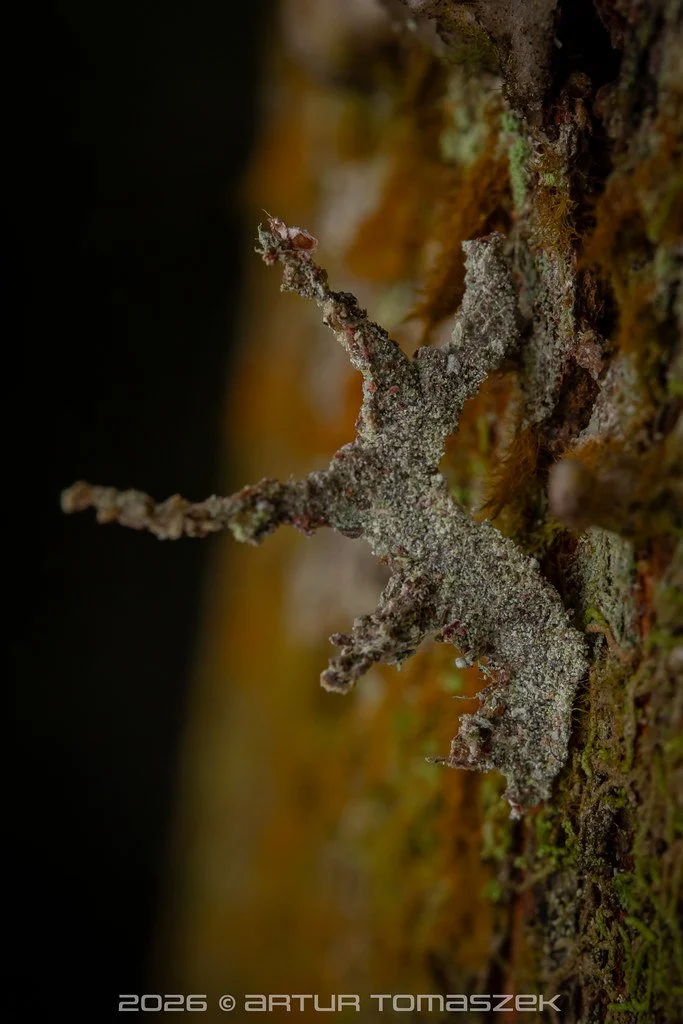
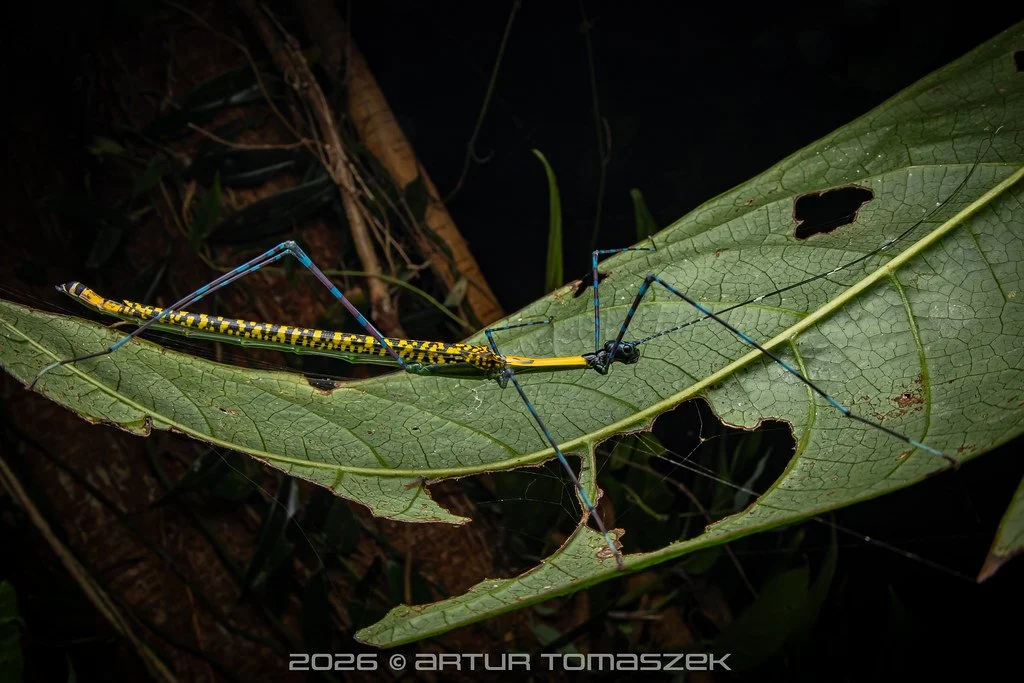
The star of the night was not a snake or a frog, but Hermagoras sigillatus, an astonishingly well-camouflaged stick insect.
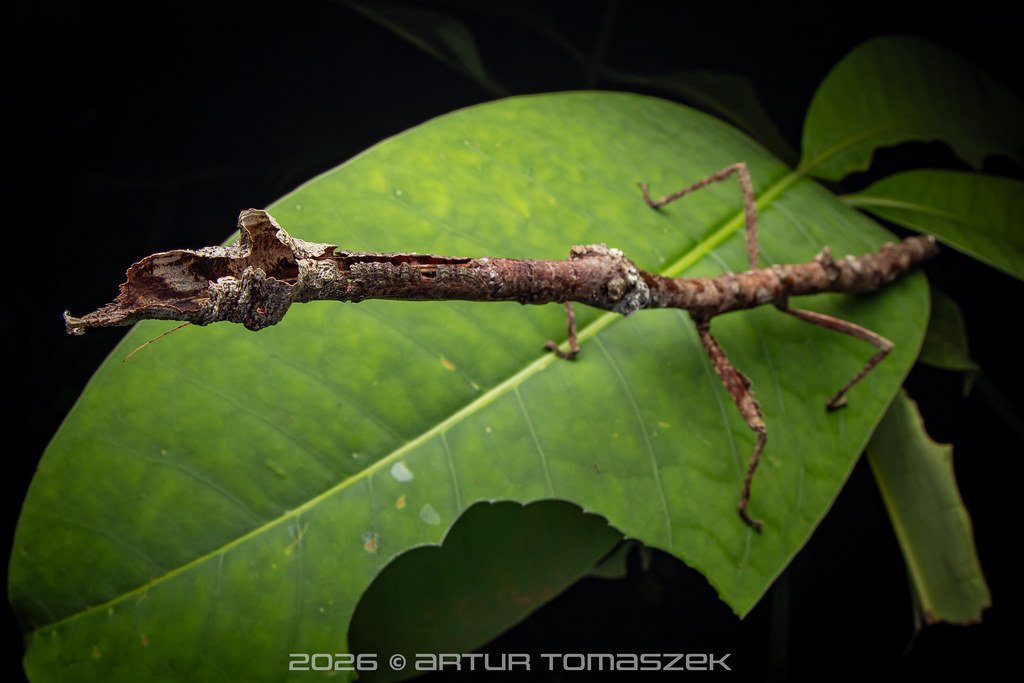
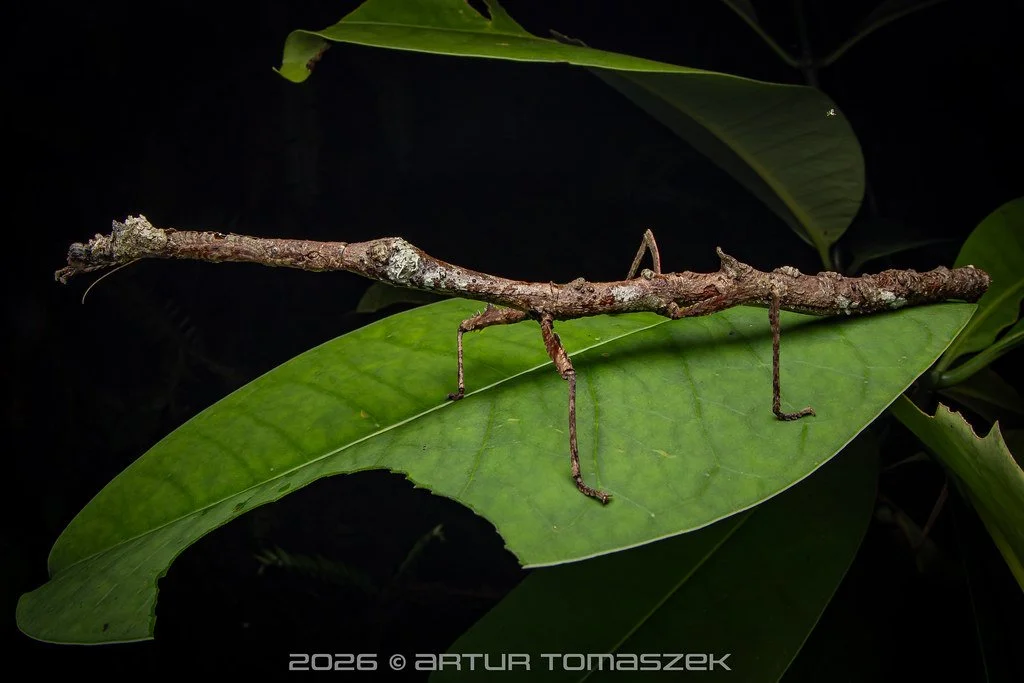
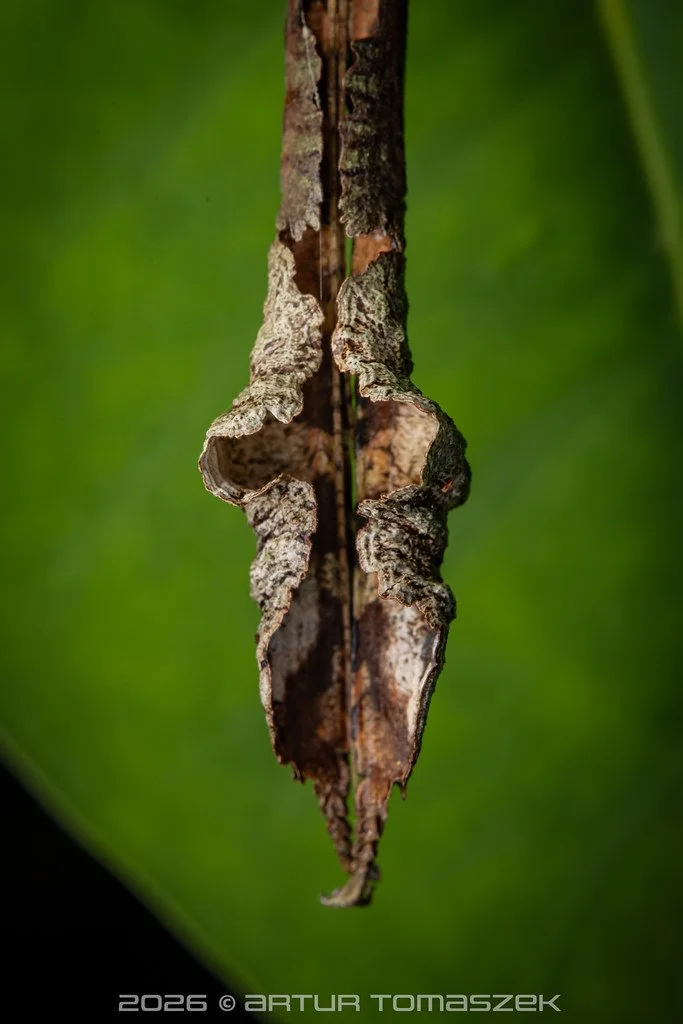
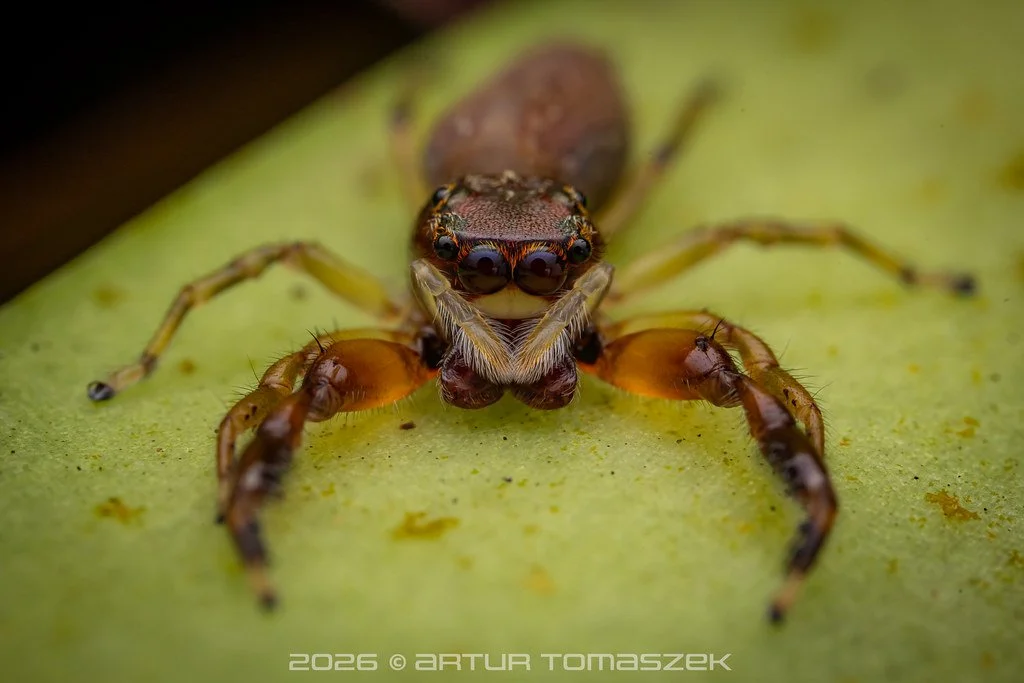
Stick insects are already experts at disappearing into vegetation, but this species takes the disguise to another level. Its irregular outline, textured body and mottled colours imitate a lichen-covered or mossy twig. Even when you know exactly where it is, your eyes keep trying to turn it back into a genuine twig.
Borneo Highlands
The next day, we drove into the Borneo Highlands with one very definite target in mind, that is Ansonia latidisca, the Bornean rainbow toad.
This remarkable little stream toad was known only from old specimens and had not been recorded since 1924. It was even placed on a list of the world’s most wanted “lost frogs”. Then, in 2011, researchers rediscovered it in western Sarawak after 87 years without a confirmed sighting, and produced the first photographs of the species alive. Its long limbs and extraordinary mixture of green, purple, brown and reddish colours create a moss-like camouflage perfectly suited to wet montane forest.
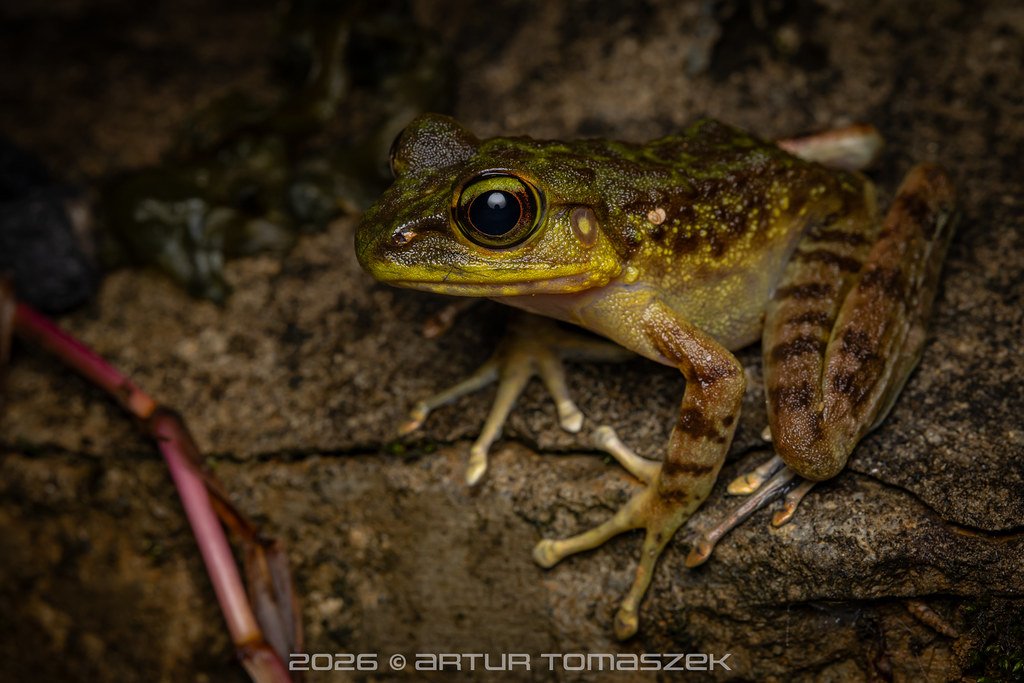
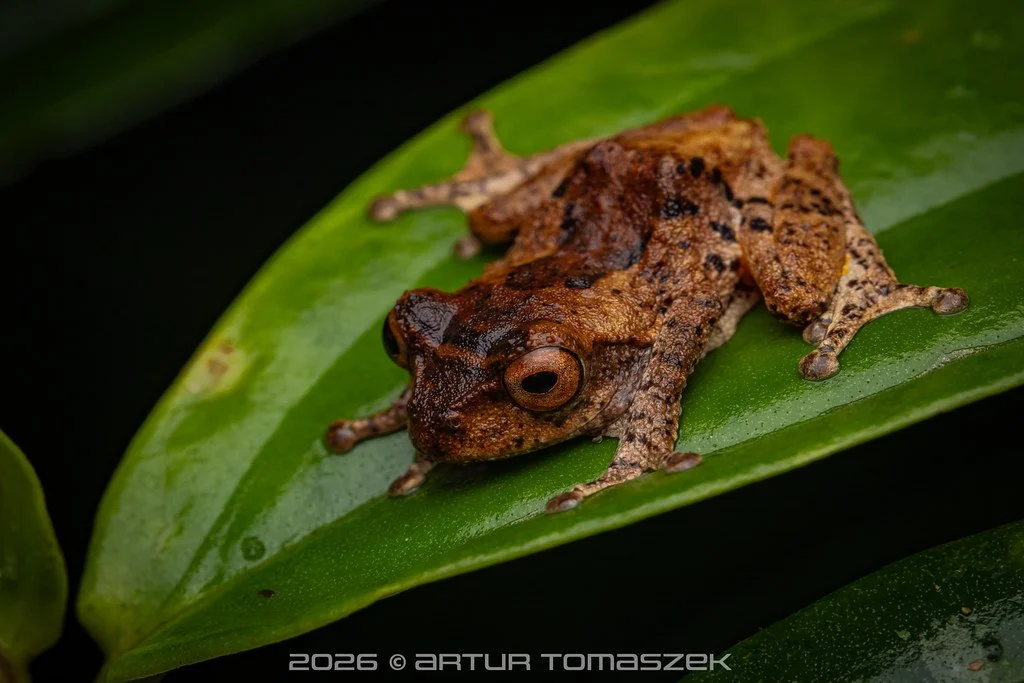
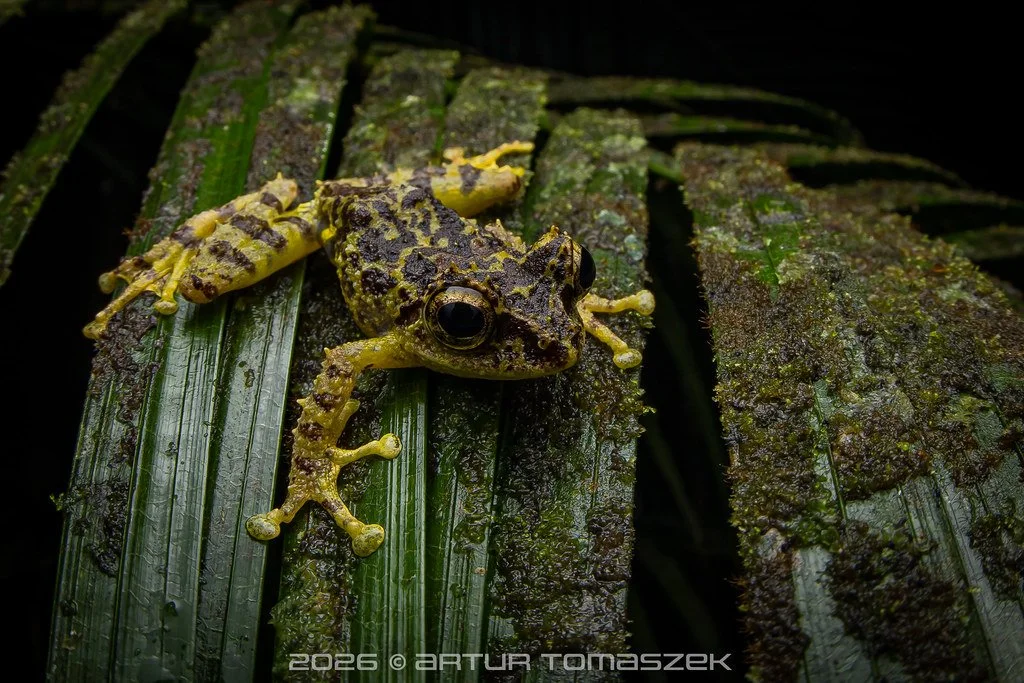
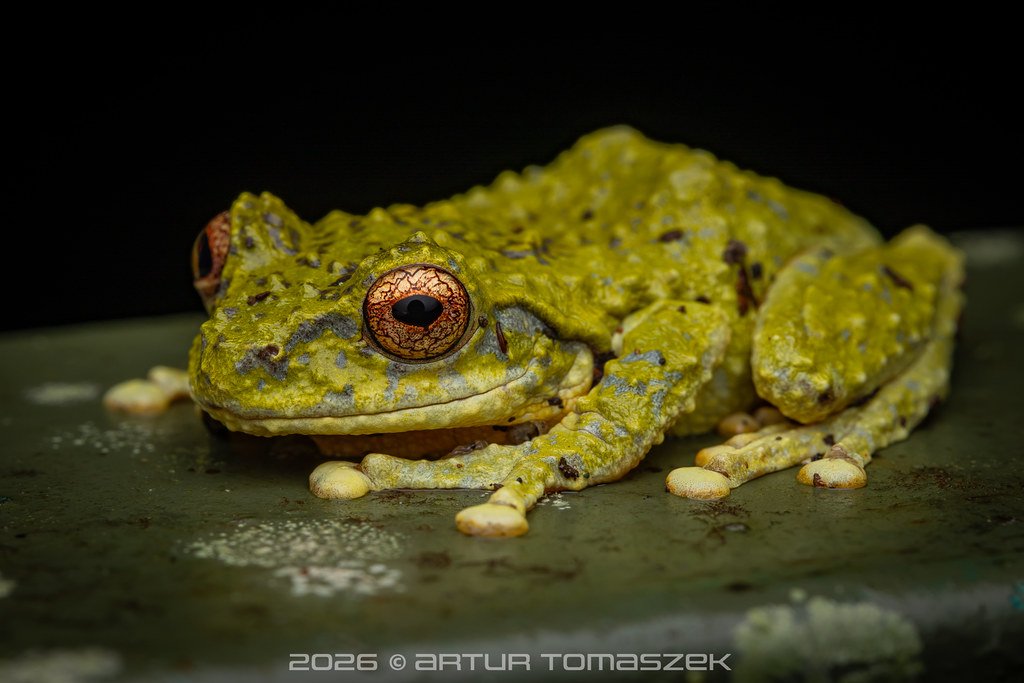
We searched for it three nights in a row but, unfortunately, the rainbow toad remained hidden from us. There were, however, quite a few other interesting species of frogs.
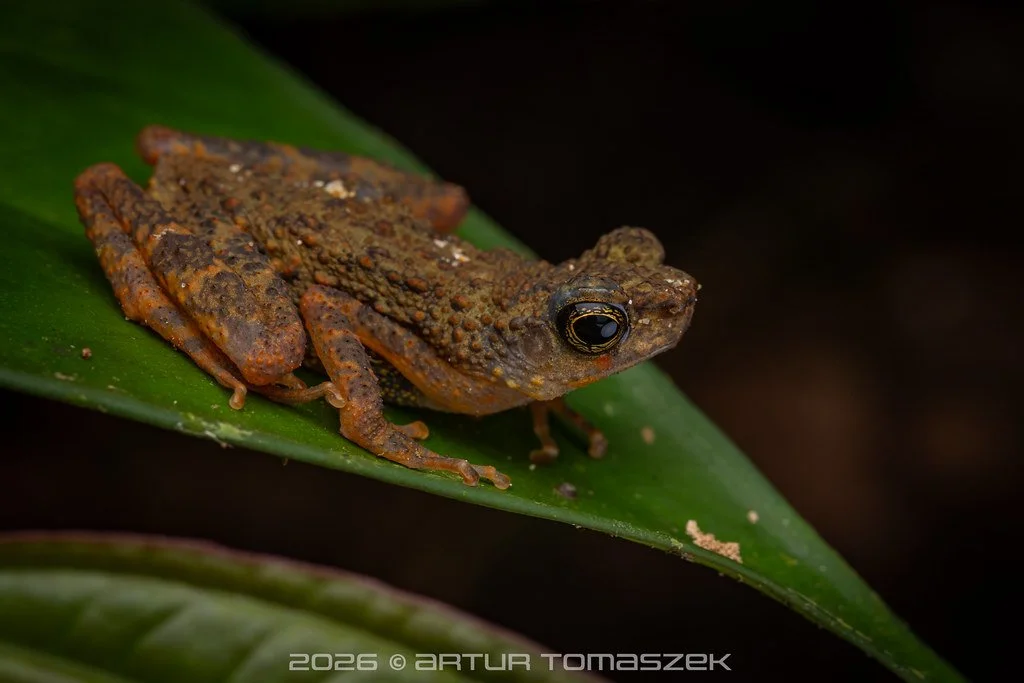
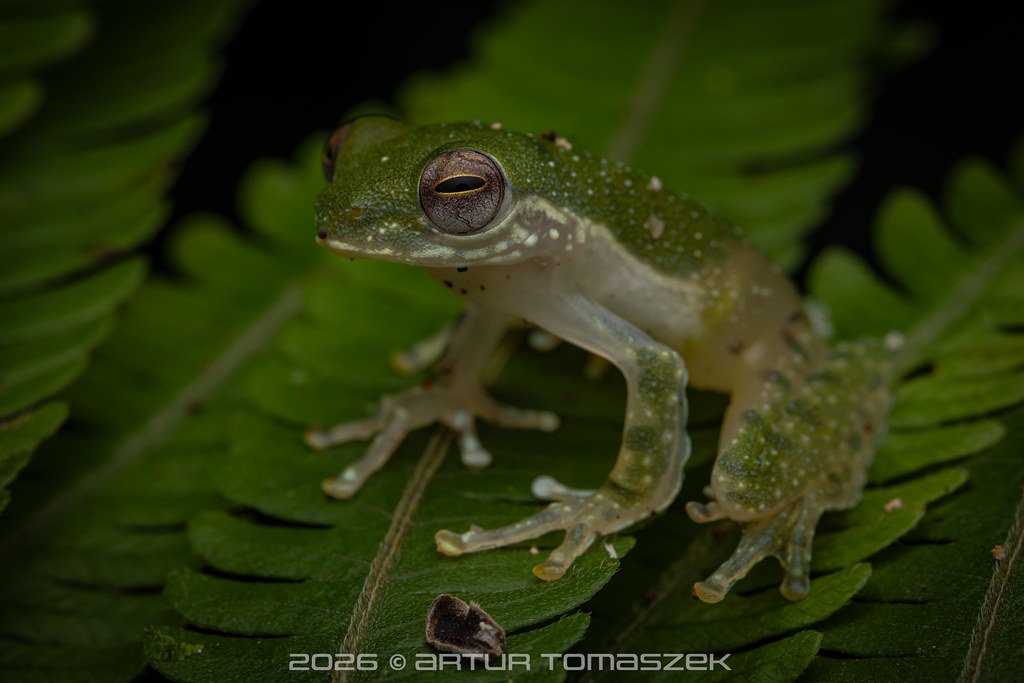
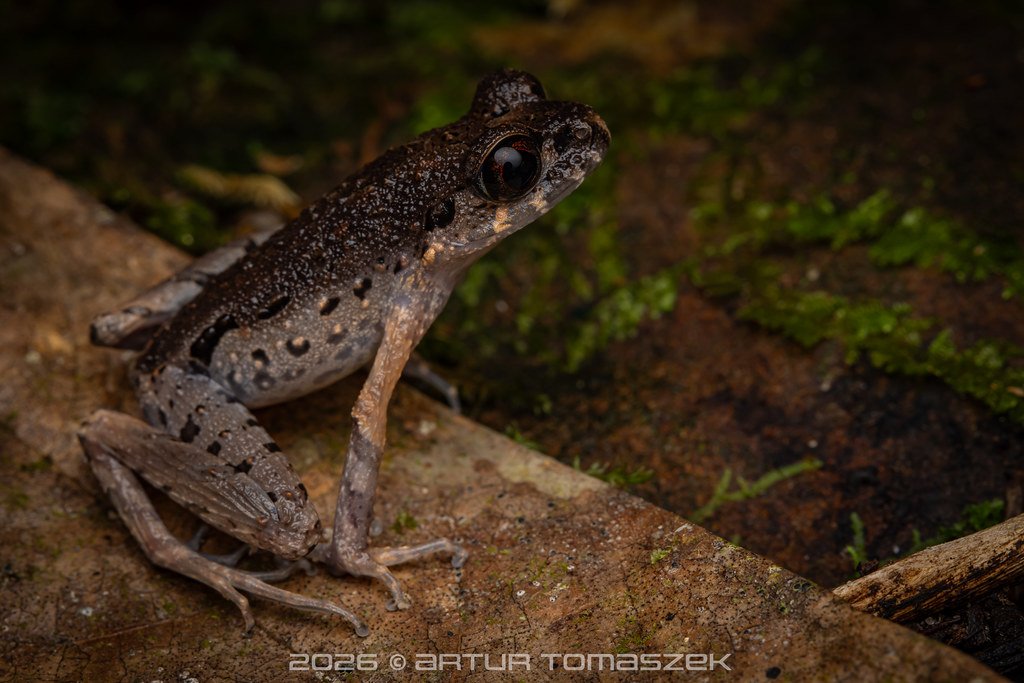
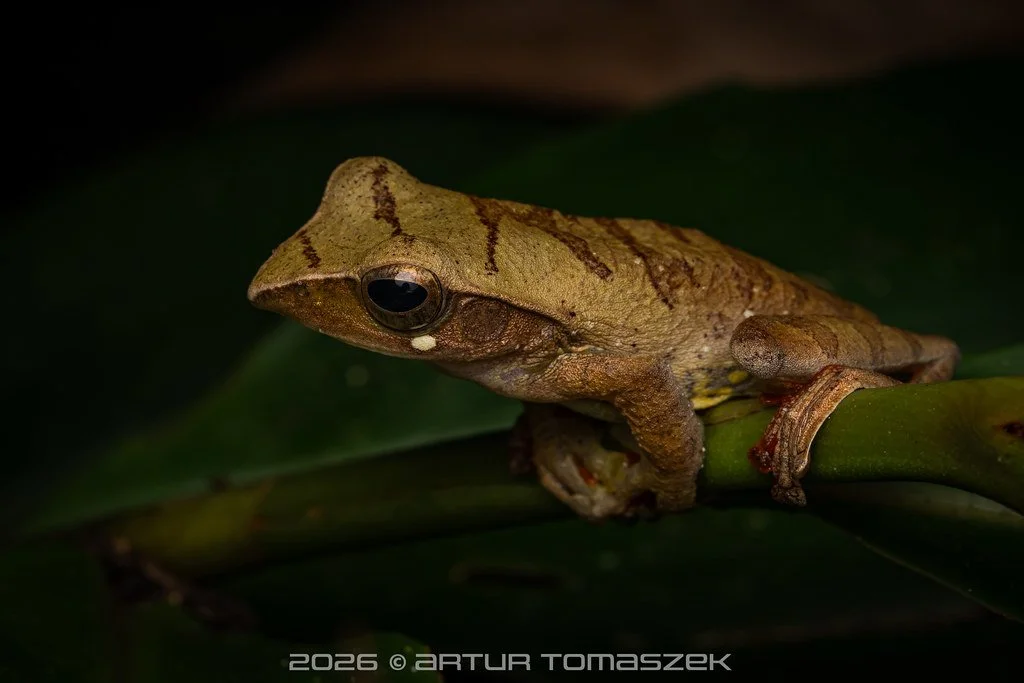
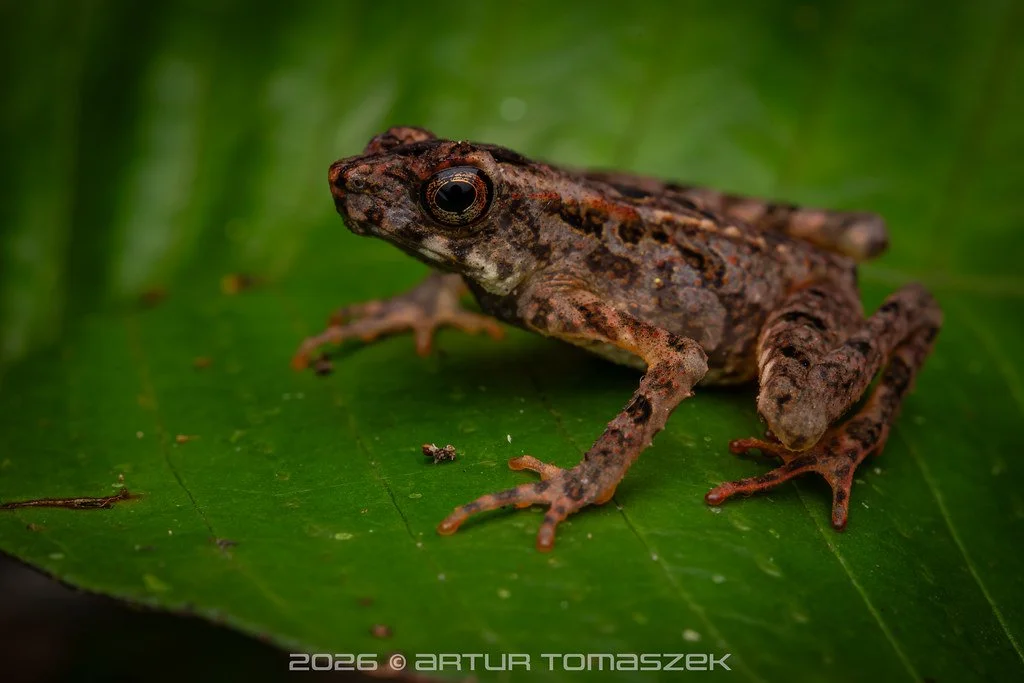
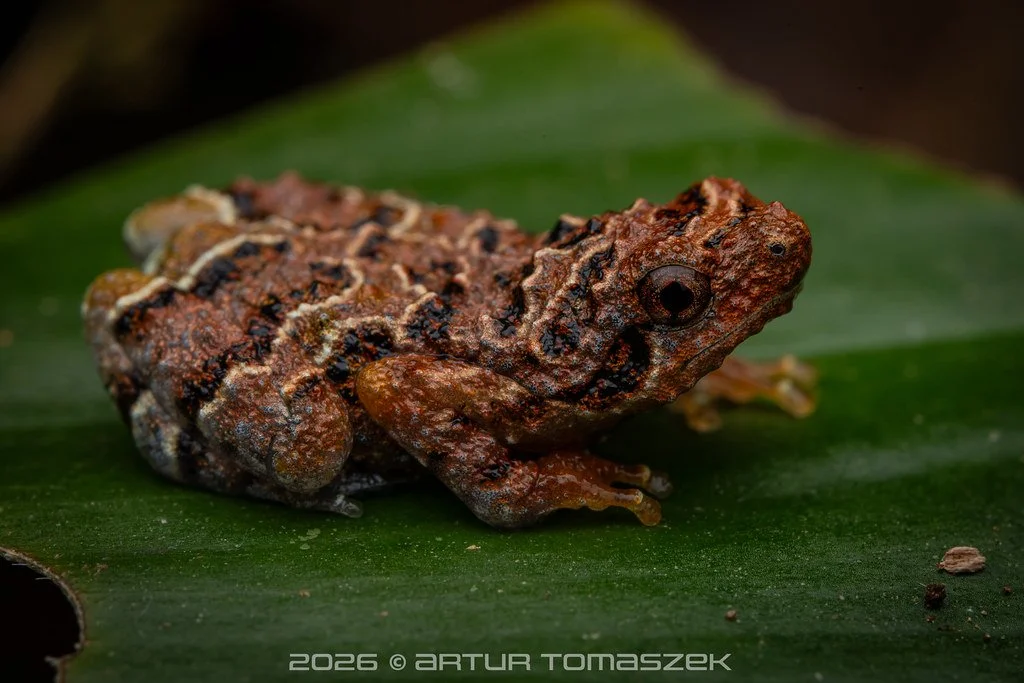
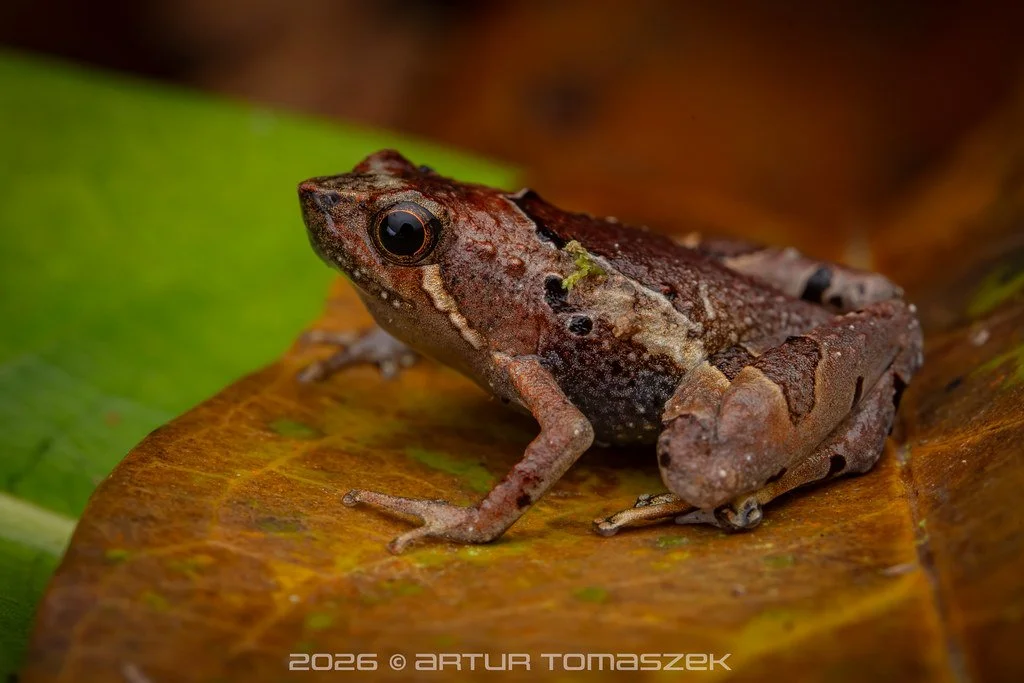
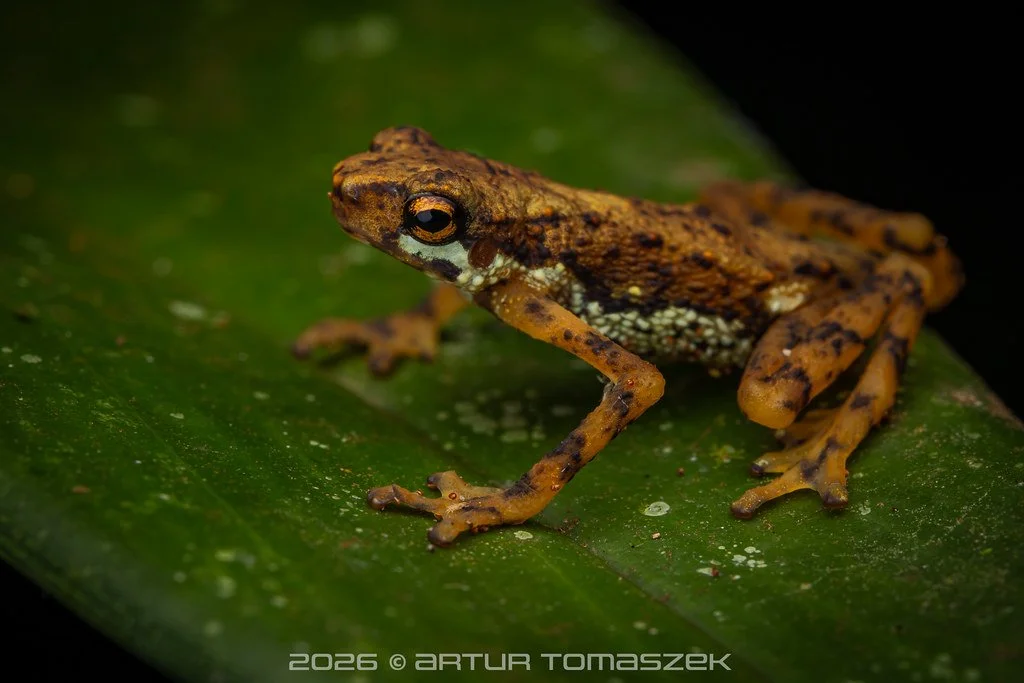
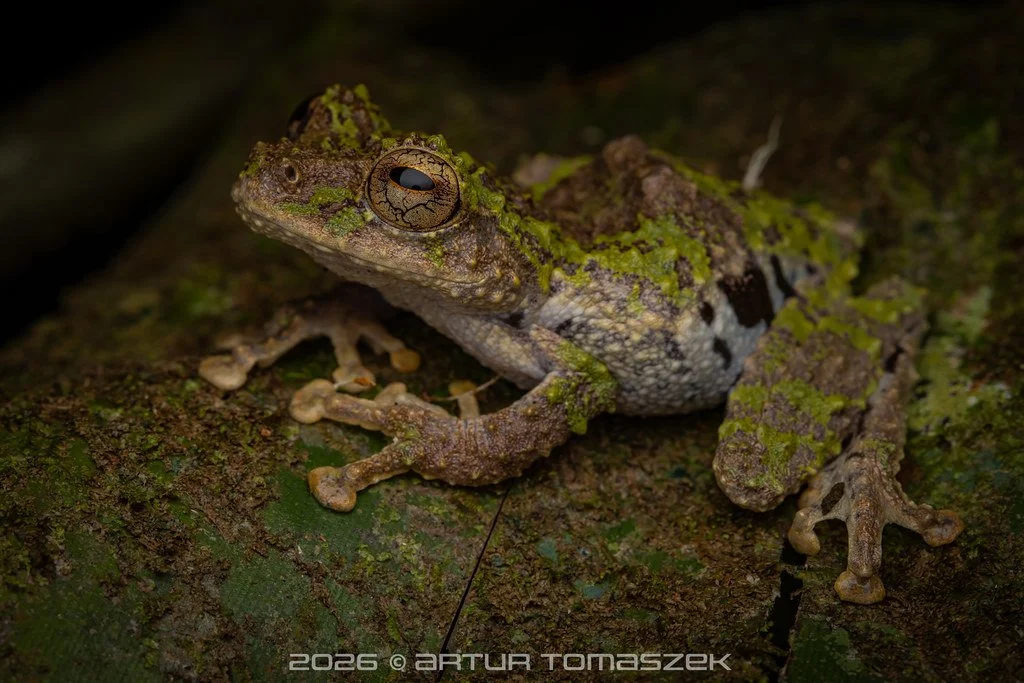
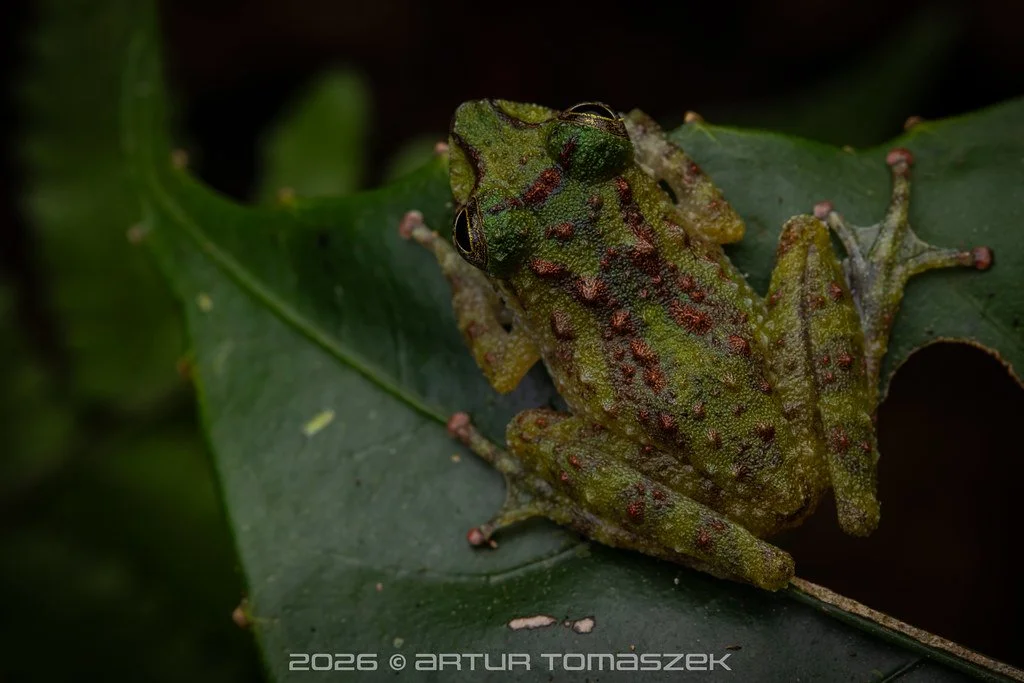
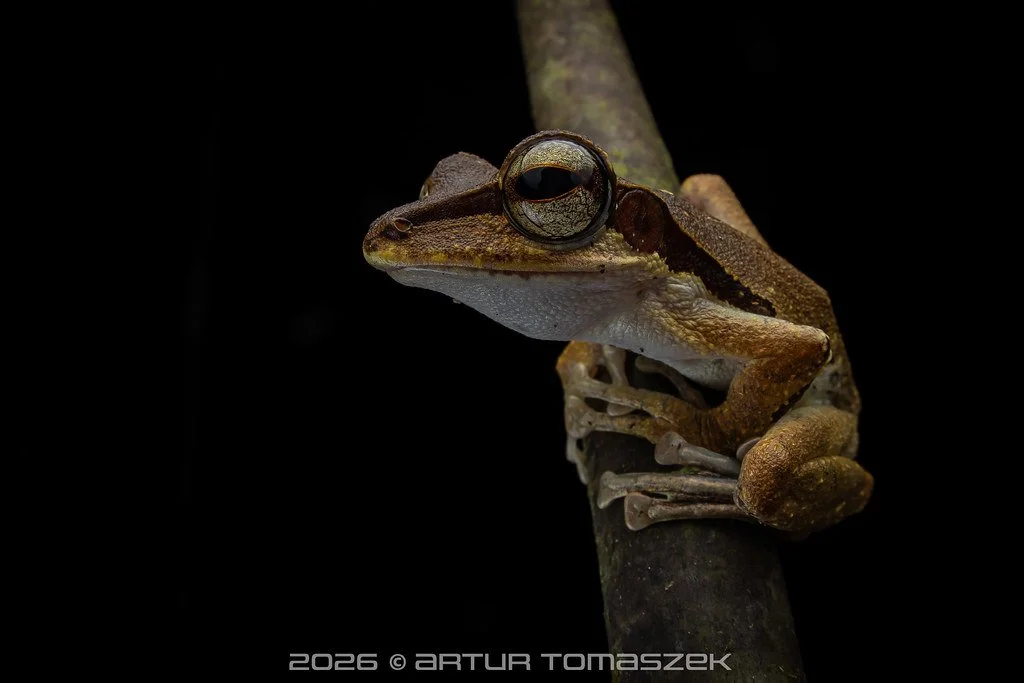
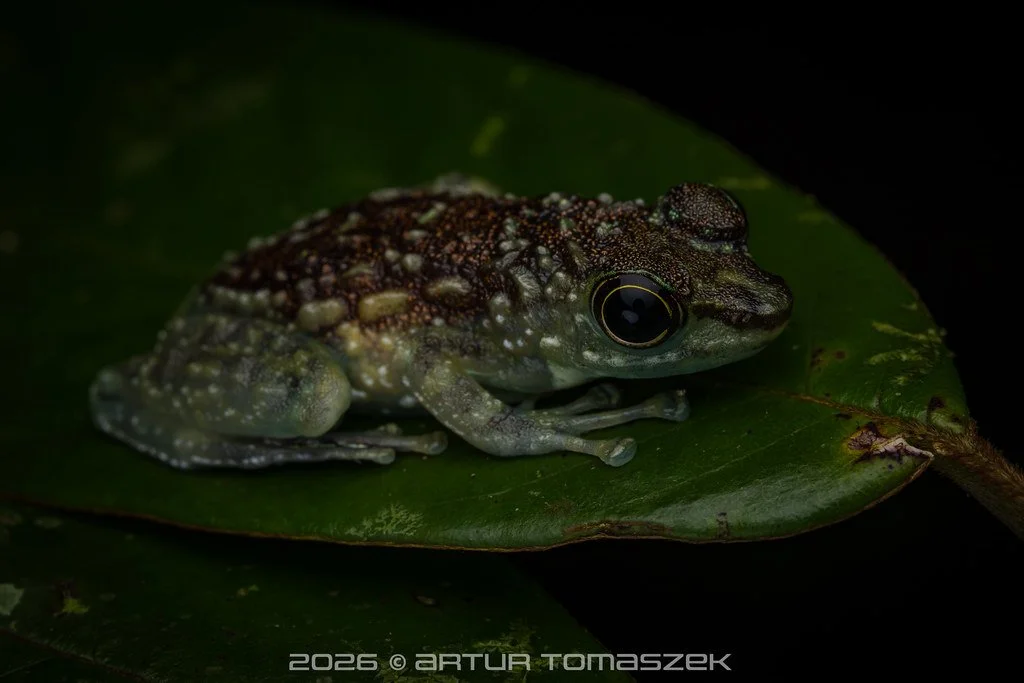
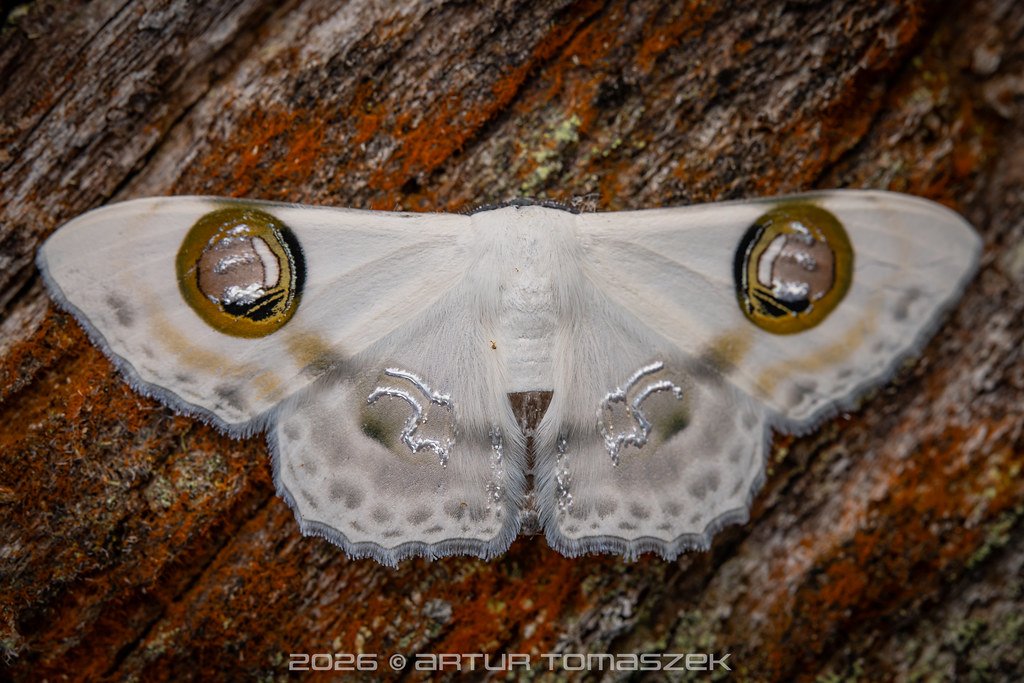
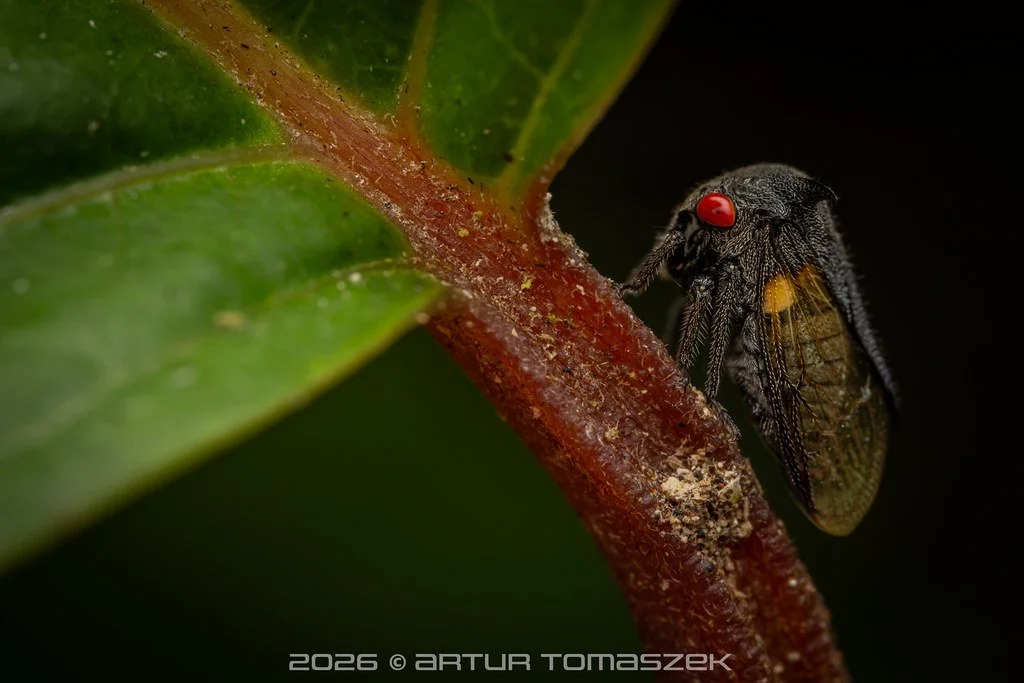
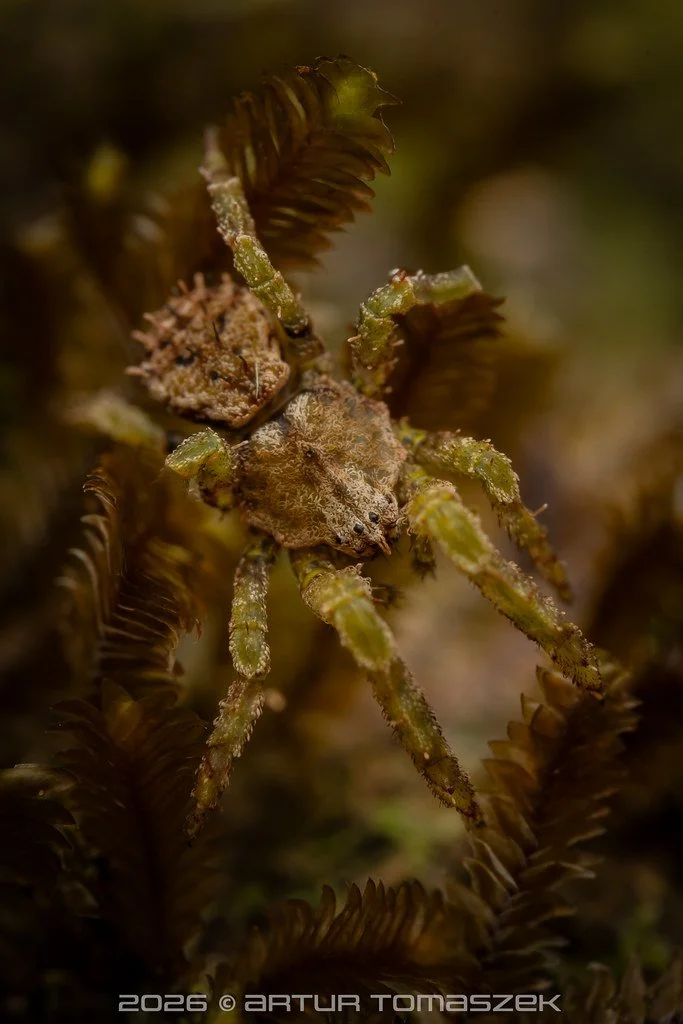
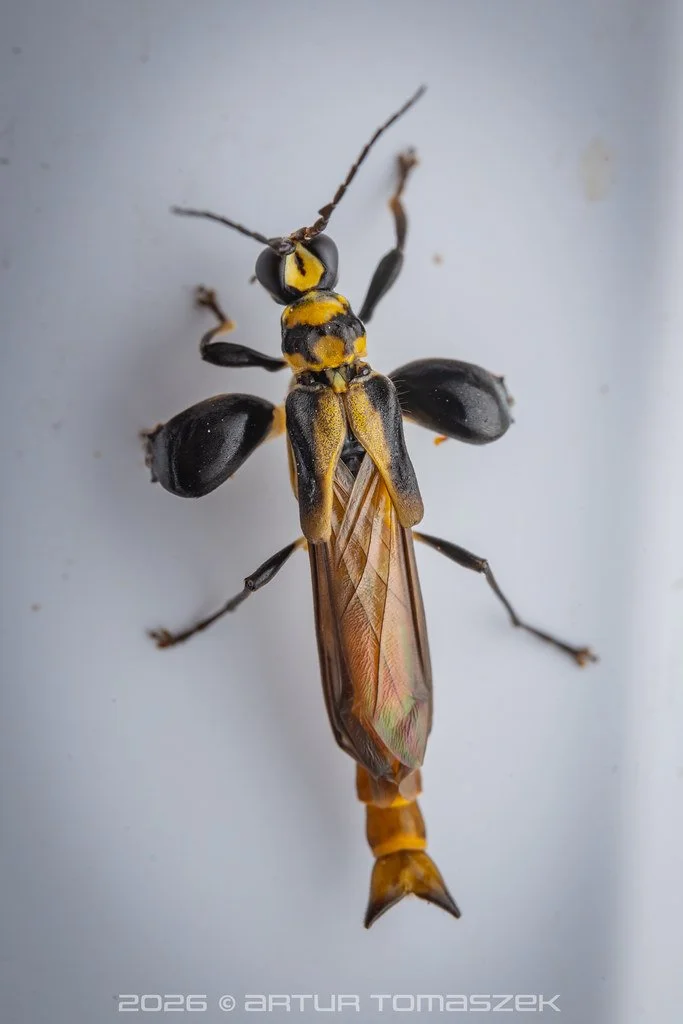
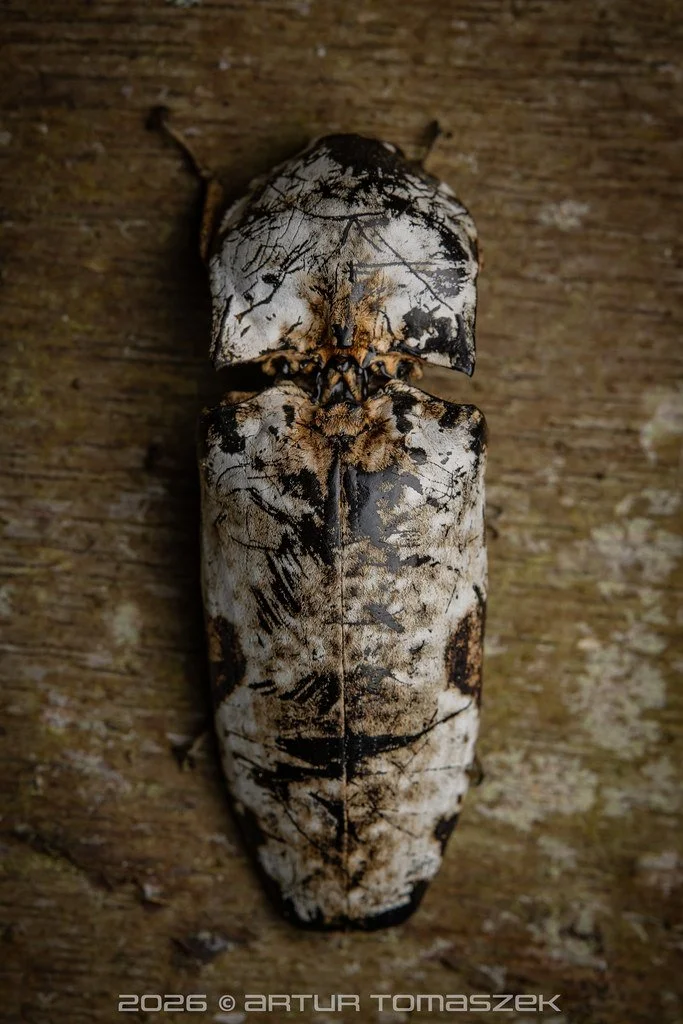
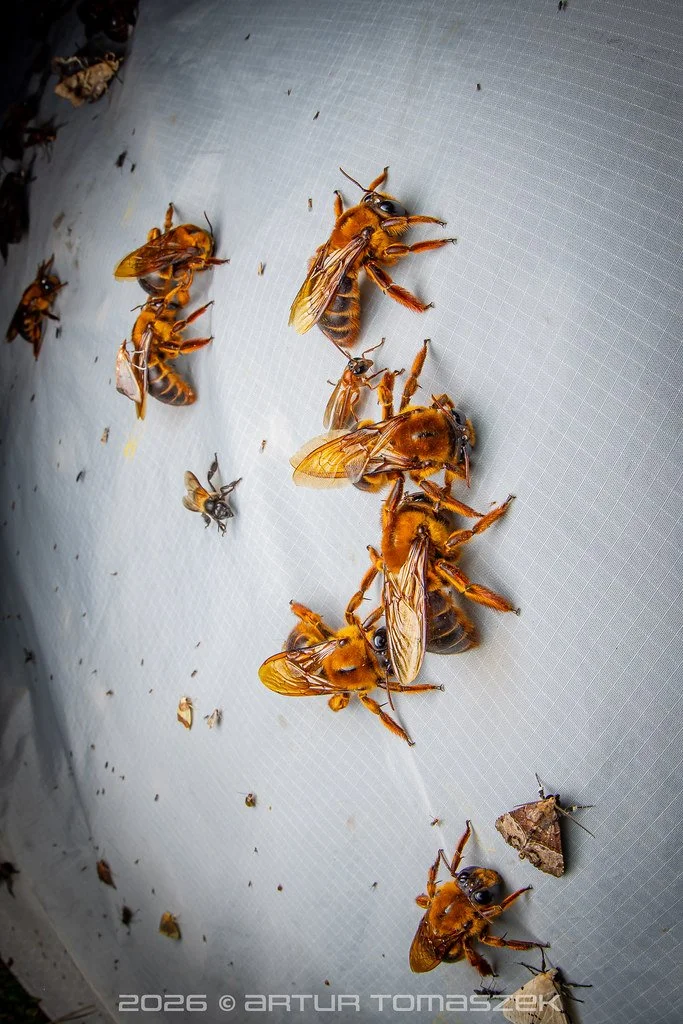
The conditions were painfully dry, yet the highlands still produced an impressive variety of frogs. Artur also ran his moth trap, which attracted some more and less excellent invertebrates. Among the not-so-excellent ones were “night wasps”, one of which landed on Karolina’s thigh and painfully stung her without even being touched. At first there was just pain, which turned into itching and what is known as a large local reaction the next morning. The redness and itching kept spreading until it took over most of Karolina’s thigh. It looked scary, but other than itching, swelling and redness there were no systemic symptoms whatsoever, so oral antihistamines, creams and ice packs were Karolina’s chosen course of treatment. It took over 2 weeks to heal and all is fine now.
Anyway, back to the main thread. Come to think of it, if the diversity on the moth trap and in the forest in general was this good during such poor weather, it’s not difficult to imagine how crazy it might be on a properly wet night.
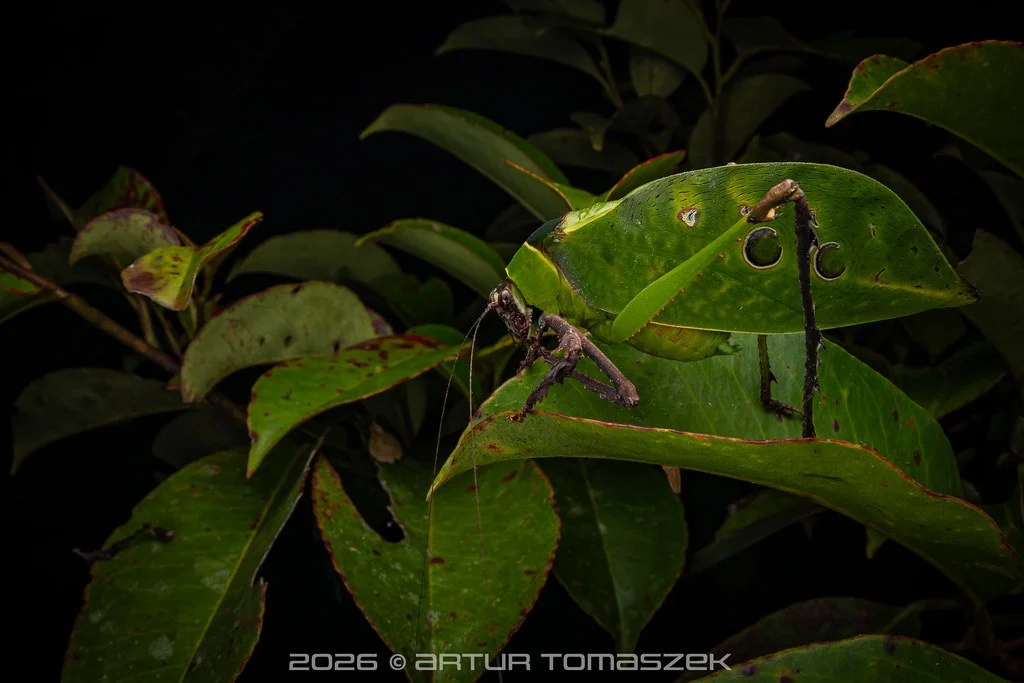
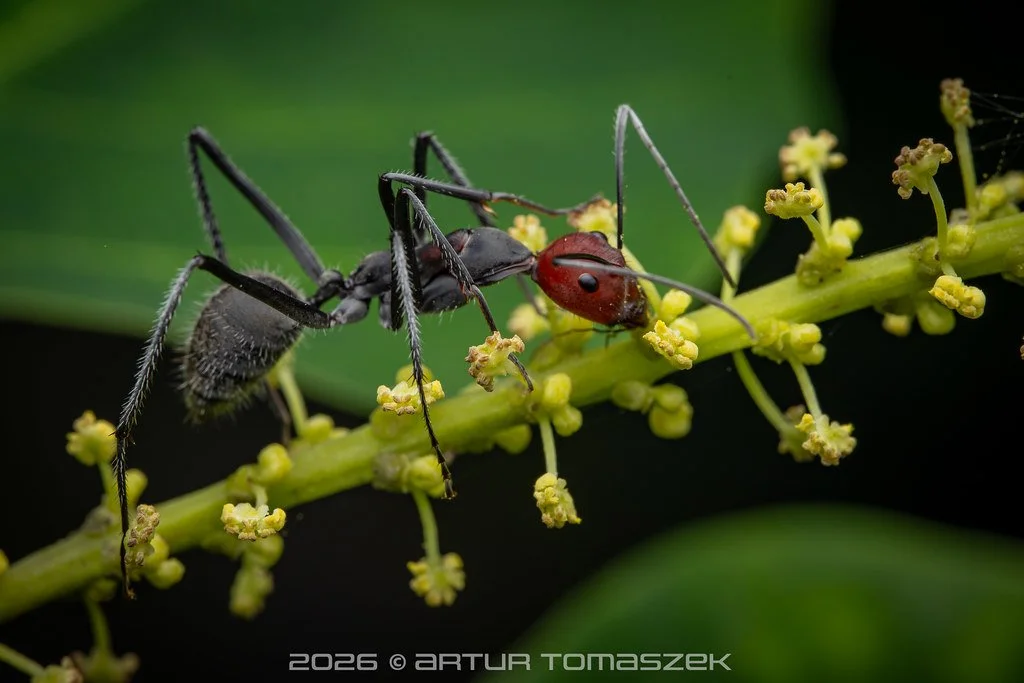
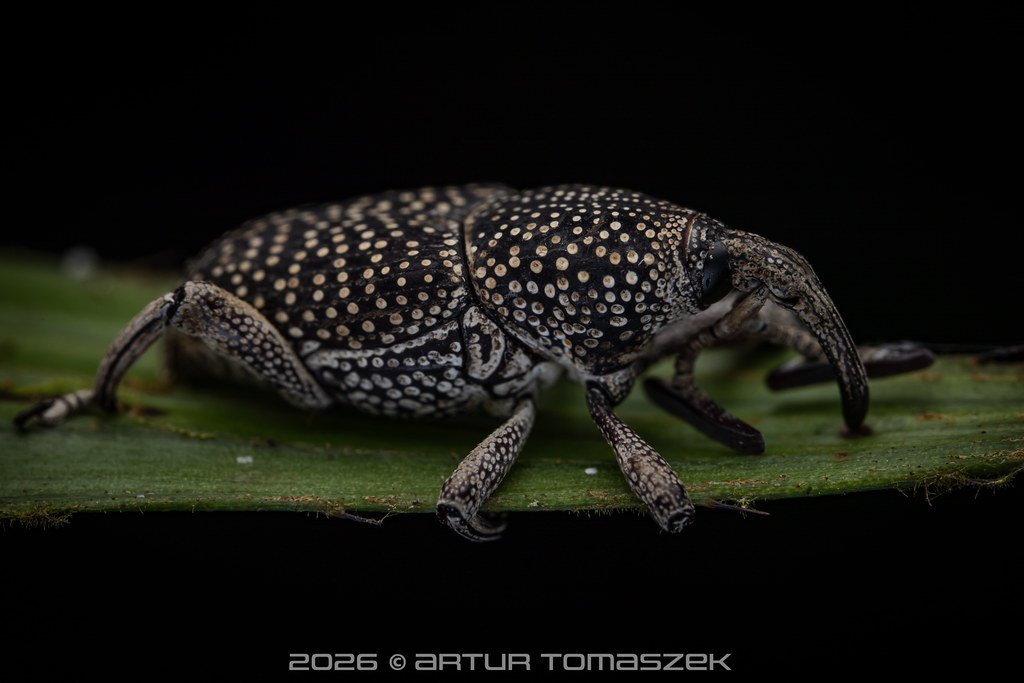
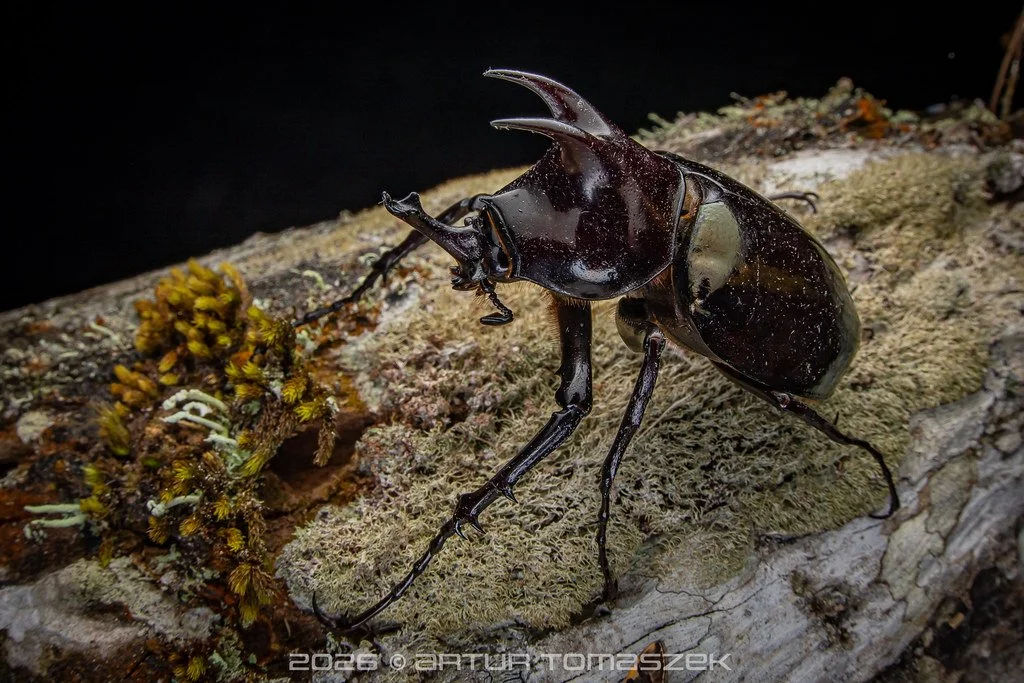
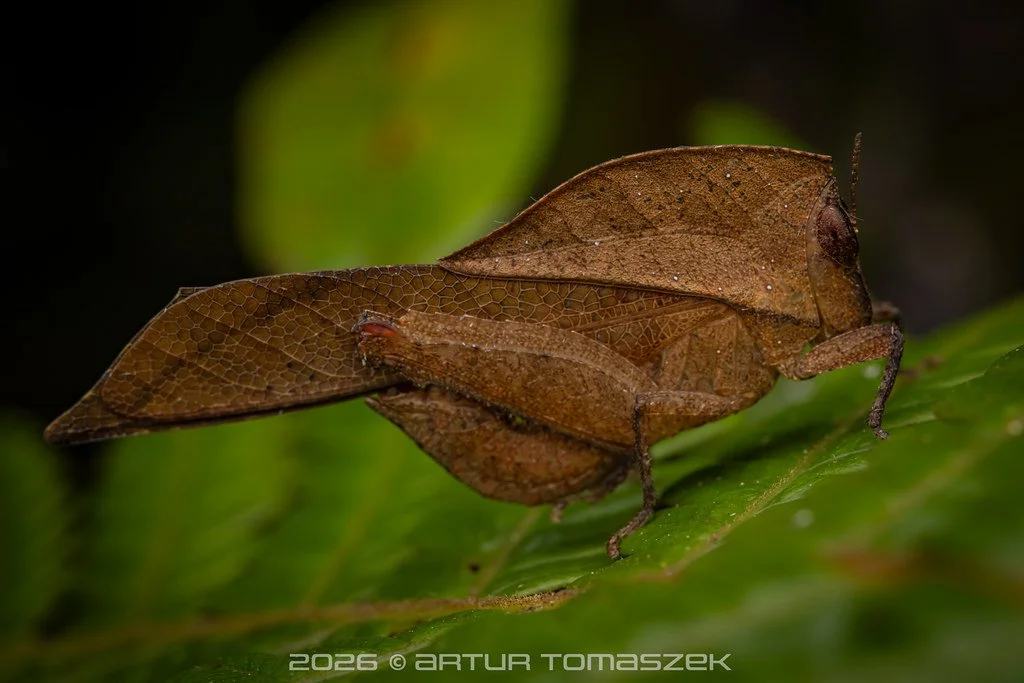
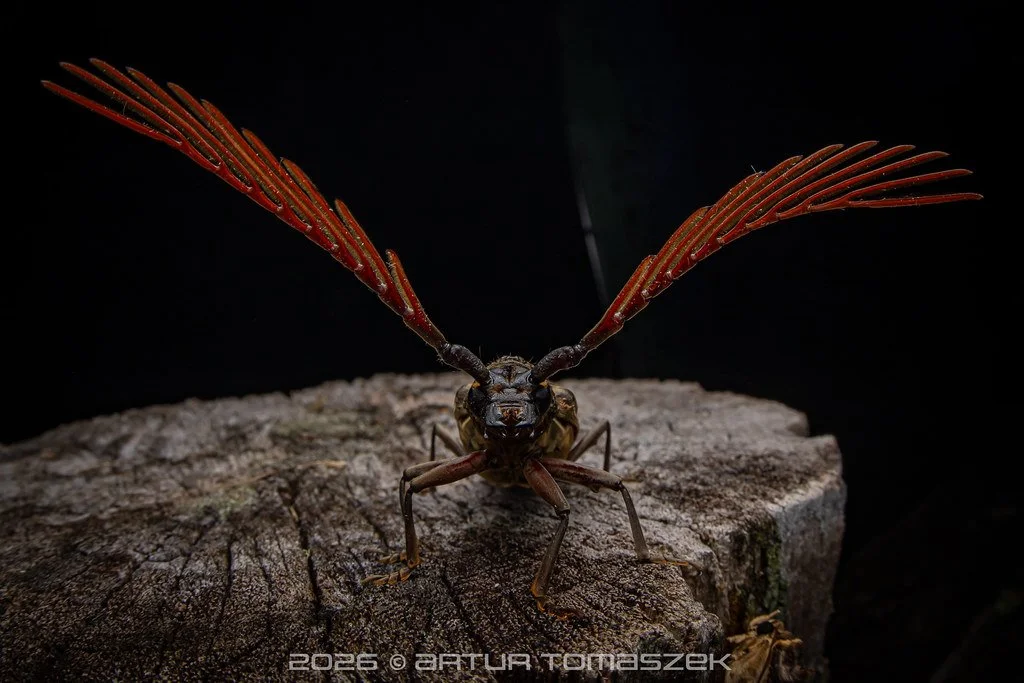
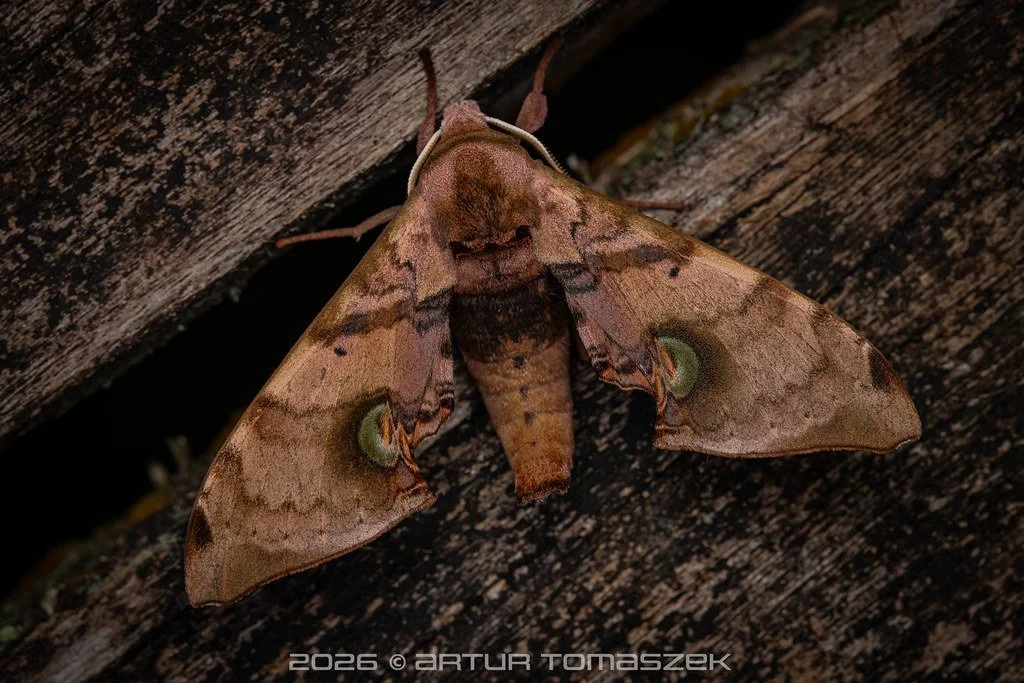
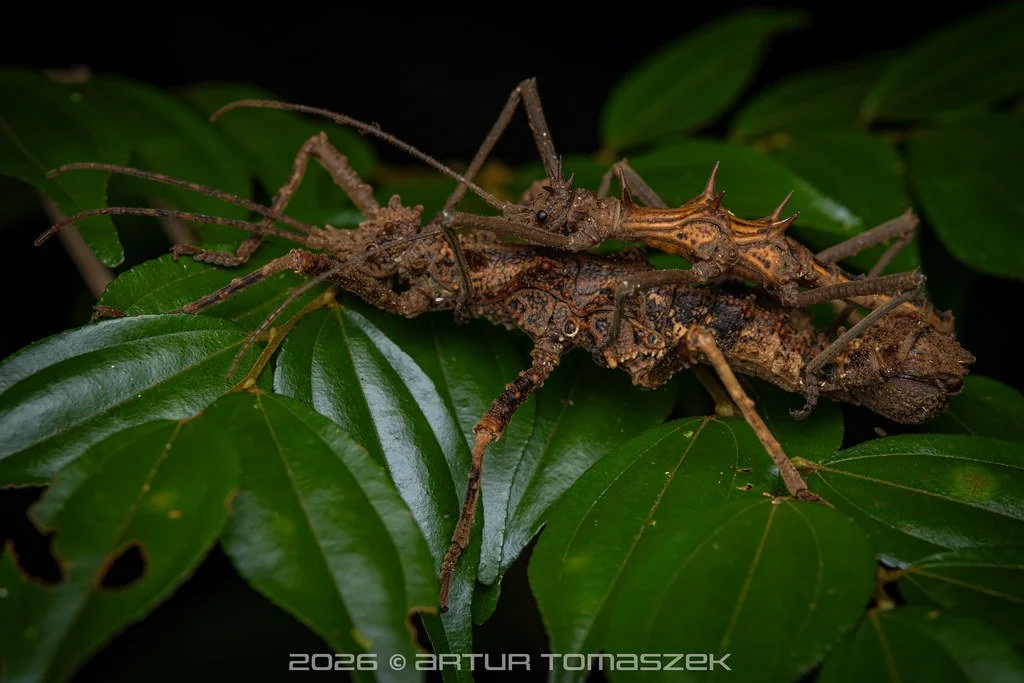
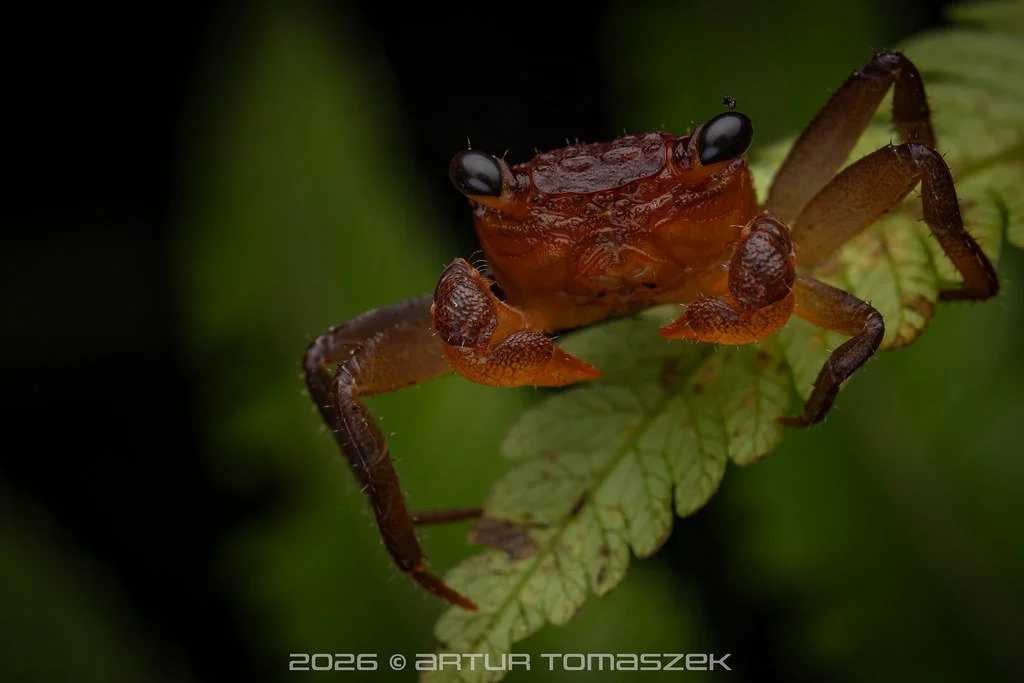
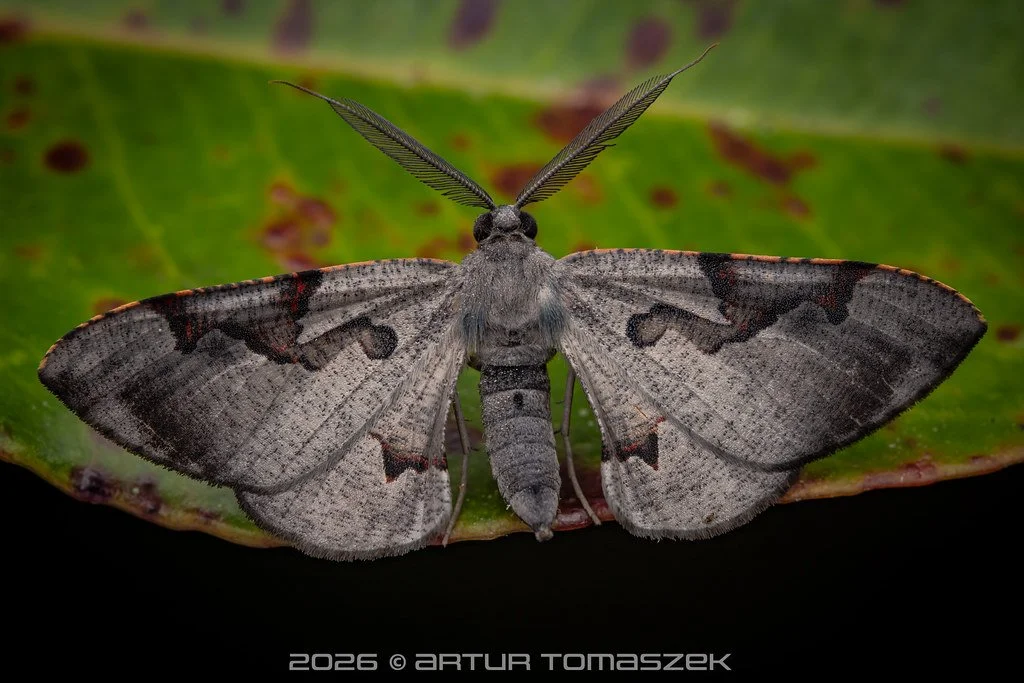
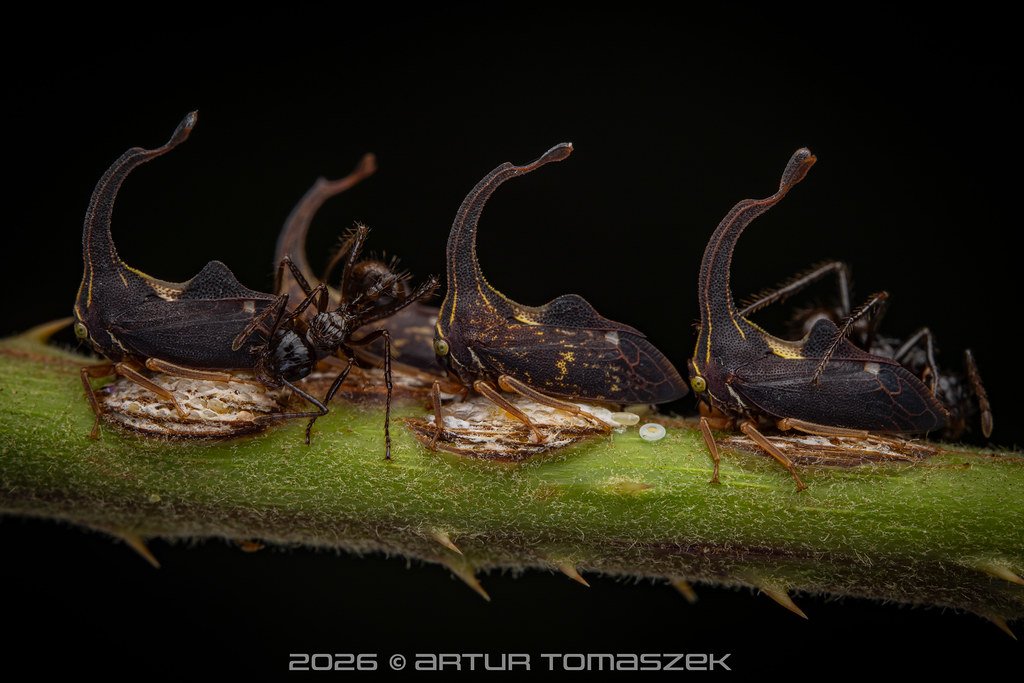
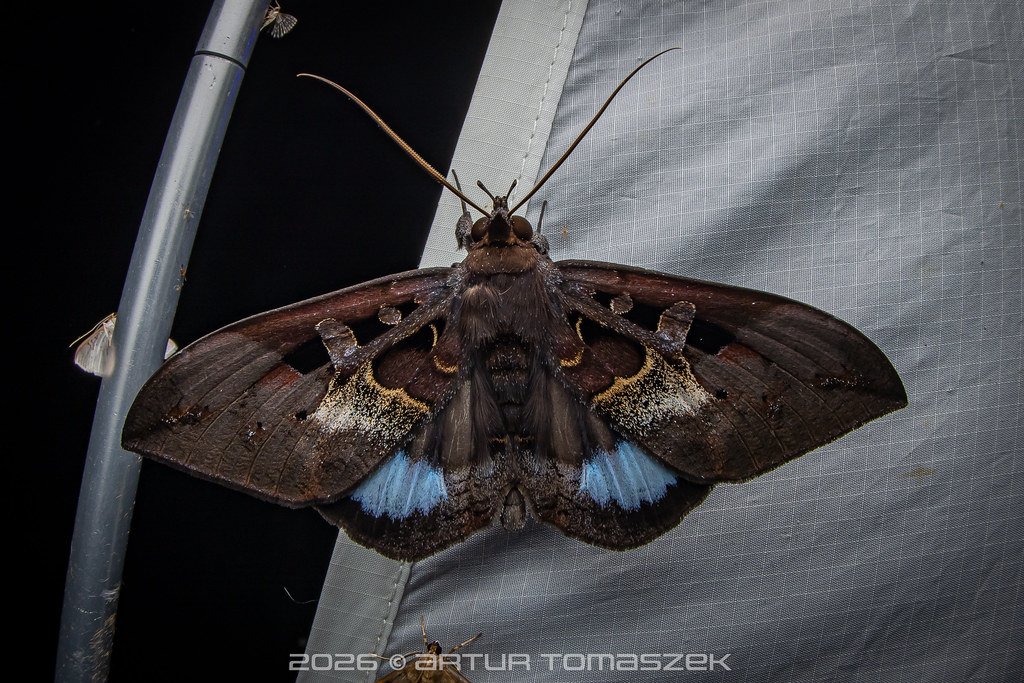
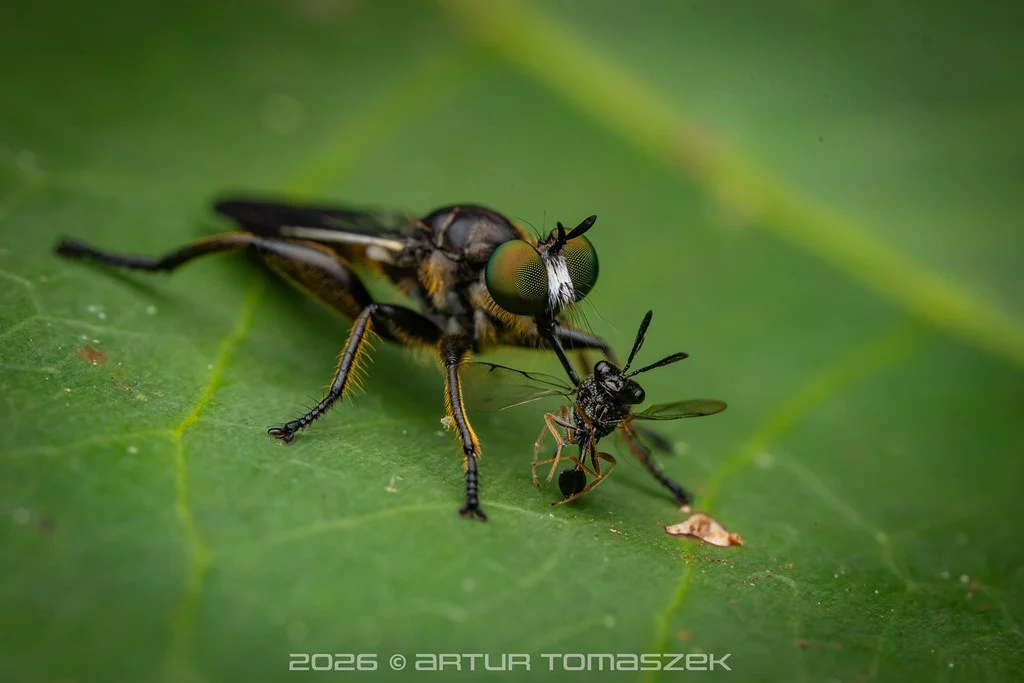
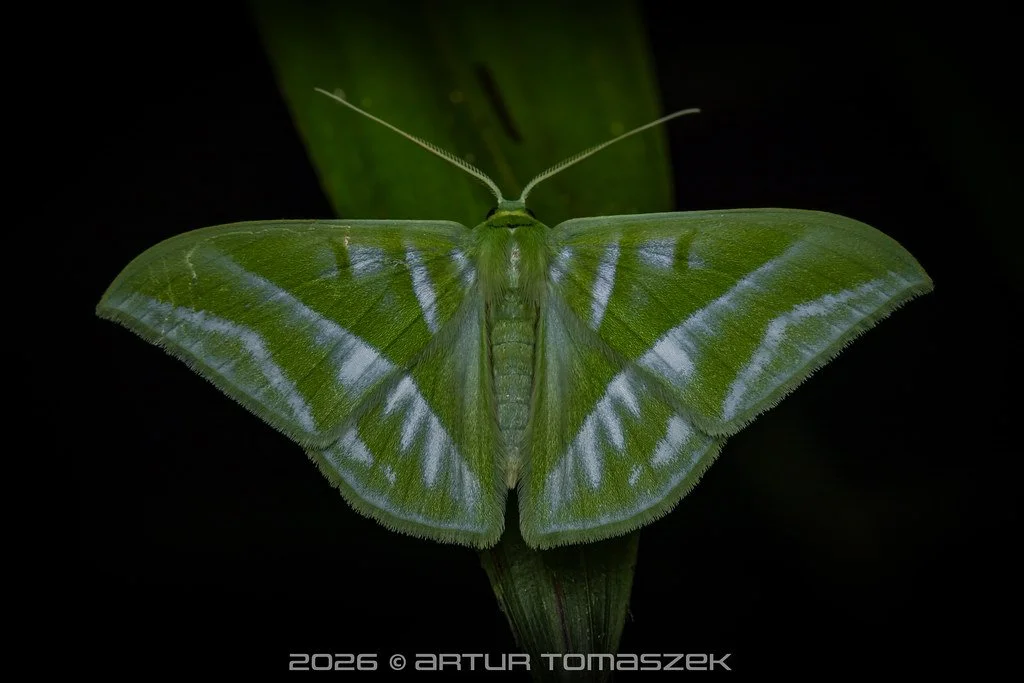
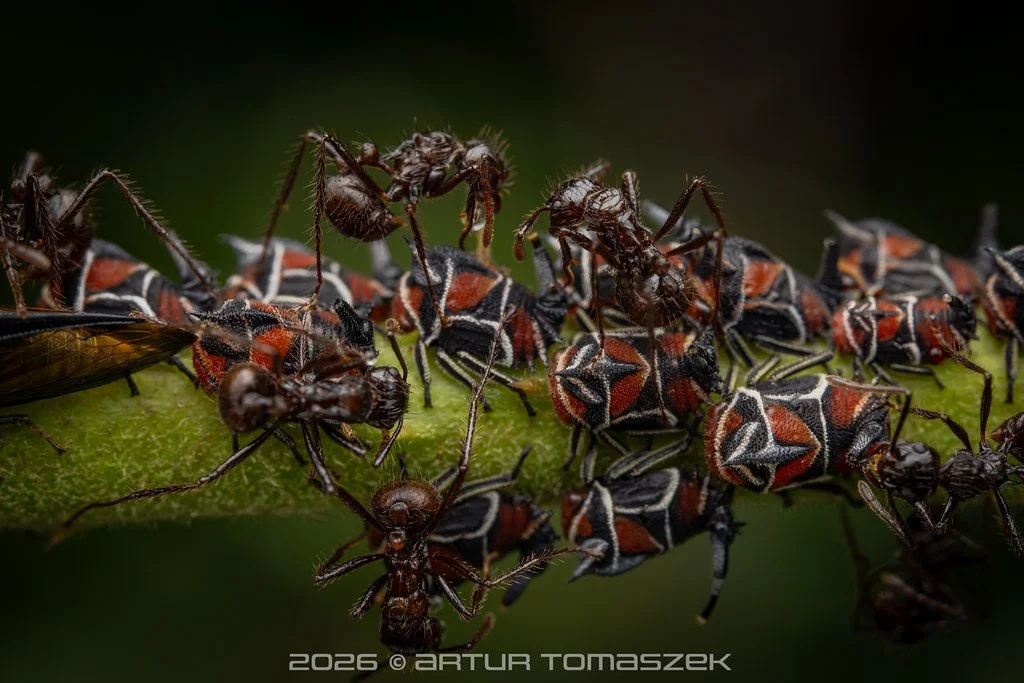
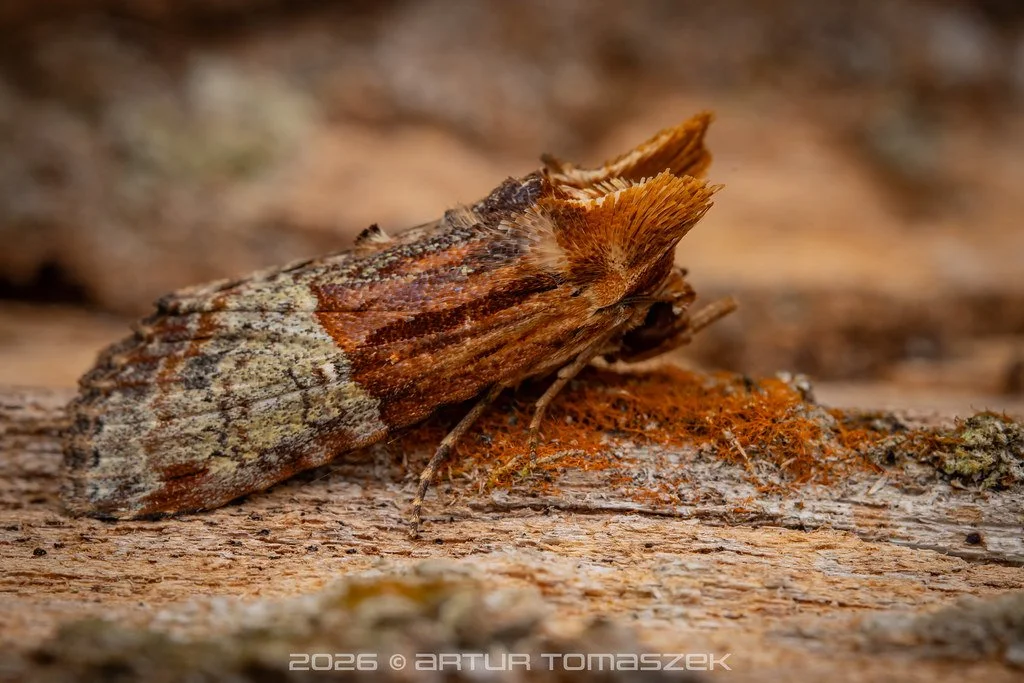
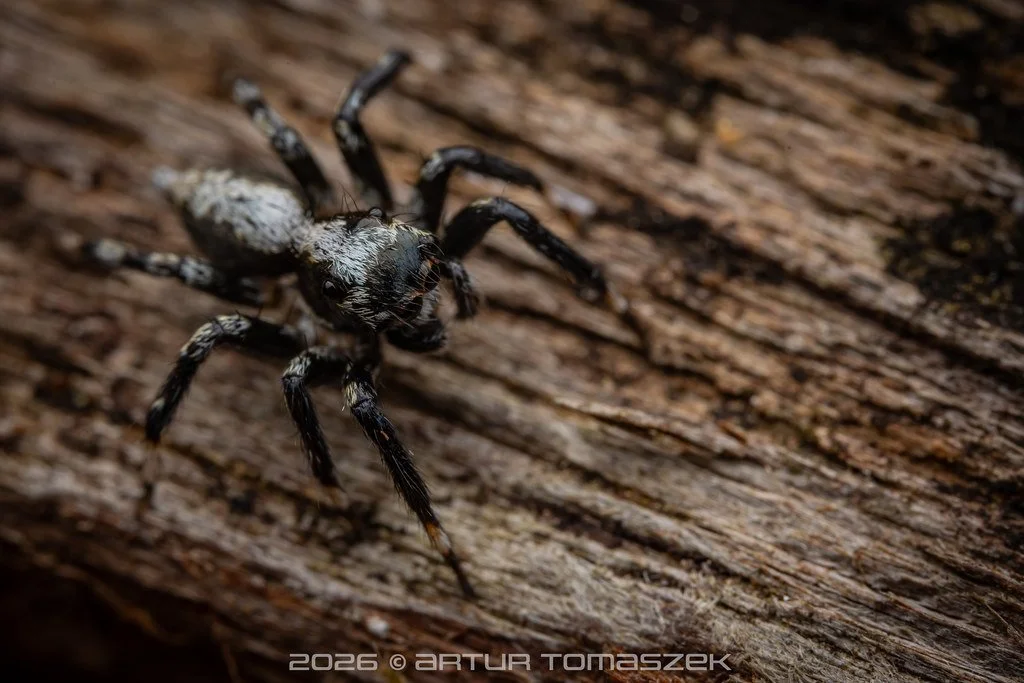
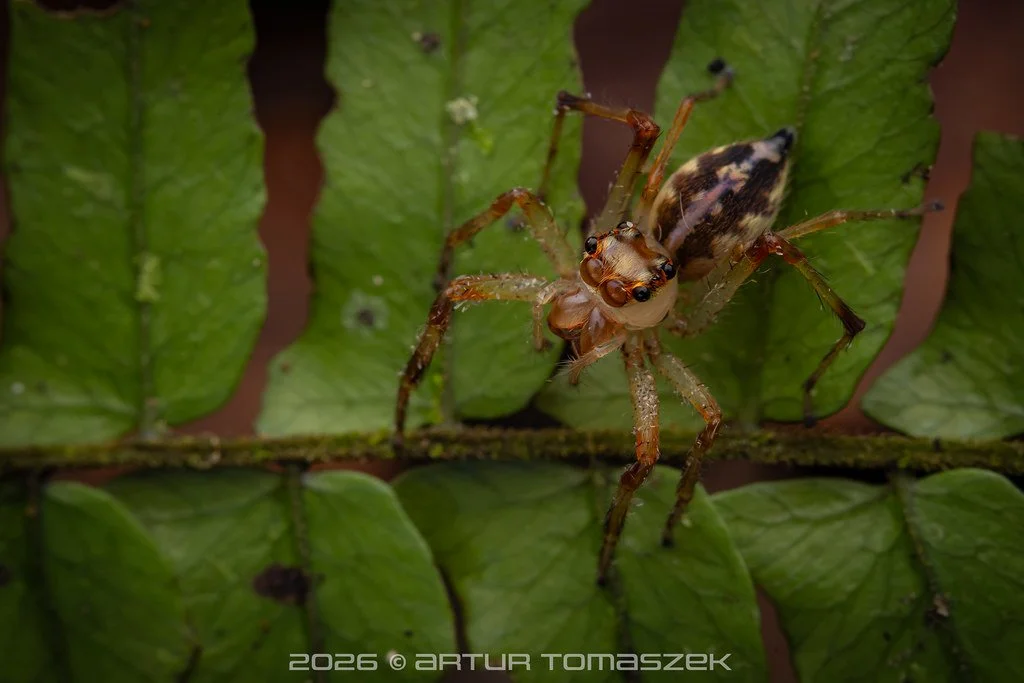
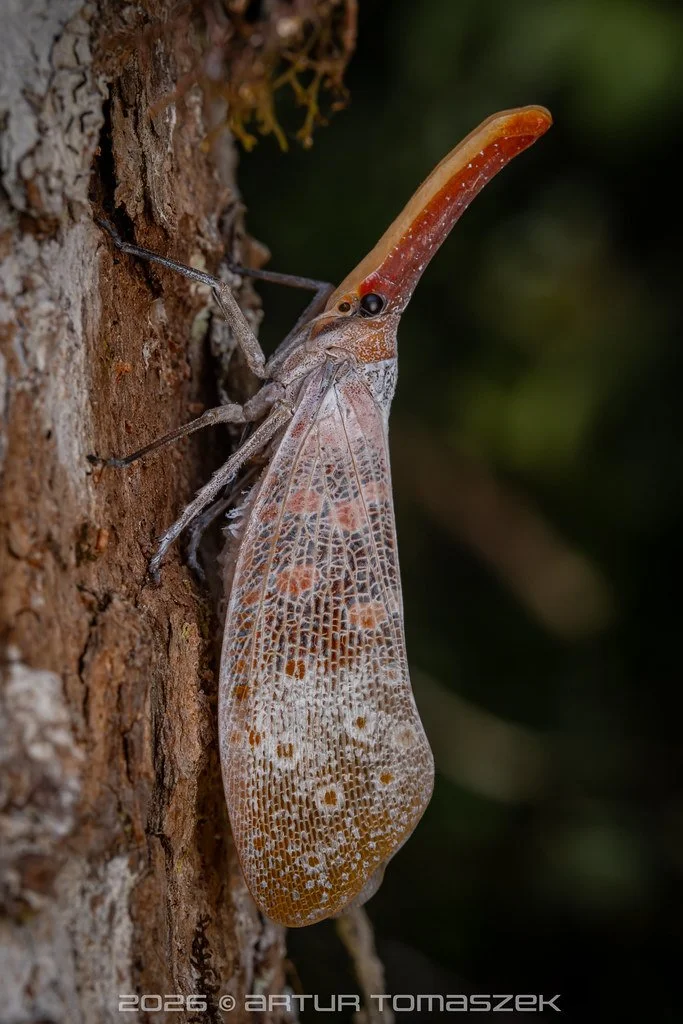
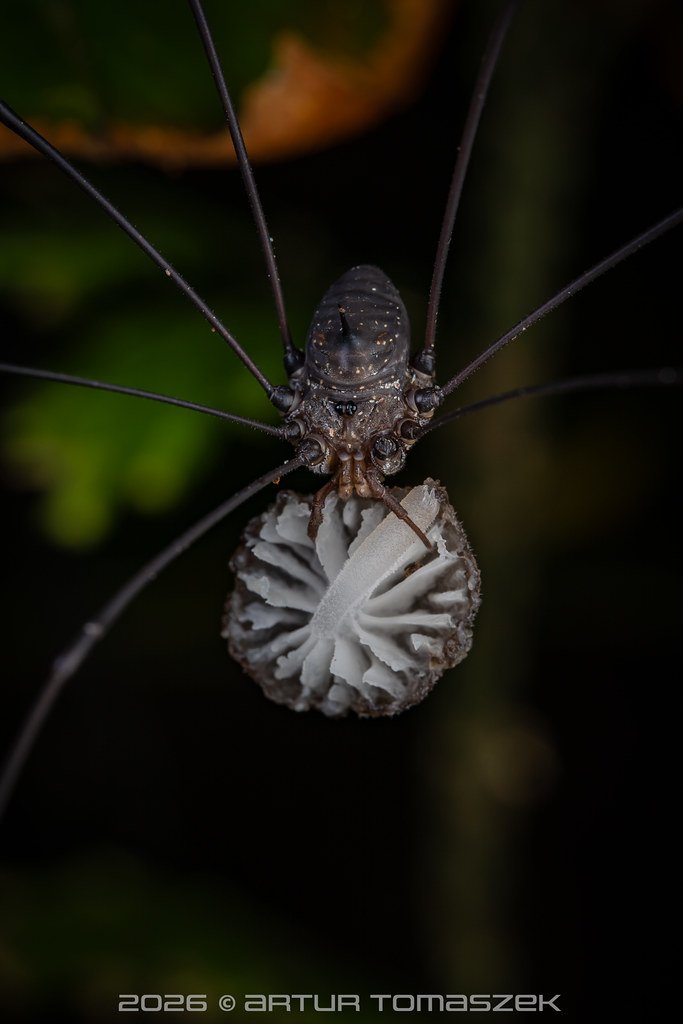
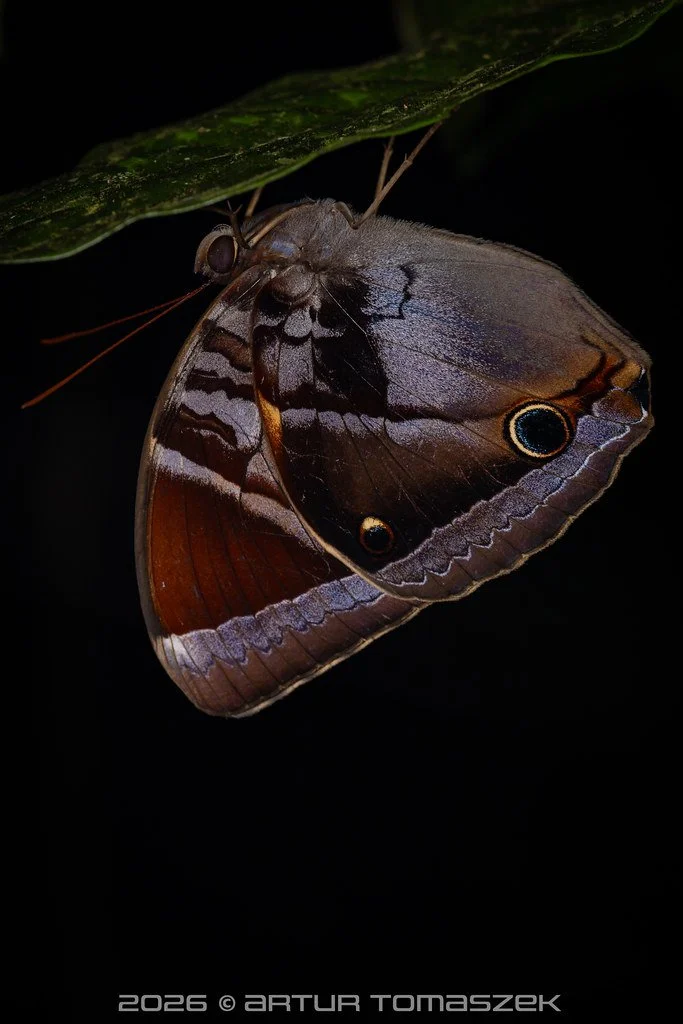
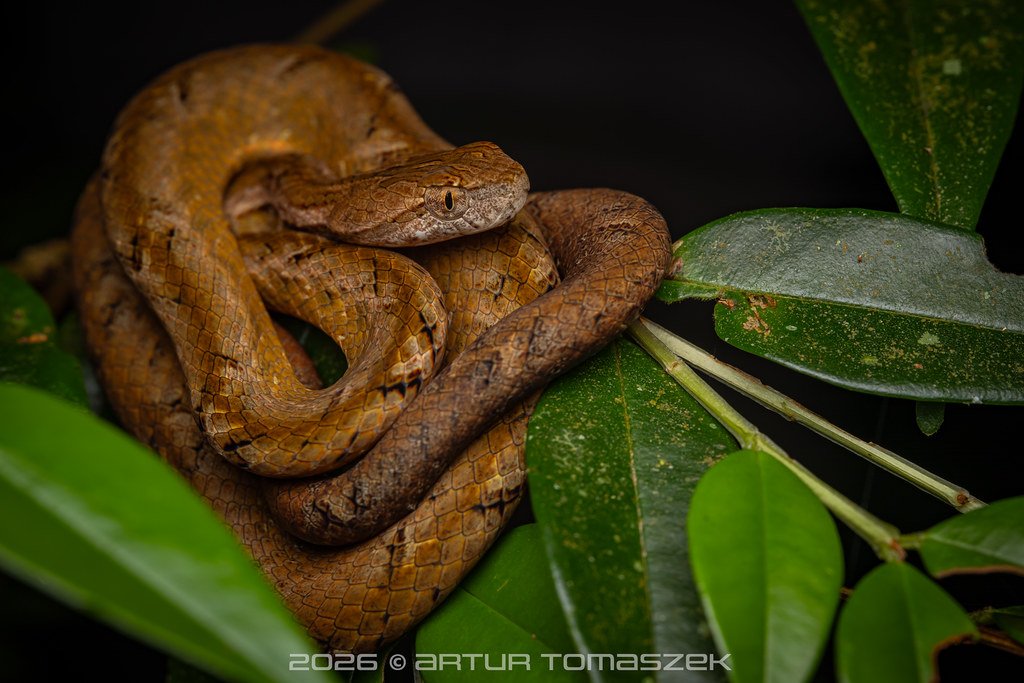
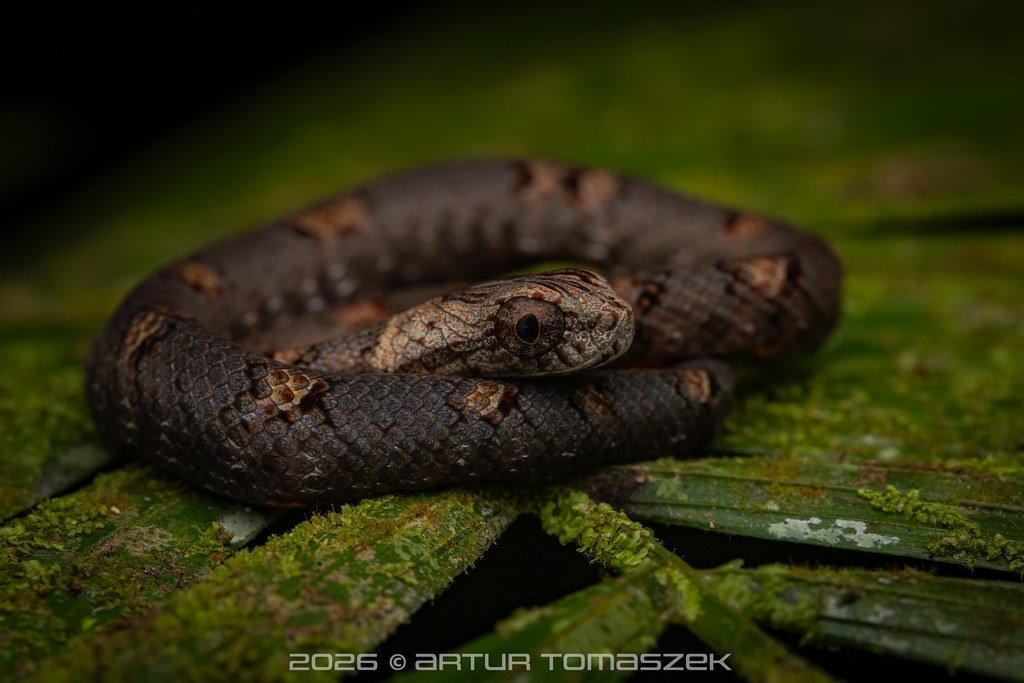
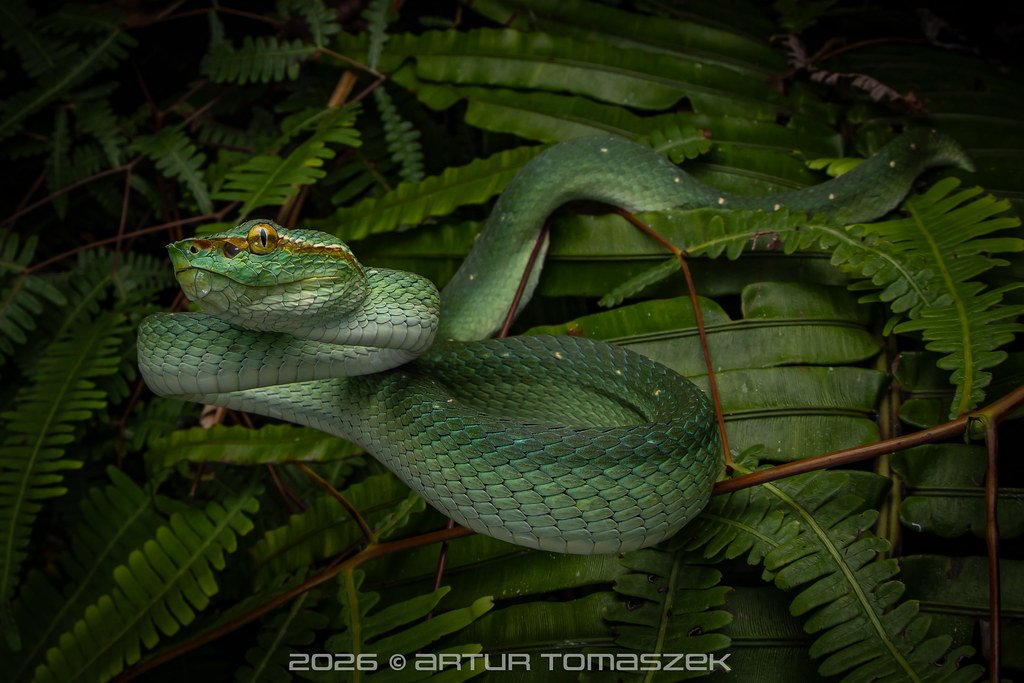
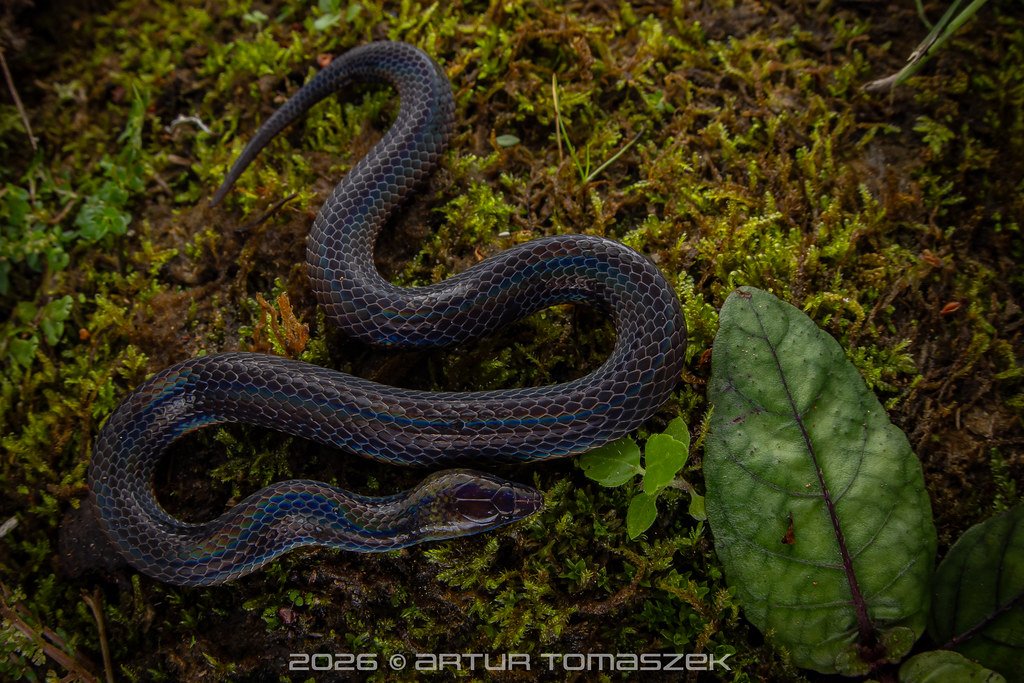
Snake activity was less exciting though. Psammodynastes pulverulentus and Tropidolaemus subannulatus were relatively common, and Calamaria bicolor and Pseudorabdion collaris added some variety. Beyond those, we did not find very much.
Sadly, the smoke from fires across the border in Kalimantan hung in the air, making the already hot and dry conditions even less pleasant. The combination of haze, silent forest and low animal activity followed the same pattern we had experienced throughout most of Indonesia.
The 2026 fire season in Indonesia has been exacerbated by a very strong El Niño. The fires have burnt large areas of Sumatra and Kalimantan, while smoke and haze have affected Malaysia, Singapore and the Philippines. The deeply disappointing and upsetting fact is that most of these fires have nothing to do with nature, but that’s a topic for another discussion.
Anyway, Borneo Highlands clearly have enormous potential, it’s just that our arrival coincided with the lack of rain and the beginning of El Niño, which made the land clearing fires worse. There were still plenty of frogs, lizards and invertebrates to photograph, and sightings of more Aeluroscalabotes felinus in the end strengthened Artur’s increasingly serious belief that this might be his favourite gecko ever.
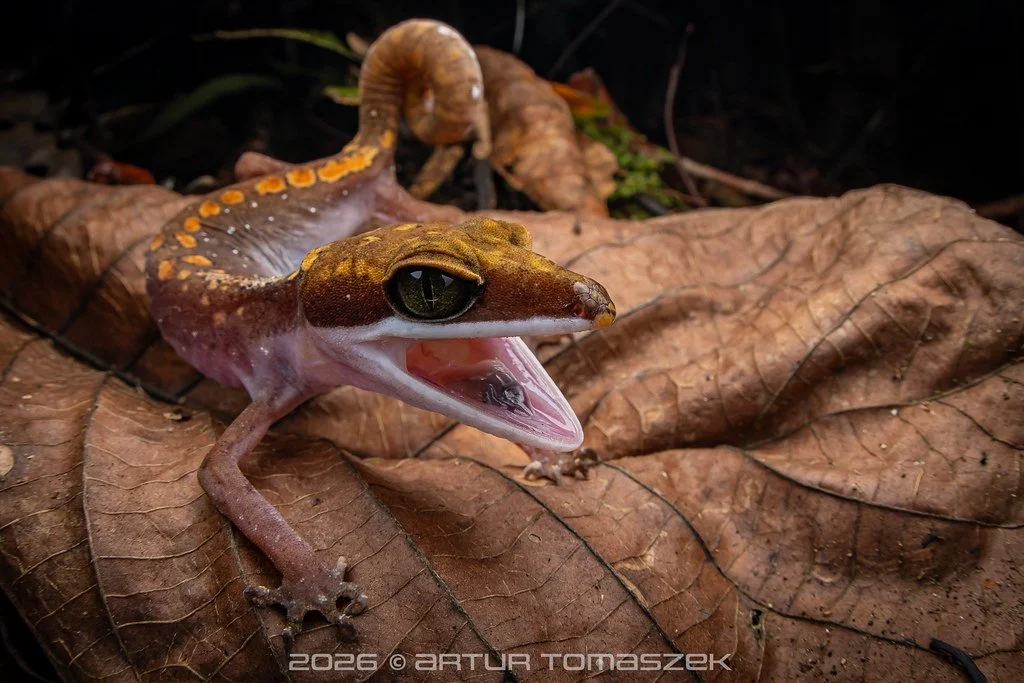
Aeluroscalabotes felinus
We may have missed Ansonia latidisca, but that only settled one thing: we have to return. Preferably in wet weather, with the streams full, the moth trap busy and one small rainbow-coloured toad hopefully waiting somewhere for us.
And that was the end of our herping in Malaysia. Next, we left Borneo behind and flew to Thailand for our friend’s wedding. For once, the next stop was not supposed to be about herping…