Indonesia (Jul 2026)
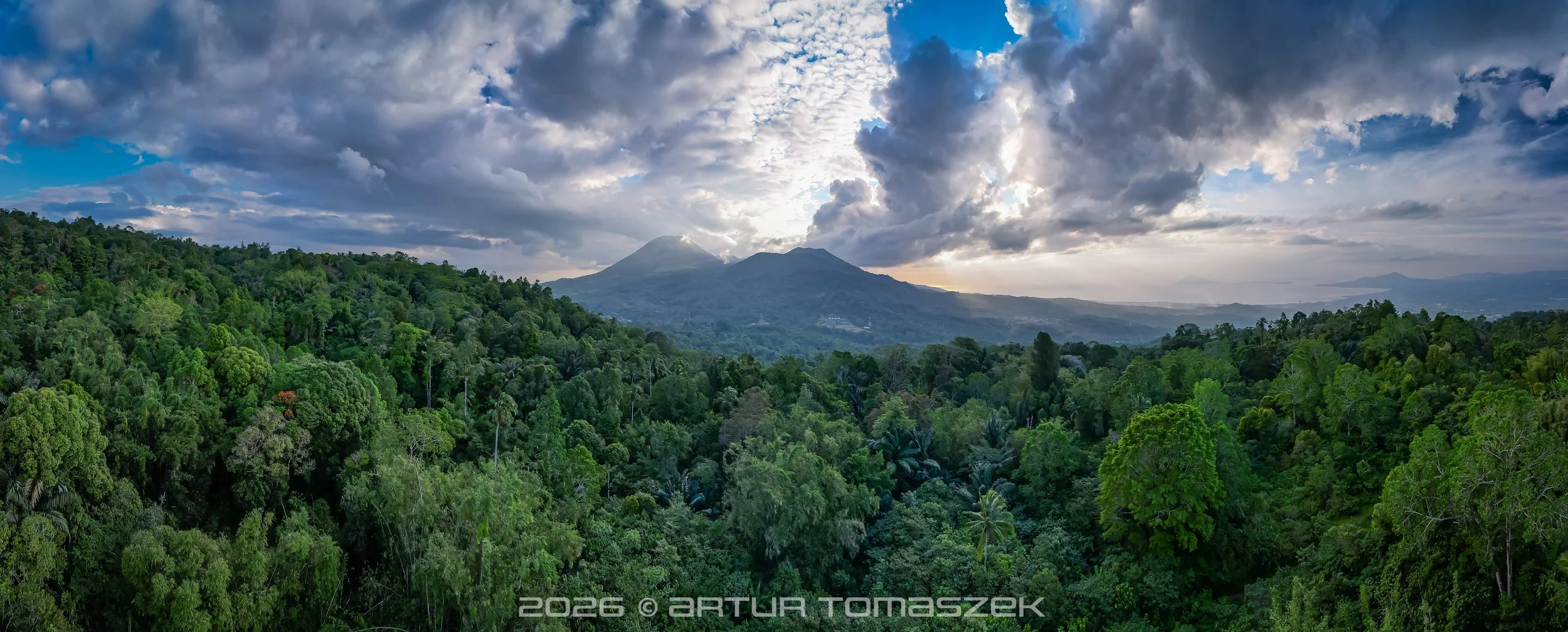
North Sulawesi
Indonesia. The world’s largest archipelago, made up of more than 17,000 islands stretching along the equator between the Indian and Pacific oceans. Its complicated geography is one of the main reasons its wildlife is so extraordinary. Java, Sumatra and Borneo belong to Sundaland and were once connected to continental Asia, while Sulawesi and the Lesser Sundas sit beyond the Wallace Line. The result is an incredible mixture of isolated island populations and species found nowhere else on Earth.
From tropical rainforests and cool montane streams to seasonally dry forest, open savannahs and coral seas, Indonesia holds an almost ridiculous variety of habitats. More than 1,100 species of reptiles and amphibians have been recorded, and new species are still being described. Unfortunately, this biodiversity faces equally varied threats, including habitat loss and illegal wildlife trade. During this trip, we also faced a sensitive issue within wildlife tourism, which is catching wild animals in advance and later “planting” them for visiting photographers, with or without their knowledge.
We were already familiar with small pieces of Indonesia. We had previously herped Bali, and we had visited Komodo together more than a decade ago. This time, however, the plan was much more ambitious: Java, Flores and Komodo National Park, North Sulawesi, Sumatra and finally West Kalimantan. Countless night walks, far too little rain and one animal that had been sitting at the very top of our wish list for years. Before continuing to Malaysia on our own, we spent the first part of our summer travelling across Indonesia with Jesse, Arius and then Agus, searching for everything from tiny montane frogs to some of the strangest reptiles in Asia.
The weather, of course, had other ideas. Almost everywhere we went had been dry for far too long. Streams had shrunk, forests were quiet and conditions were about as far from perfect as possible. Somehow, however, Indonesia still delivered.
Java
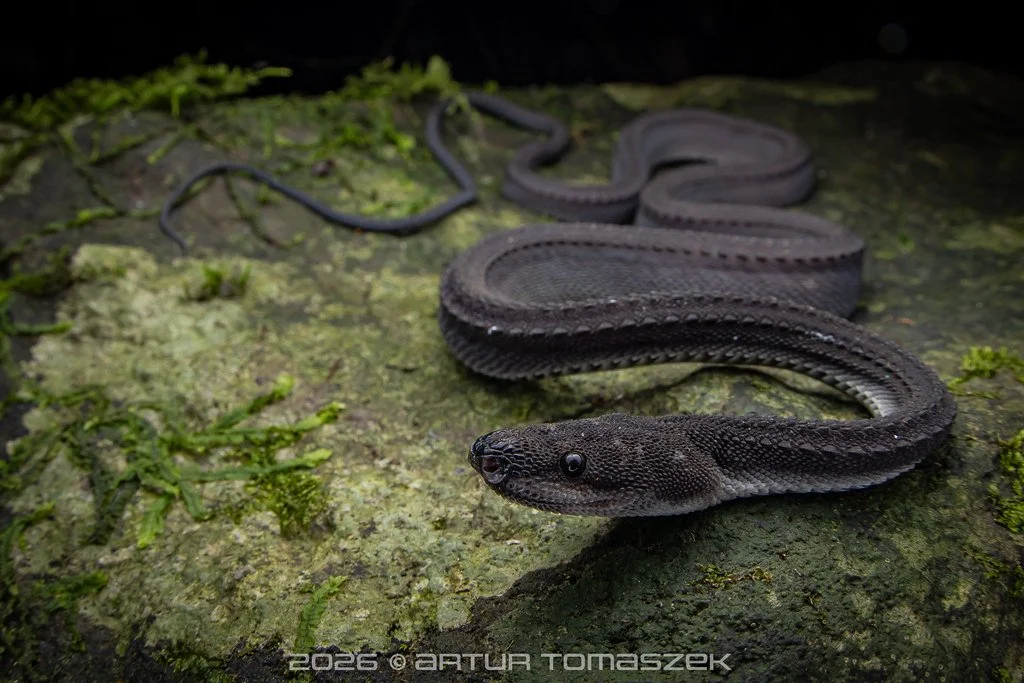
Xenodermus javanicus
We started herping on Java with two main targets, the Javan bleeding toad and the dragon snake.
Our first mission was the bleeding toad. Didi, Arius and the Lampa-Lampa team took us straight to the right habitat. Despite the prolonged dry spell, we found several individuals.
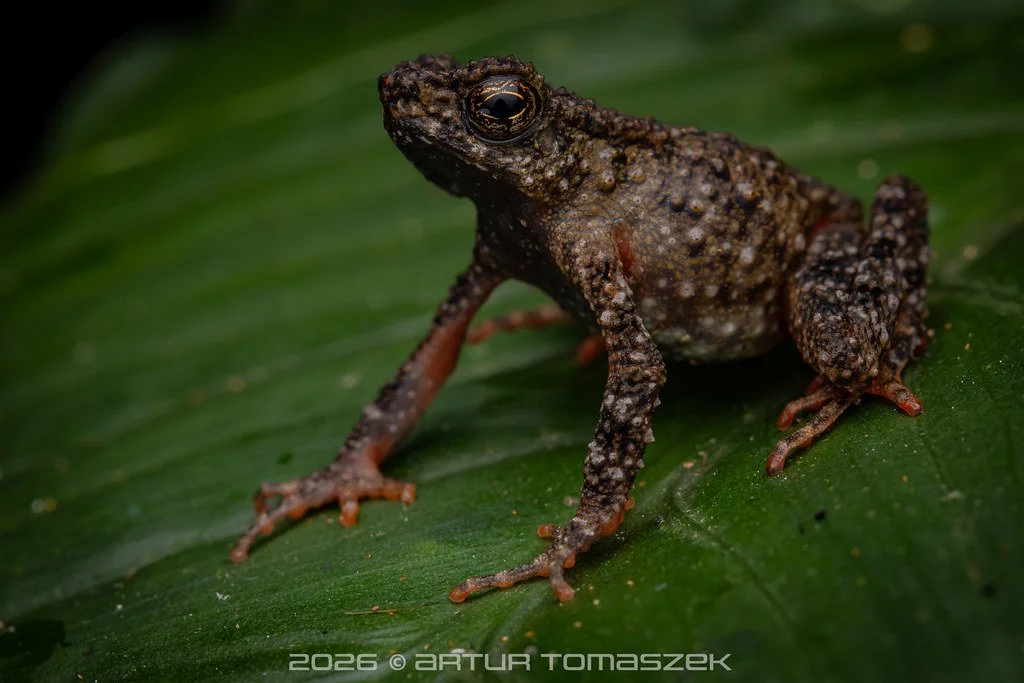
The Javan bleeding toad (Leptophryne cruentata) is a critically endangered species found only in the mountains of western Java. It is closely associated with cool montane forests and rocky streams, and its remaining populations have undergone severe declines. The exact causes are still not fully understood, although disease and changes to the habitat and climate are among the suspected threats. Its creepy common name comes from the vivid red or orange markings scattered across its dark body, which make the little toad look as though it has been splashed with blood.
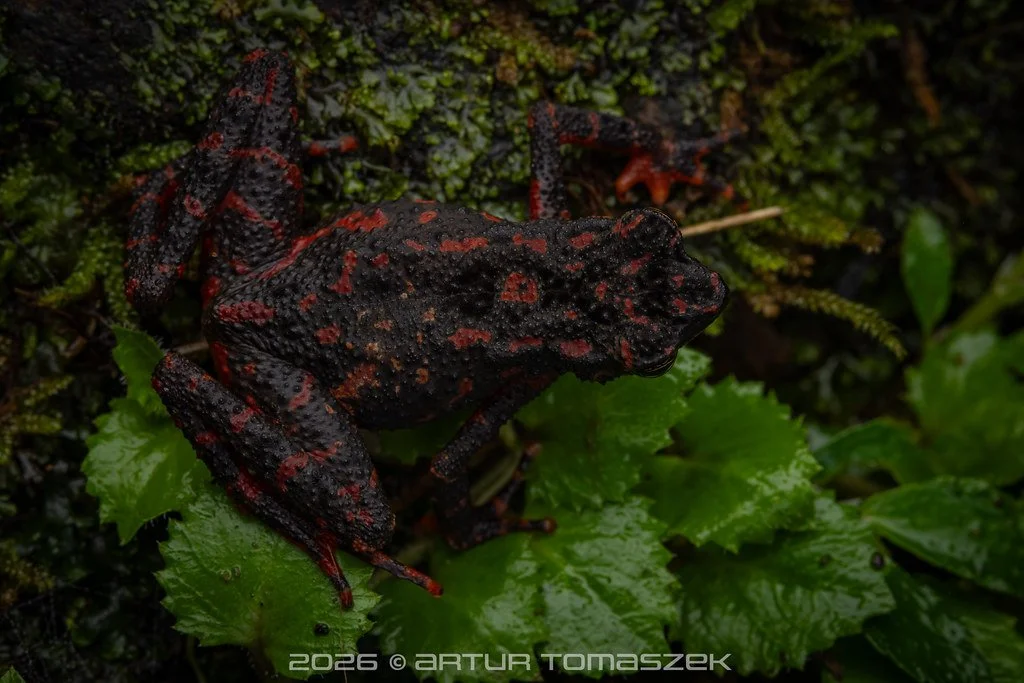
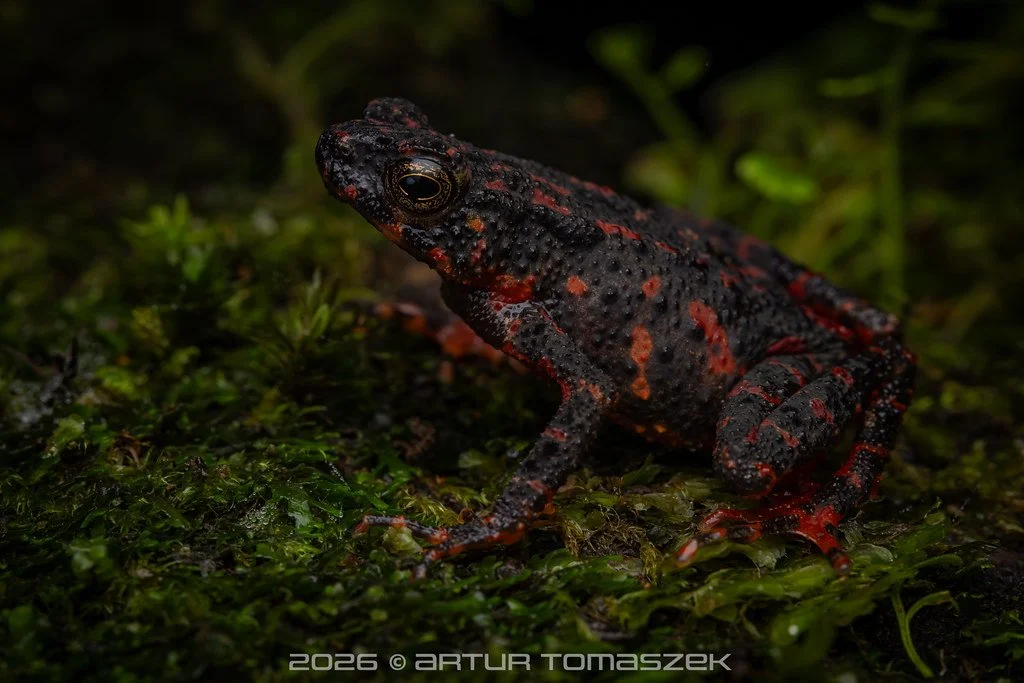
Seeing several of them in the wild was an incredible start. One major target done!
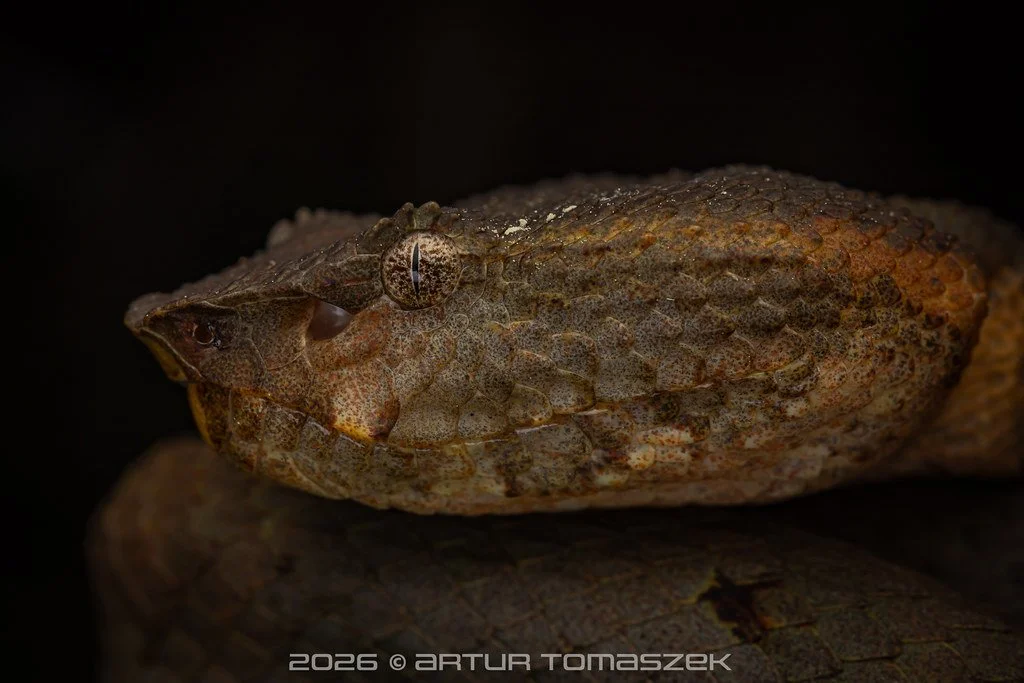
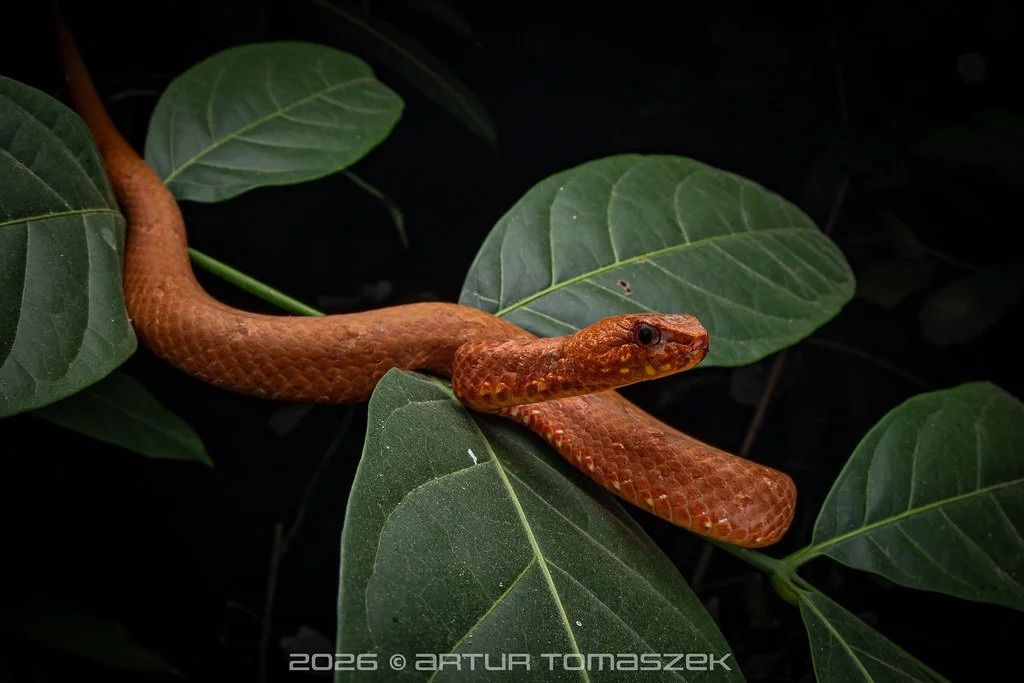
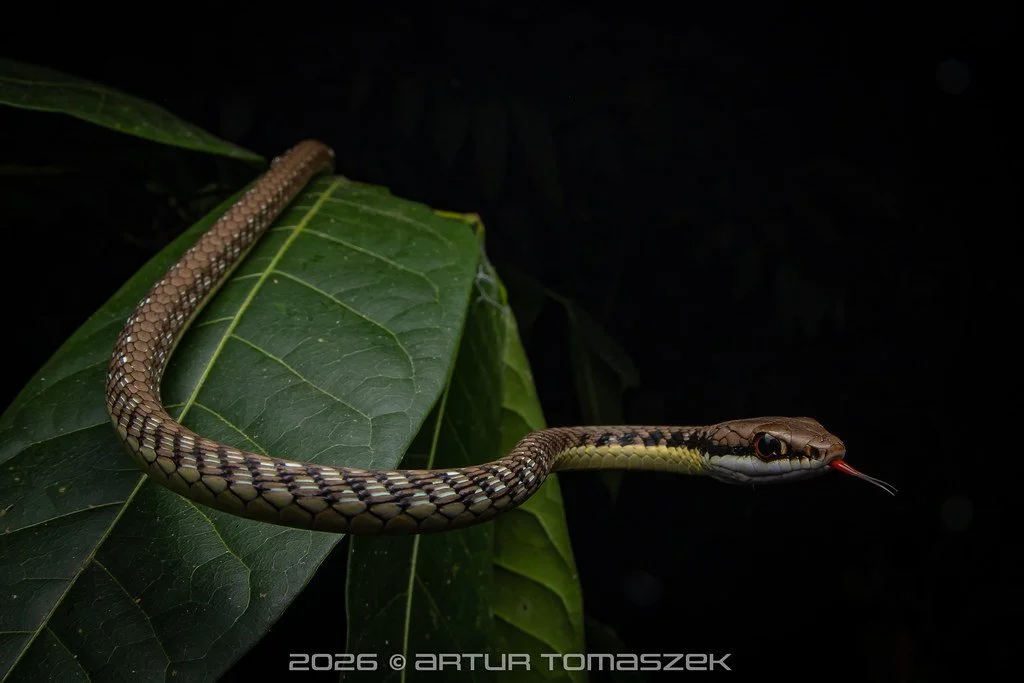
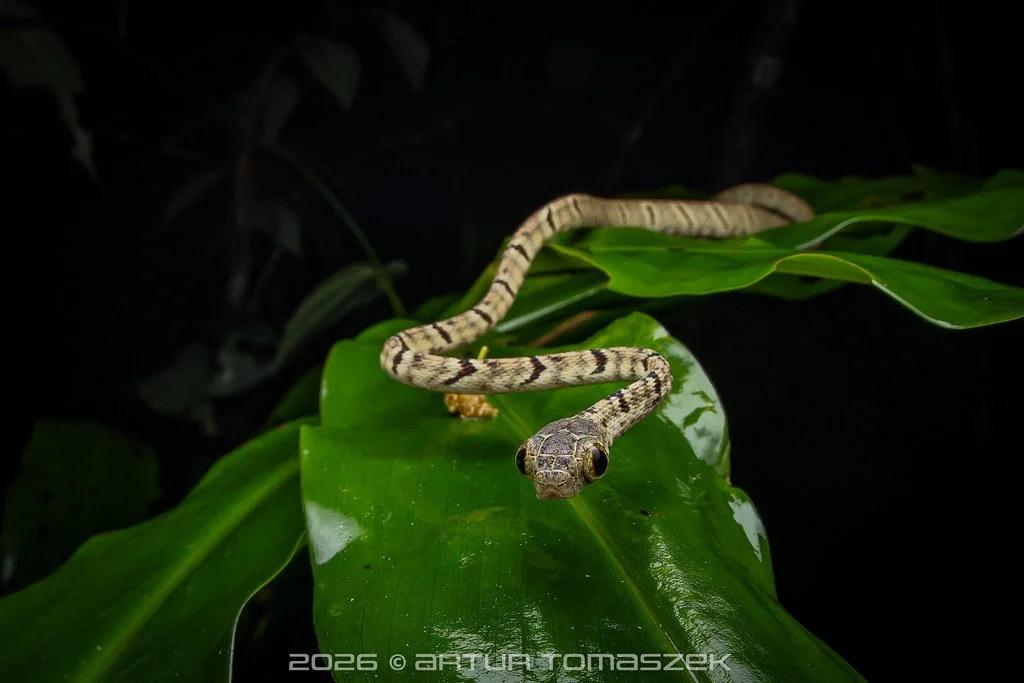
After spending some time with the toads, we changed locations and went looking for snakes. We found a couple of Dendrelaphis underwoodi, Dendrelaphis pictus, as well as a tiny Craspedocephalus puniceus in shed. Not the easiest individual to photograph, but still such a cool find. There also was the tiniest Aplopeltura boa, trying to quite literally dispose of itself in the rubbish bin. Artur found it very funny…
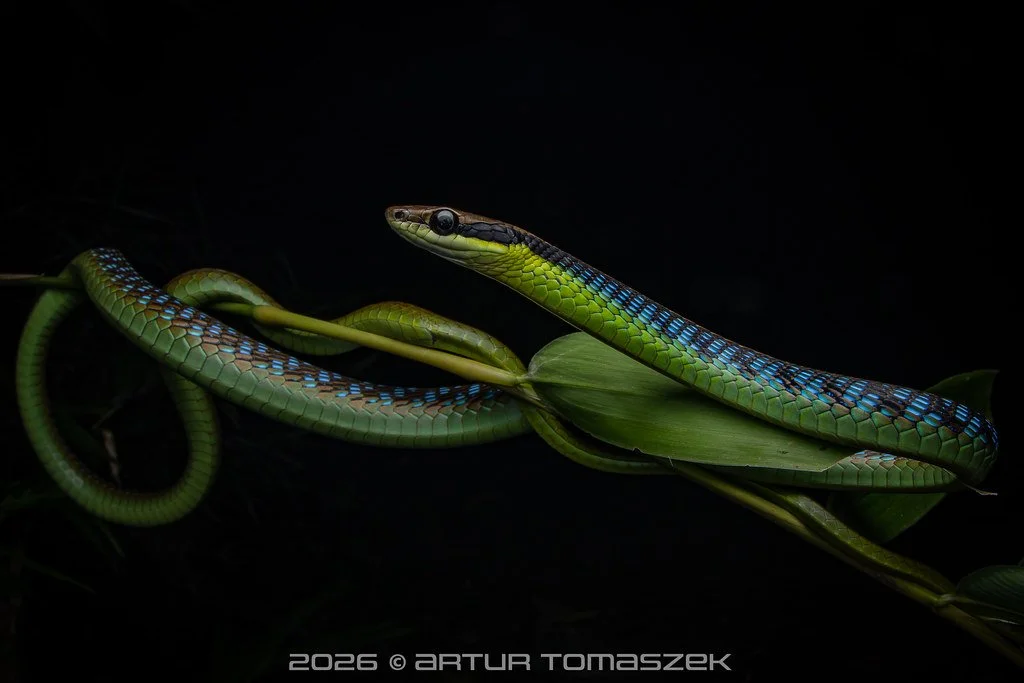
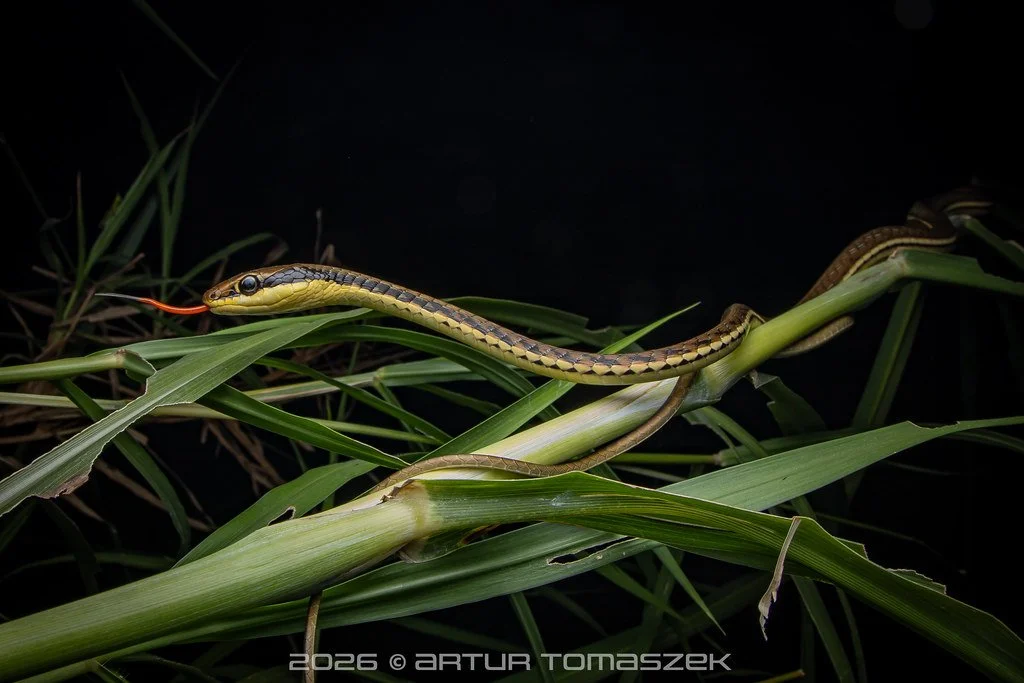
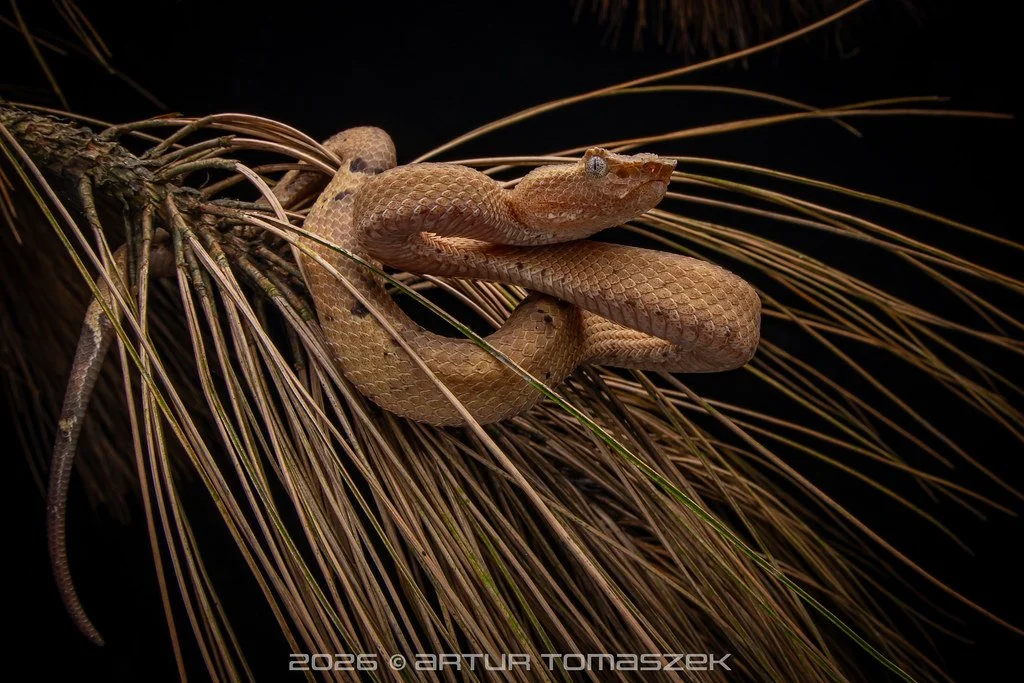
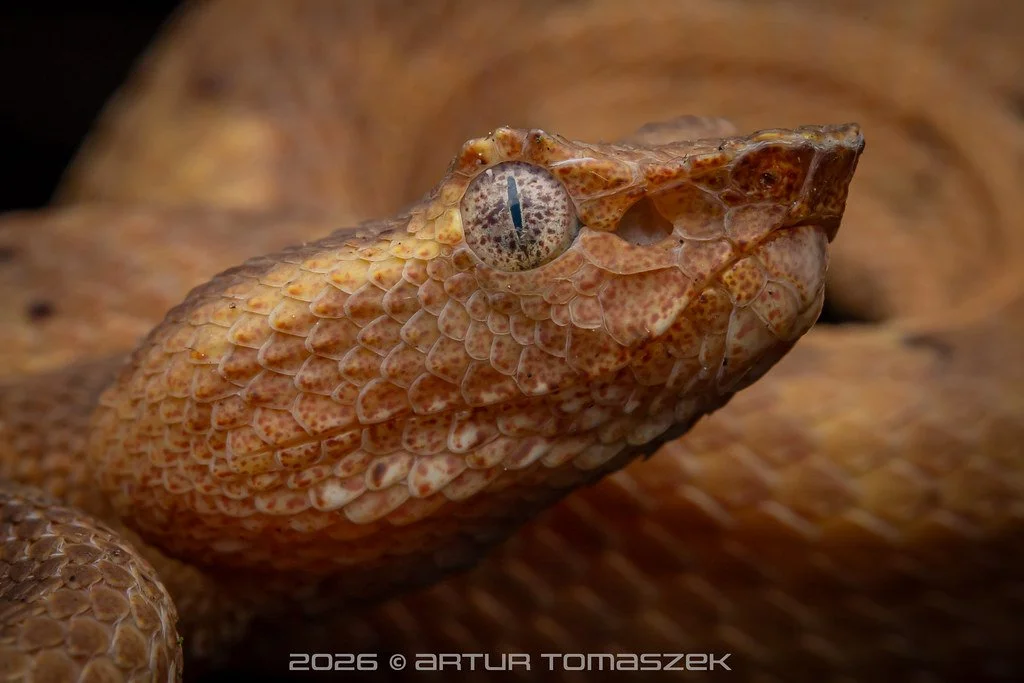
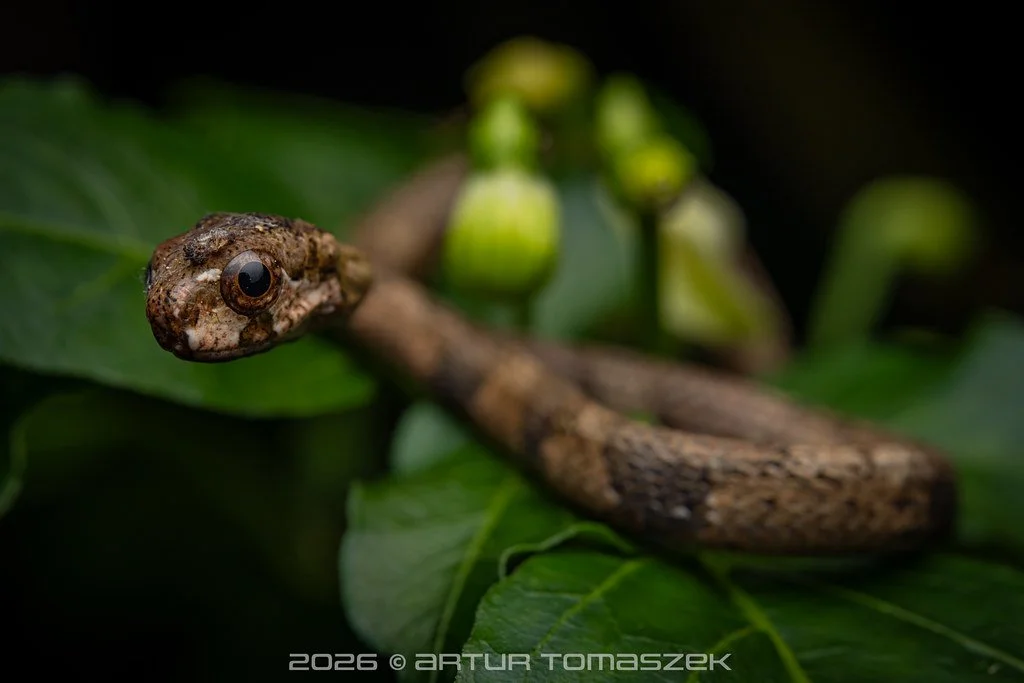
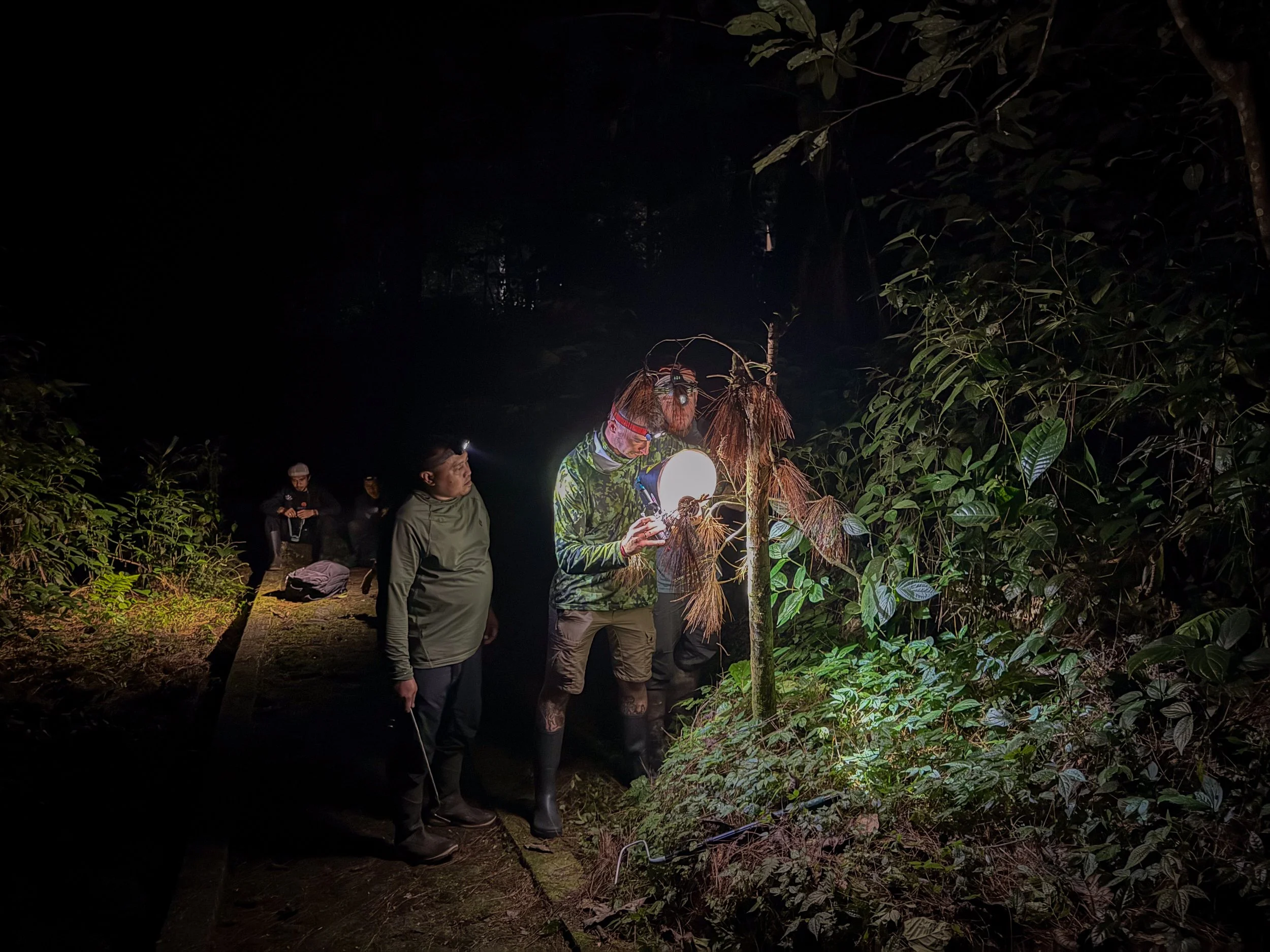
Photographing C. puniceus
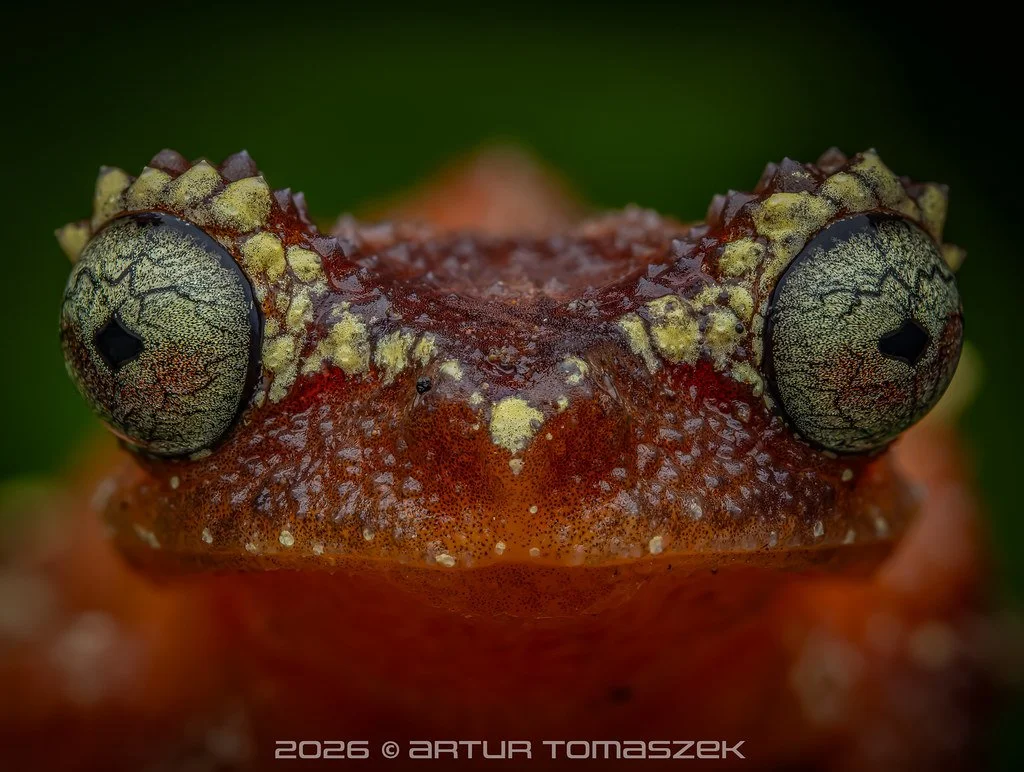
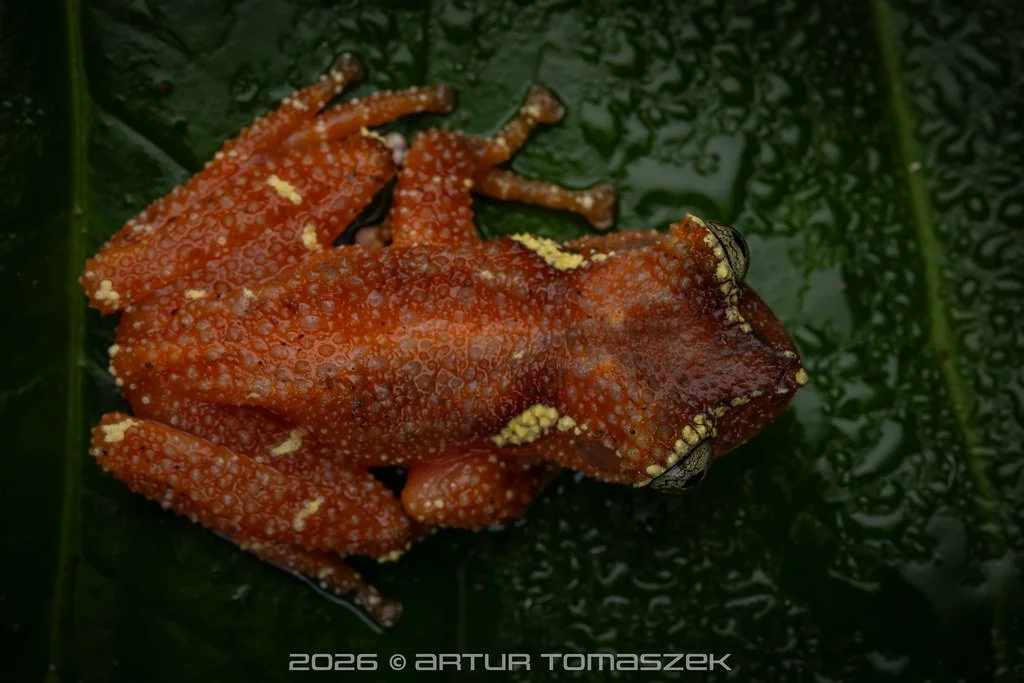
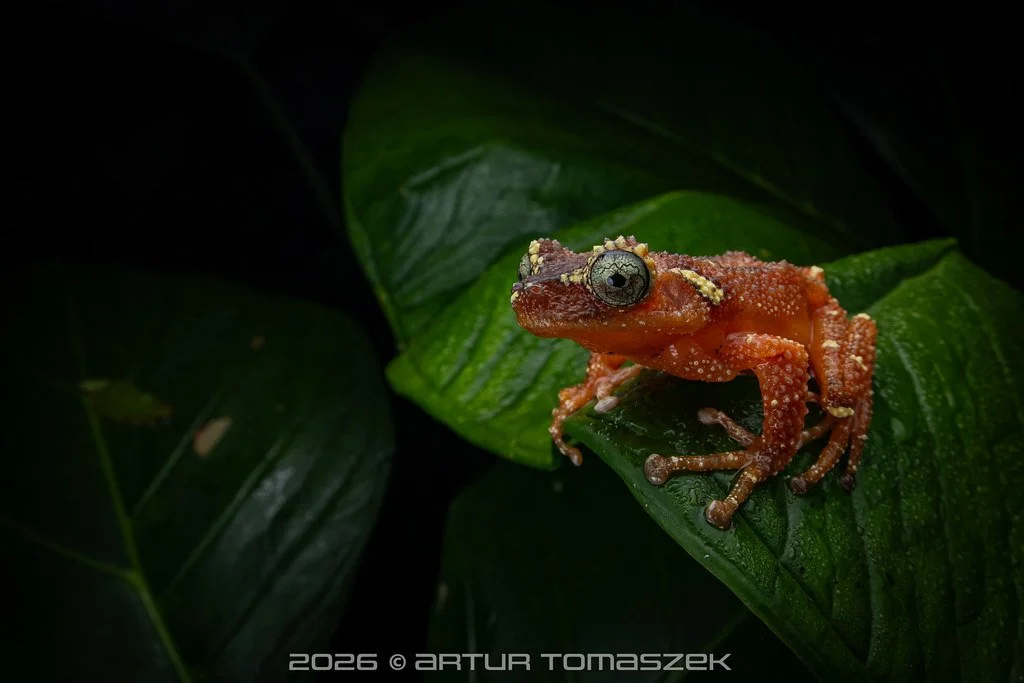
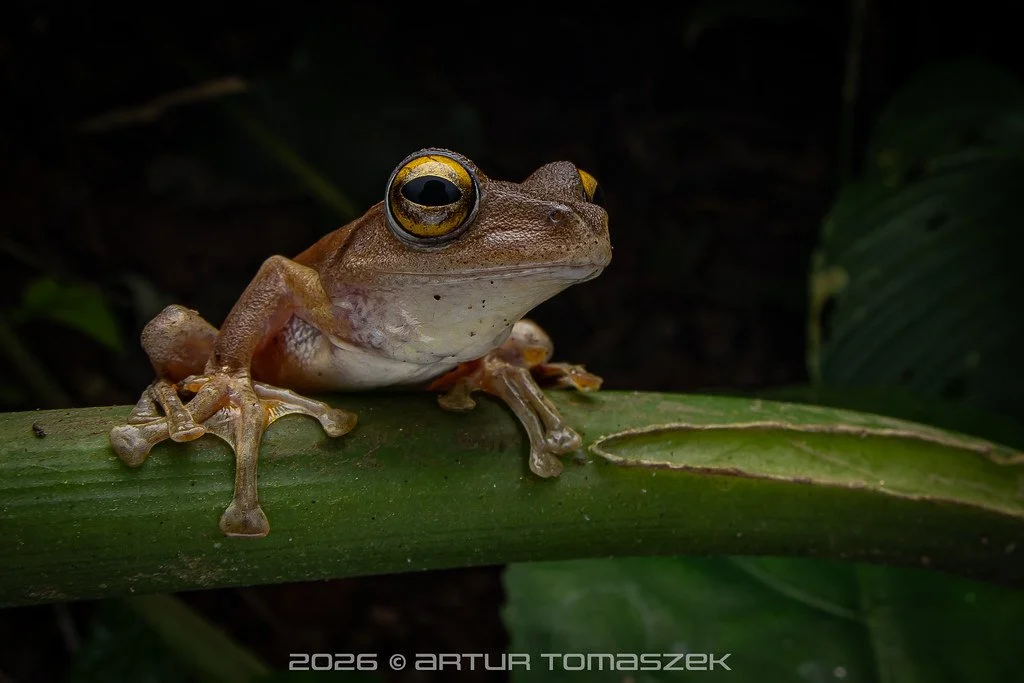
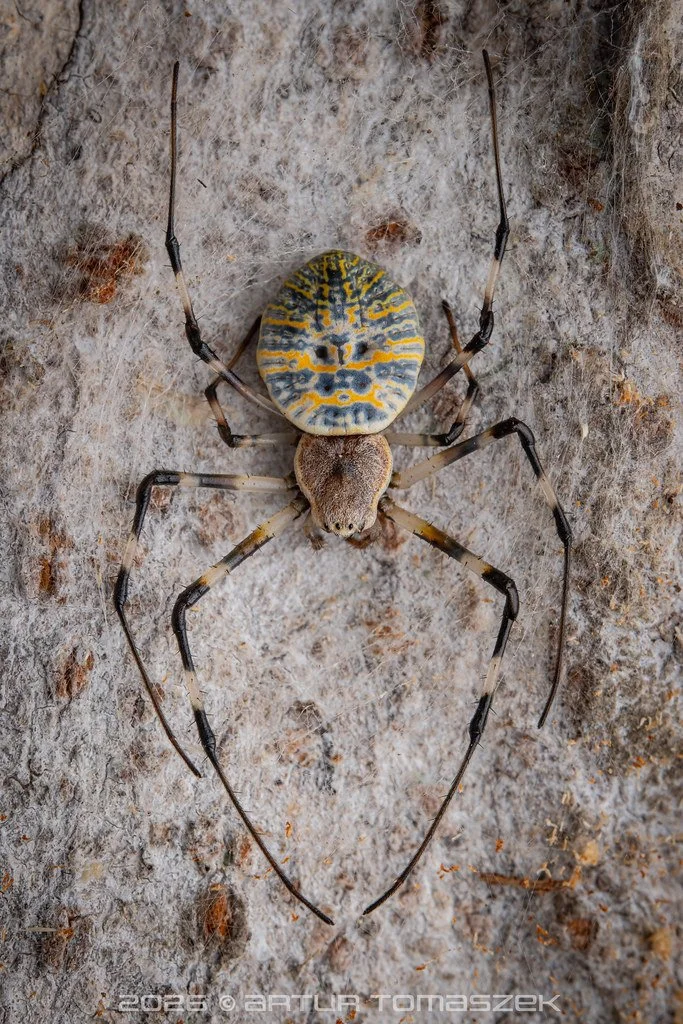
There were plenty of frogs too, but the star of the night was the pearly tree frog, Nyctixalus margaritifer. This small, unmistakable frog is another Javan endemic. It is primarily associated with highland forest and is known to breed in water-filled tree holes, where its tadpoles develop far above the streams. Its rough, granular skin and scattered yellow markings give it the pearly appearance. There were plenty of excellent invertebrates too.
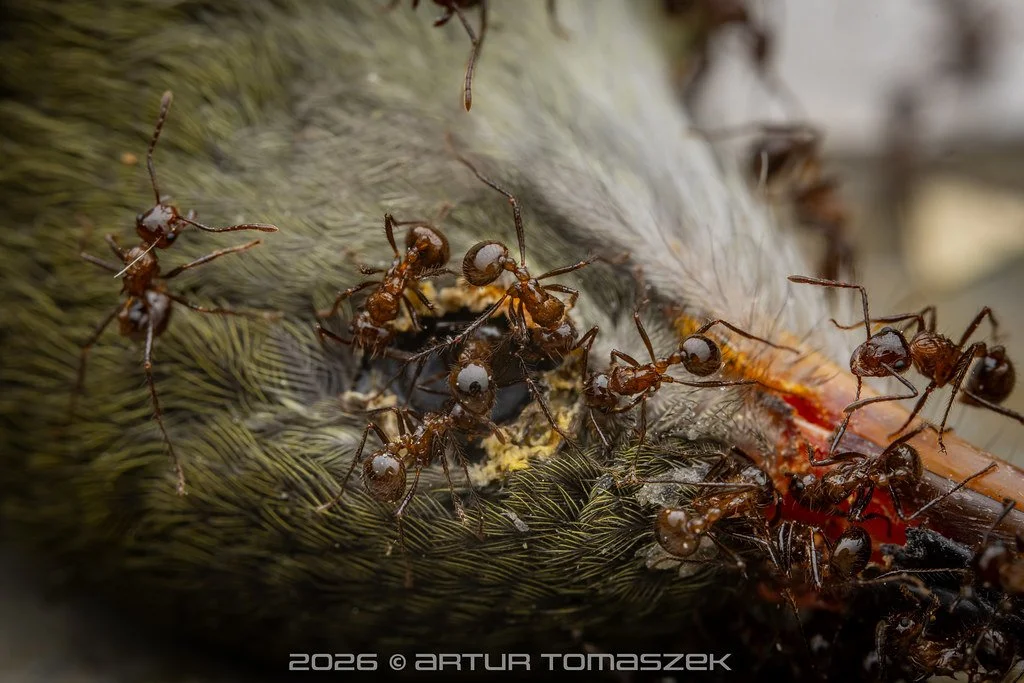
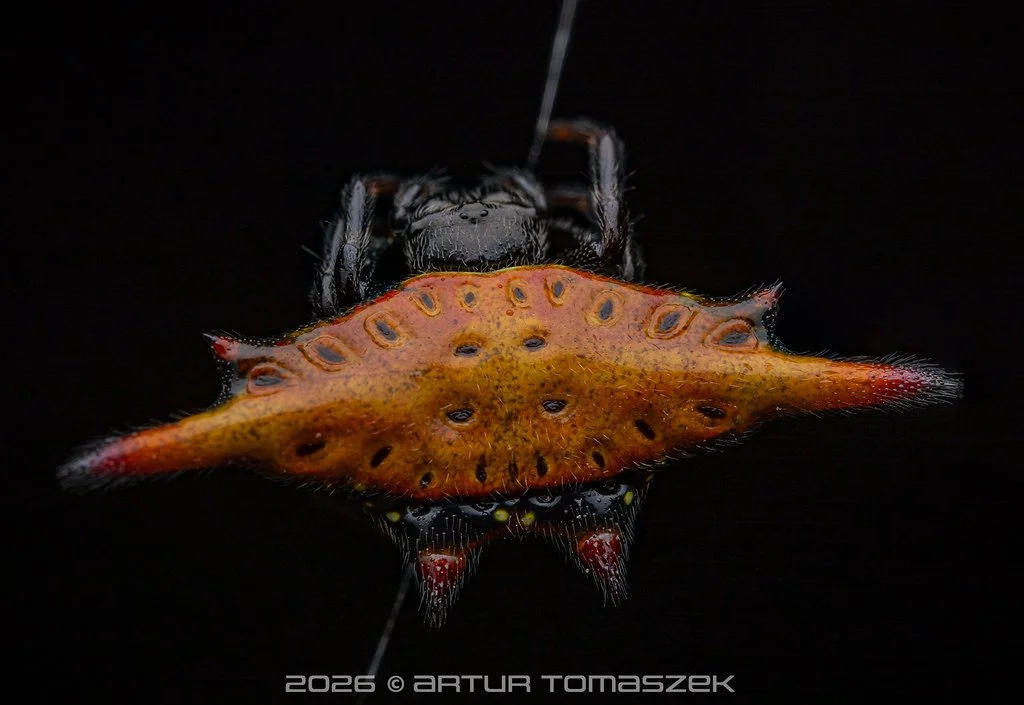
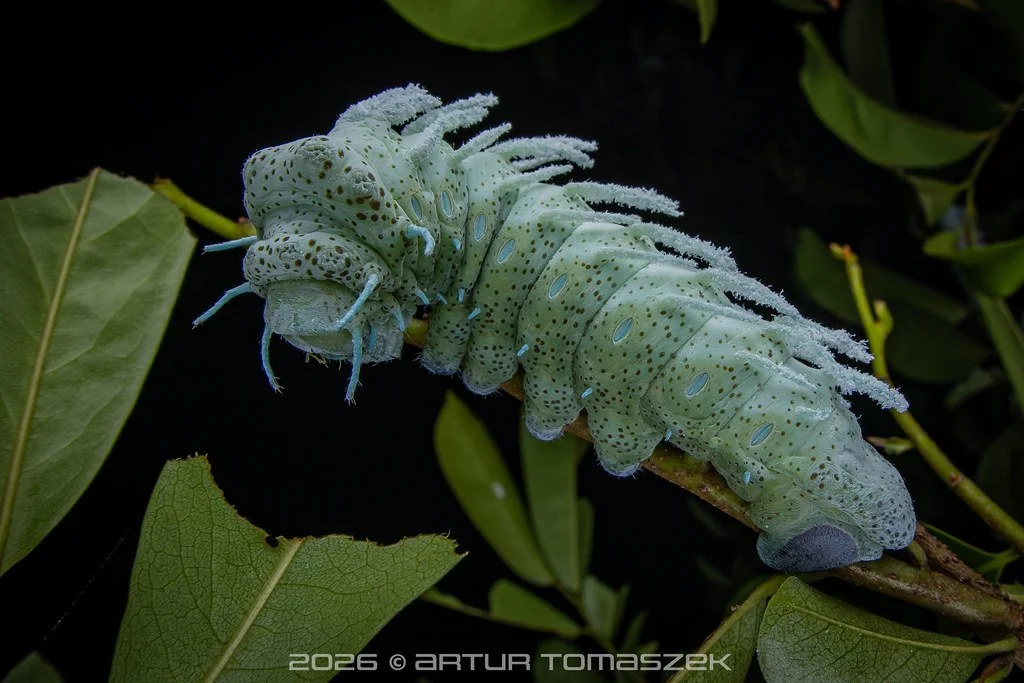
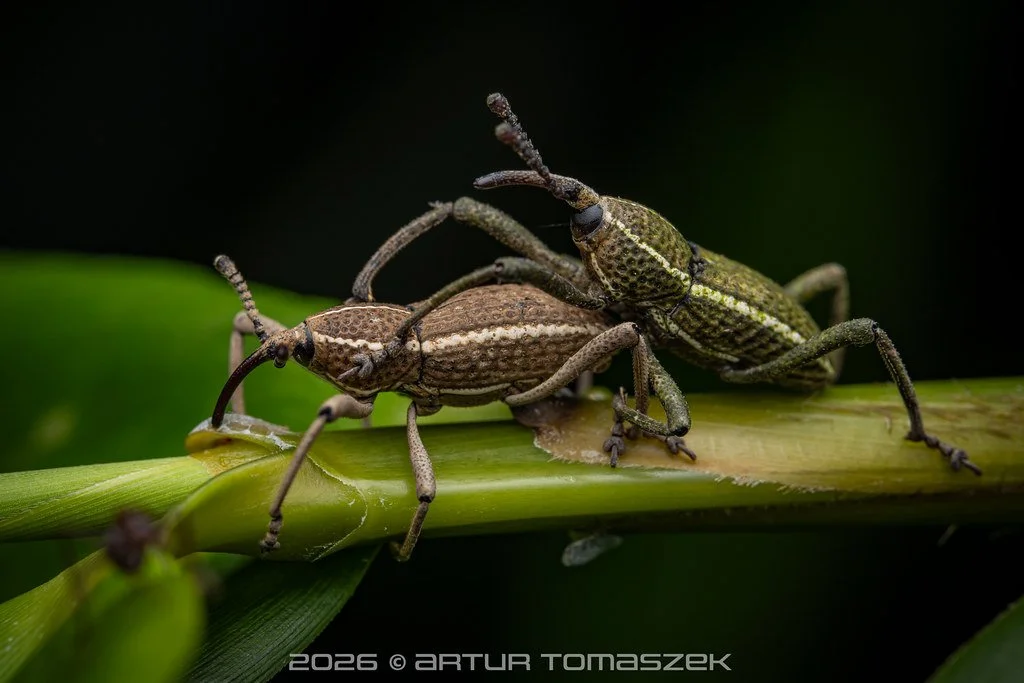
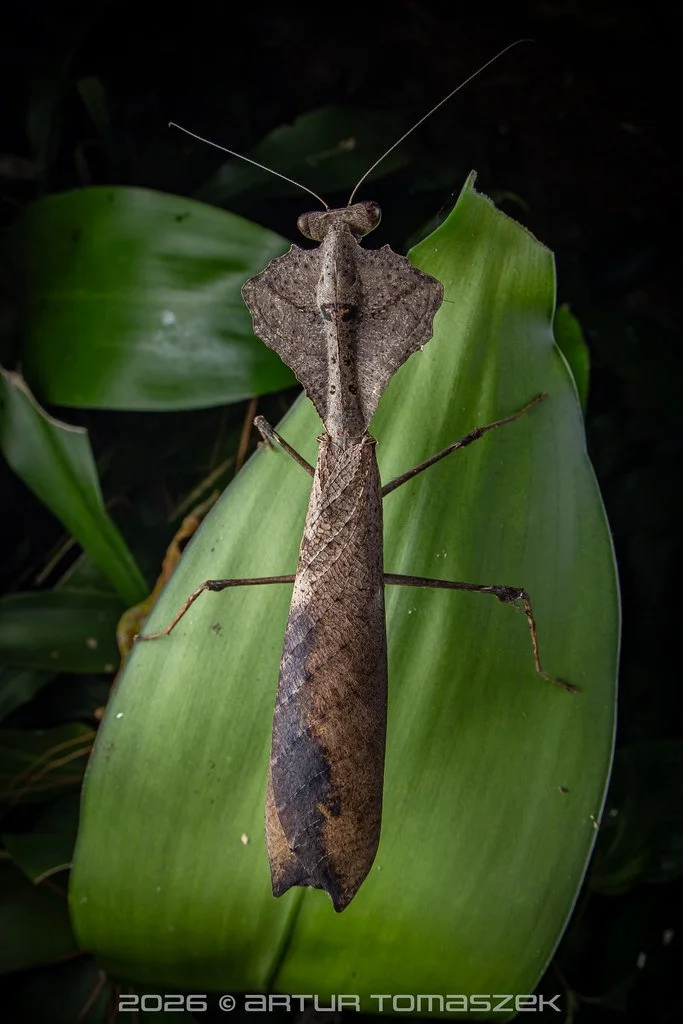
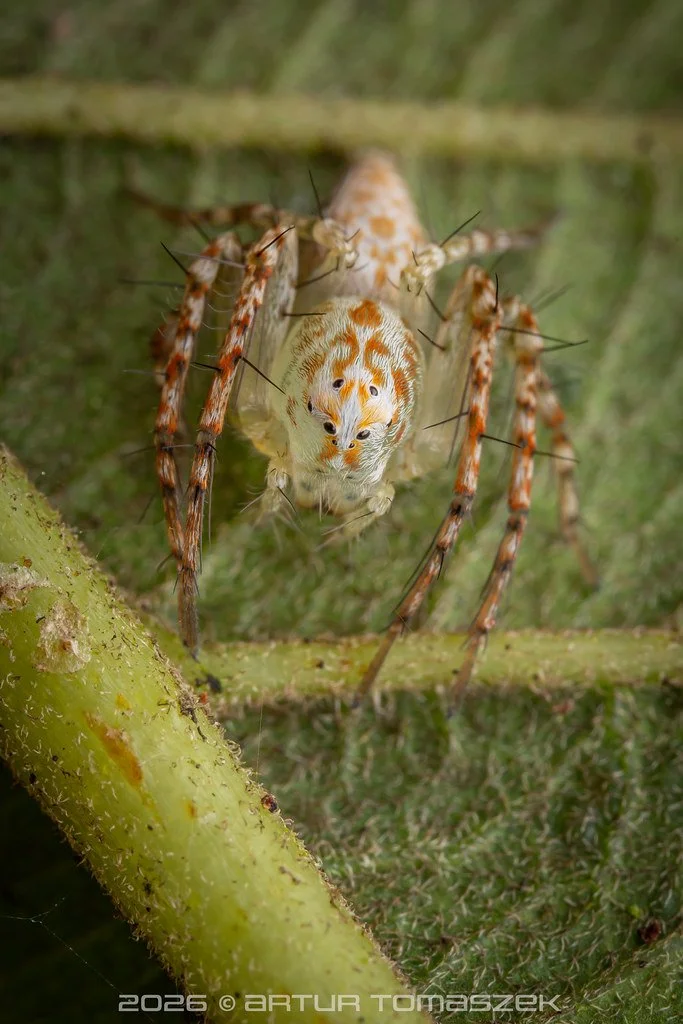
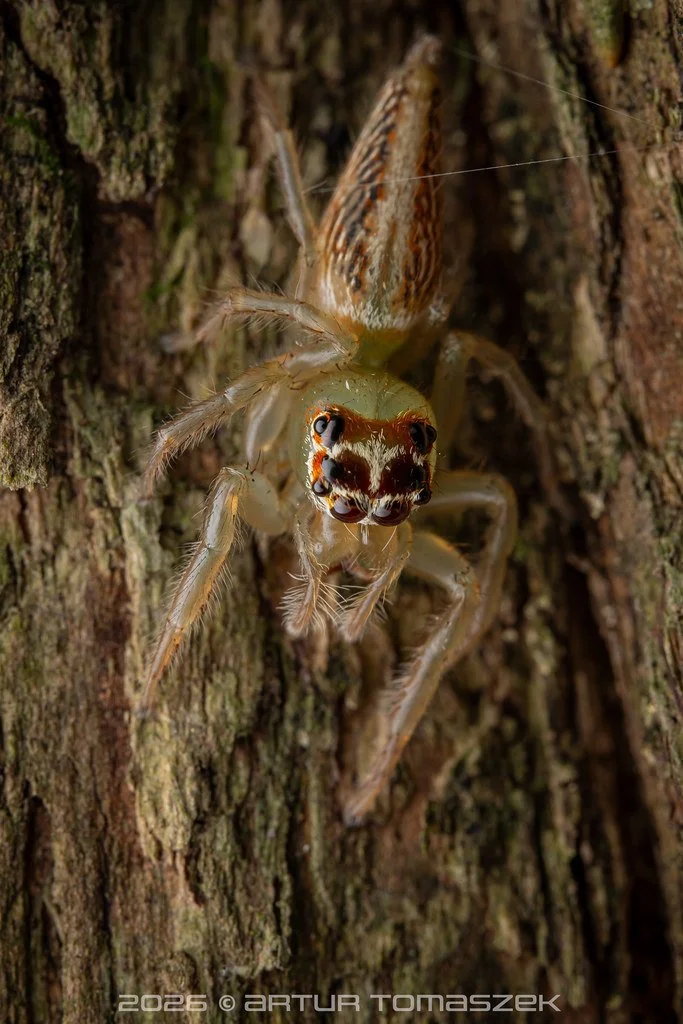
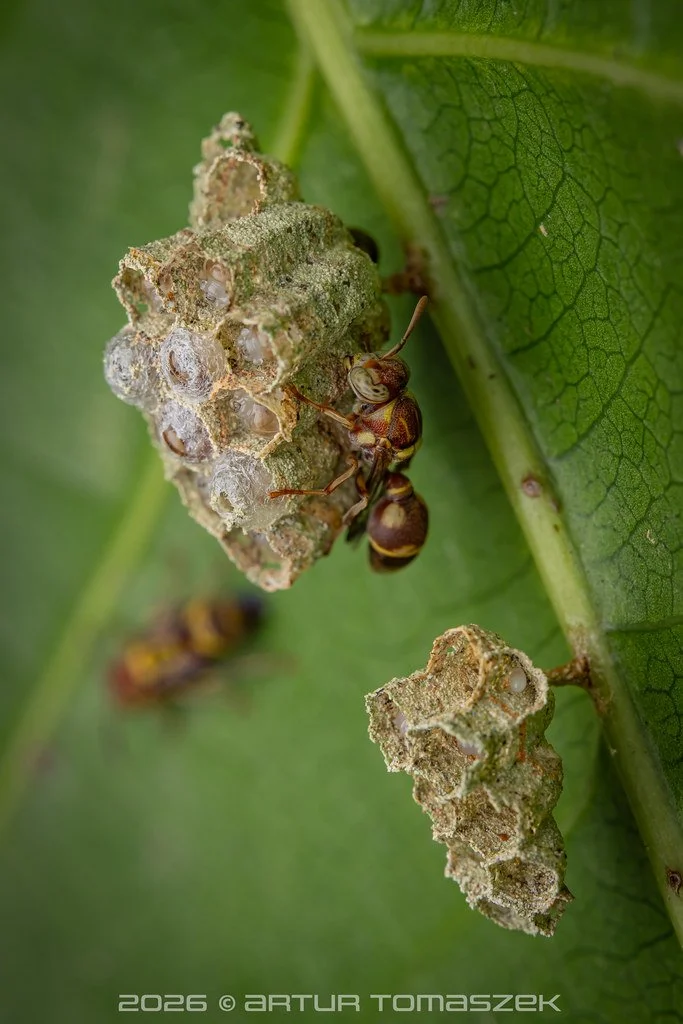
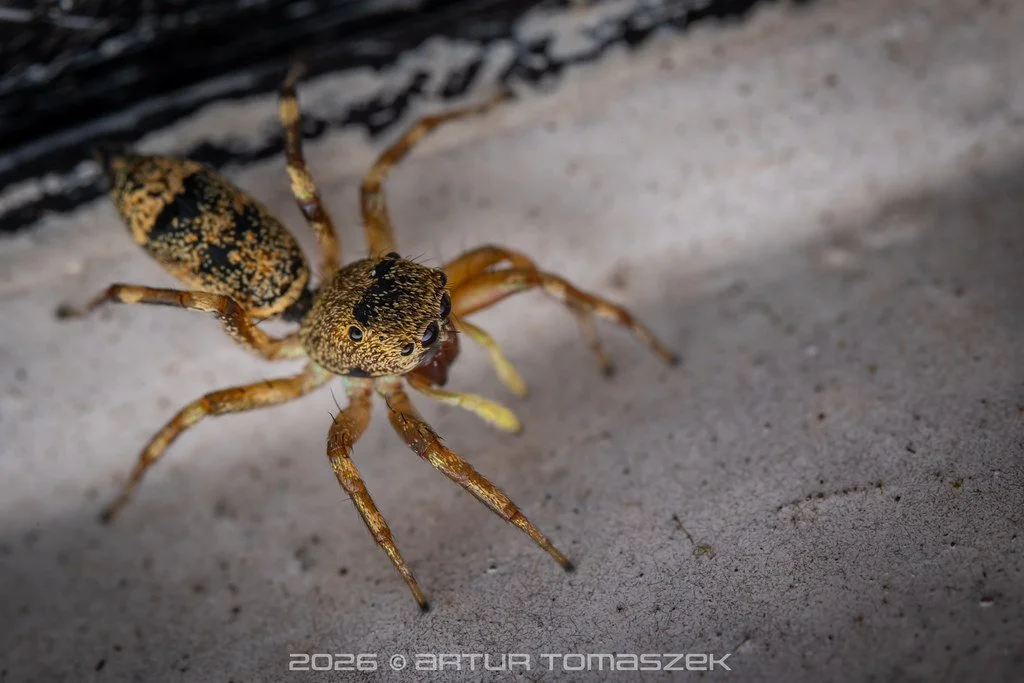
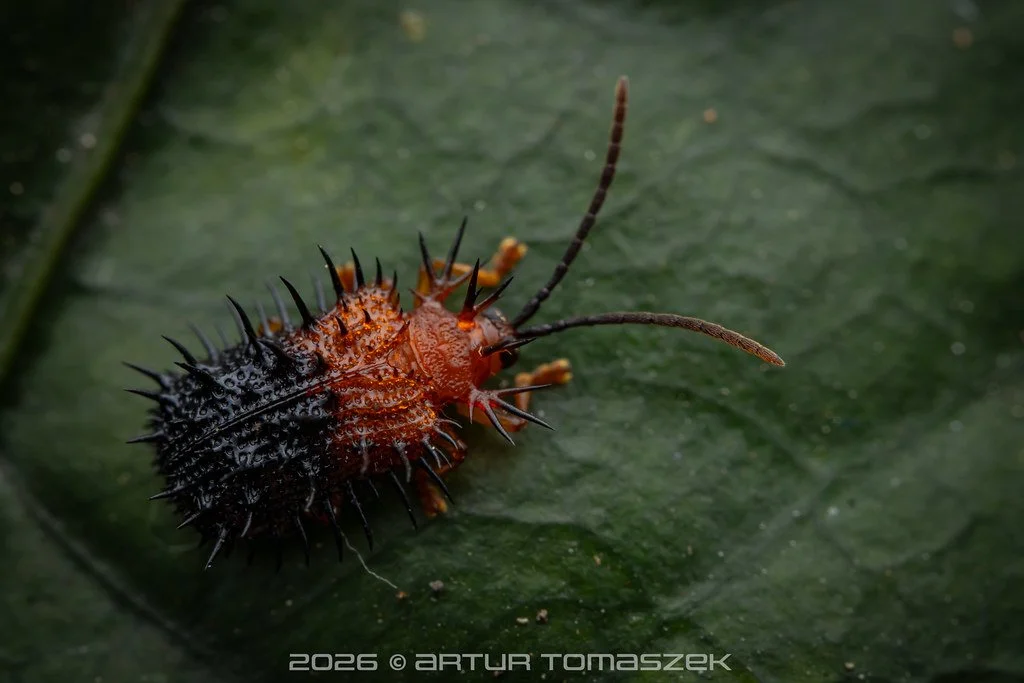
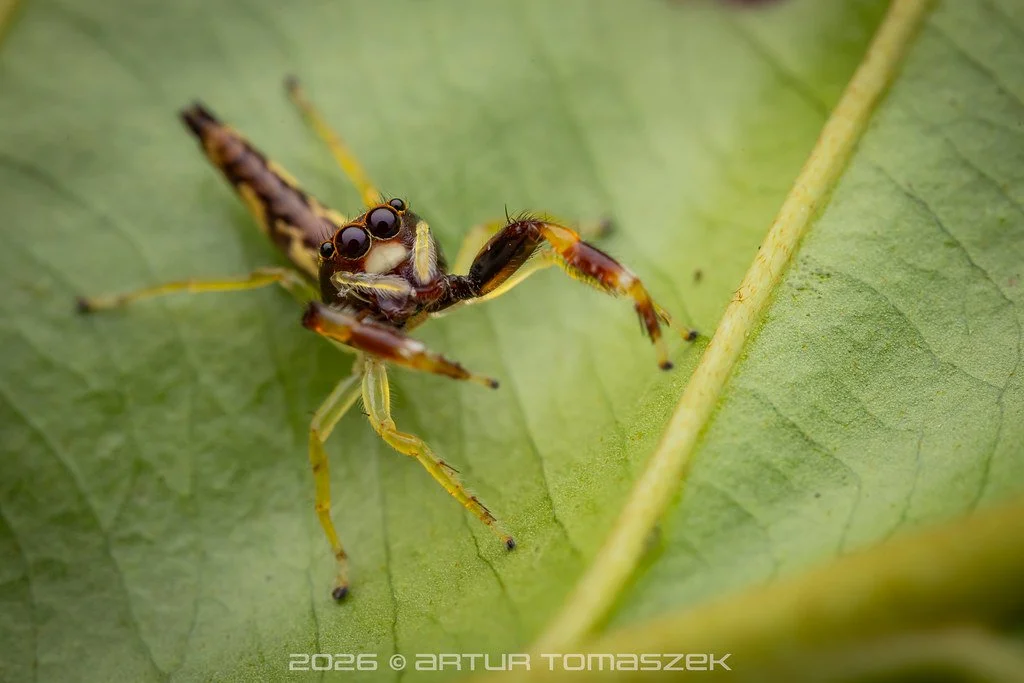
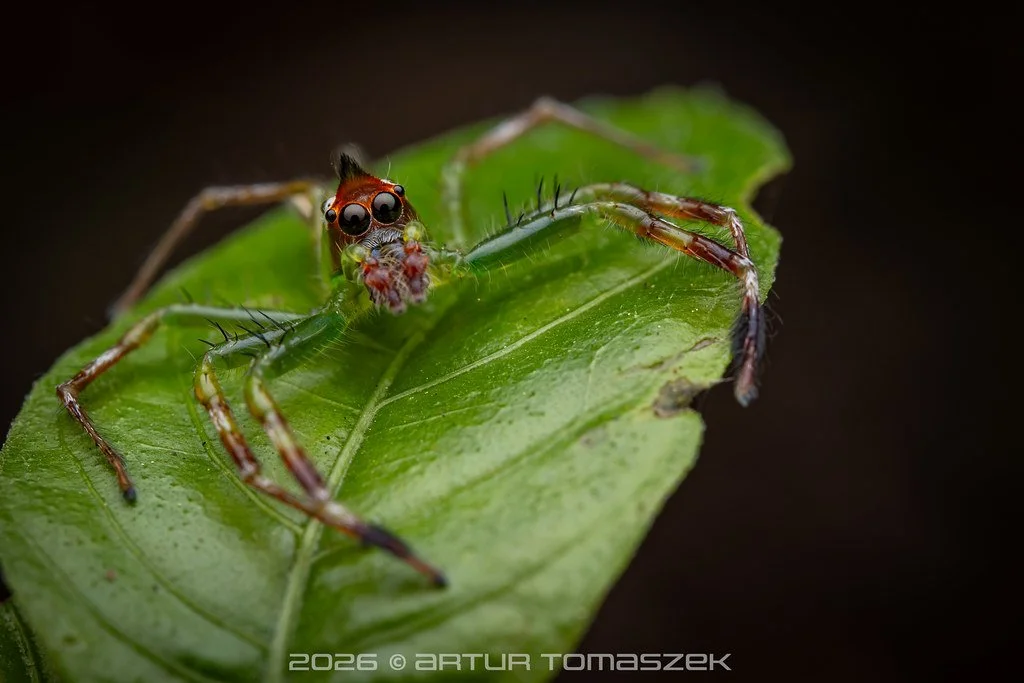
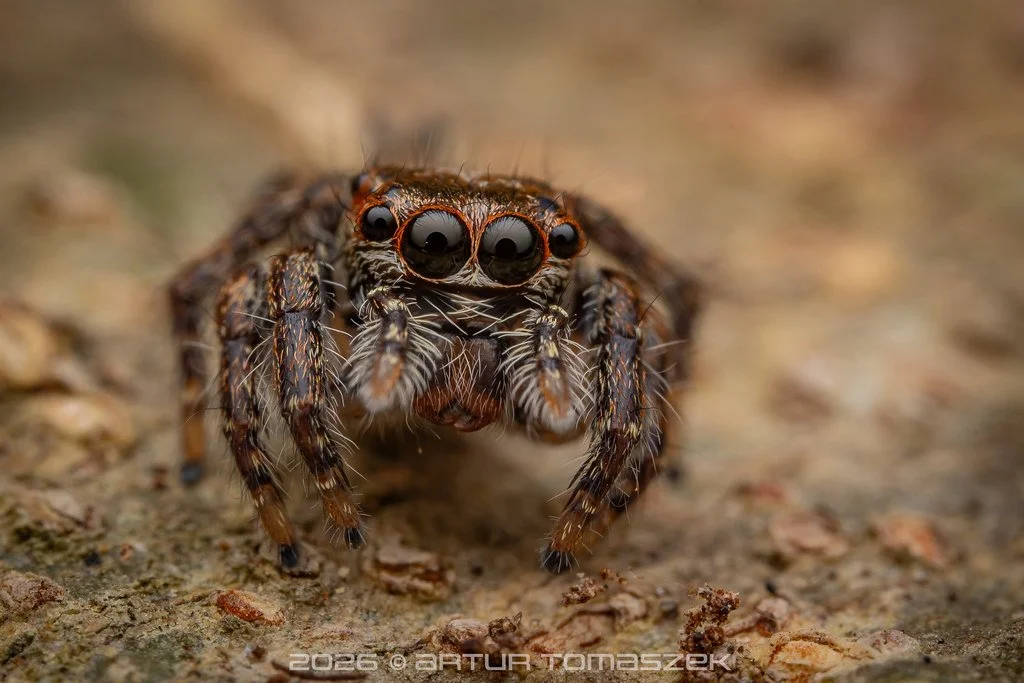
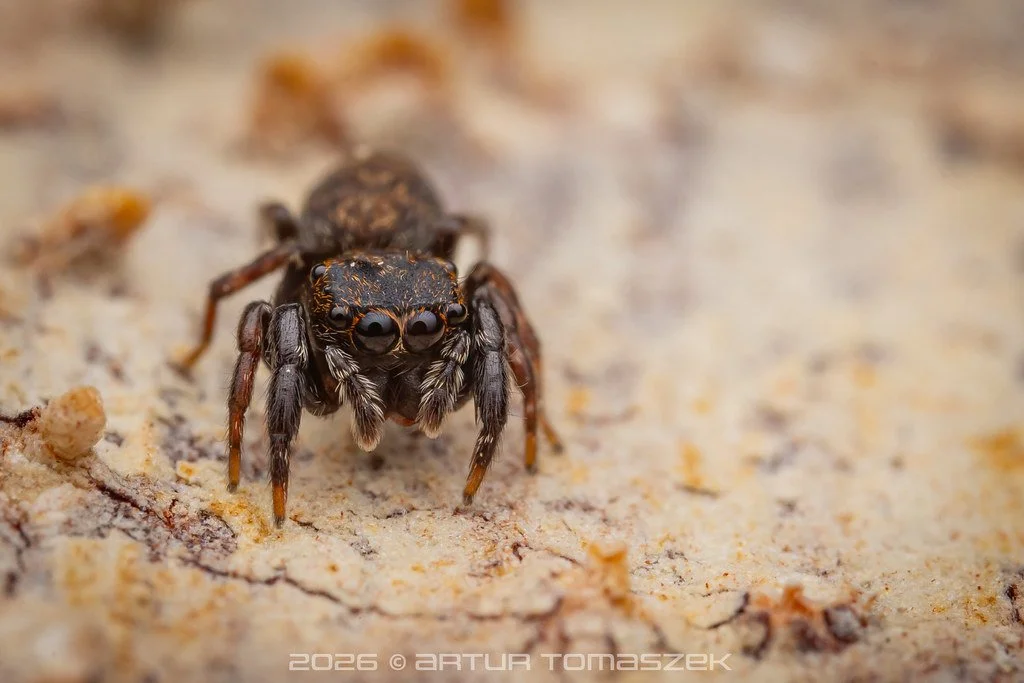
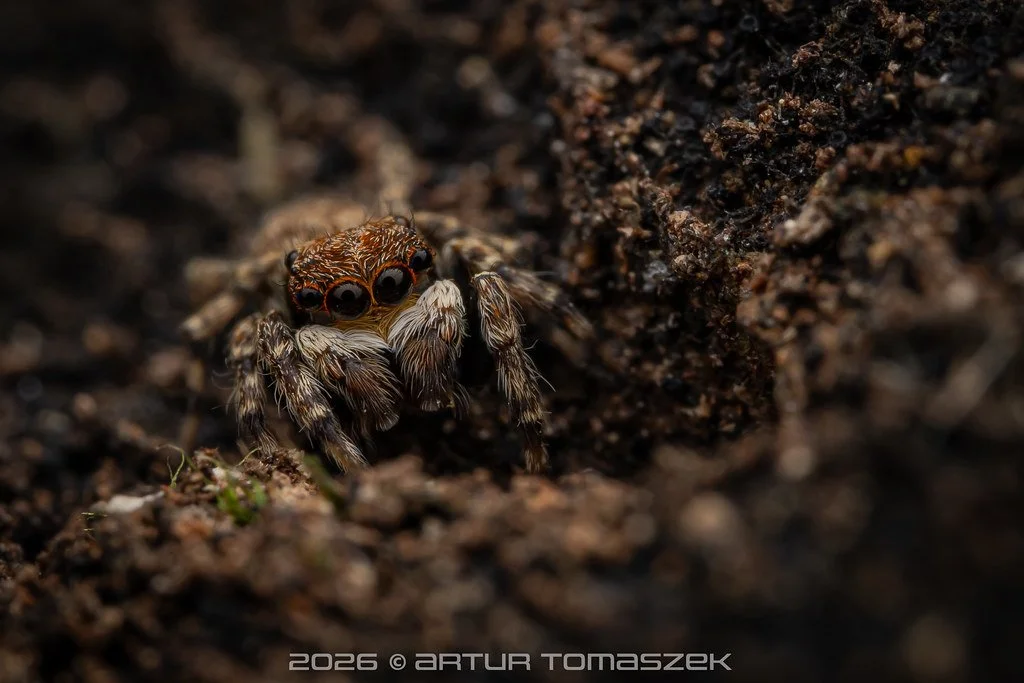
On the next day, we visited a local park in search of creepy crawlies, and it certainly did not disappoint!
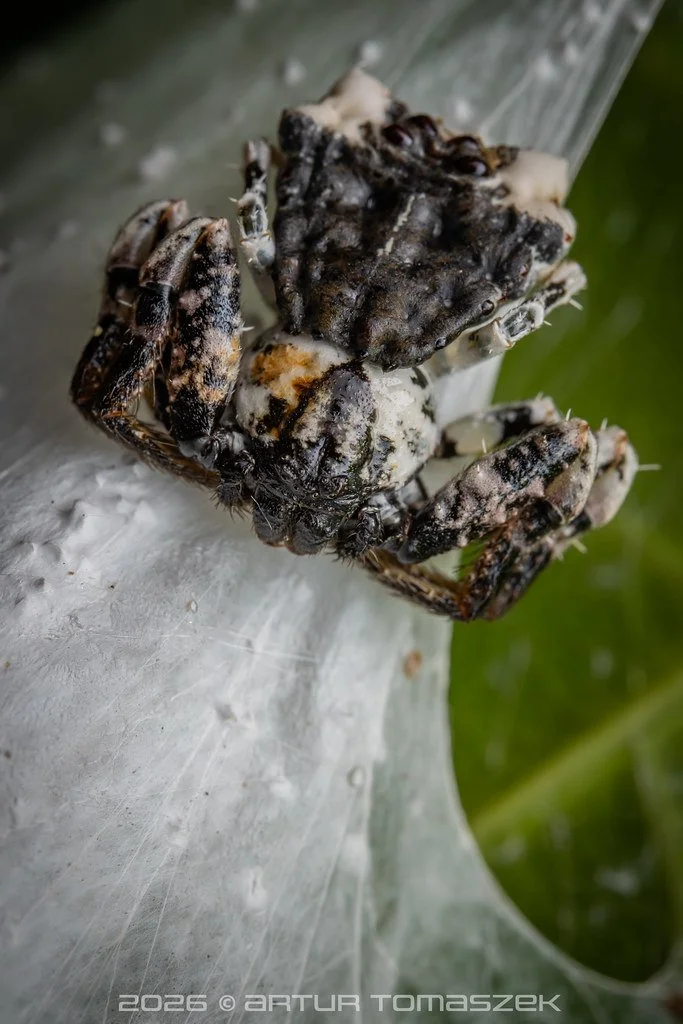
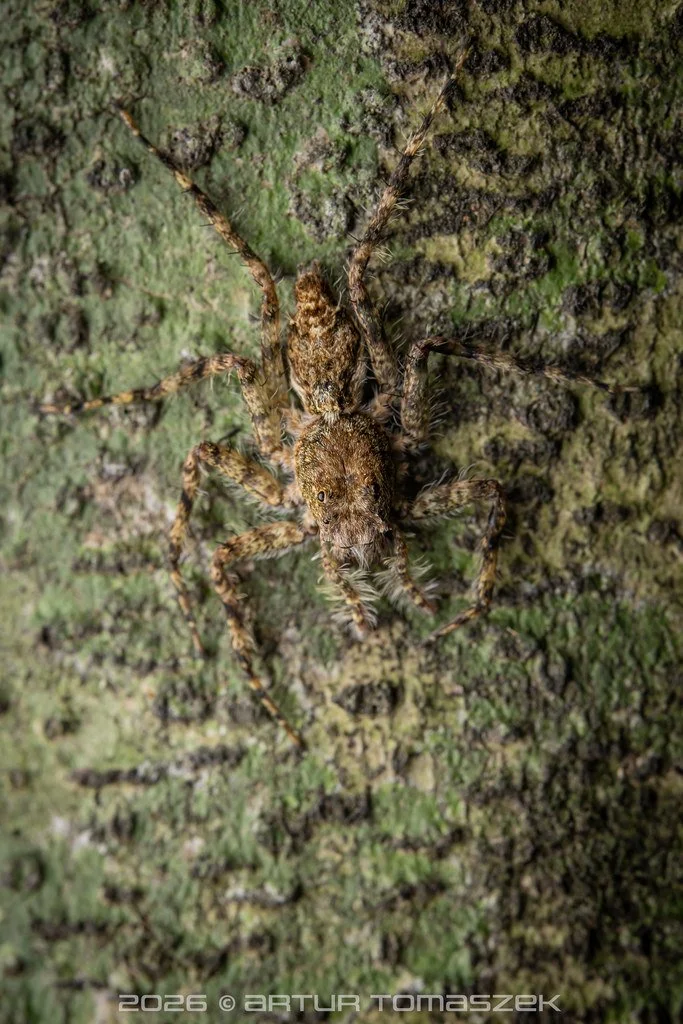
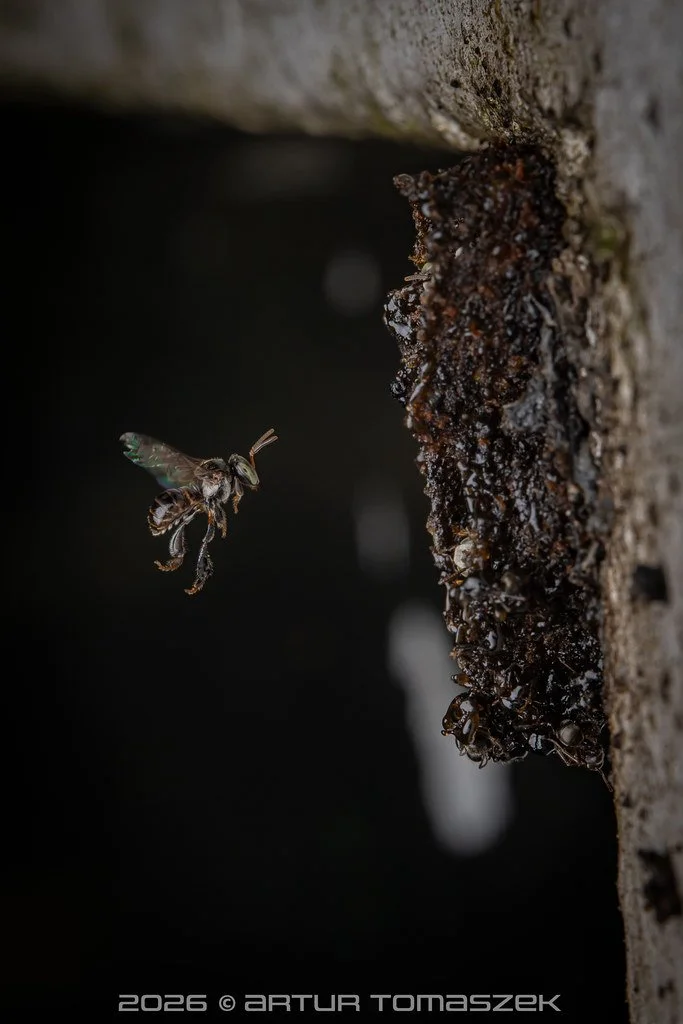
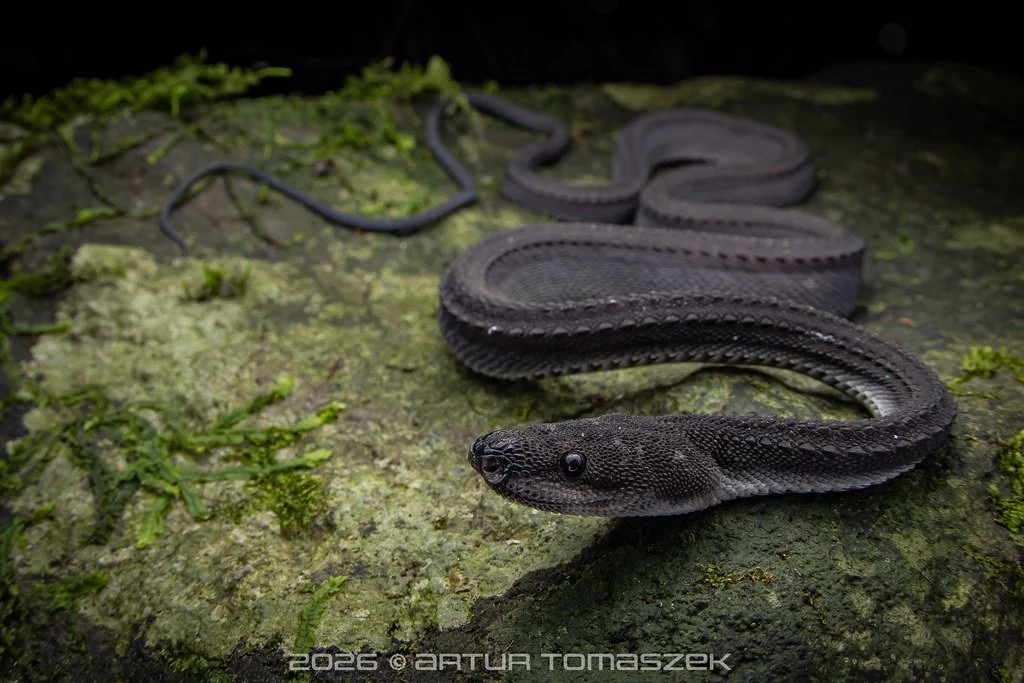
On our second night, we decided to try for the dragon snake despite the awful conditions. When we arrived at the stream, our hopes were about as low as its water level. Still, we refused to give up. Eventually, Artur found one. Almost immediately afterwards, Jesse found another. Two dragon snakes. Mission accomplished!
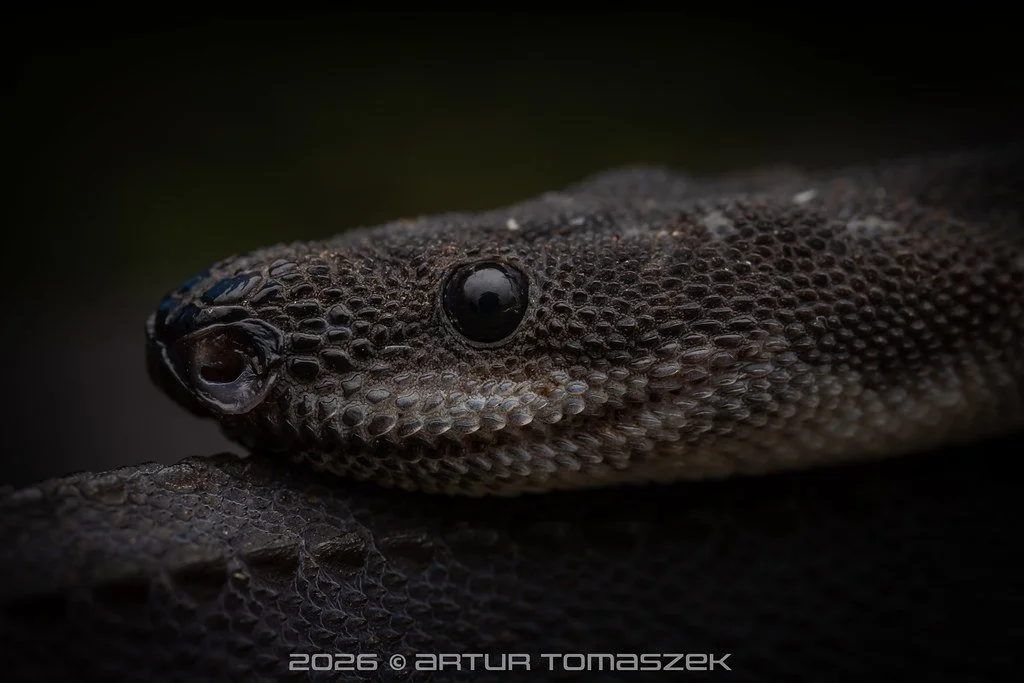
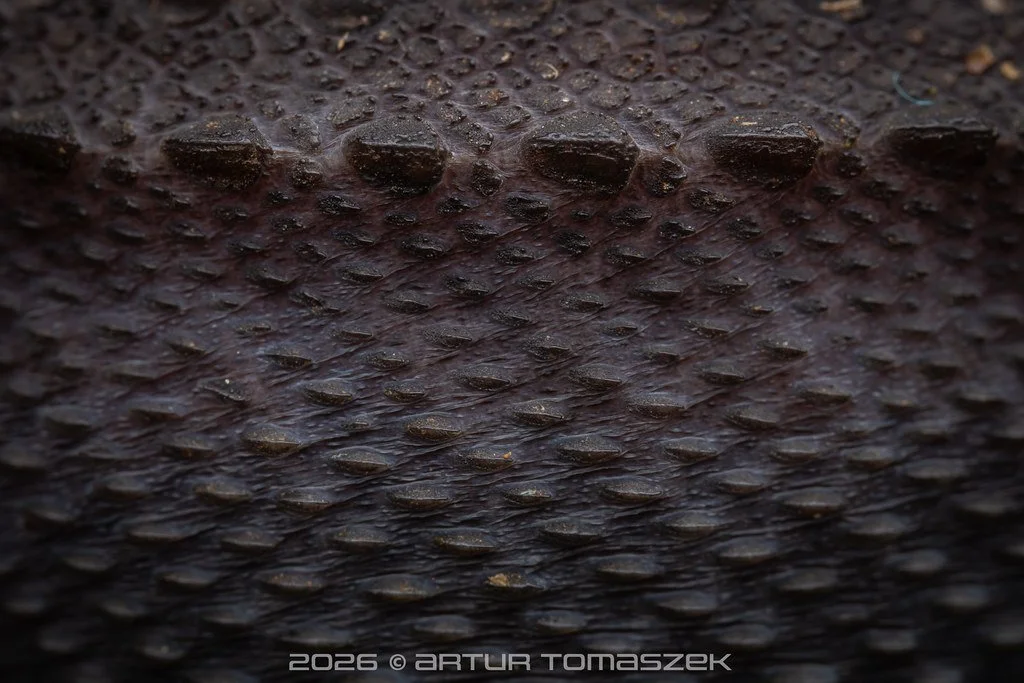
The dragon snake Xenodermus javanicus is one of those animals that hardly look real. Its body is covered by three raised rows of enlarged, strongly keeled scales. It is a secretive, nocturnal species associated with damp forest and streams, so finding two during such dry conditions felt especially fortunate.
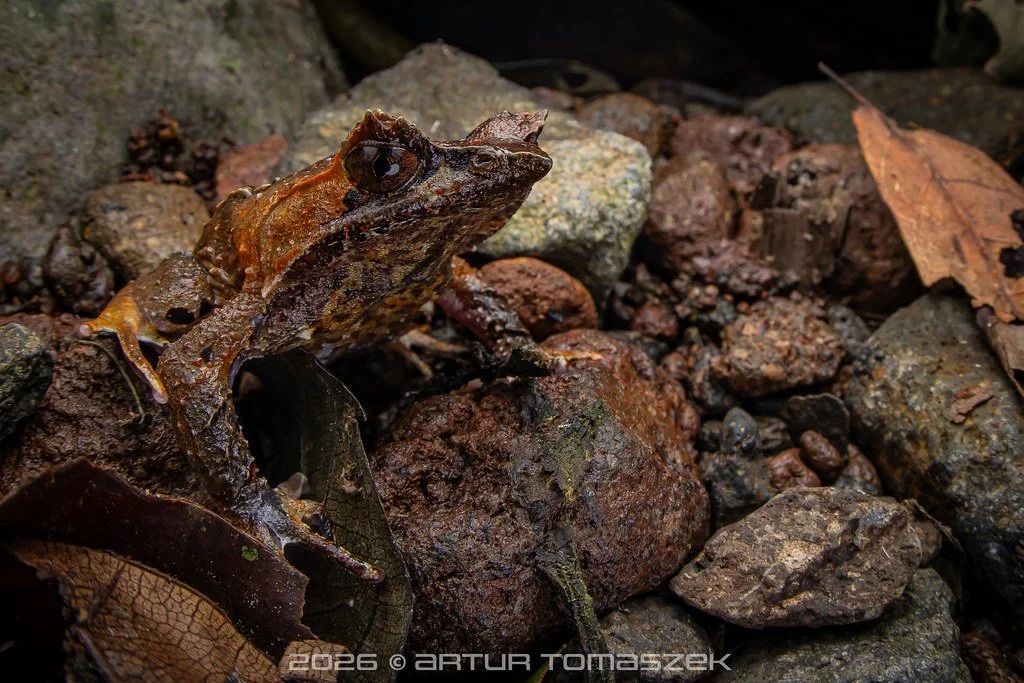
That night also produced some beautiful amphibians, including Megophrys montana, Rhacophorus margaritifer, Leptophryne borbonica and many more. Near the end of the walk, we found another Craspedocephalus puniceus, this time a full-sized adult and in much better condition for photographs.
We finished the night in the only sensible way: excellent street food and a couple of beers.
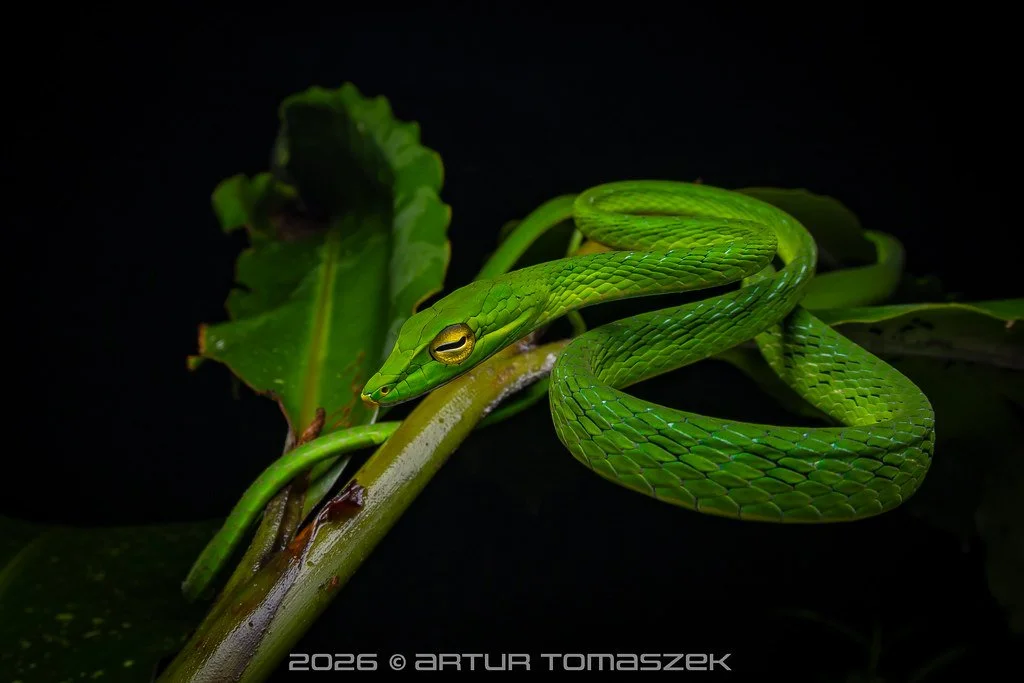
The next day, we tried our luck during daylight and “succeeded” with a lovely reticulated python. The following night brought Dendrelaphis subocularis, Bungarus fasciatus, Trimeresurus albolabris, Ahaetulla rufusoculara and another Ahaetulla prasina, together with more frogs and invertebrates.
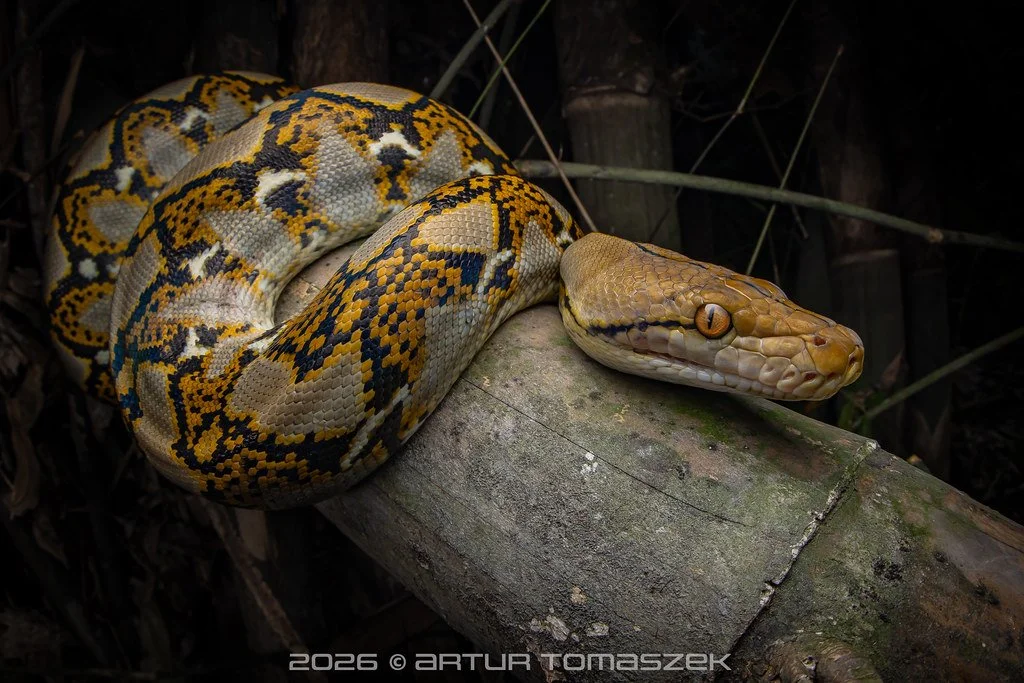
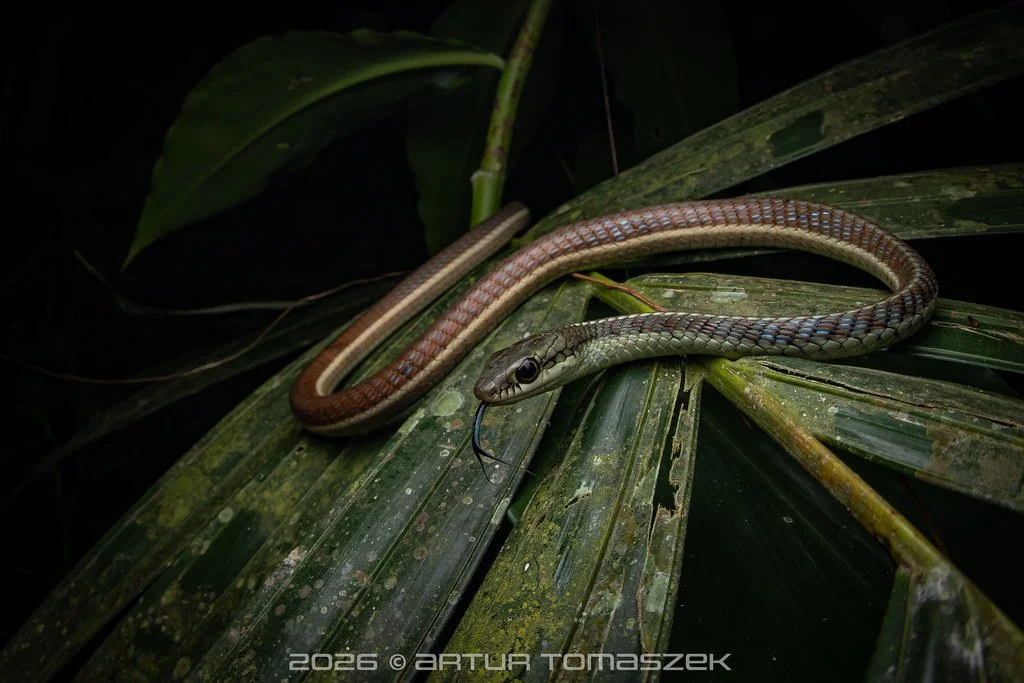
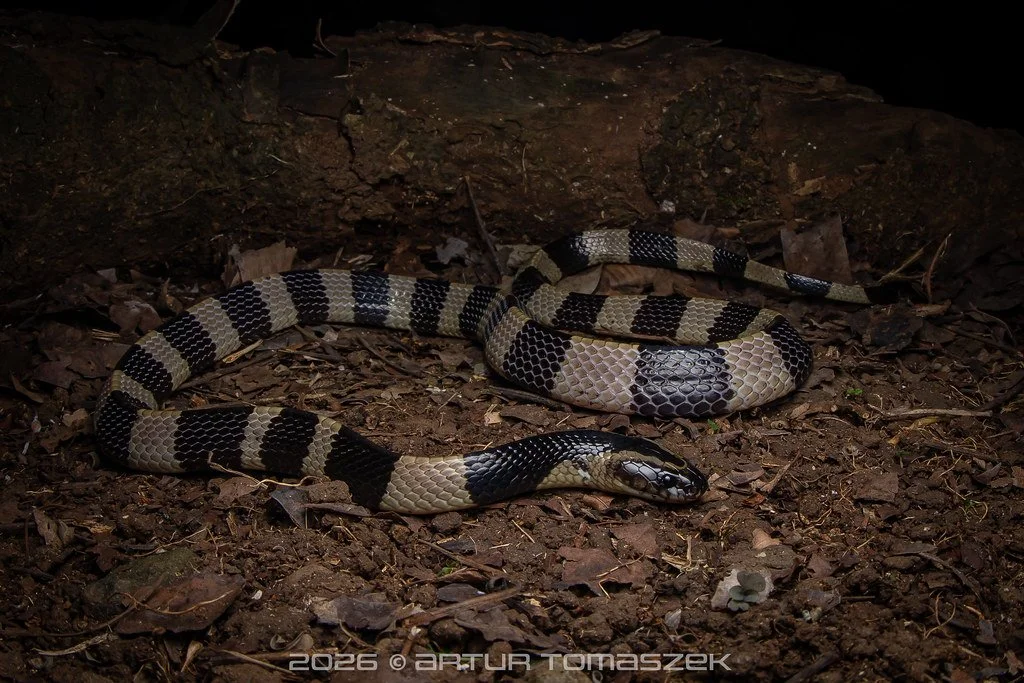
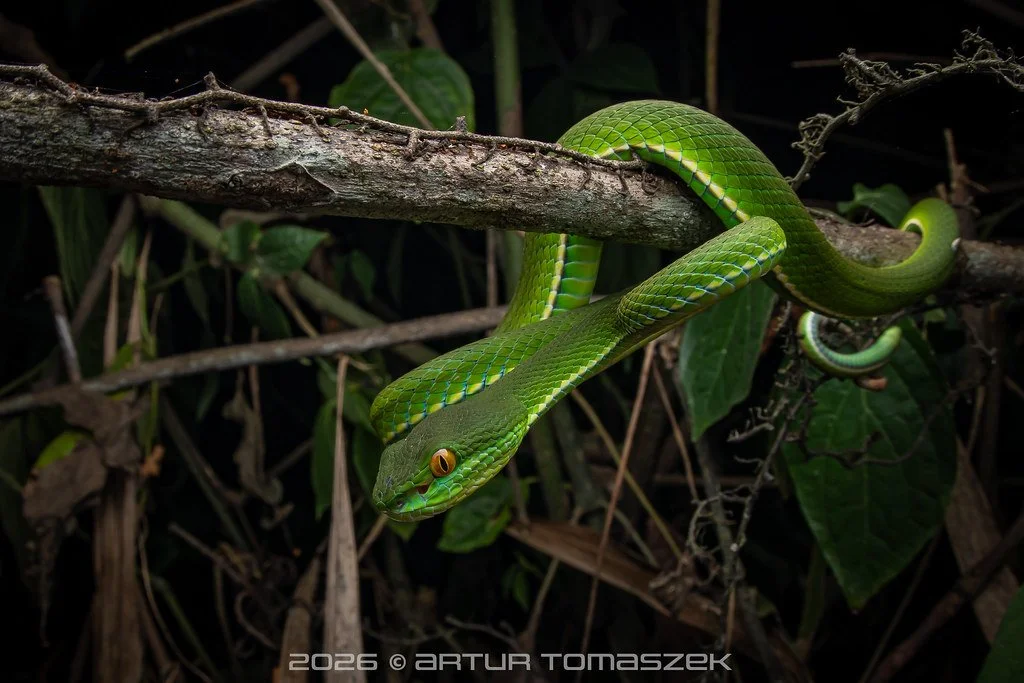
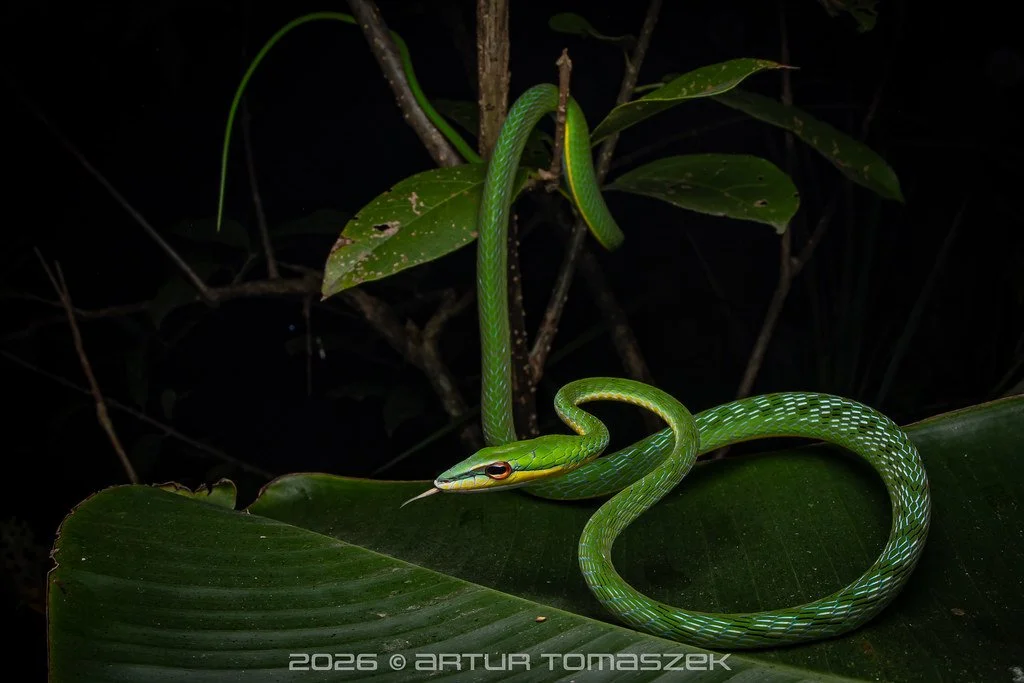
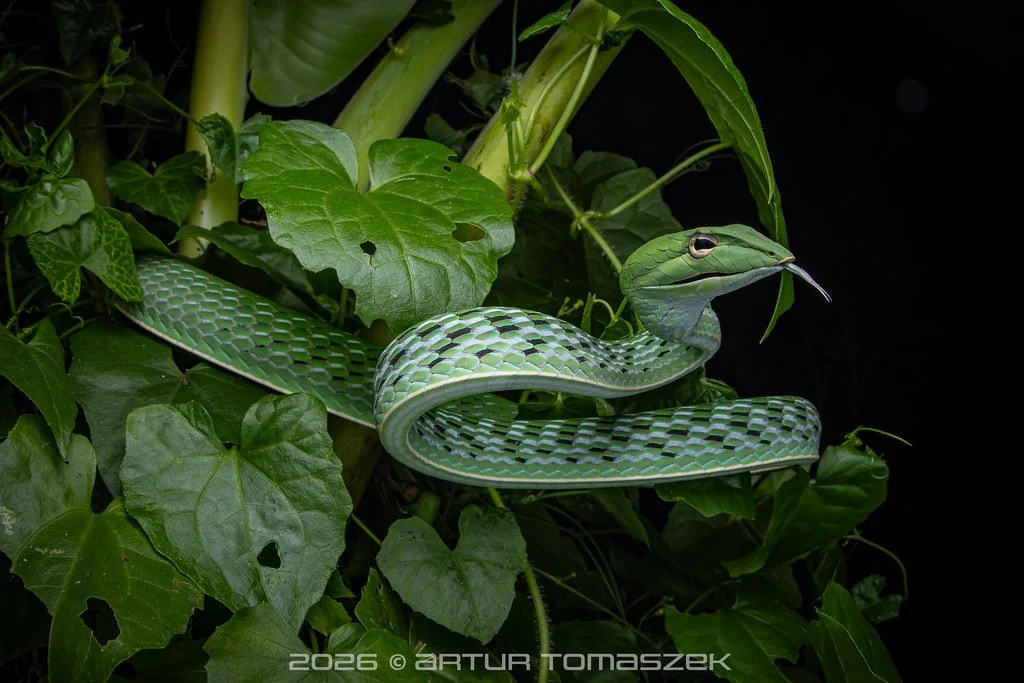
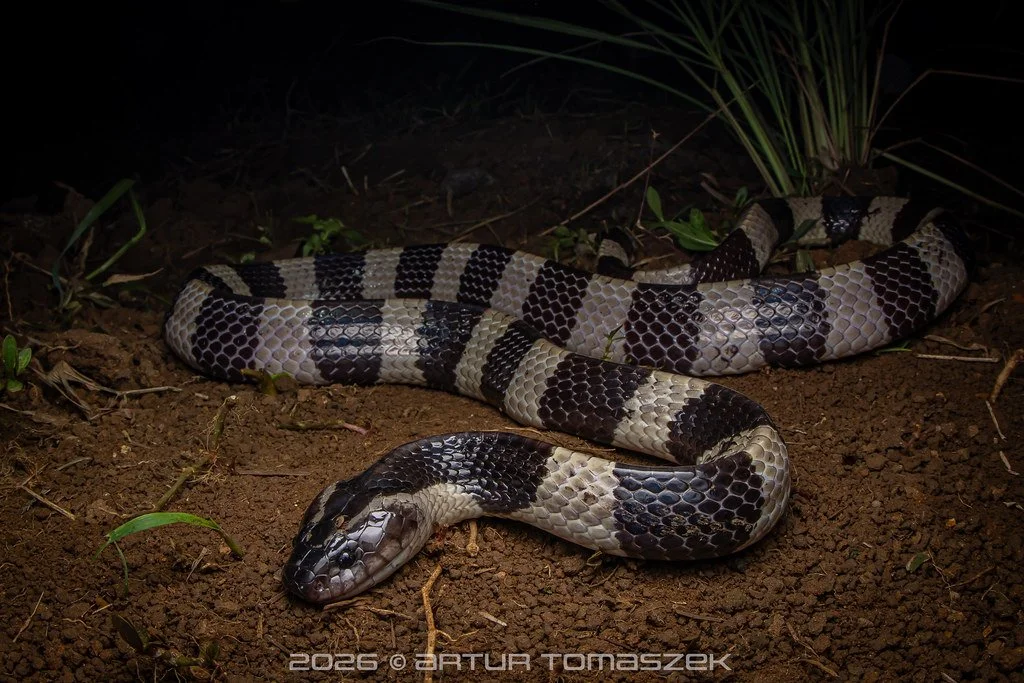
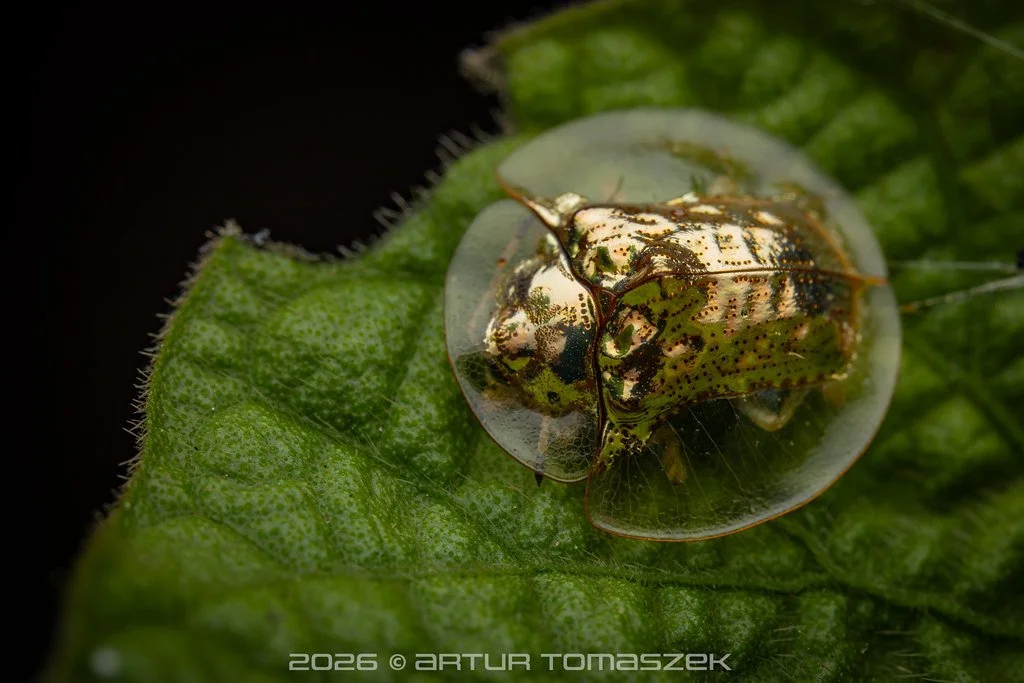
That was the end of our time on Java. We found both of our main targets and, just as importantly, met some genuinely wonderful people.
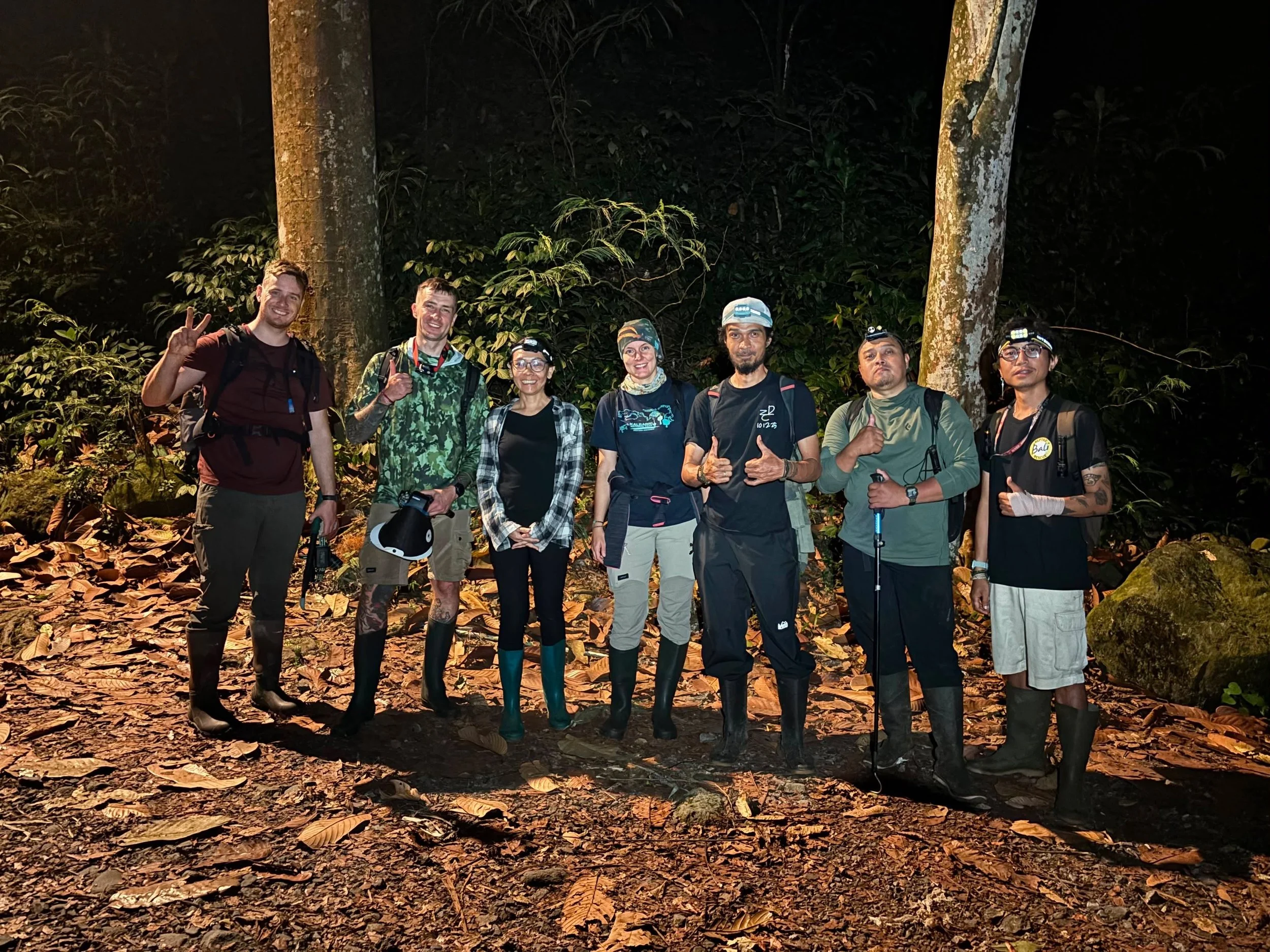
Our team on Java
Komodo
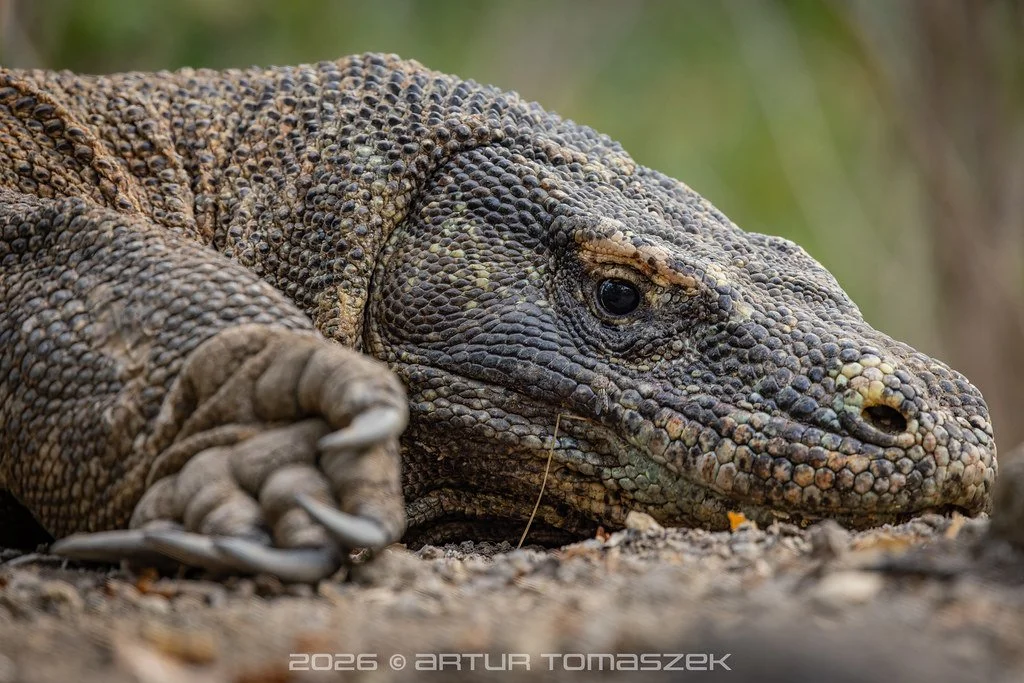
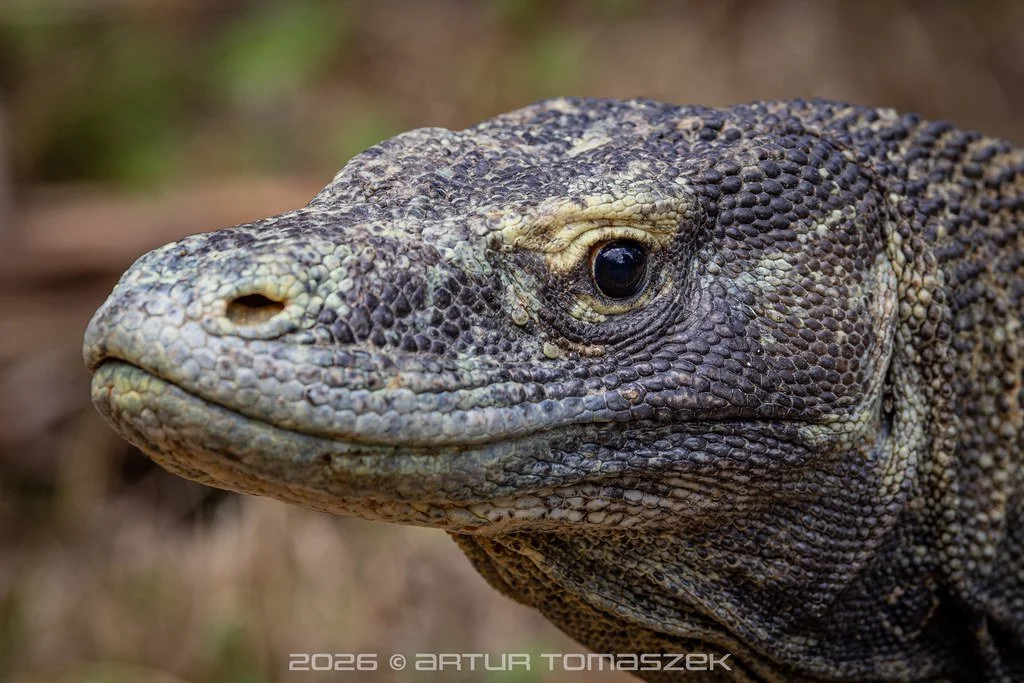
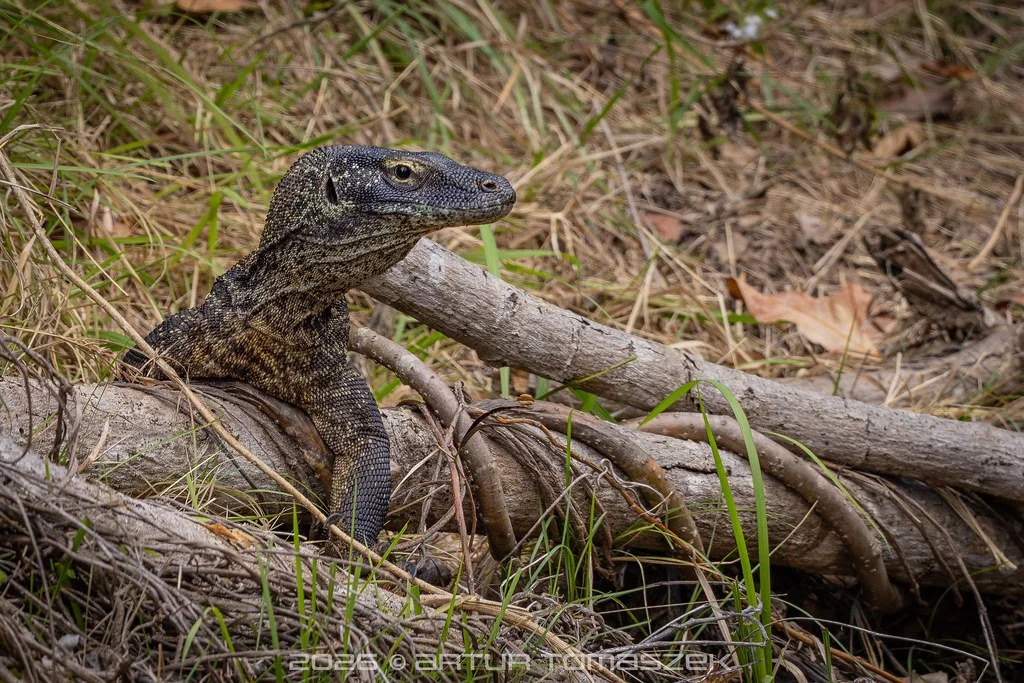
Varanus komodoensis
After landing in Labuan Bajo where we were greeted by Ajis, we had some dinner and immediately headed into the dry forest. There was no time to waste.
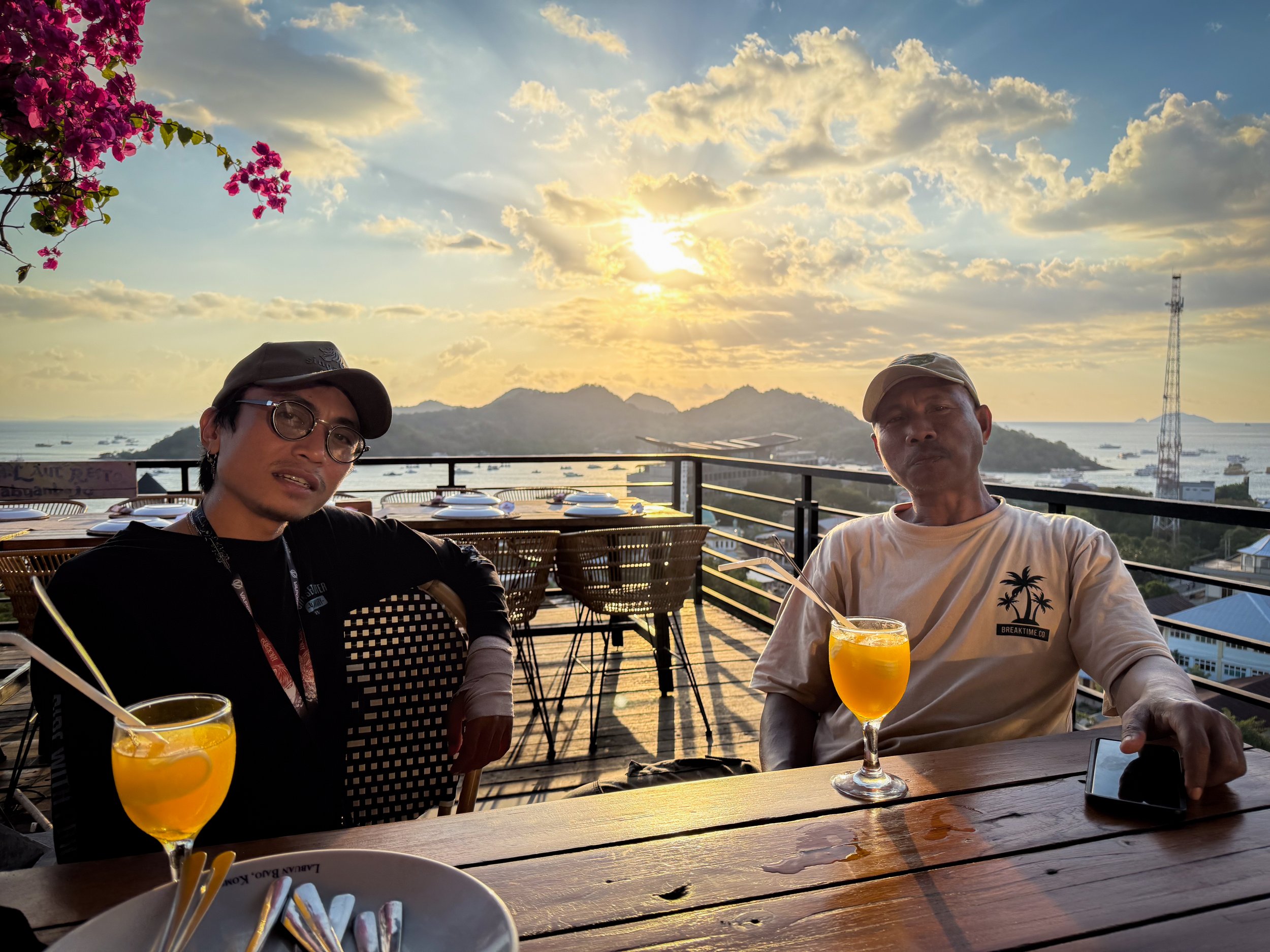
Arius and Ajis
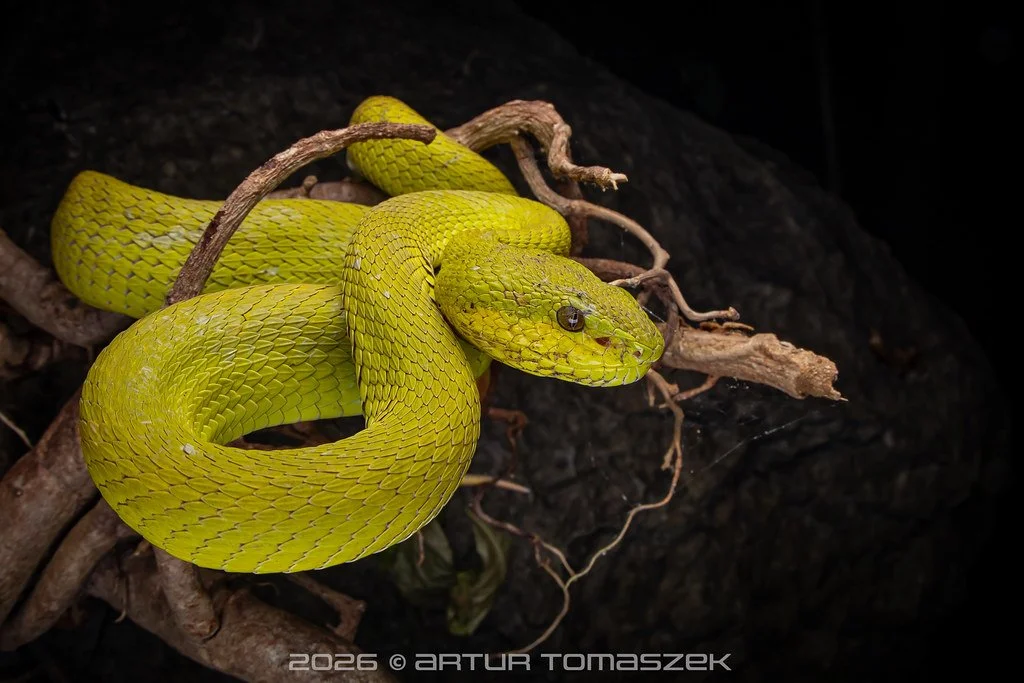
During that short first night, we found a green Trimeresurus insularis along with a yellowish individual, Dendrelaphis inornatus and Psammodynastes pulverulentus. Not bad at all for a quick introduction to Flores.
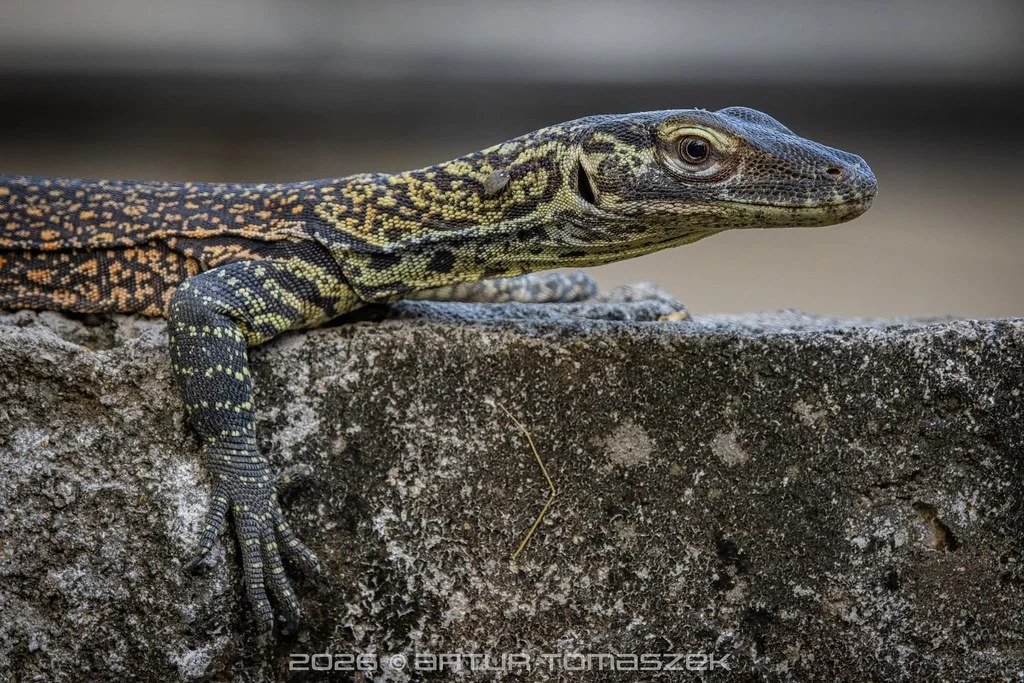
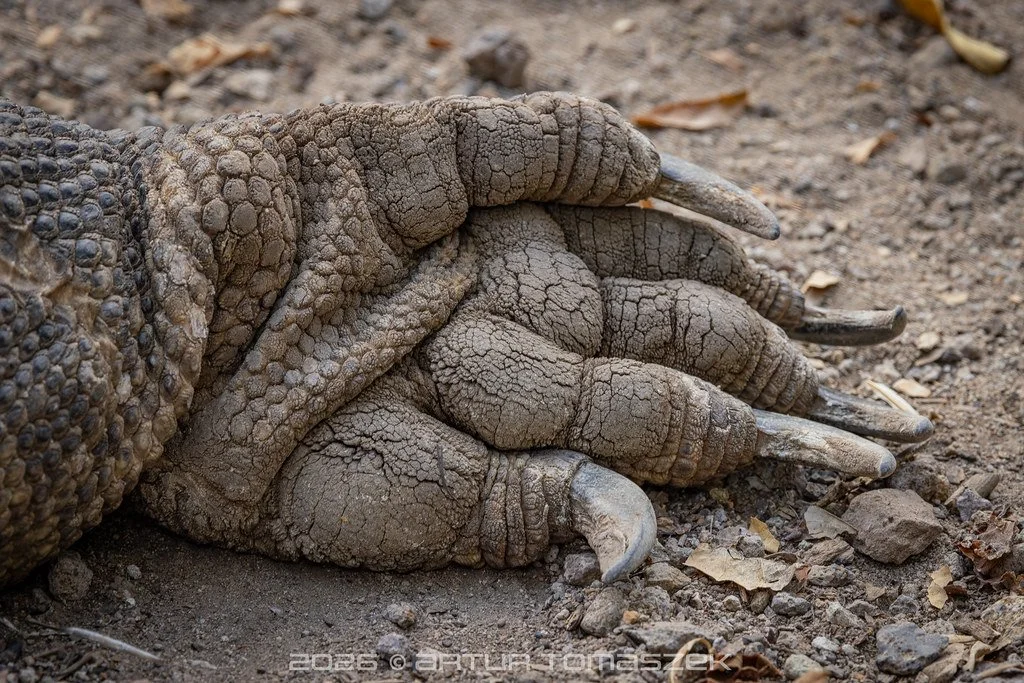
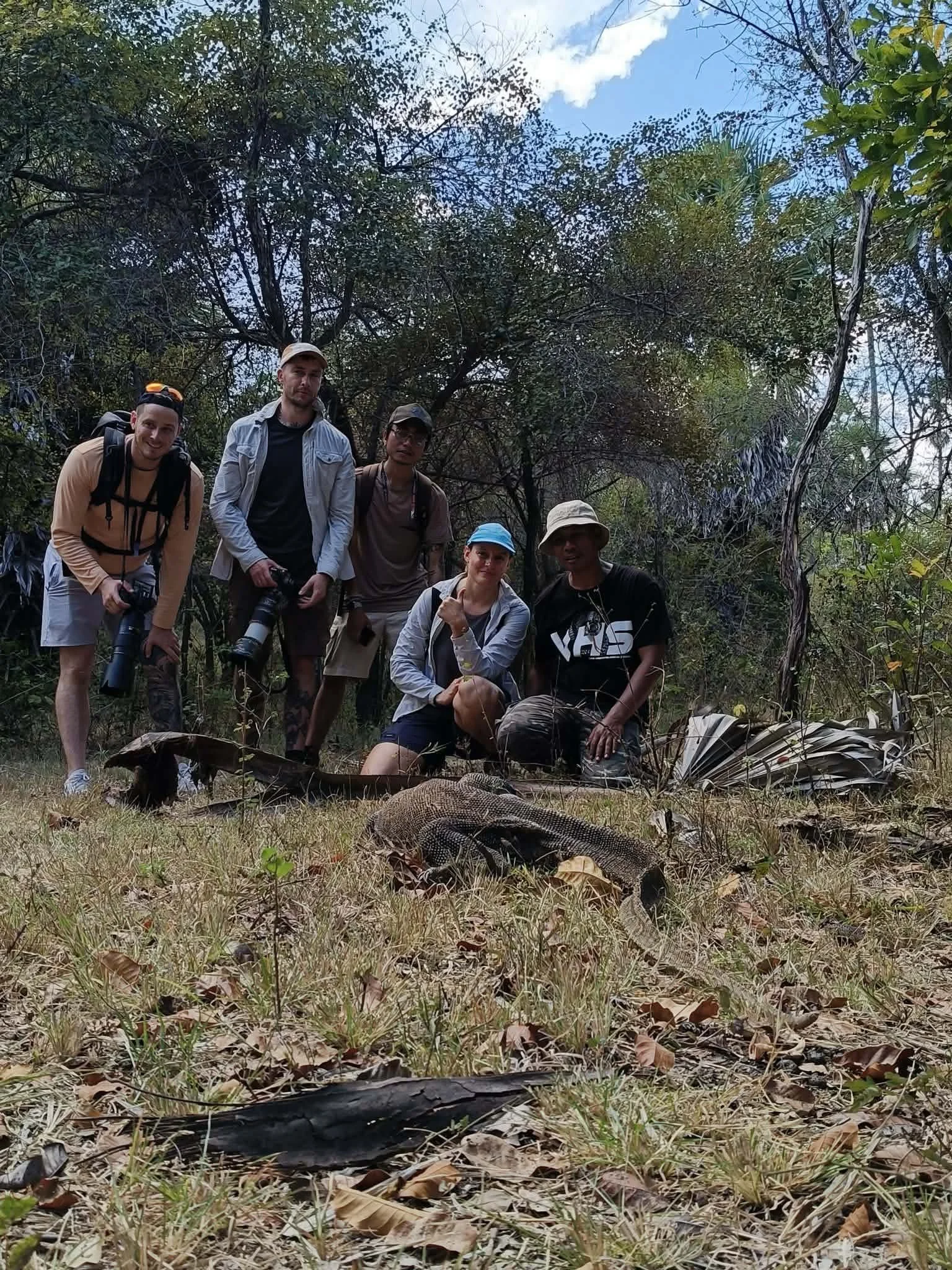
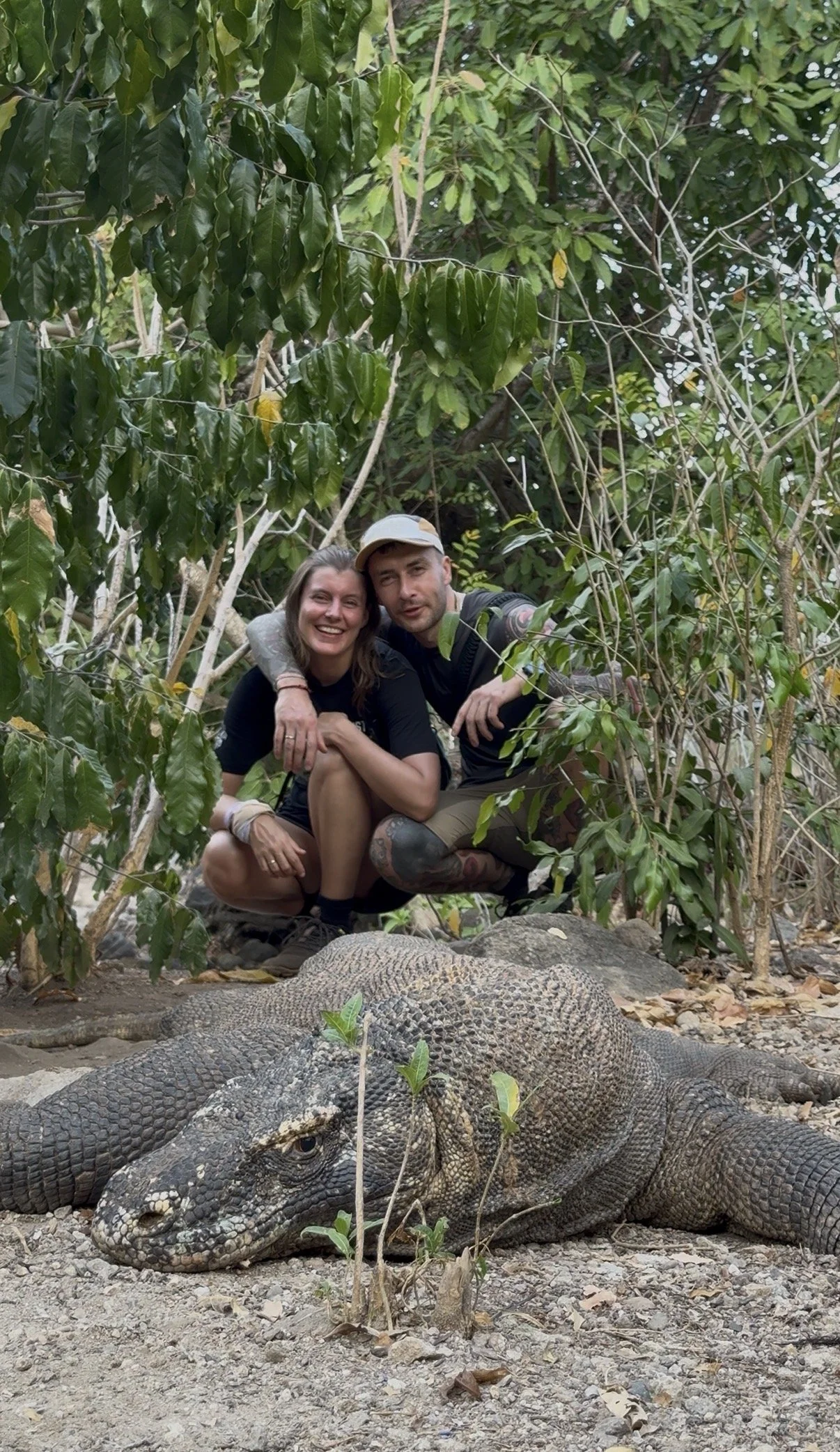
The next morning, we boarded our boat and headed to Komodo National Park. It was amazing to return after more than a decade, although the difference was impossible to miss. Komodo has become an incredibly busy place.
We spent the day cruising around the islands, snorkelling and, of course, visiting the Komodo dragons. That night we also went for a walk on Padar Island. Our main target was the famous blue form of Trimeresurus insularis, and it did not take long before we found one.
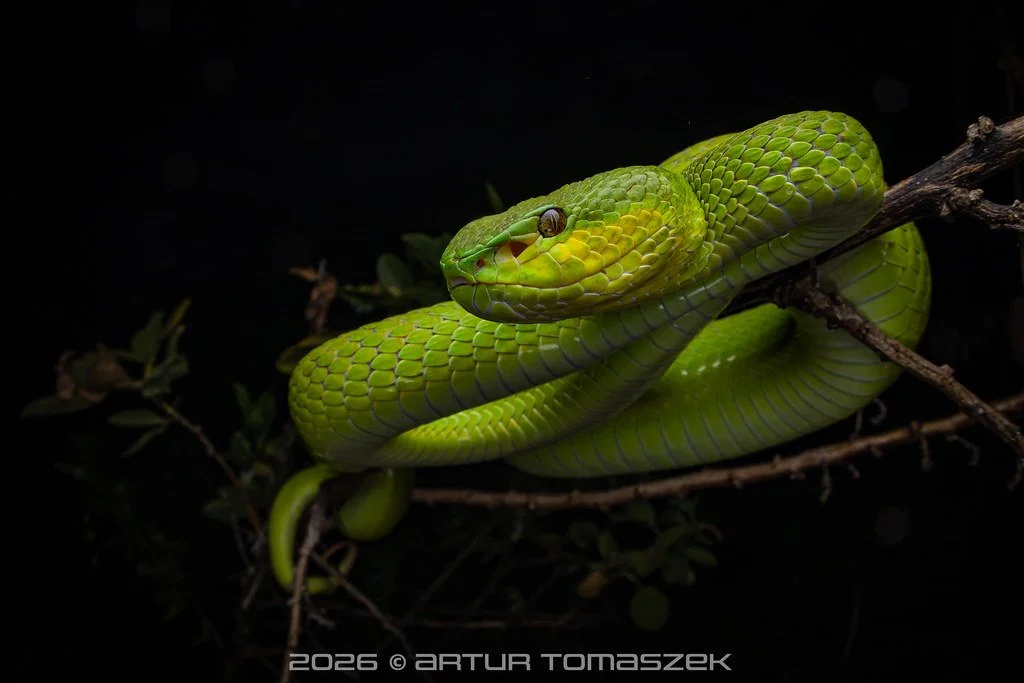
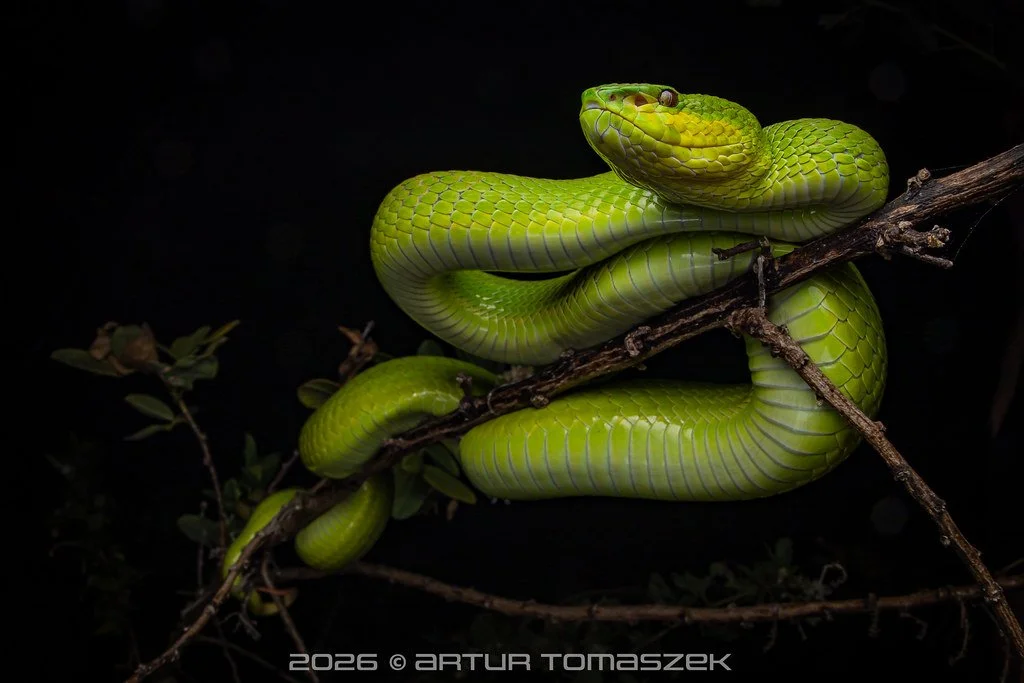
The blue insularis are not a separate species, but one expression of the remarkable colour variation found in T. insularis across the Lesser Sundas. Most individuals are green, but blue and yellow forms occur in parts of the archipelago. Seeing that unreal blue among Padar’s dry grass and shrubs was one of the most visually striking encounters of the trip. The habitat itself surprised us: open, dry and grassy, rather than the humid green forest many people might imagine for an arboreal pit viper.
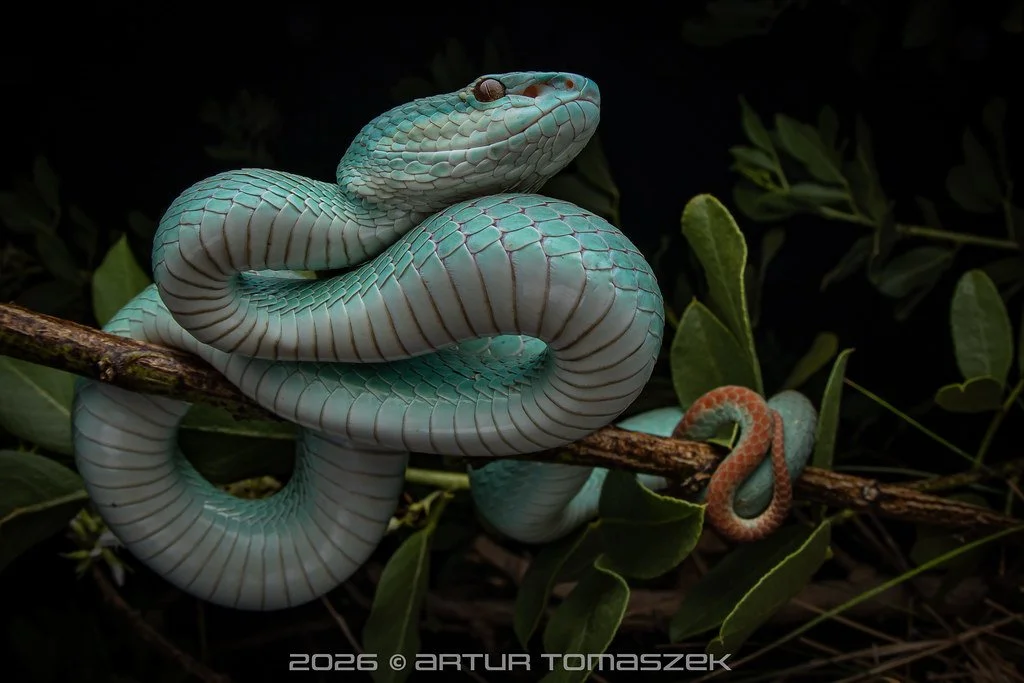
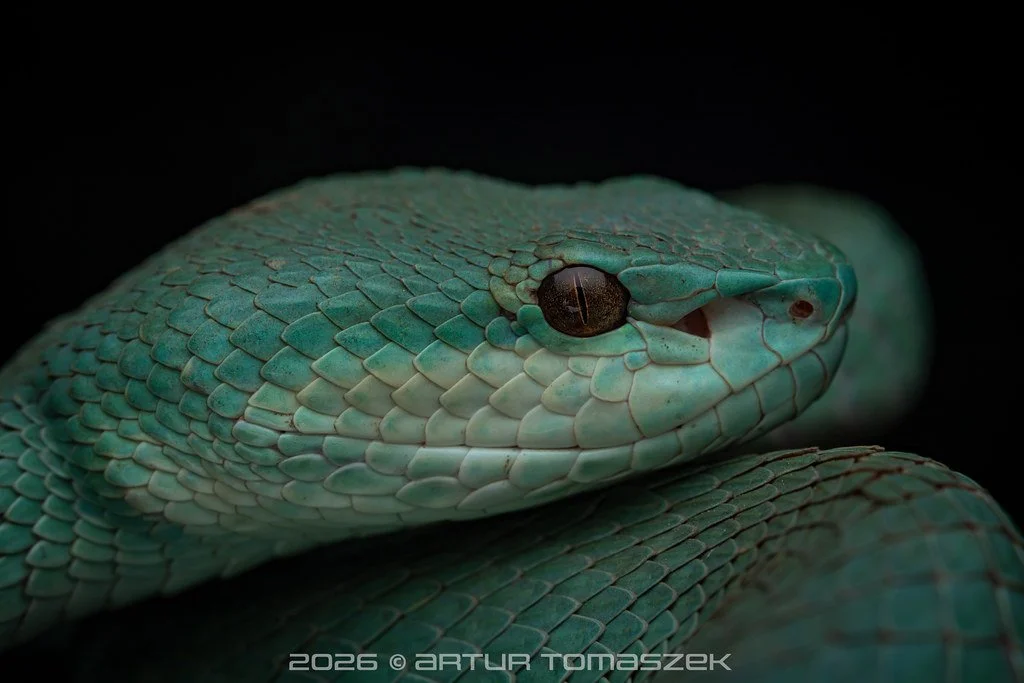
We also found several green individuals, which were much more common. One of them was enormous, the biggest Trimeresurus either of us had ever seen. It was easily over a metre long and massively built. Perhaps it approached 120 centimetres, although without measuring it on the spot we will never know. The photographs do not come close to showing its true size.
On our final day, we tried Rinca Island for Siamese Russell’s viper (Daboia siamensis) and Timor python (Malayopython timoriensis). The heat was brutal, it was exceptionally dry and we failed to find anything. On top of that, Artur developed probably one of the worst stomachaches he’s ever experienced, began shivering with fever, his every muscle hurt and he could barely walk. Even Jesse realised that something was wrong when Artur, normally charging ahead, spent the entire walk dying quietly at the back of the group.
Luckily, Karolina had brought the right medicine and fixed him overnight. It was a loooong night, but by the morning we were ready to move again. We later found out that it’s quite common for boats in Komodo to store raw meat near ice cubes used for drinks…
We said goodbye to Arius, met with Agus at the airport in Bali and headed to North Sulawesi.
North Sulawesi
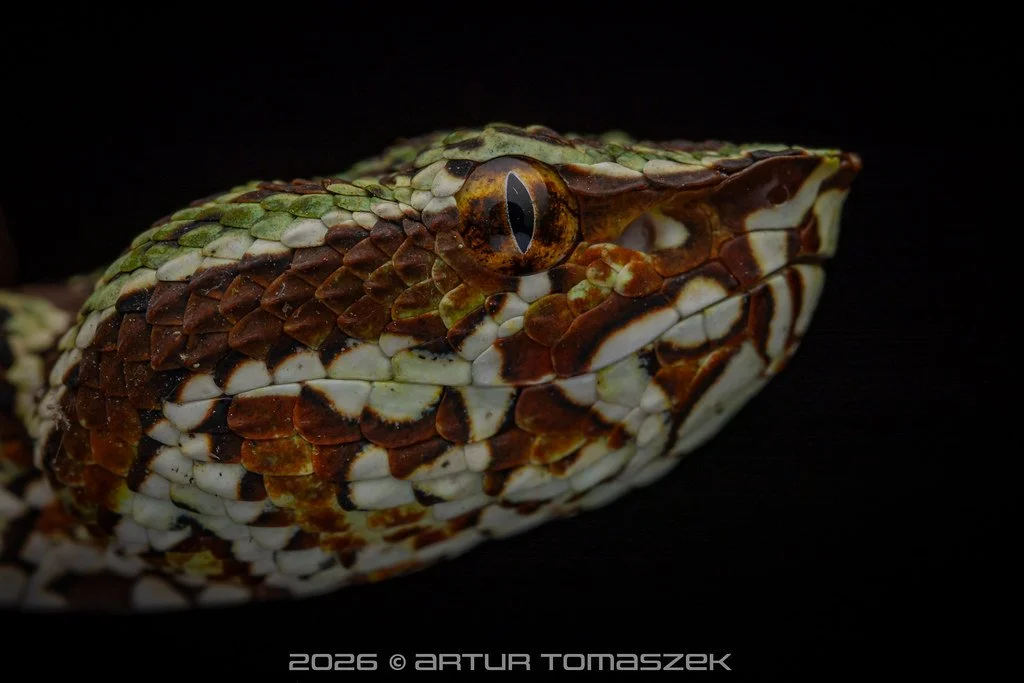
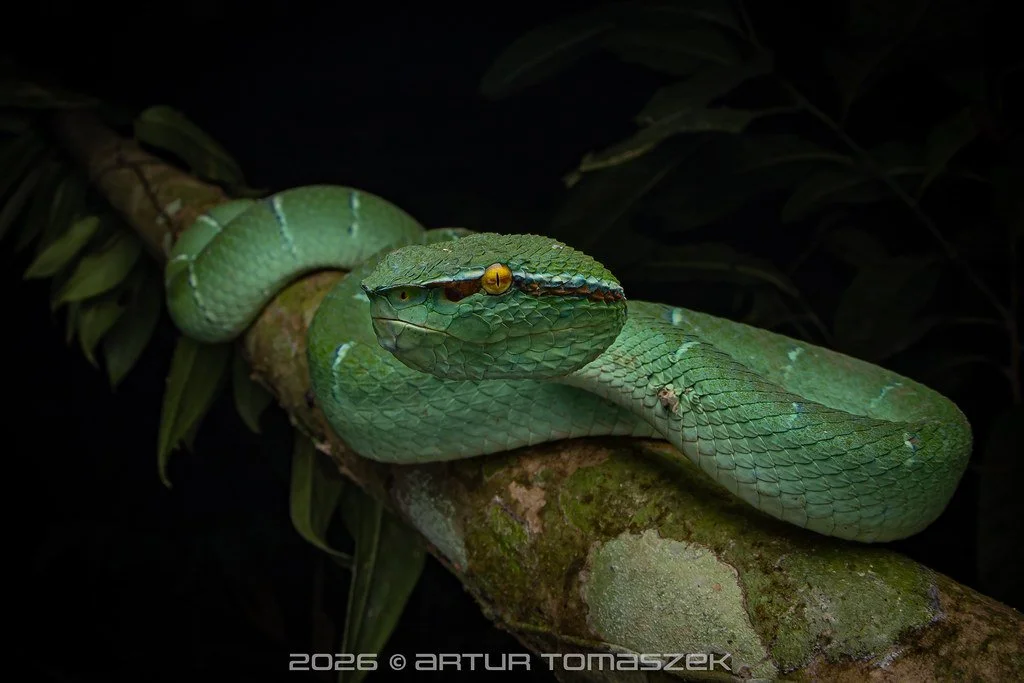
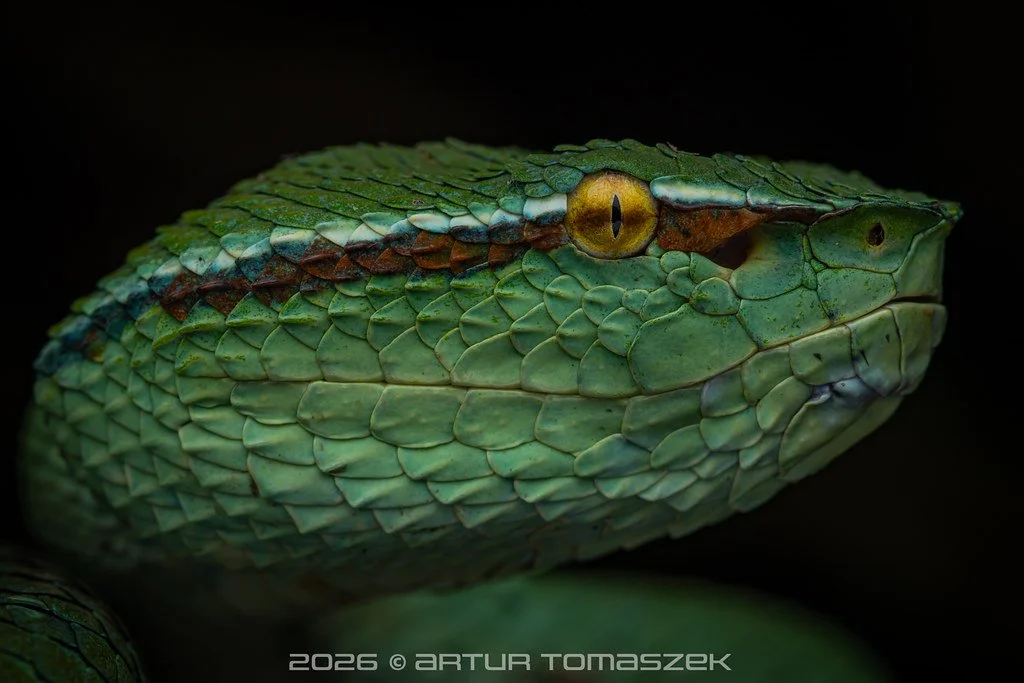
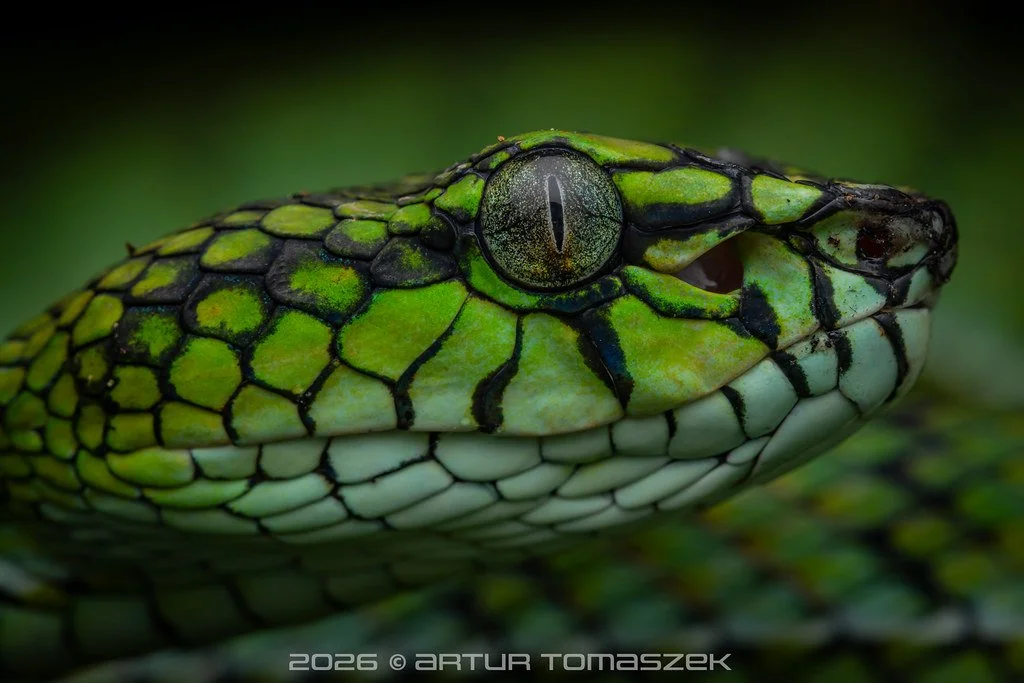
Tropidolaemus laticinctus
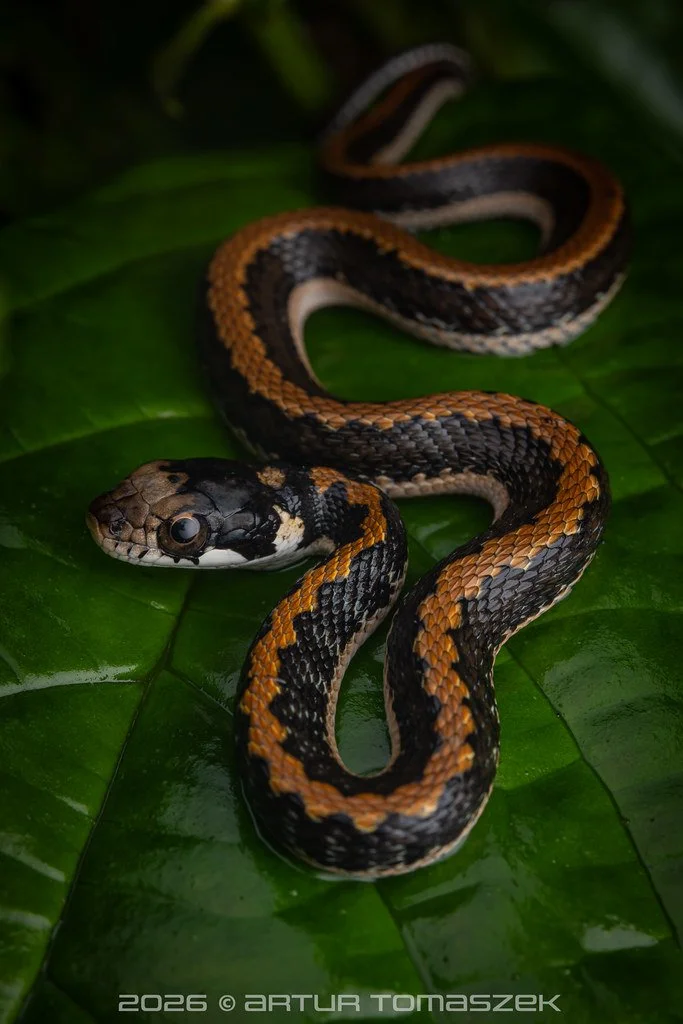
We arrived at around midnight, but that did not stop us from heading directly into the forest. Several Dendrelaphis terrificus, Tropidolaemus subannulatus and a few Ahaetulla fasciolata made the first night very promising.
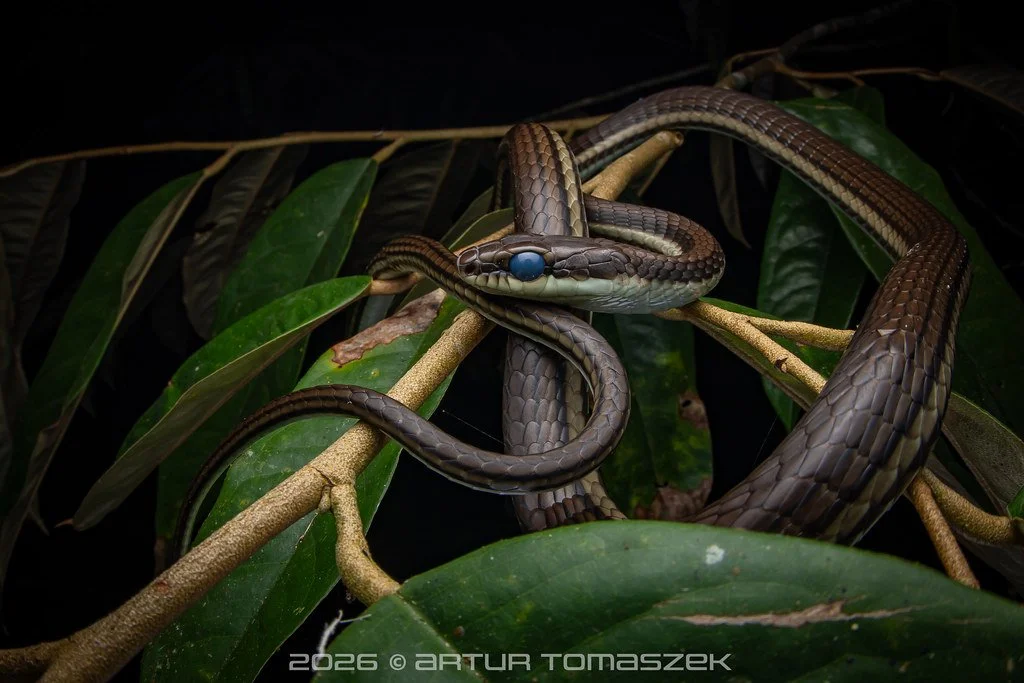
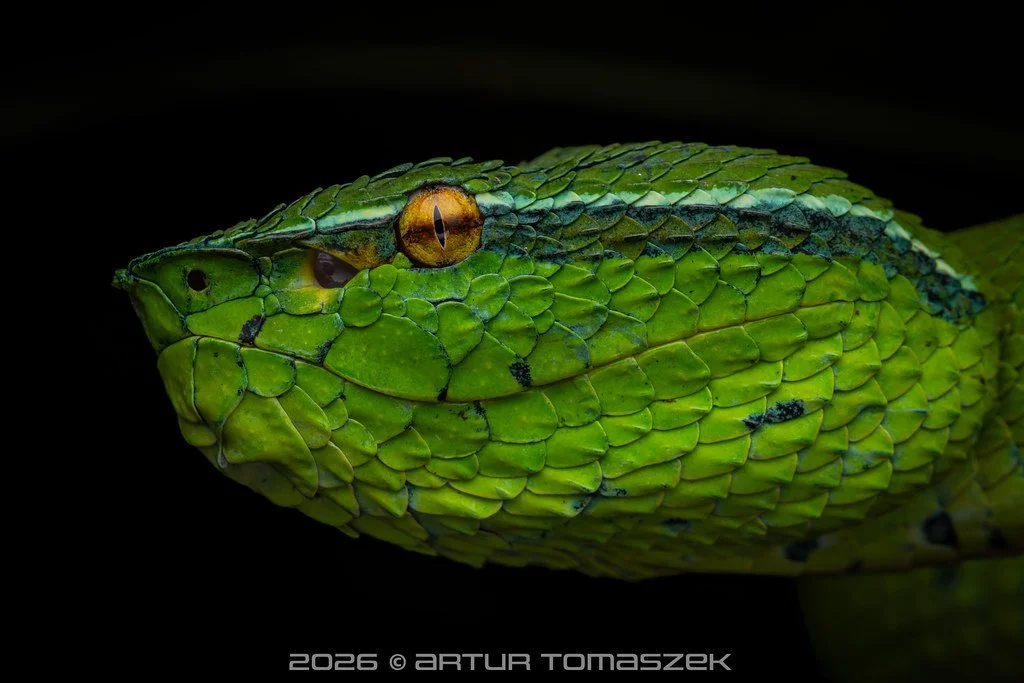
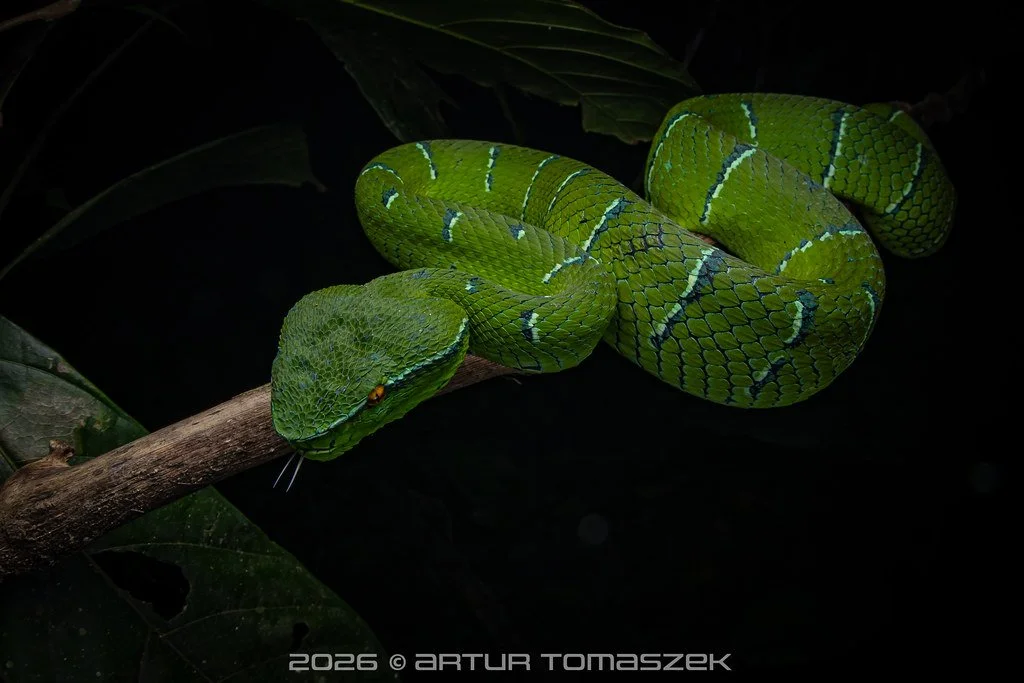
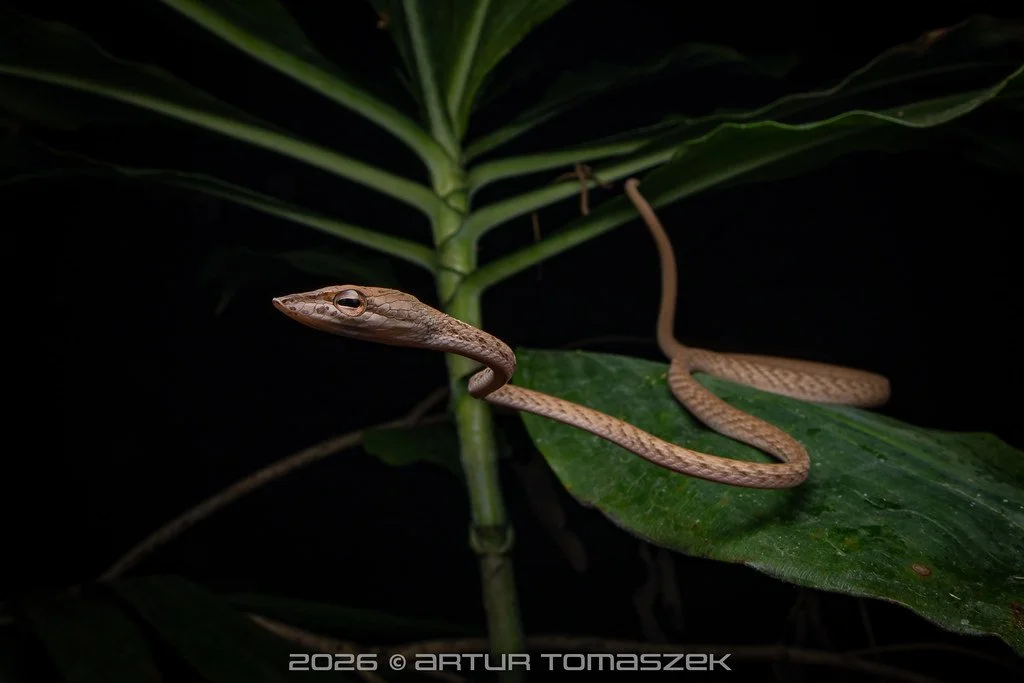
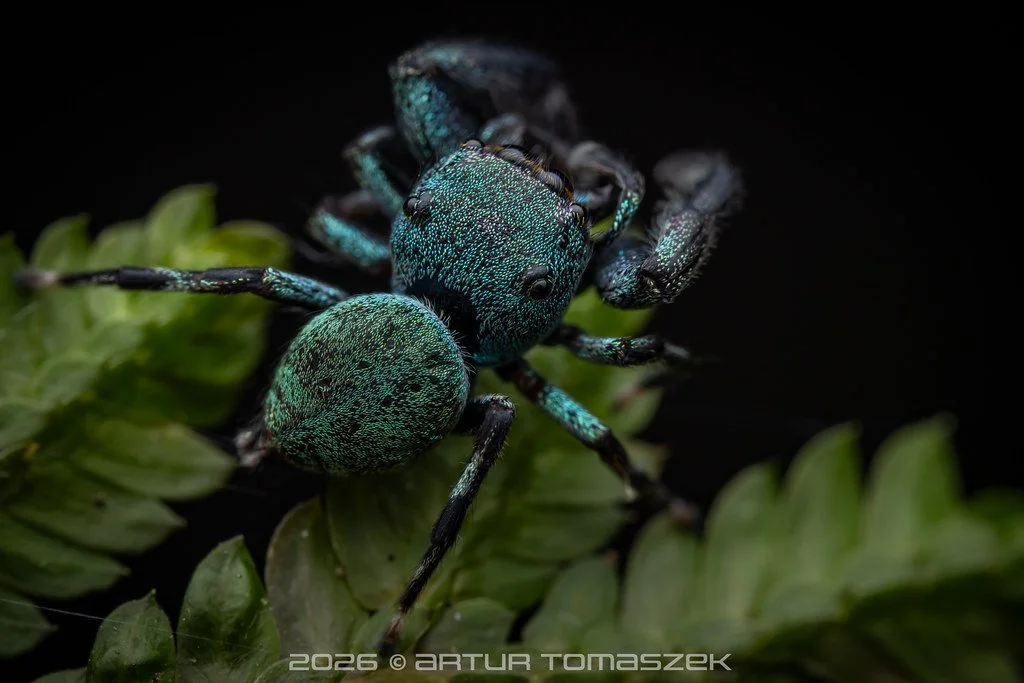
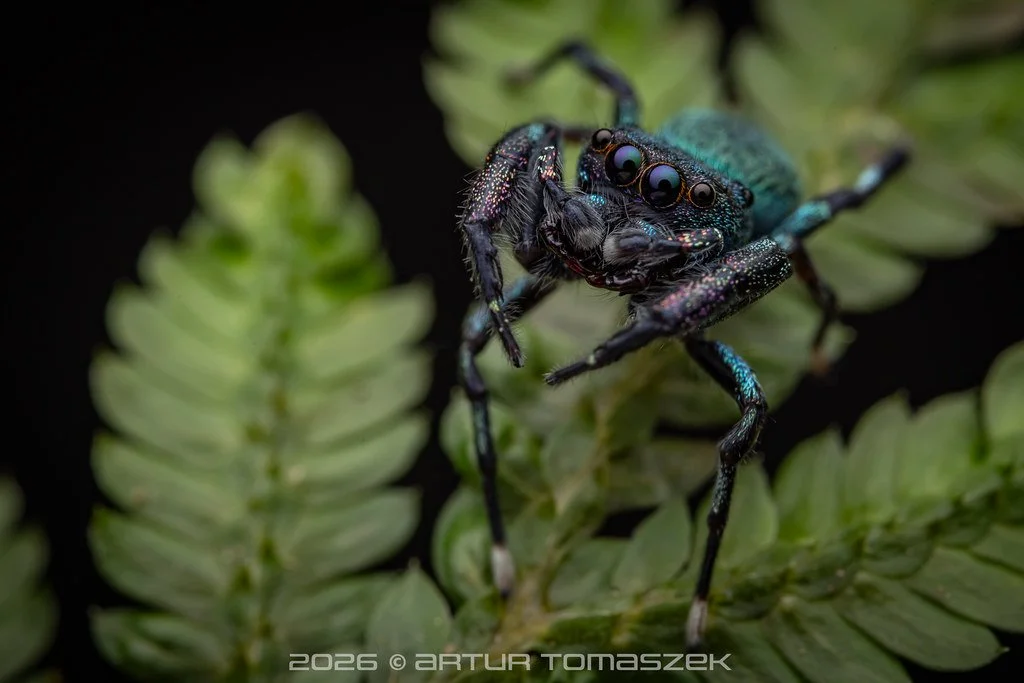
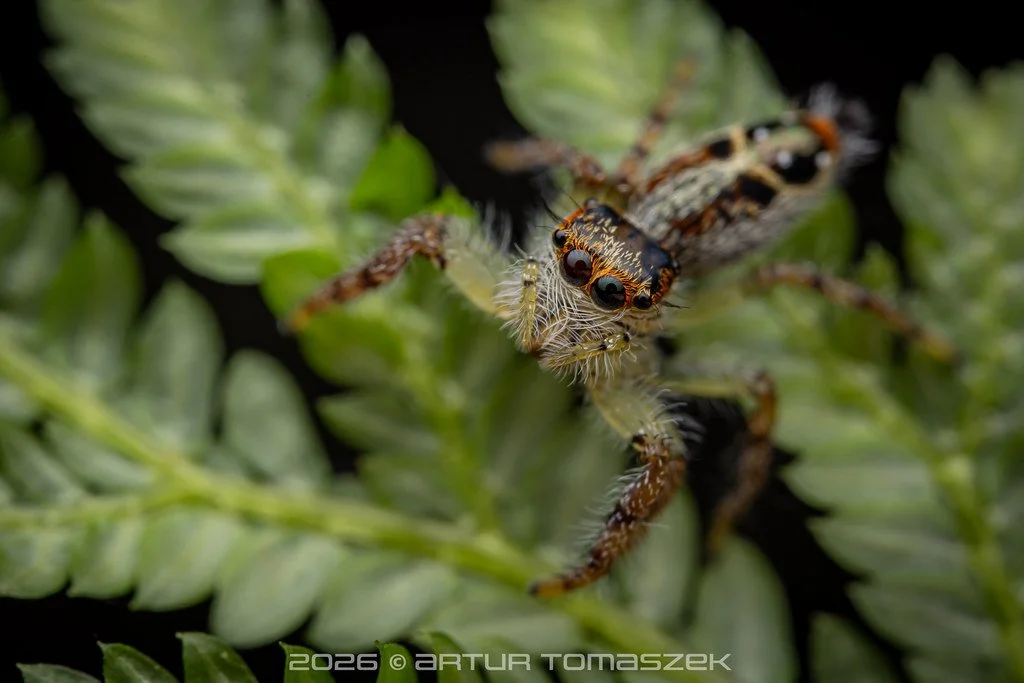
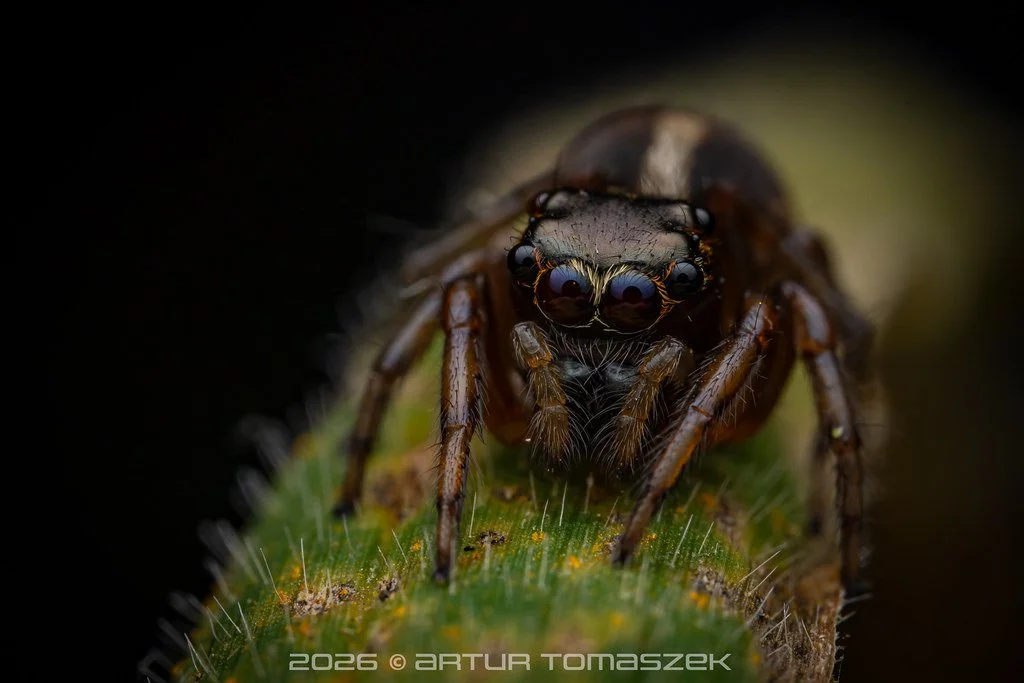
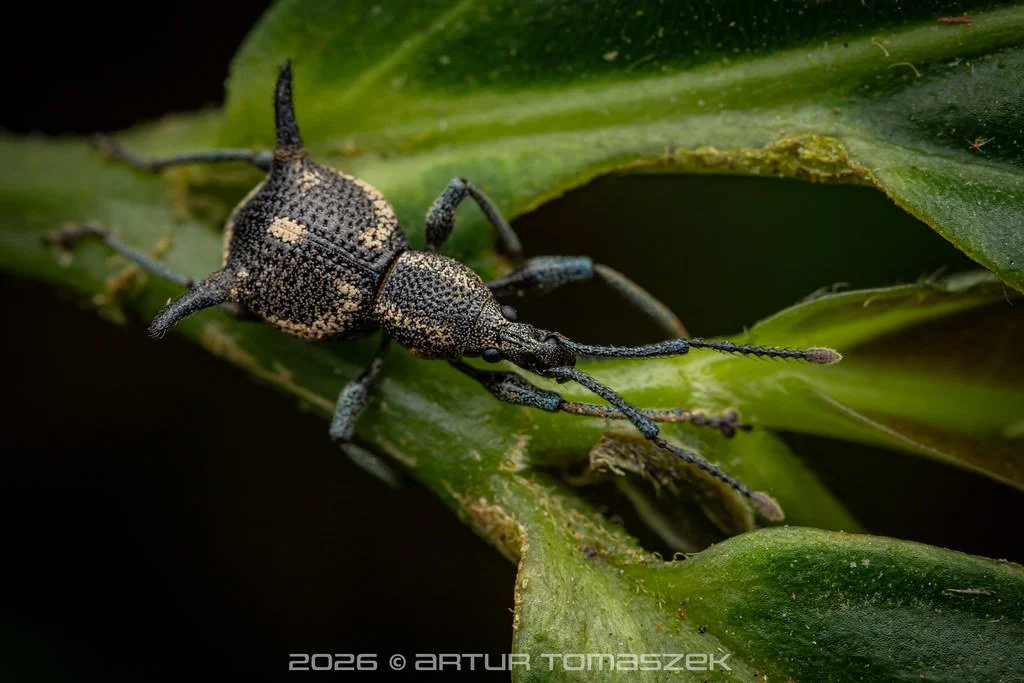
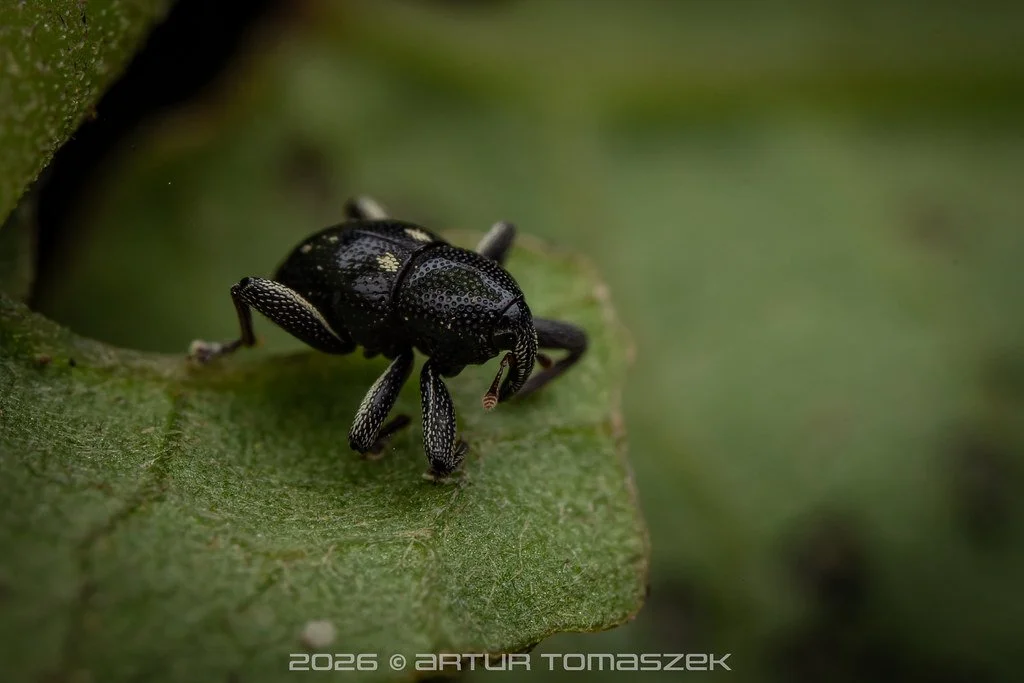
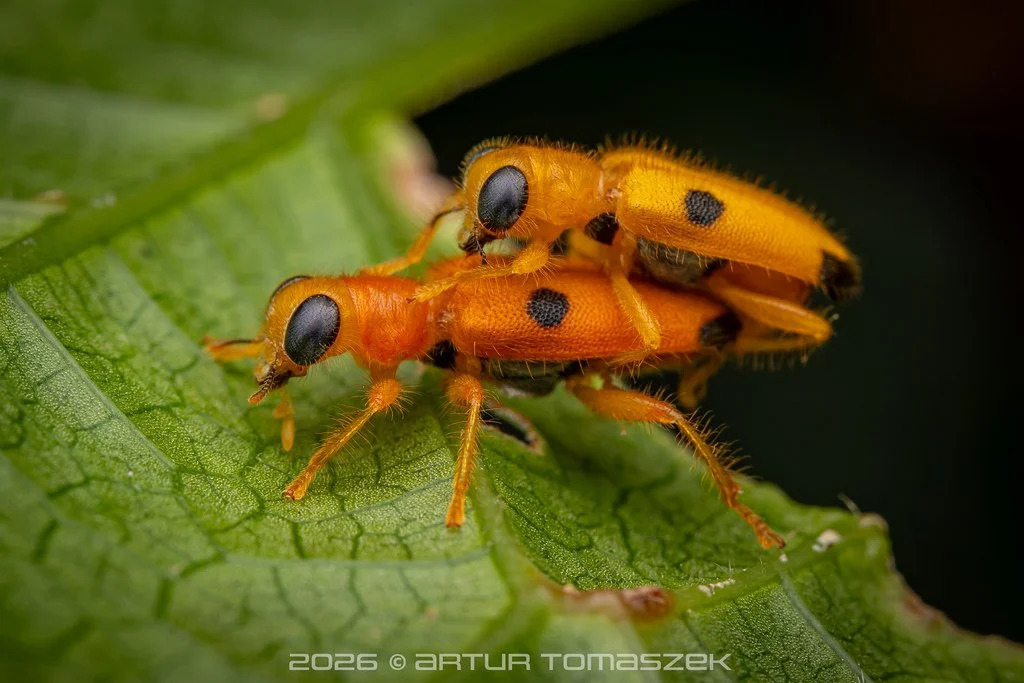
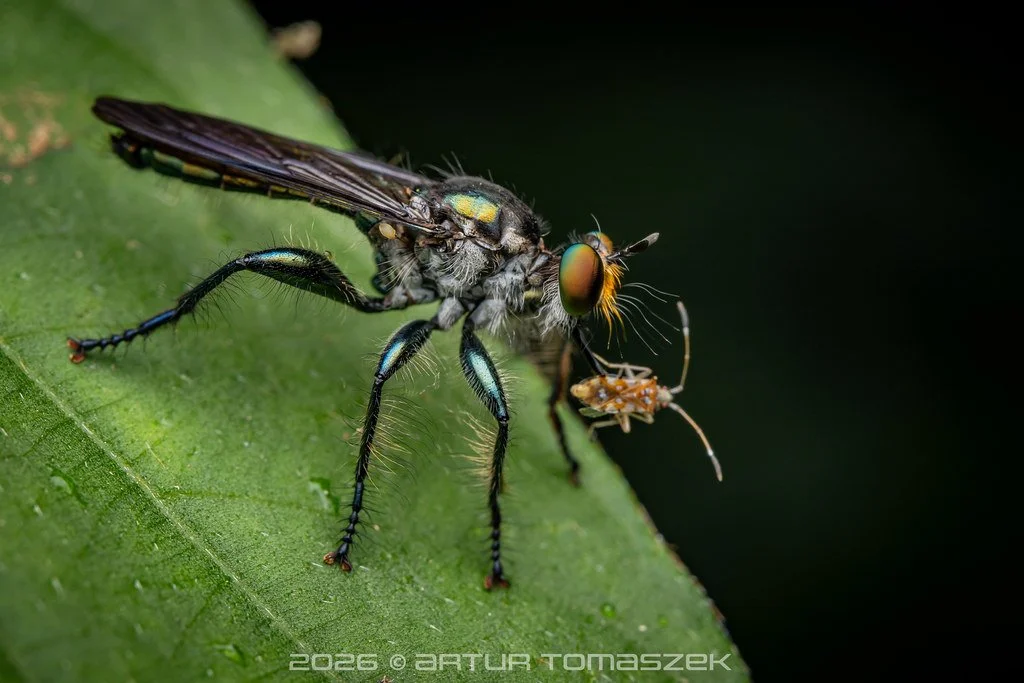
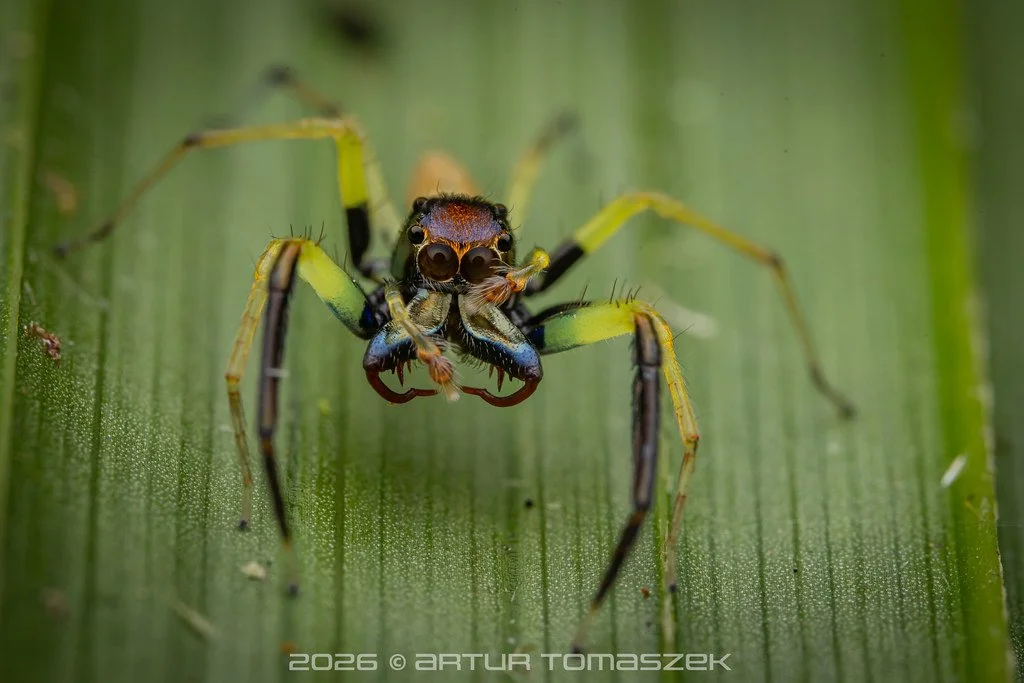
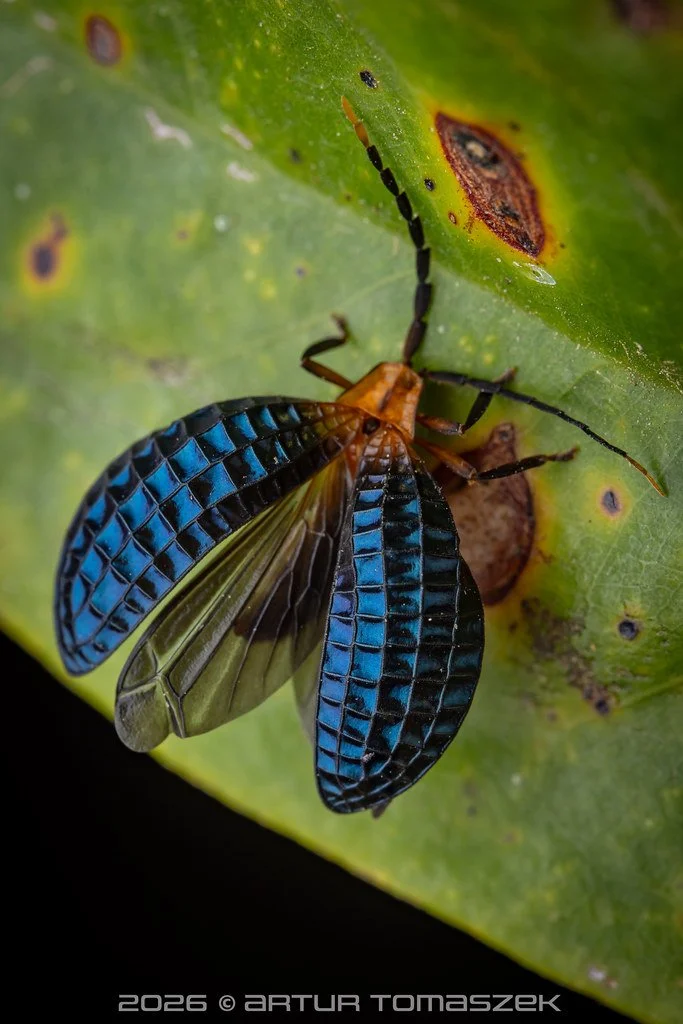
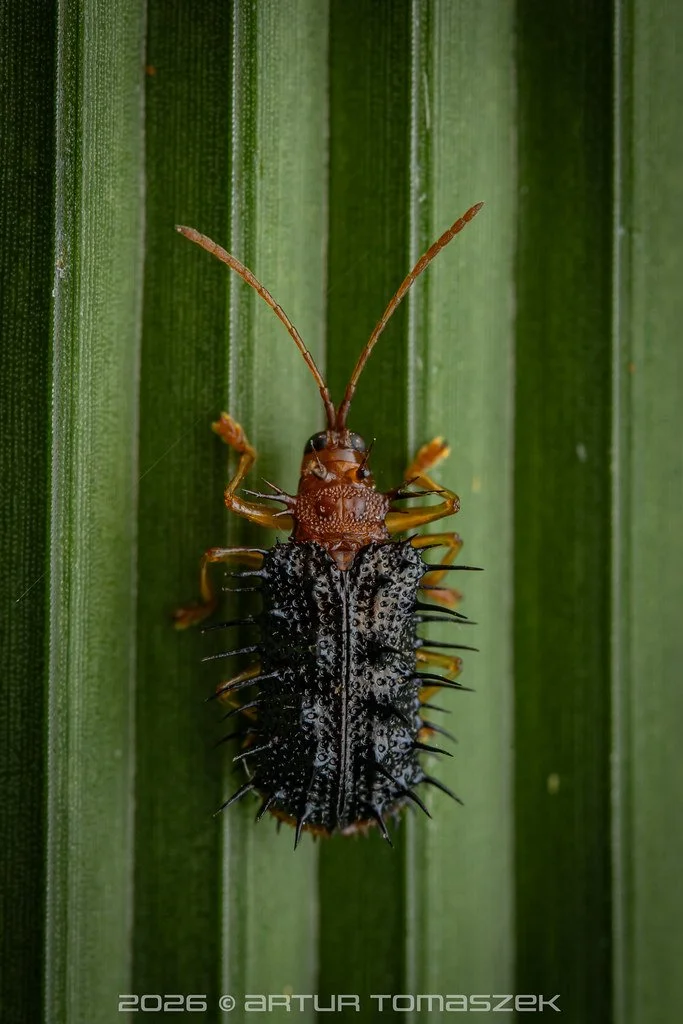
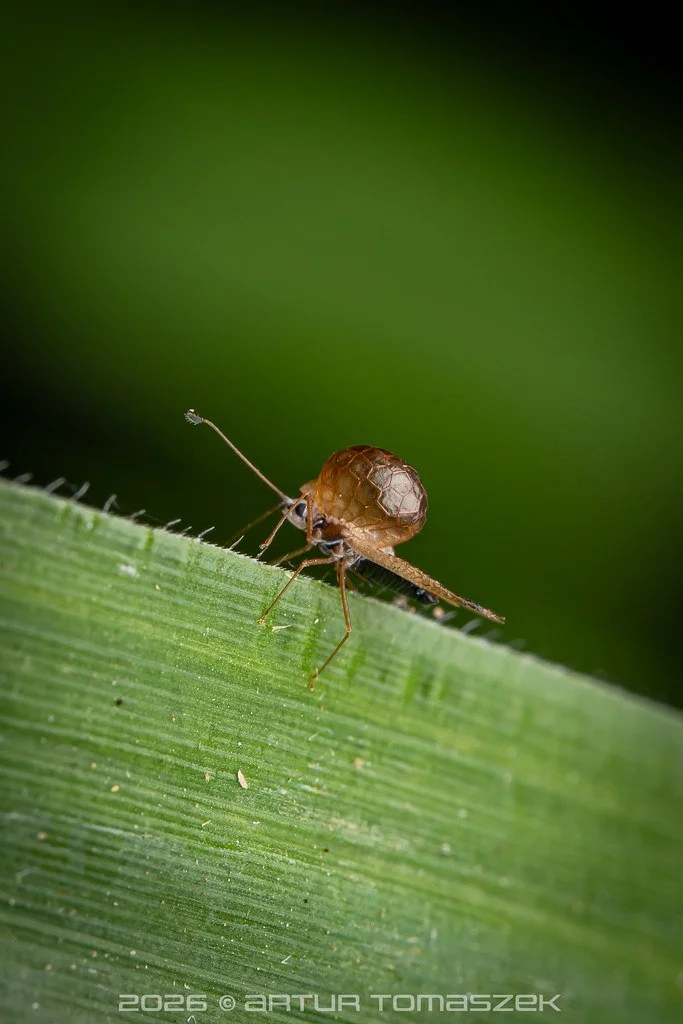
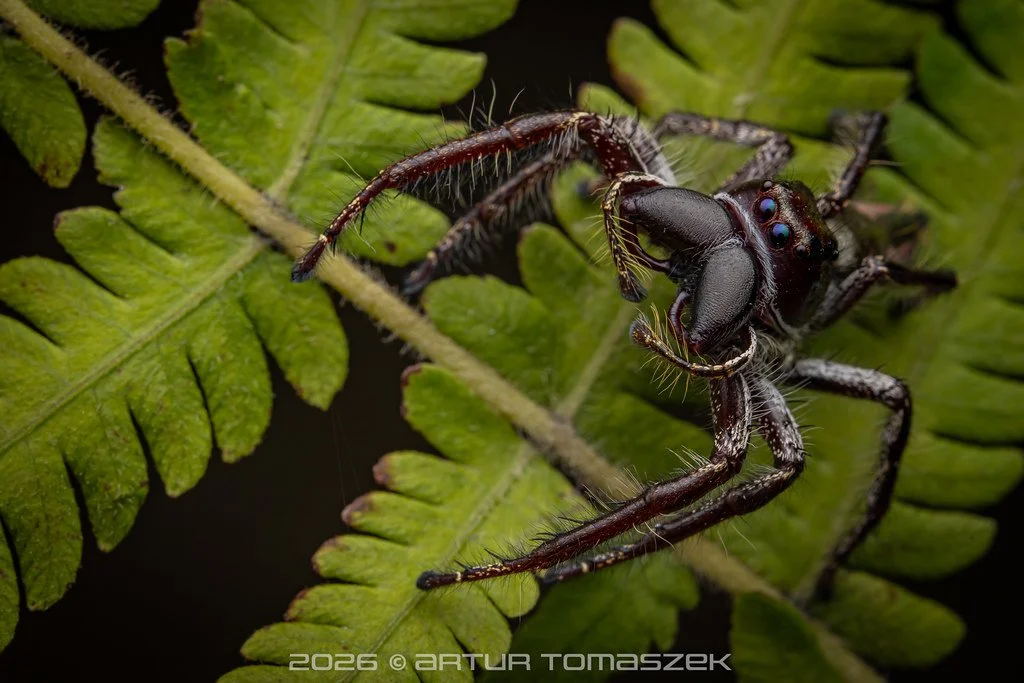
The following day, we went bugging. Strong wind kept invertebrate activity relatively low, but we still managed to find lots of beautiful things before returning our attention to reptiles after dark.
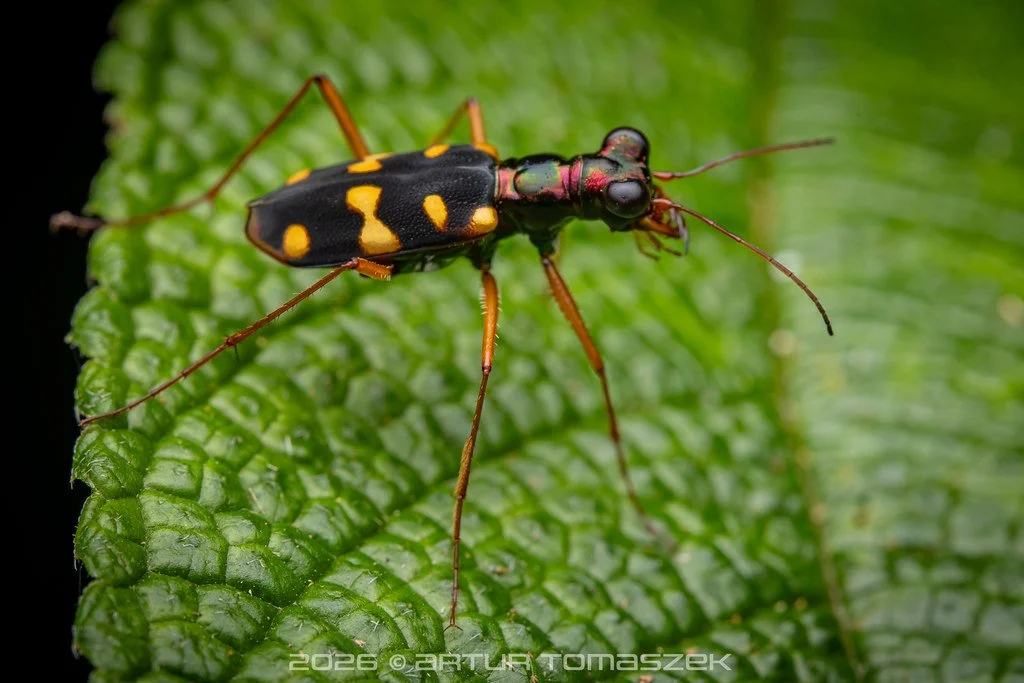
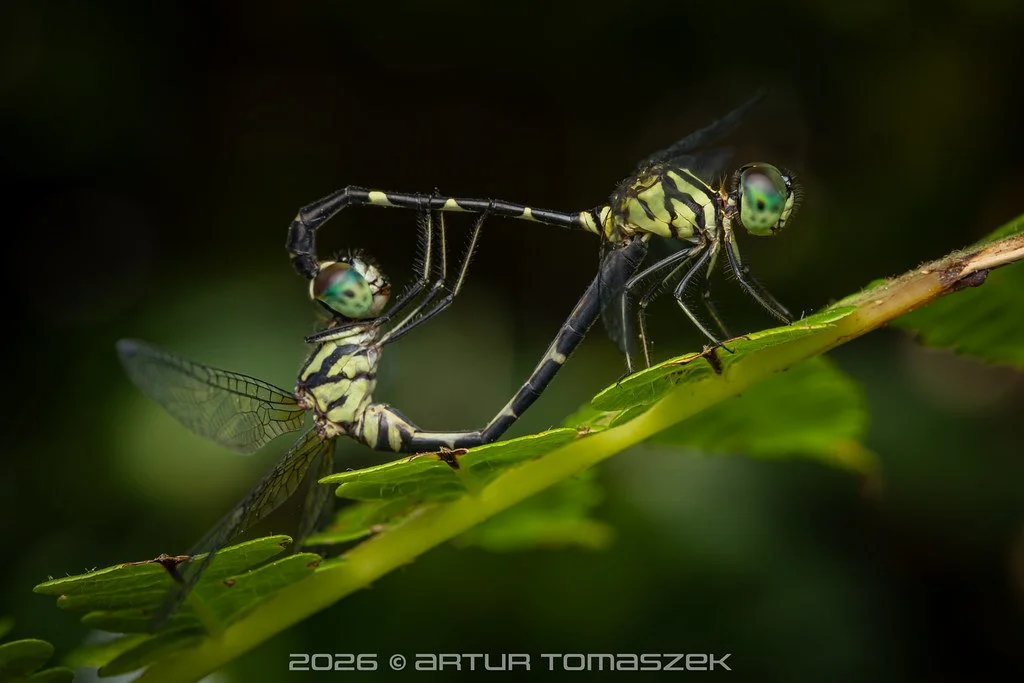
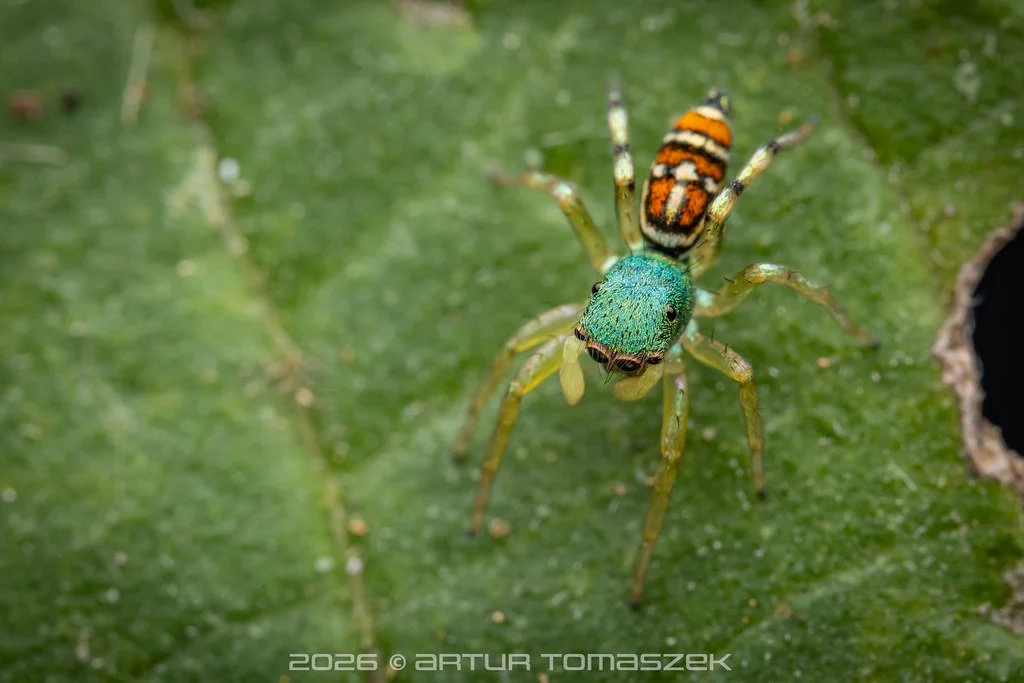
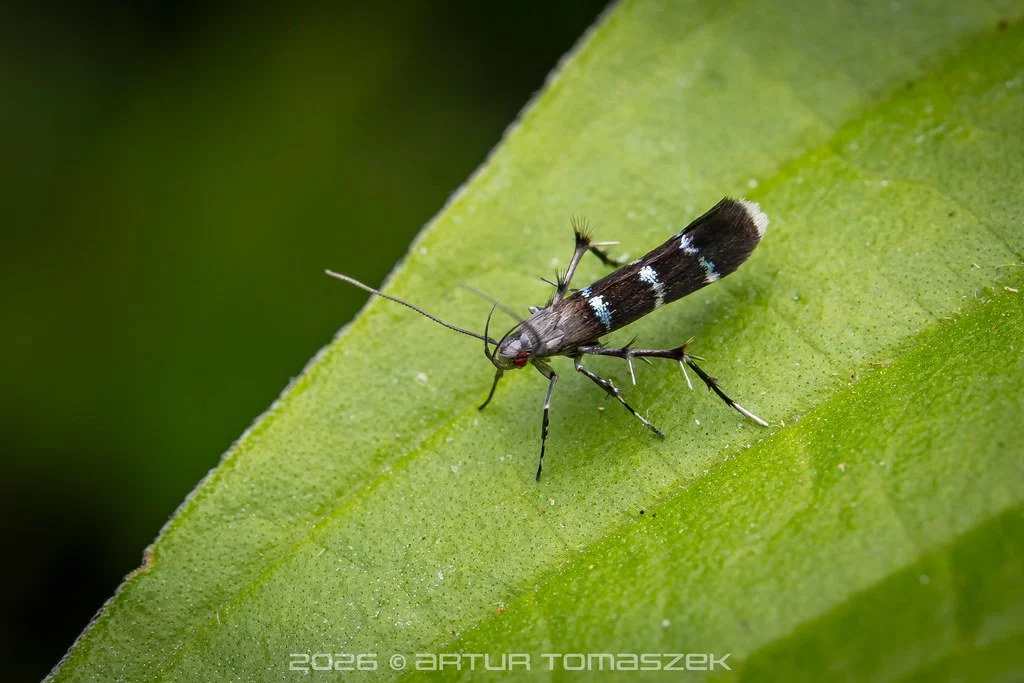
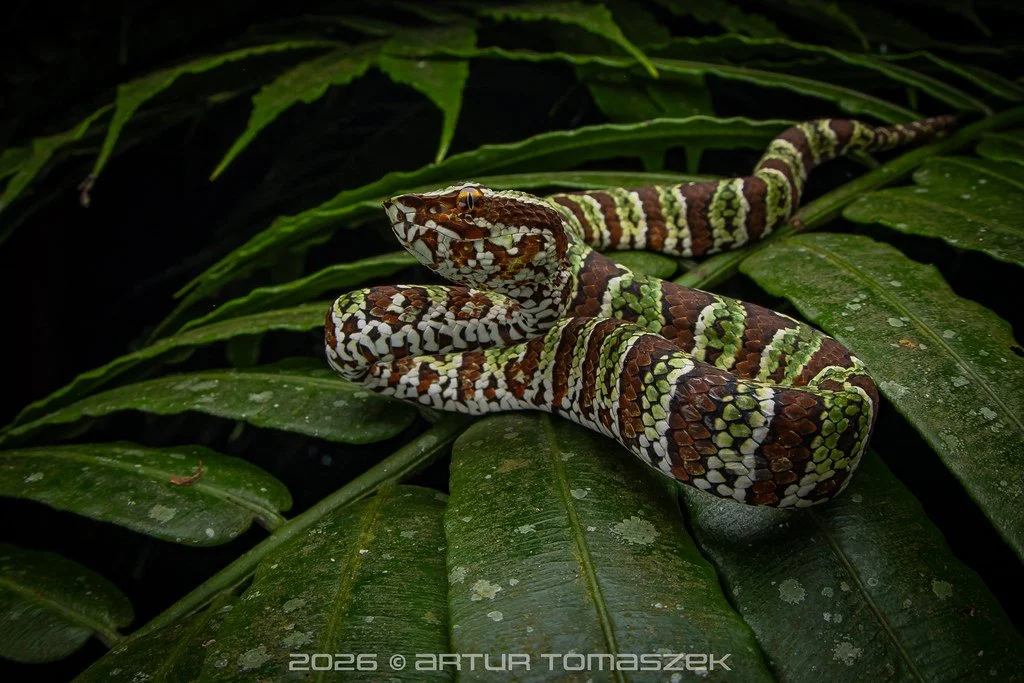
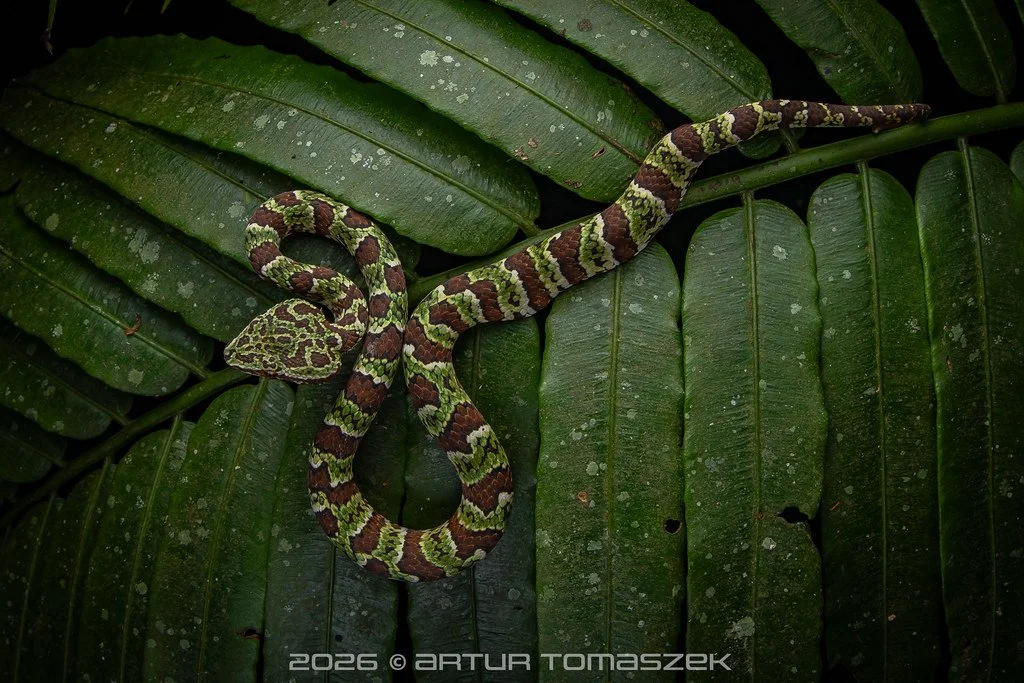
Our main Sulawesi target was the banded temple pit viper (Tropidolaemus laticinctus). The terrain in North Sulawesi is not easy, with brutally steep slopes buried beneath dense vegetation. In other words, the sort of place Artur enjoys the most.
We walked for hours, climbing up and down through the forest. Just as we were beginning to accept defeat, our local guide spotted a huge female Tropidolaemus laticinctus high in a tree.
WOW. She was a real dragon.
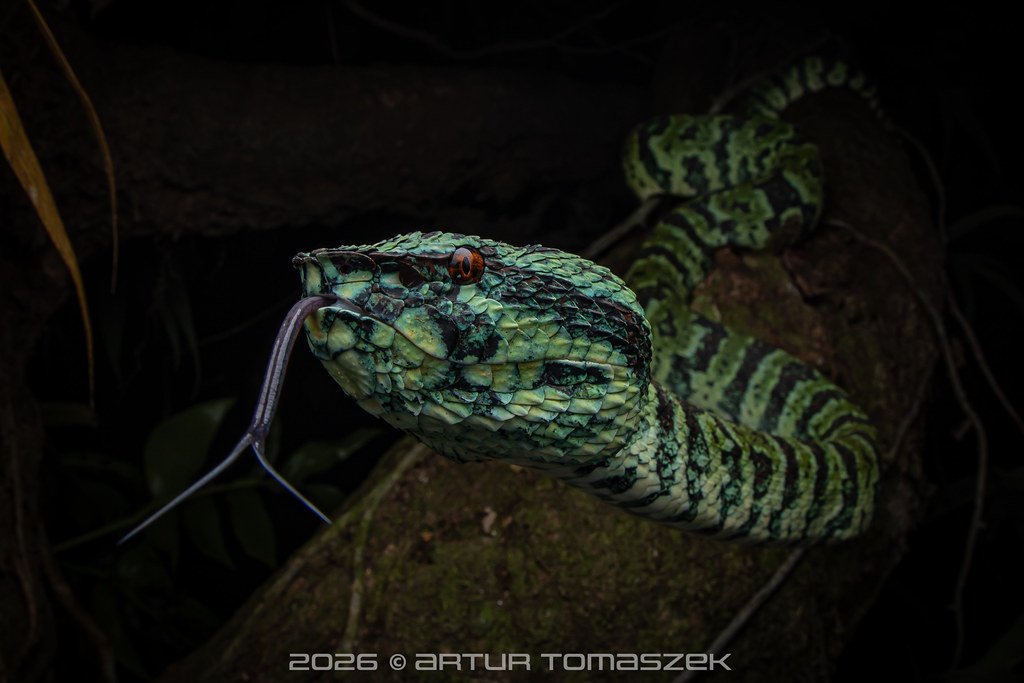
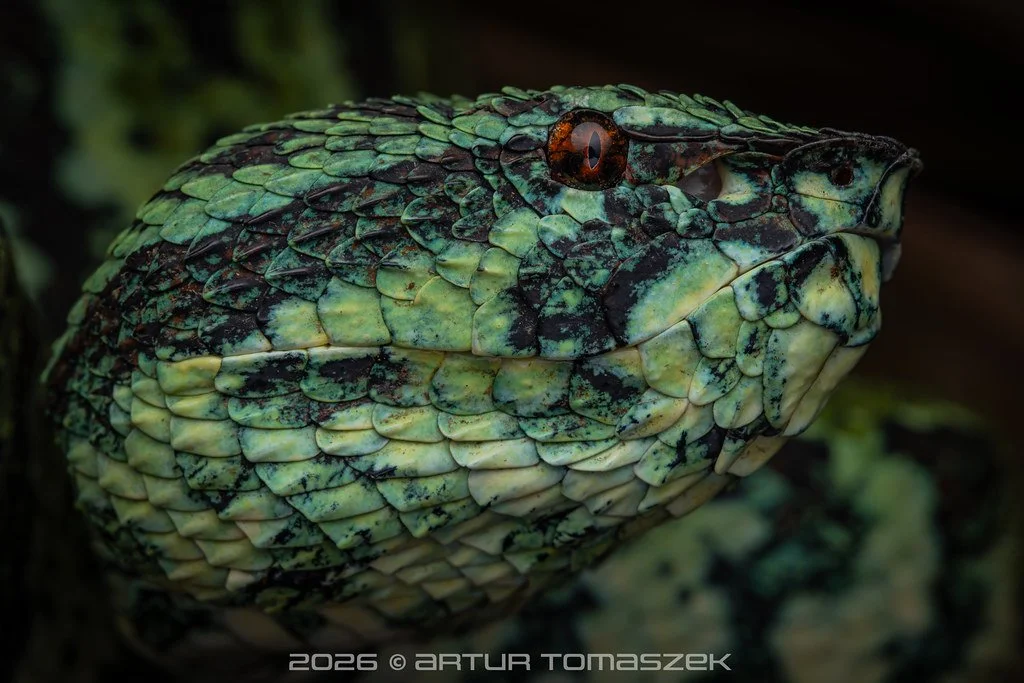
By checking the pattern on her head, we discovered that the same female had been encountered by other herpers in February. After asking where she had been found previously, we learnt that it was on the opposite side of the valley. In roughly six months she appeared to have travelled about 400 metres (an interesting little glimpse into the movements of an individual wild snake).
The discovery nevertheless led into a much less enjoyable conversation about wildlife tourism in Indonesia, the pre-catching and “planting” of animals for visiting photographers.
Apparently, this is not rare. We were told that even well-known wildlife photographers sometimes contact guides in advance and ask them to catch particular snakes before they arrive. People actually pay for this, and they often still claim to be “ethical wildlife photographers.”
For us, it removes everything that makes herping meaningful. The search, the uncertainty, the exploration of the habitat, the moment of discovery and observation of natural behaviours are the whole point. More importantly, keeping wild snakes confined for days can cause stress, injury and even death. Later in the trip, we would see apparent evidence of exactly that.
It is easy to direct all the anger at local guides, but that is neither fair nor honest. Many work in places with very limited ways to earn money, and if clients keep requesting guaranteed animals, someone will supply them. That does not make the practice acceptable, but the photographers who create and fund the demand share as much responsibility. If visitors insisted on authentic encounters and refused pre-caught animals, guides would change their habits. If people continue paying for staged “finds” instead, the practice will continue.
As for our huge female T. laticinctus, everything we could verify about her earlier location and subsequent movement made sense. We were satisfied that this encounter was genuine, and after the distance and terrain we had covered, it certainly felt earned.
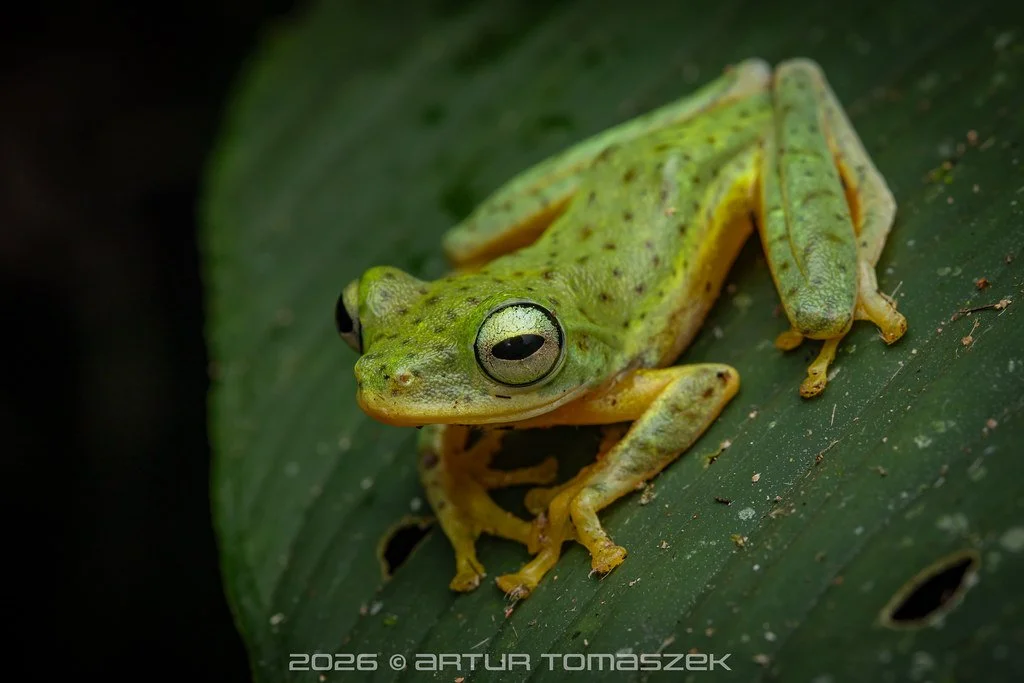
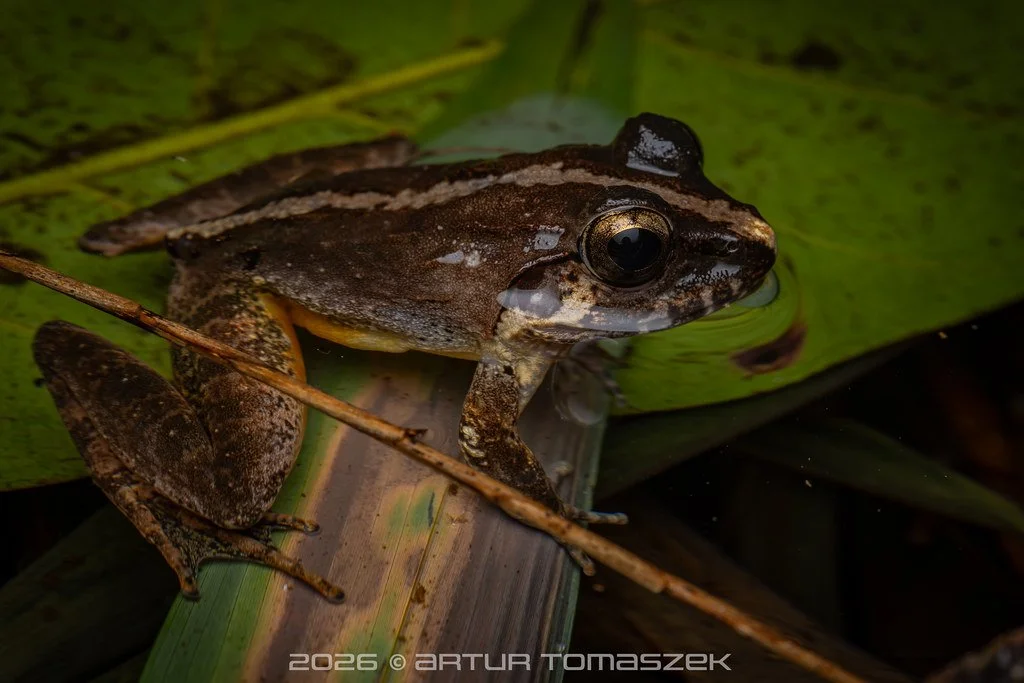
There were plenty of frogs and other small creatures that night too. There was also a rat for dinner…
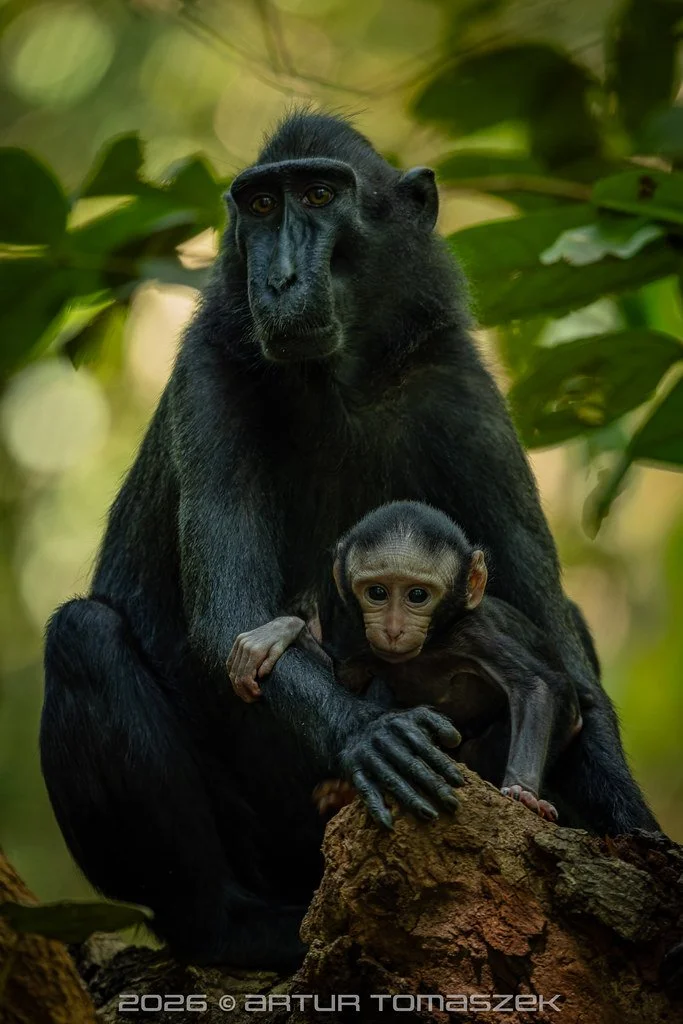
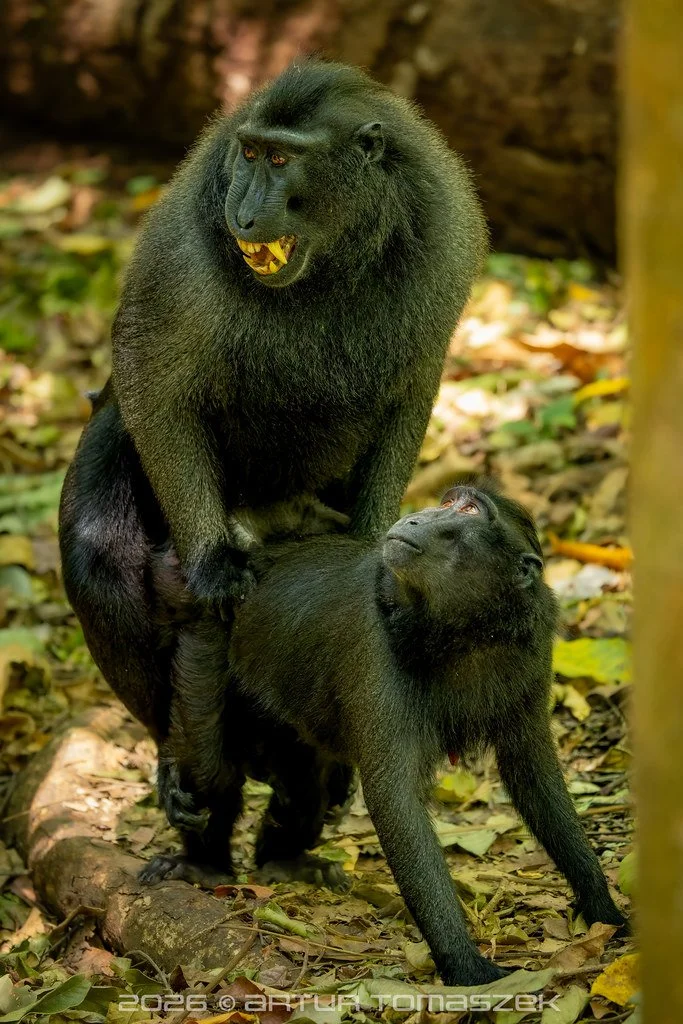
During the following day, we visited Tangkoko Nature Reserve to see the crested black macaques (Macaca nigra). These charismatic primates are found only in the far northeast of Sulawesi and a few nearby islands. They live in large, highly social groups and spend a great deal of time on the ground. Sadly, they are critically endangered, with hunting and habitat loss being their main threats. Tangkoko remains one of the best and most important places to see and protect them.
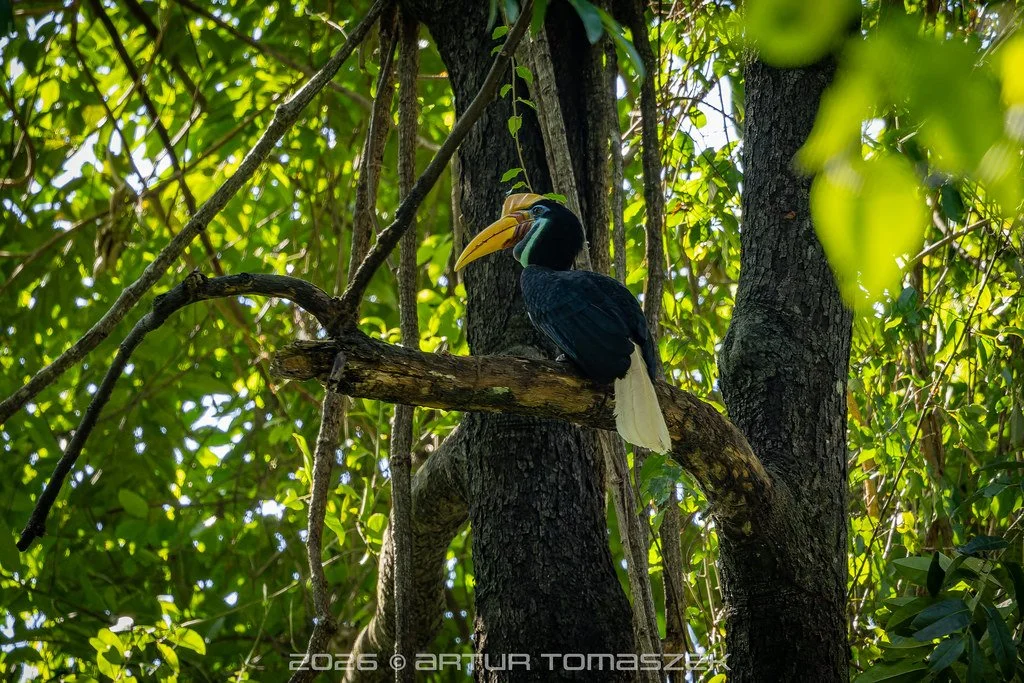
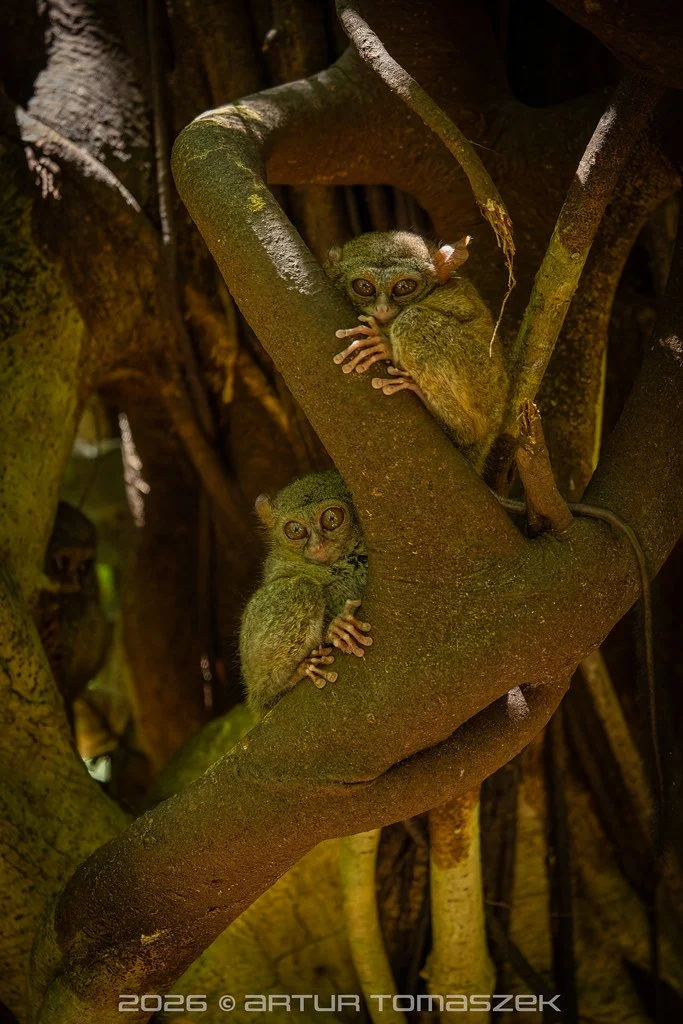
We also encountered Gursky’s spectral tarsier (Tarsius spectrumgurskyae), the strange Sulawesi bear cuscus (Ailurops ursinus) and knobbed hornbill (Rhyticeros cassidix). Tangkoko is a very cool place, and we would happily return for a longer visit.
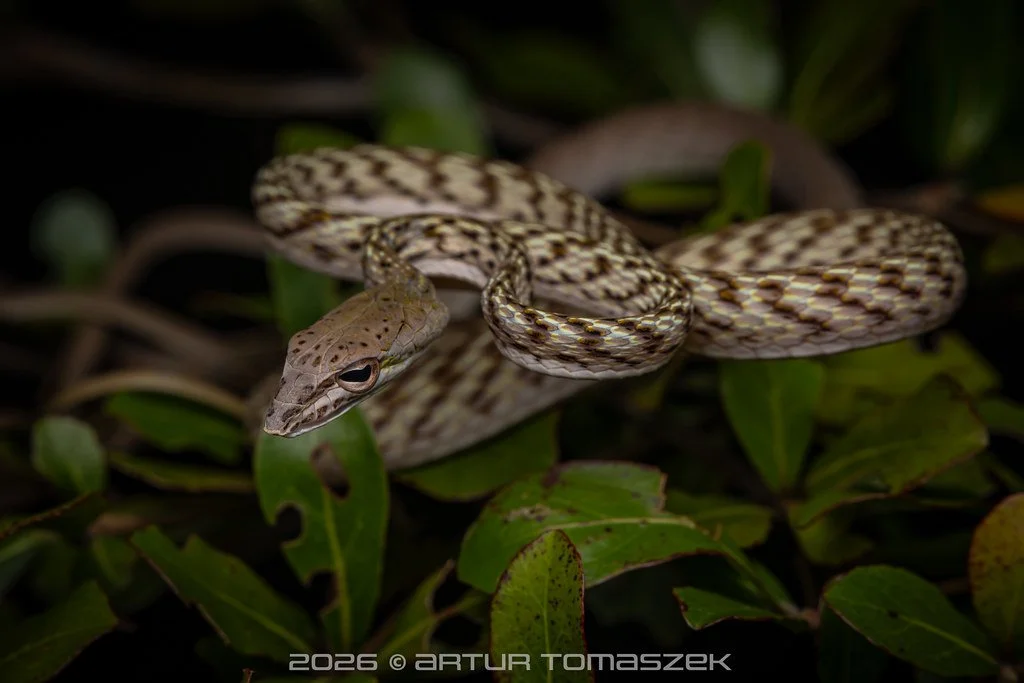
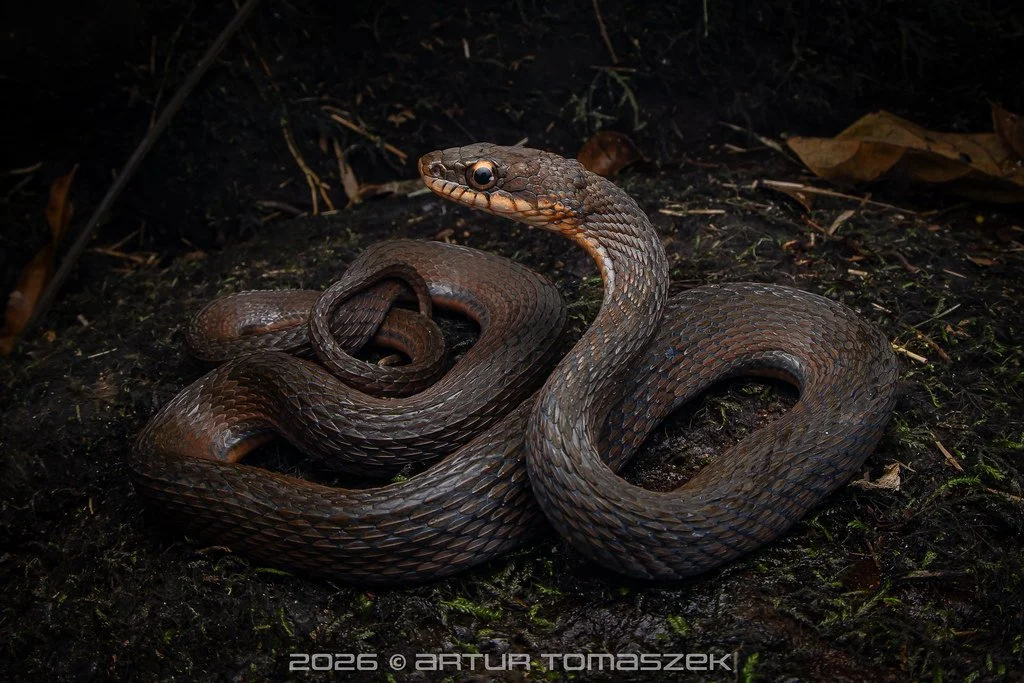
At night, we focused on herps again. We found yet more Tropidolaemus subannulatus (by this point in the trip we must have seen close to fifty), as well as both juvenile and adult Rhabdophis chrysargoides. The difference in appearance between their different life stages was remarkable. We also found Boiga irregularis, together with more amphibians and invertebrates.
For our final night, we moved to another area and tried once more for snakes. The terrain was exceptionally difficult, and after hours filled almost entirely with Ahaetulla prasina and Tropidolaemus subannulatus, we had lost hope of finding anything different.
Then, just as we were about to turn back, BANG! Another Tropidolaemus laticinctus, much smaller than the first one, sitting high in a tree.
It was the perfect ending to our Sulawesi chapter.
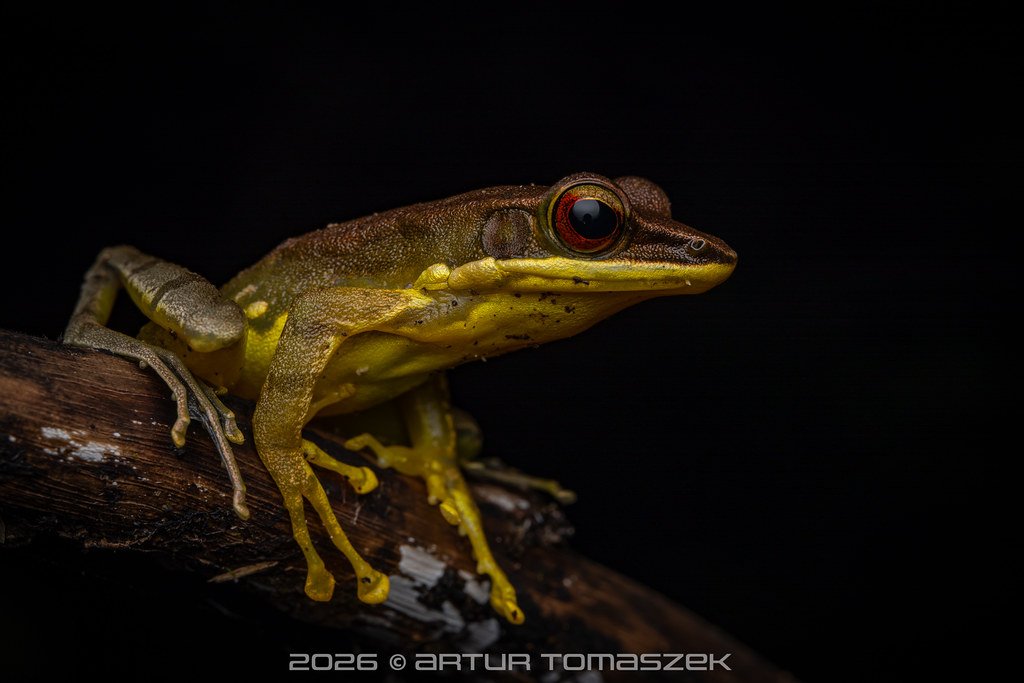
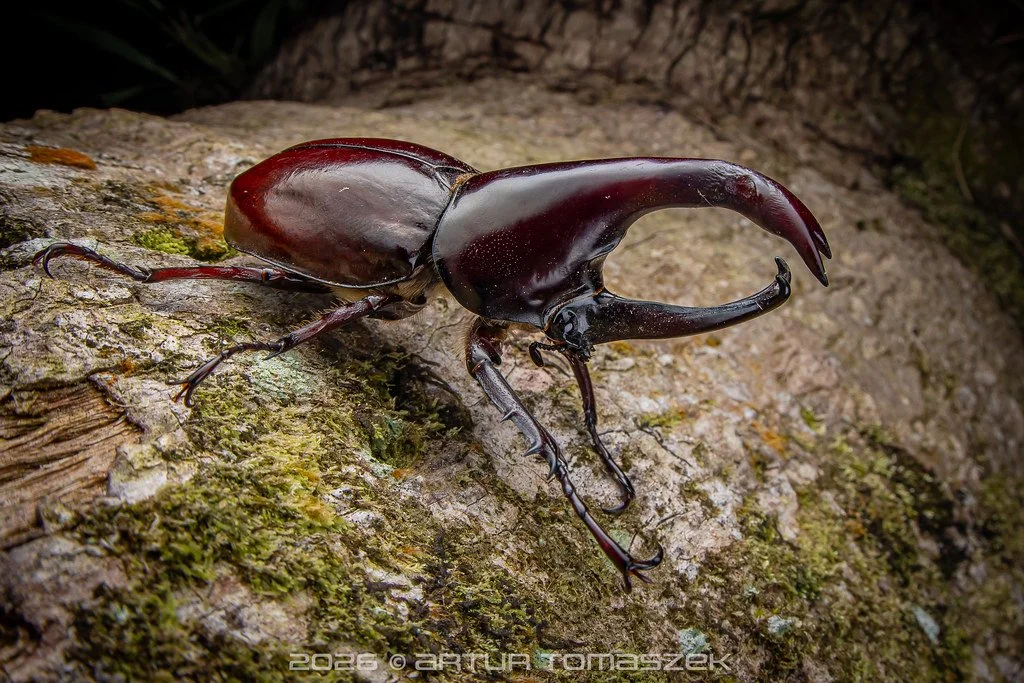
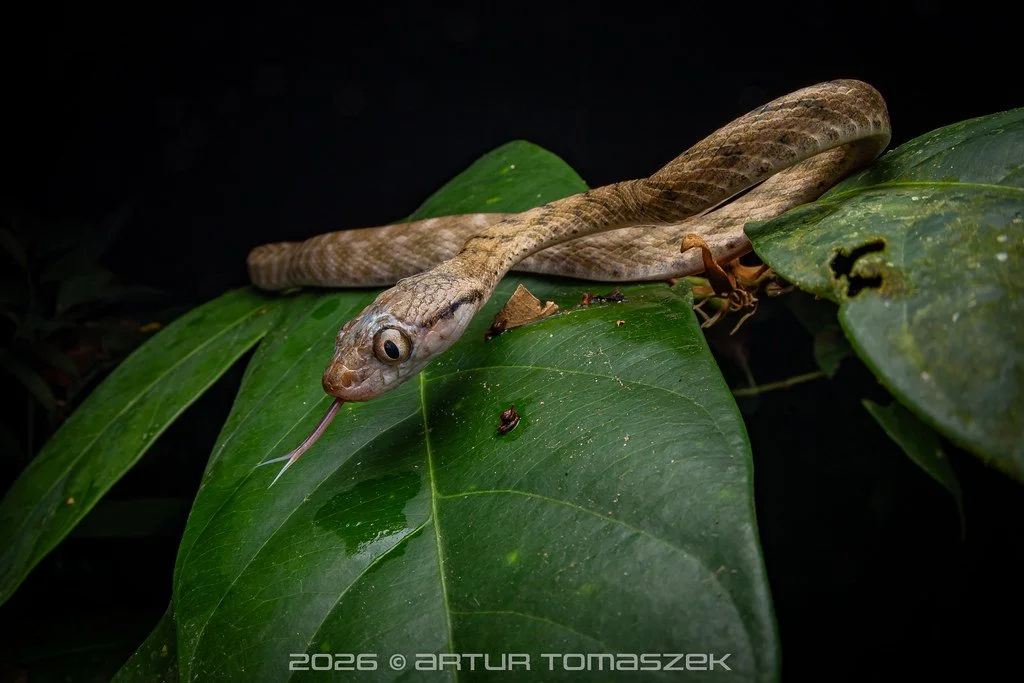
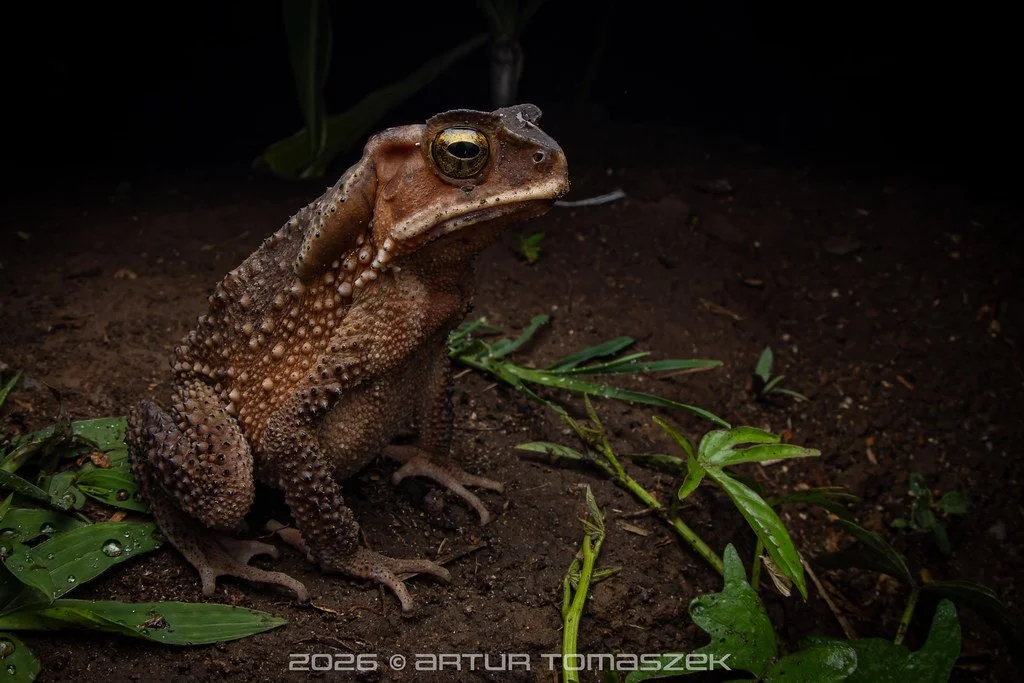
North Sumatra
Next, we flew to Sumatra for just two quick nights. Artur had only one major target there: Trimeresurus gunaleni. We managed to find two.
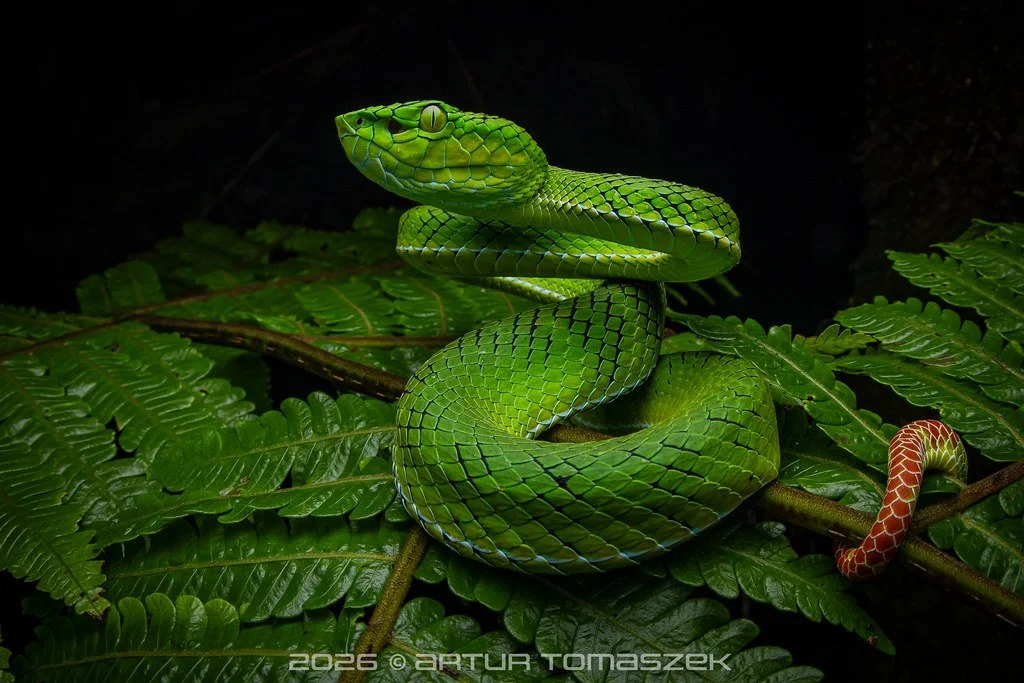
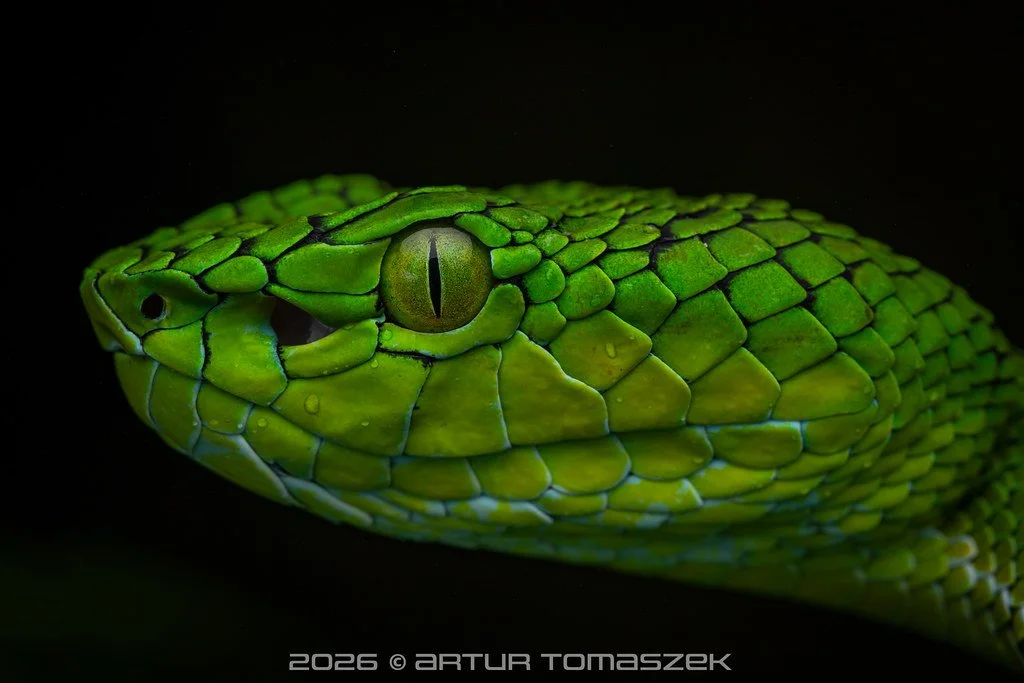
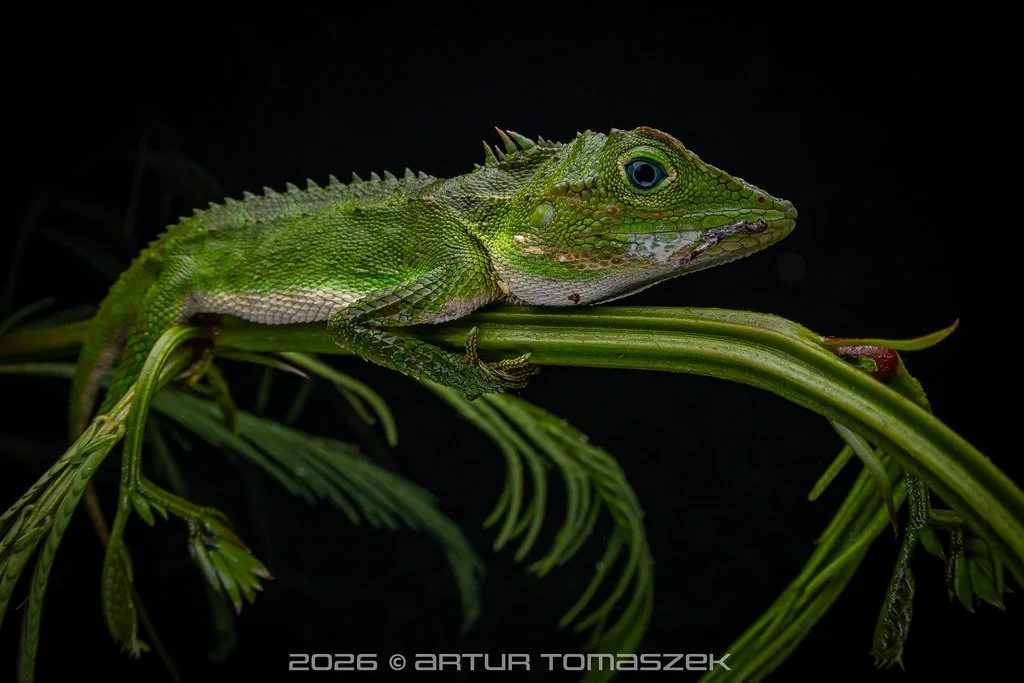
The first night also produced Oligodon petronellae and Craspedocephalus andalasensis, along with several lizards and frogs. After travelling all day, we were completely exhausted and allowed ourselves a relatively early finish.
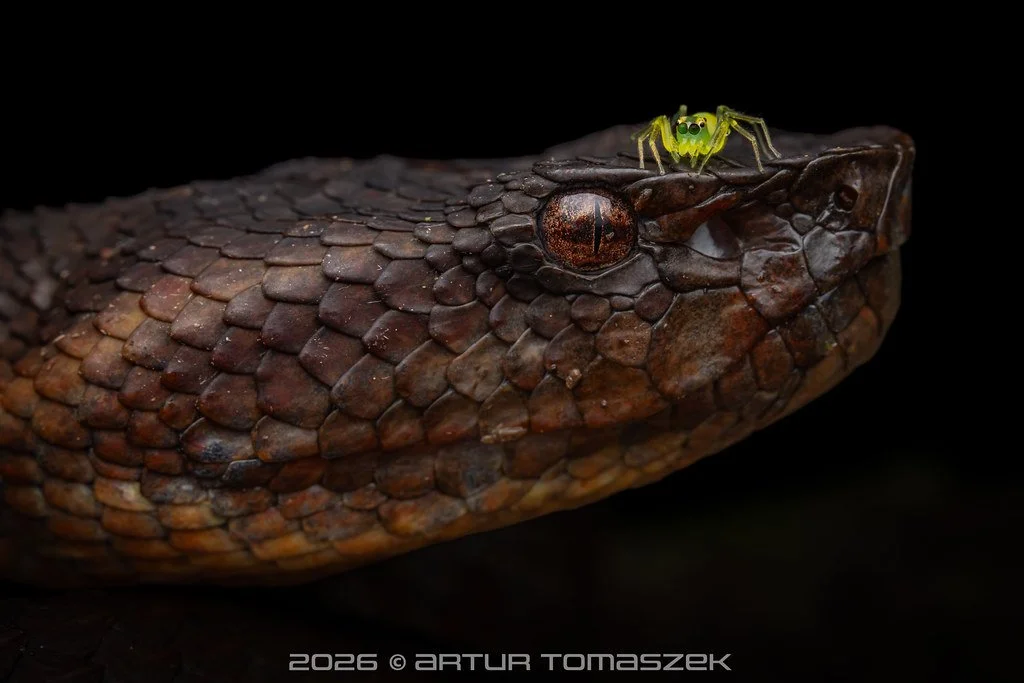
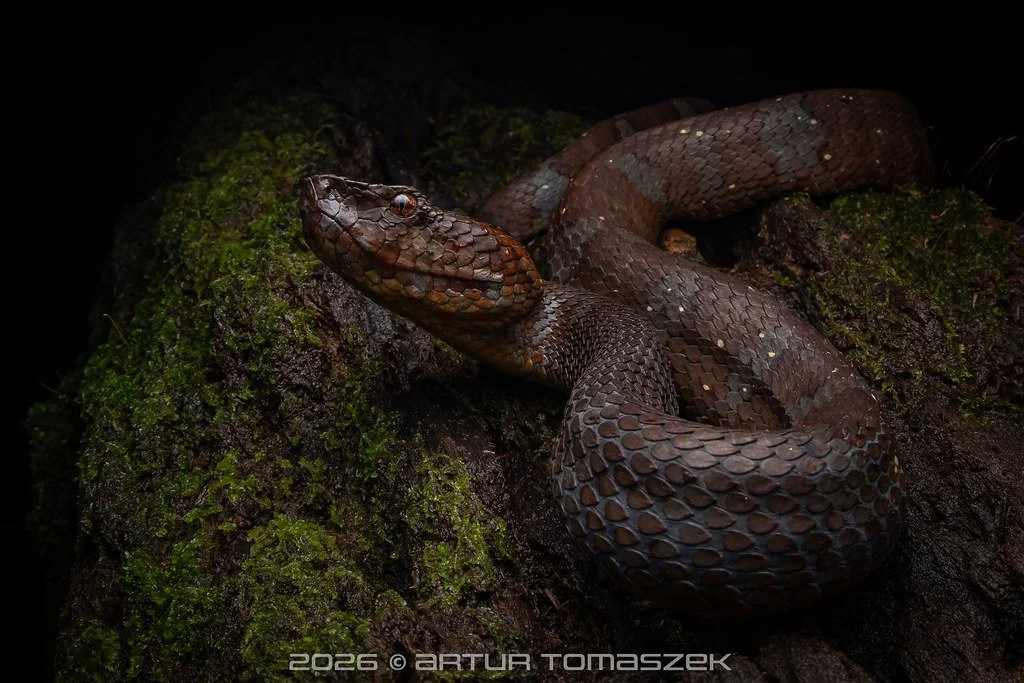
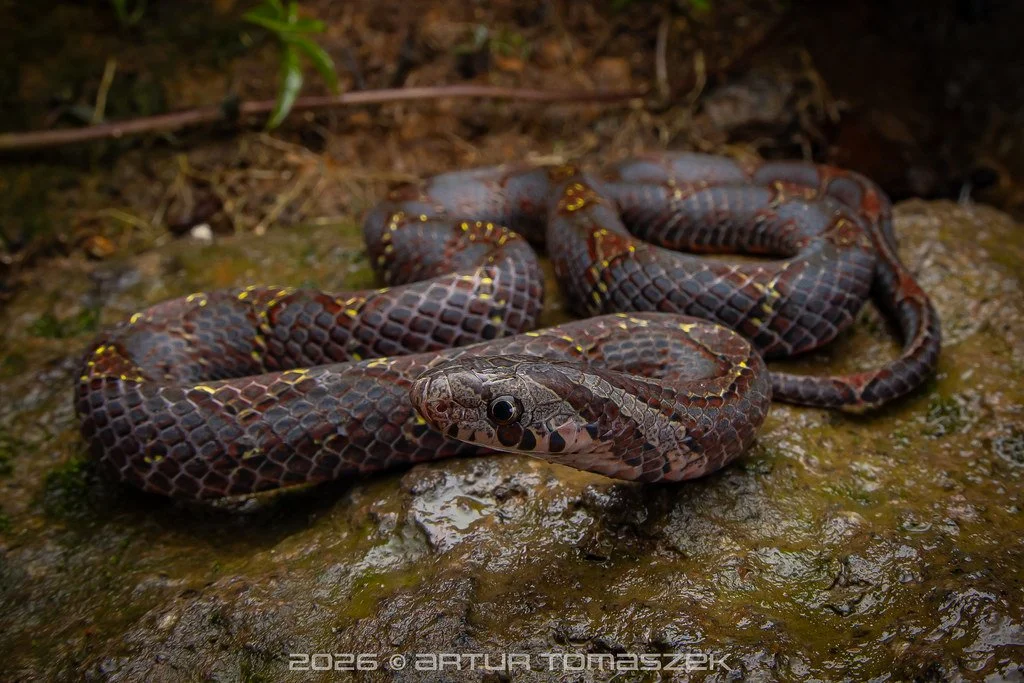
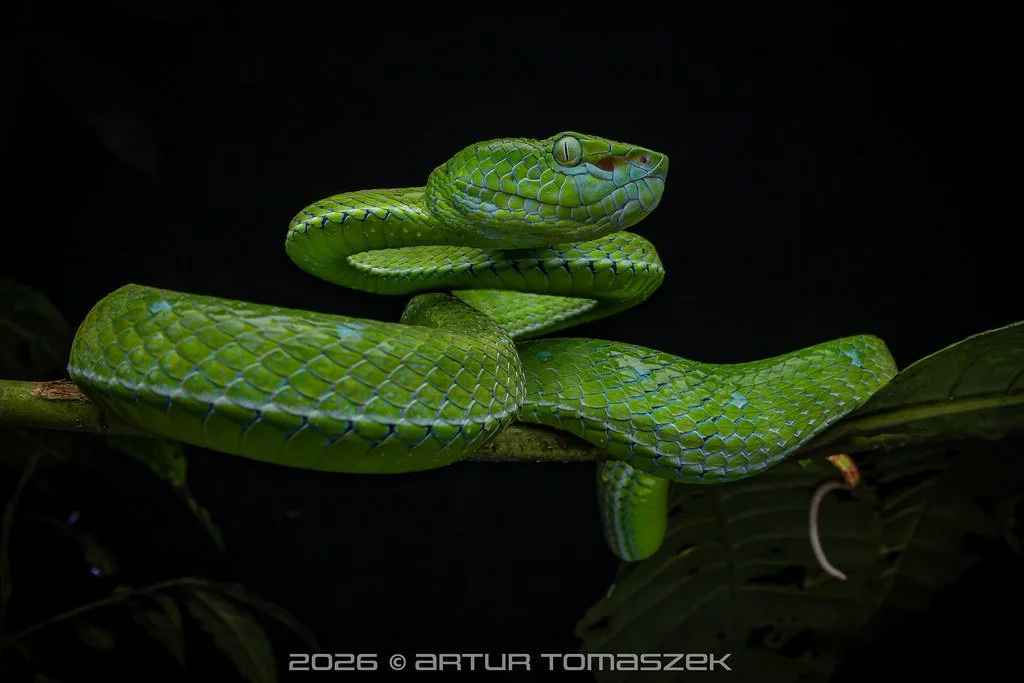
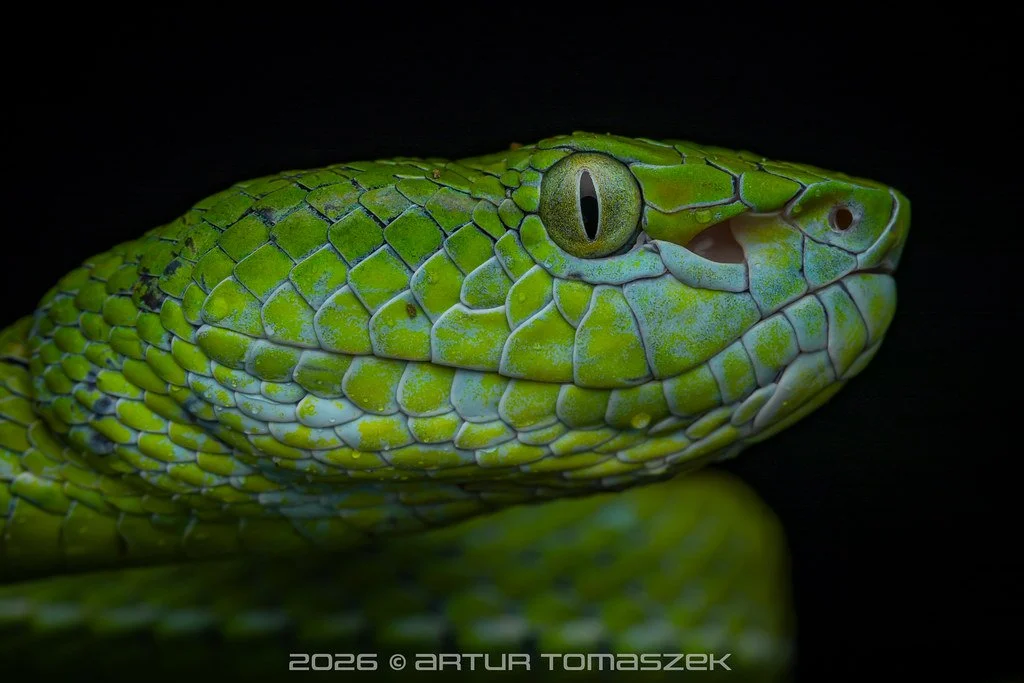
The next day, we drove south to search a lowland forest for a different group of species. In hindsight, this was a mistake. The drive was so long that it consumed almost the entire day. We did, however, find Trimeresurus hageni, which made Artur very happy, and then spotted a Trimeresurus sumatranus.
Immediately, something felt wrong. The position of the animal and the way it moved did not fit the situation. It became clear that this was another planted snake. Close macro photographs also showed damaged scales around its face, the sort of abrasion that can result when a snake repeatedly pushes against the walls of a small container.
We know that the people involved wanted us to leave happy. But this is not what makes us happy. It was upsetting to see a magnificent wild animal reduced to a prop, and it left a sour taste over the rest of the night.
We finished with another T. hageni, Ahaetulla mycterizans, Boiga bengkuluensis. The next morning, we headed to Kalimantan for the moment around which the entire Indonesian trip had been built.
West Kalimantan
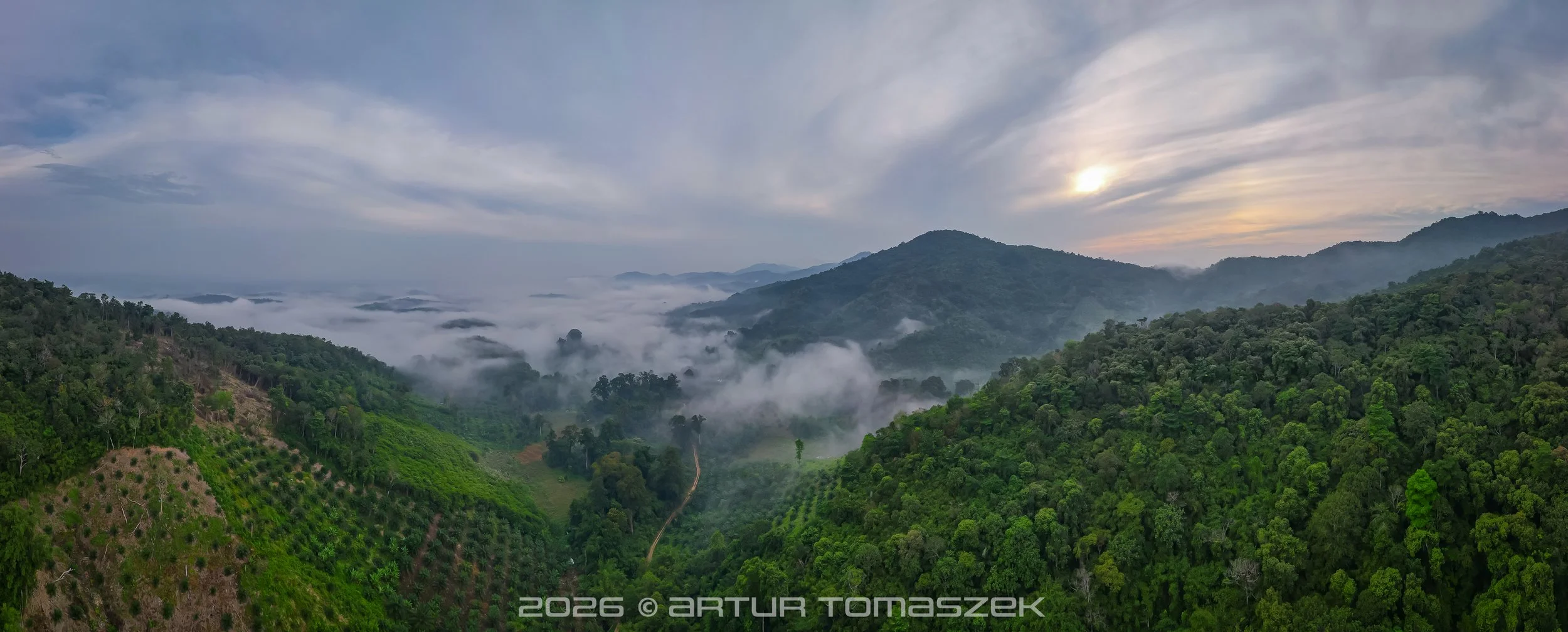
West Kalimantan
We landed in Pontianak, rented a car and began the long drive deep into the island for the final, and most important, part of the trip.
On the way, we were lucky enough to help release a Javan file snake (Acrochordus javanicus) that got trapped in a local fisherman’s net. What an extraordinary snake to encounter before we had even reached our destination.
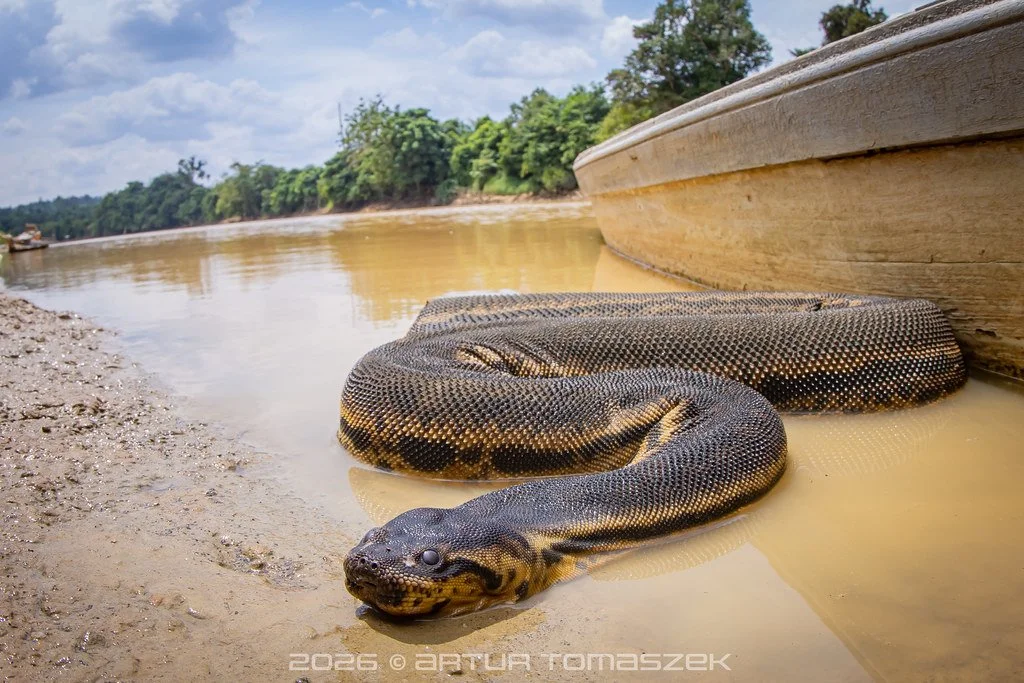
Acrochordus javanicus
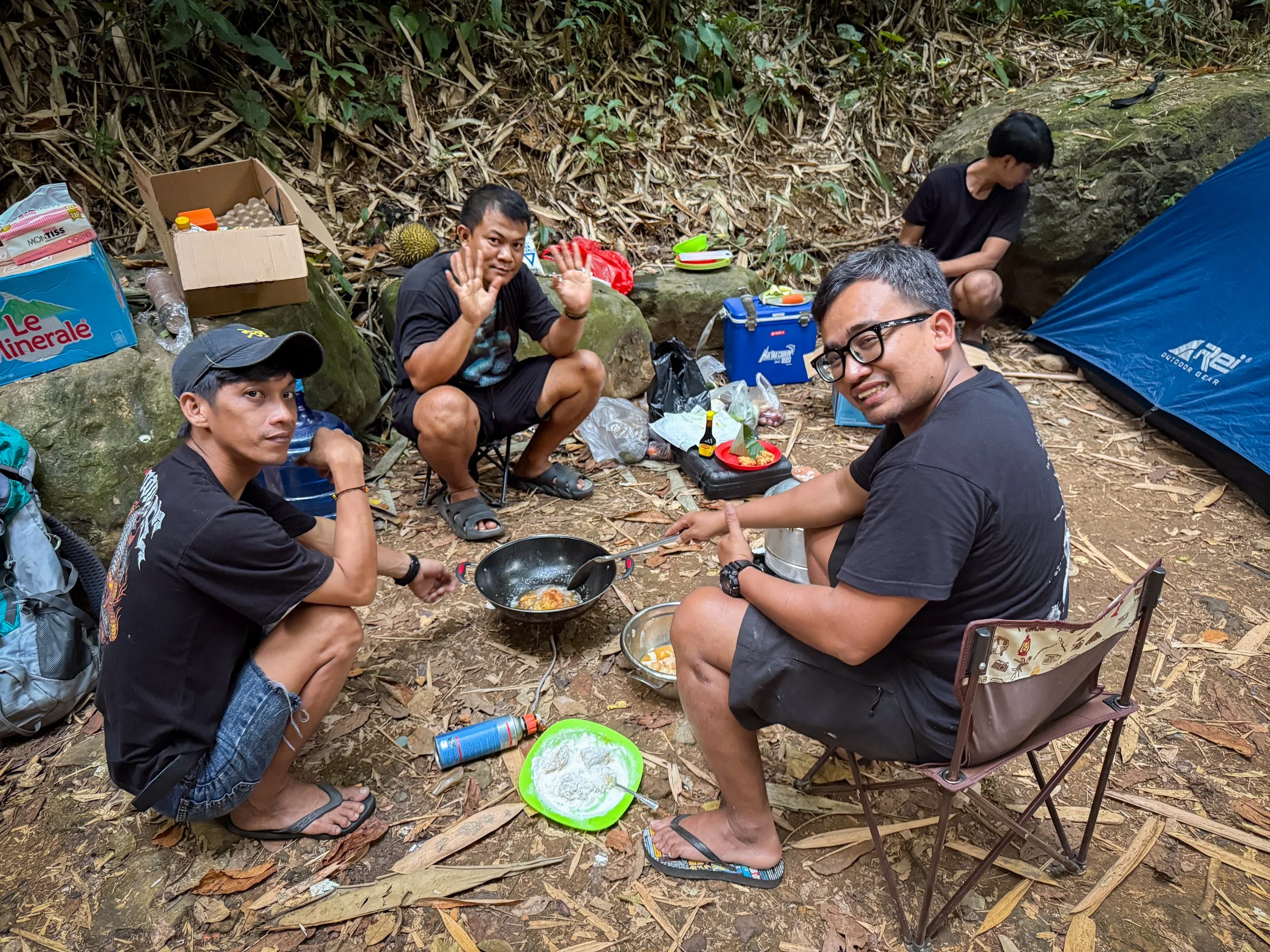
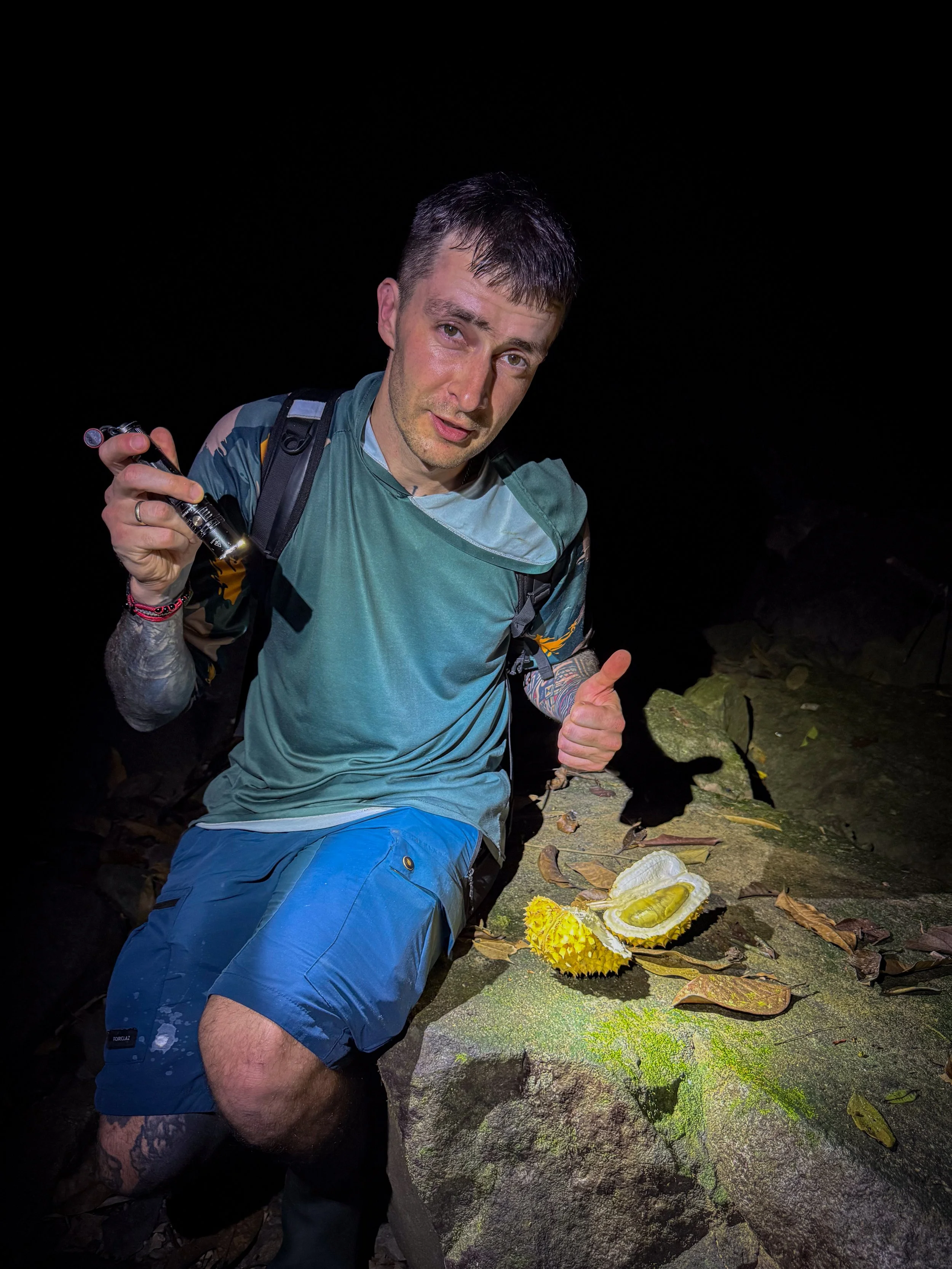
We spent three nights camping at our herping spot, eating wild durians, drinking fresh coffee and eating delicious food cooked by our guides. Diversity was not especially high and the forest was still worryingly dry and quiet, but the place itself was beautiful.
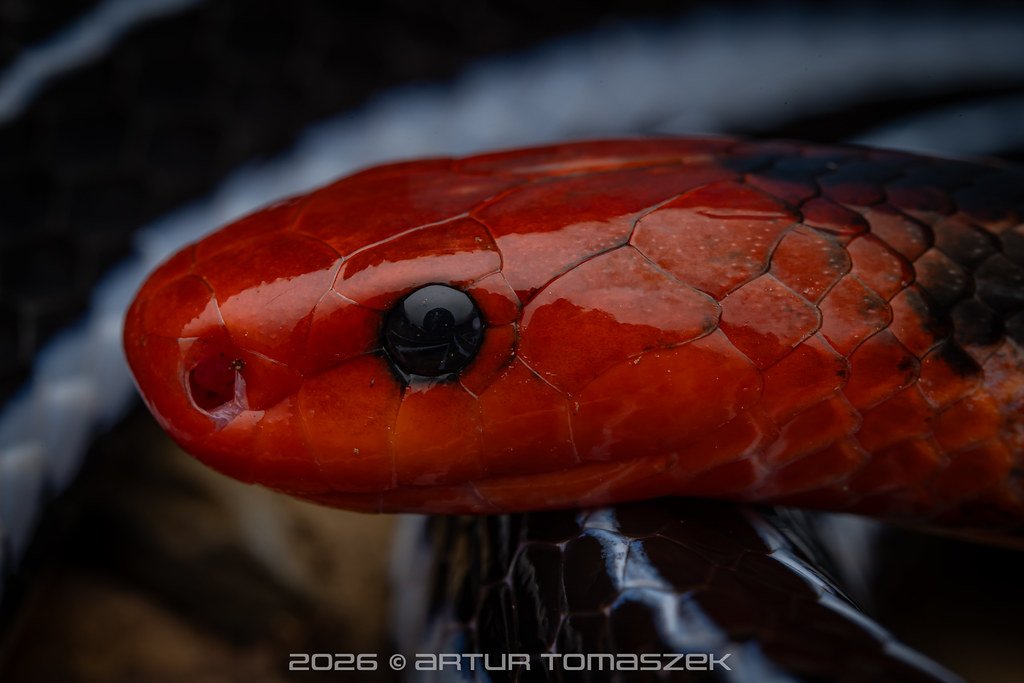
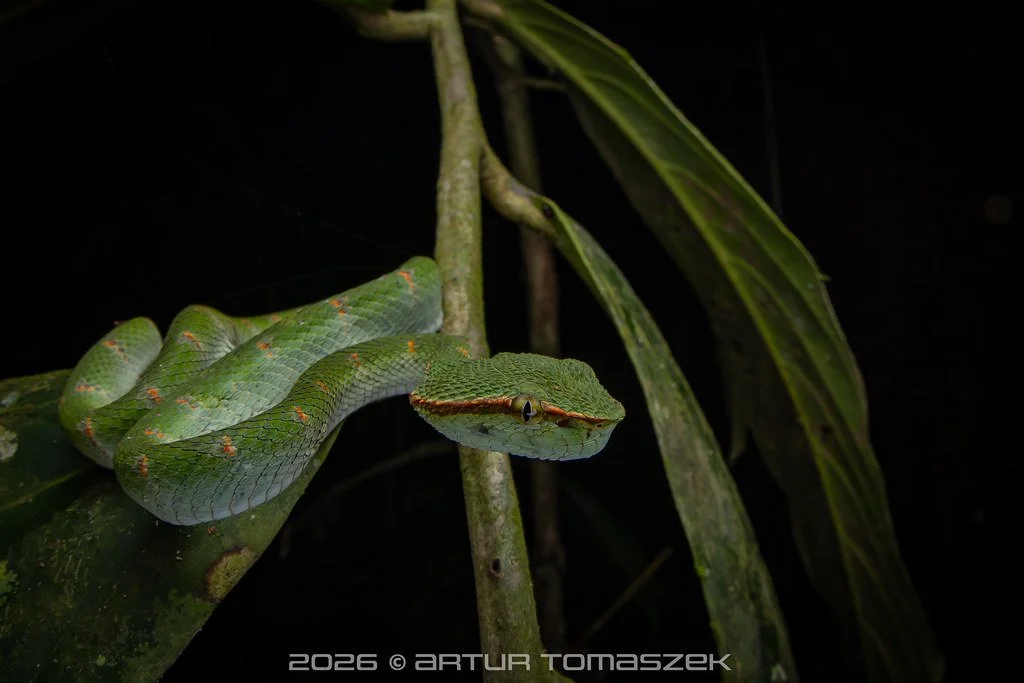
We found a ridiculous number of Tropidolaemus subannulatus. Strangely, almost every individual was a male. On one tree alone, five males were perched among the branches, yet we could not find a single female. At least not until our final night, when one large female finally appeared.
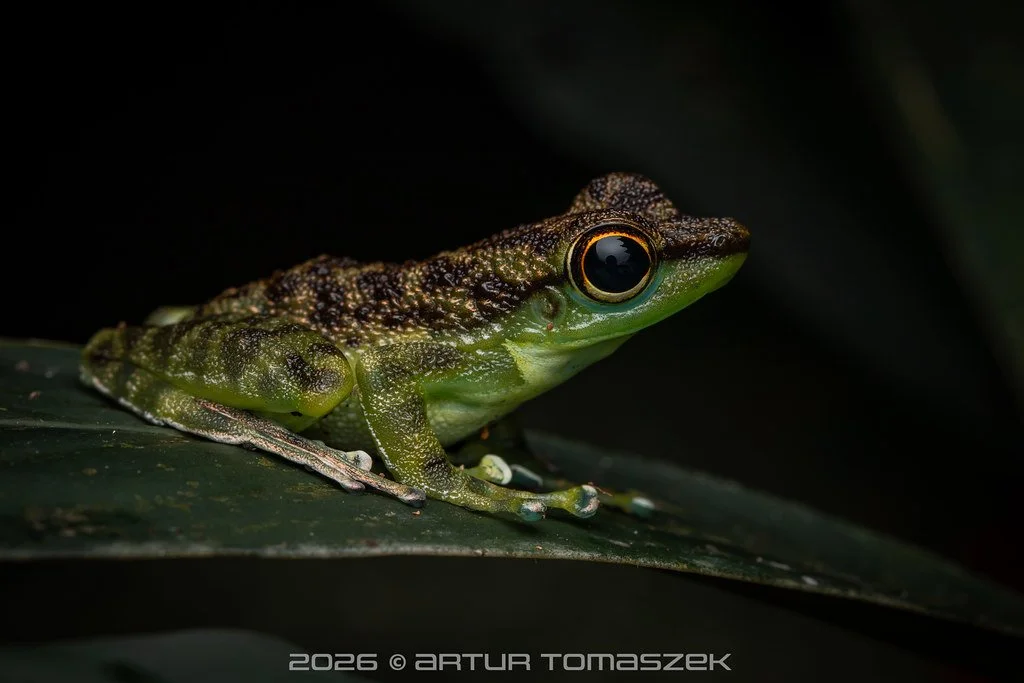
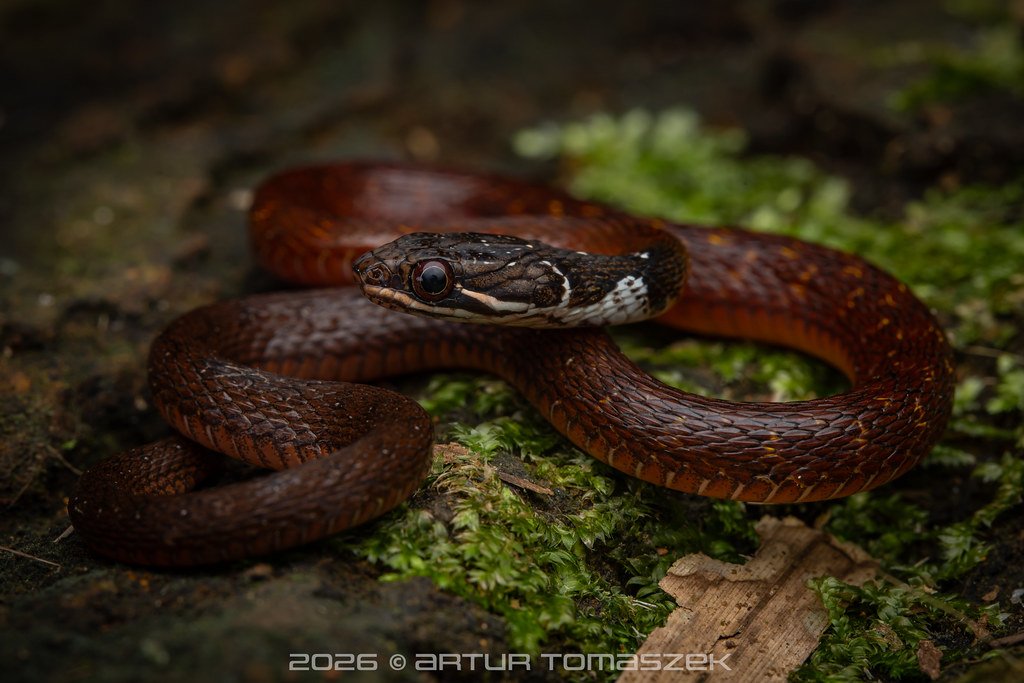
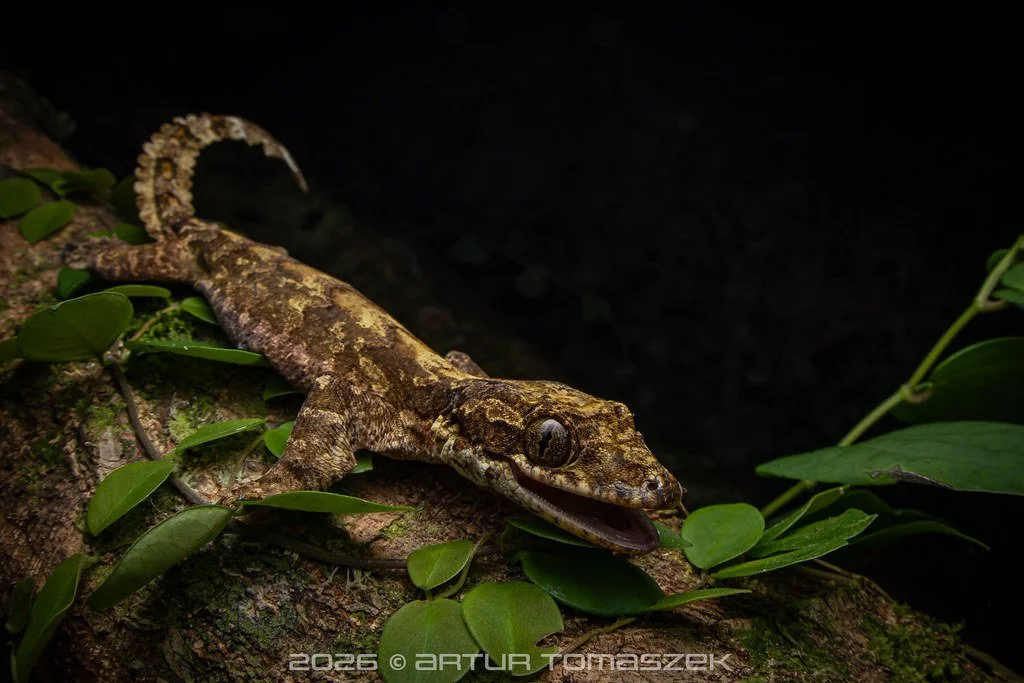
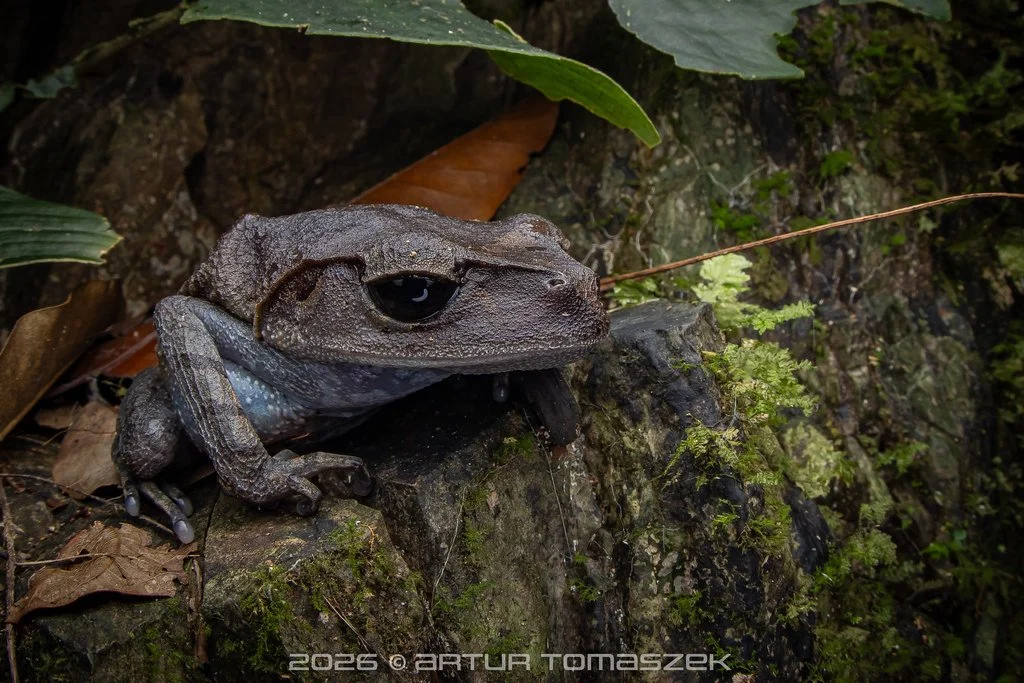
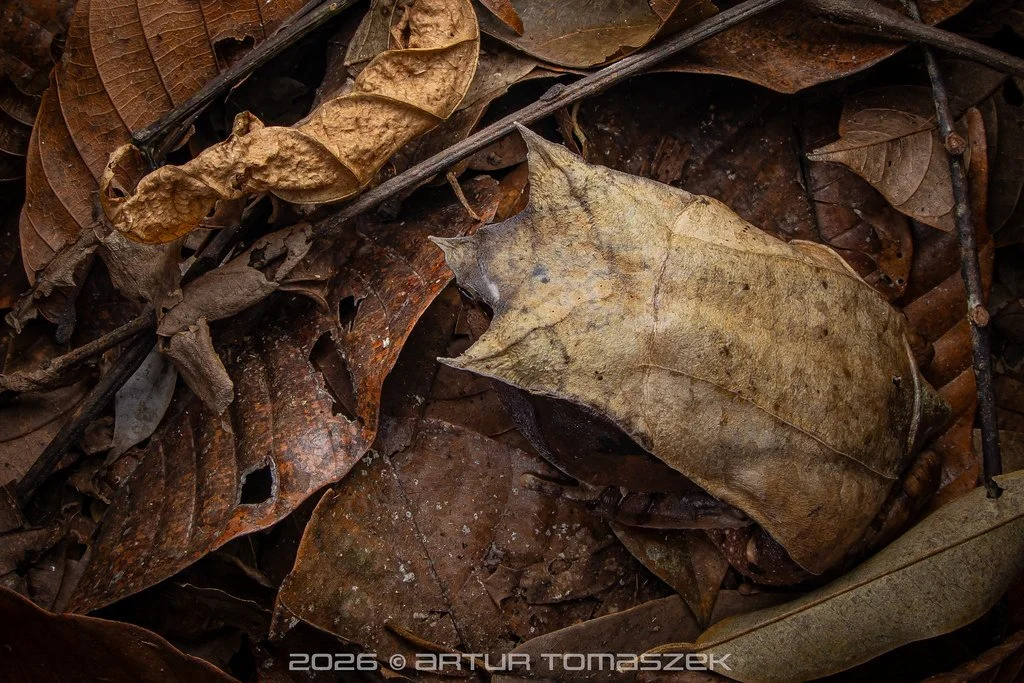
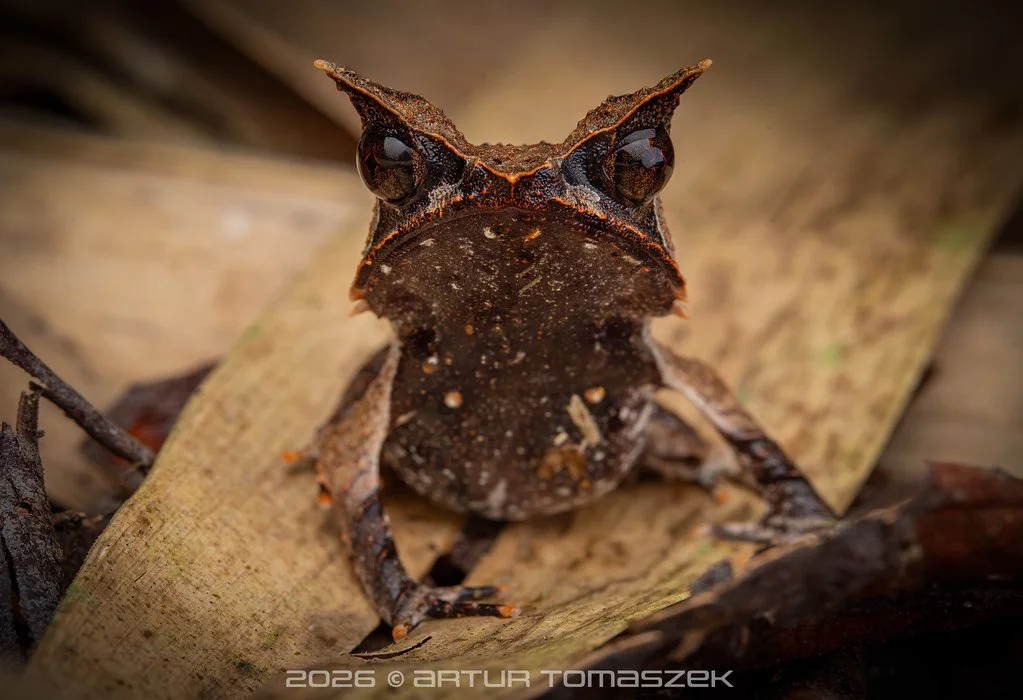
Other encounters included Gekko kuhli, Rhabdophis conspicillatus, Pelobatrachus nasutus, as well as more frogs and invertebrates. They were all welcome, but there was no pretending that our attention was evenly divided. We were here for one animal.
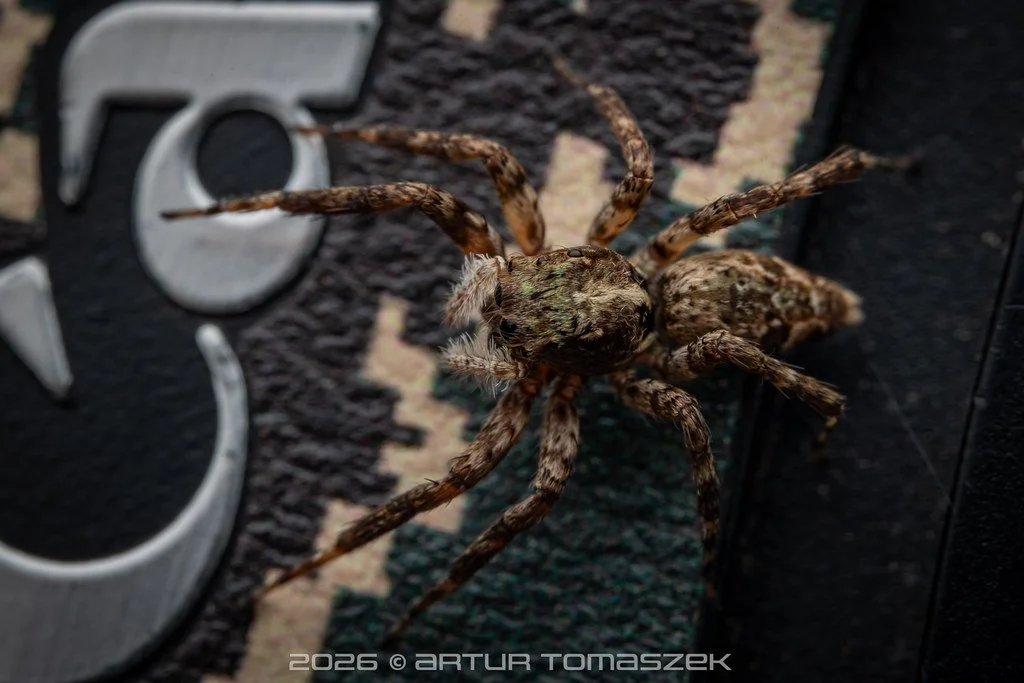
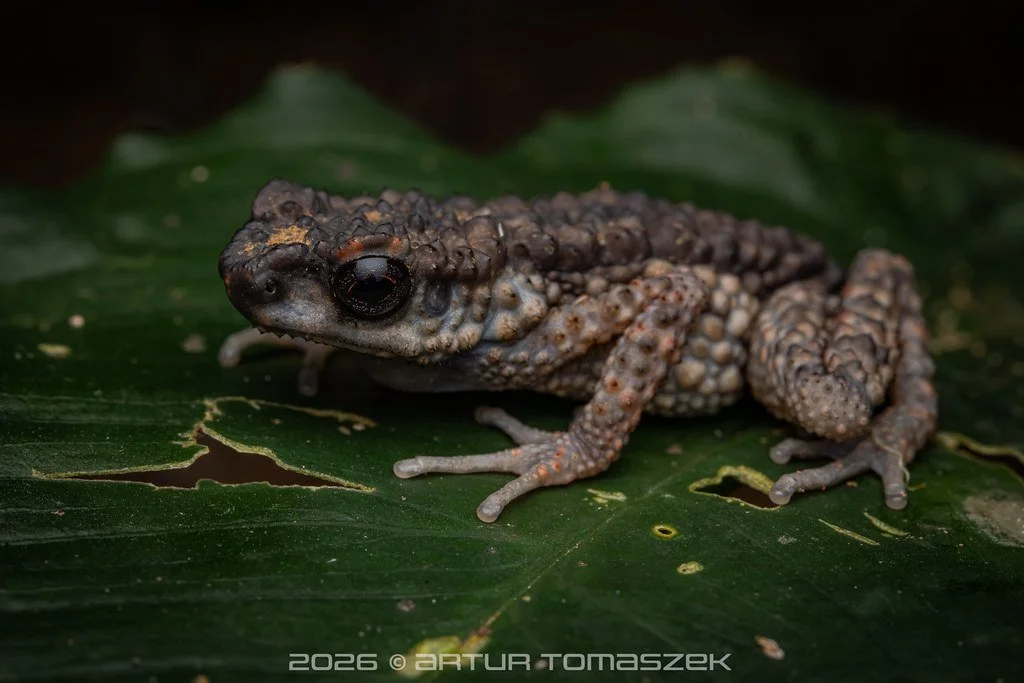
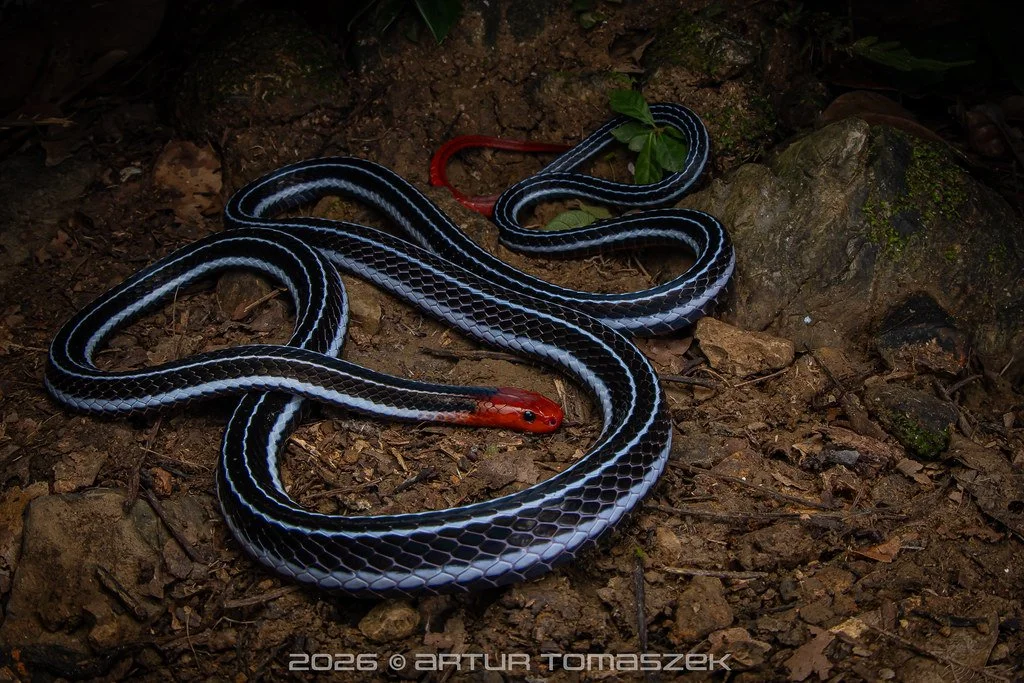
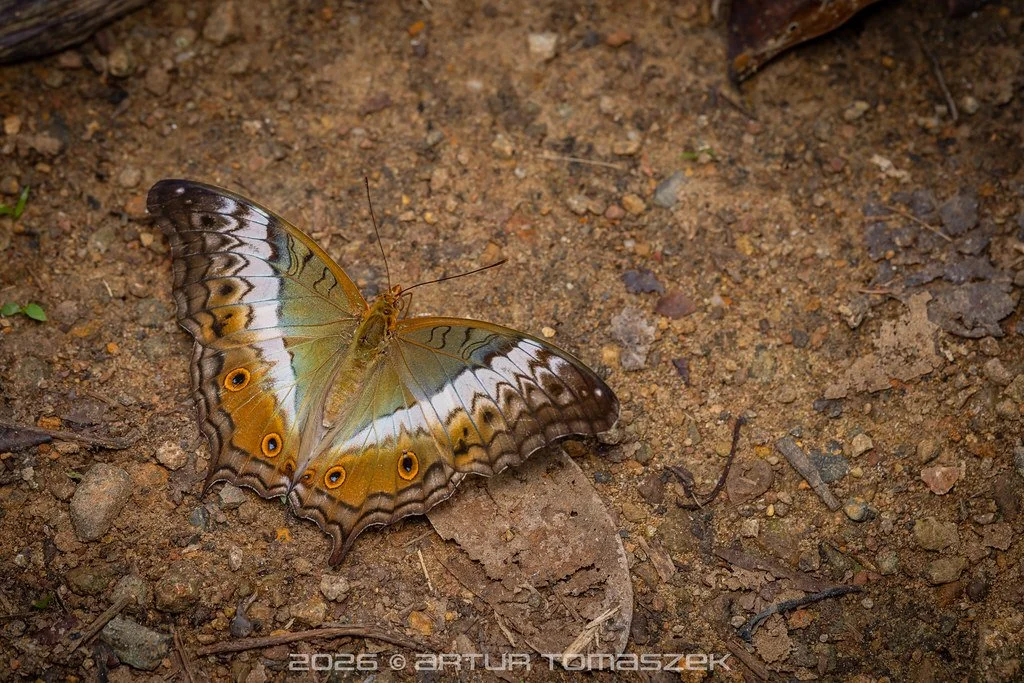
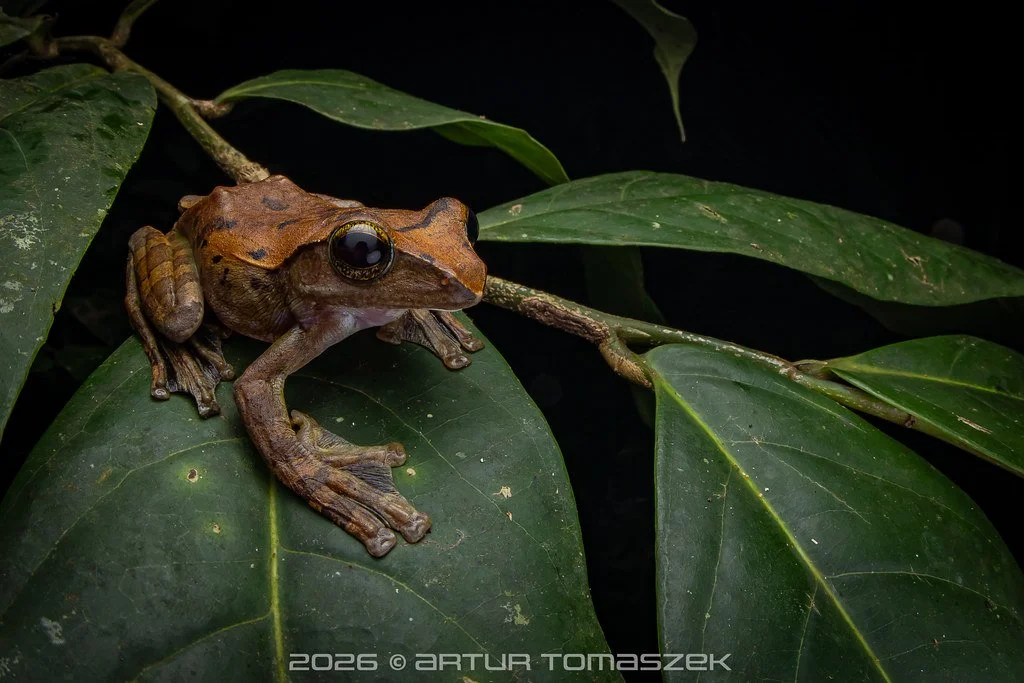
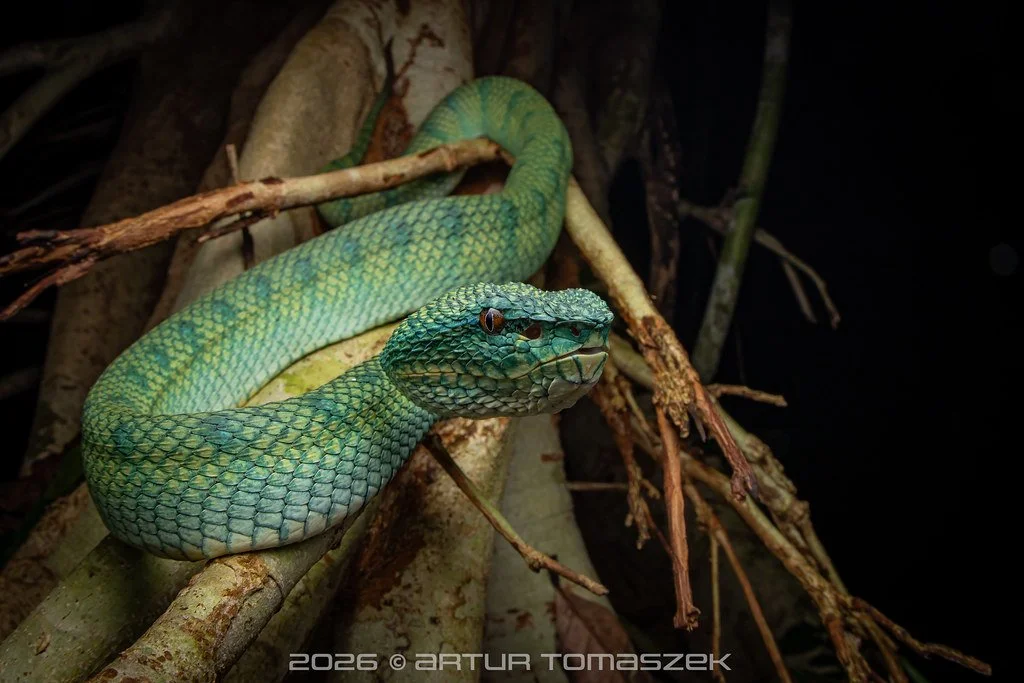
Then it happened!
Lanthanotus borneensis, the Bornean earless monitor.
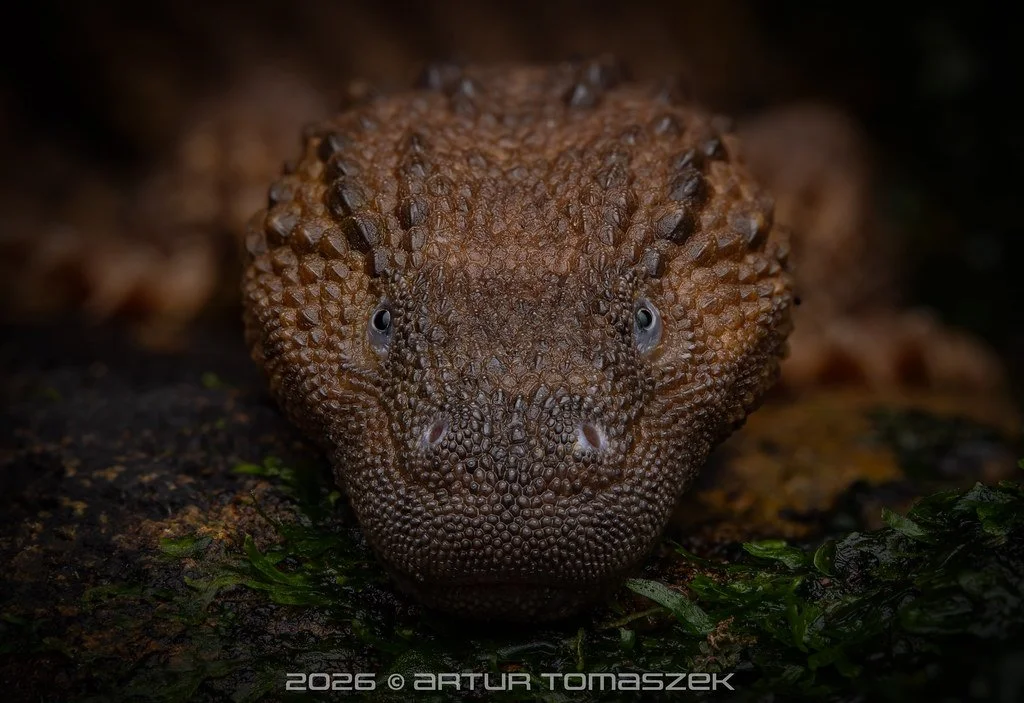
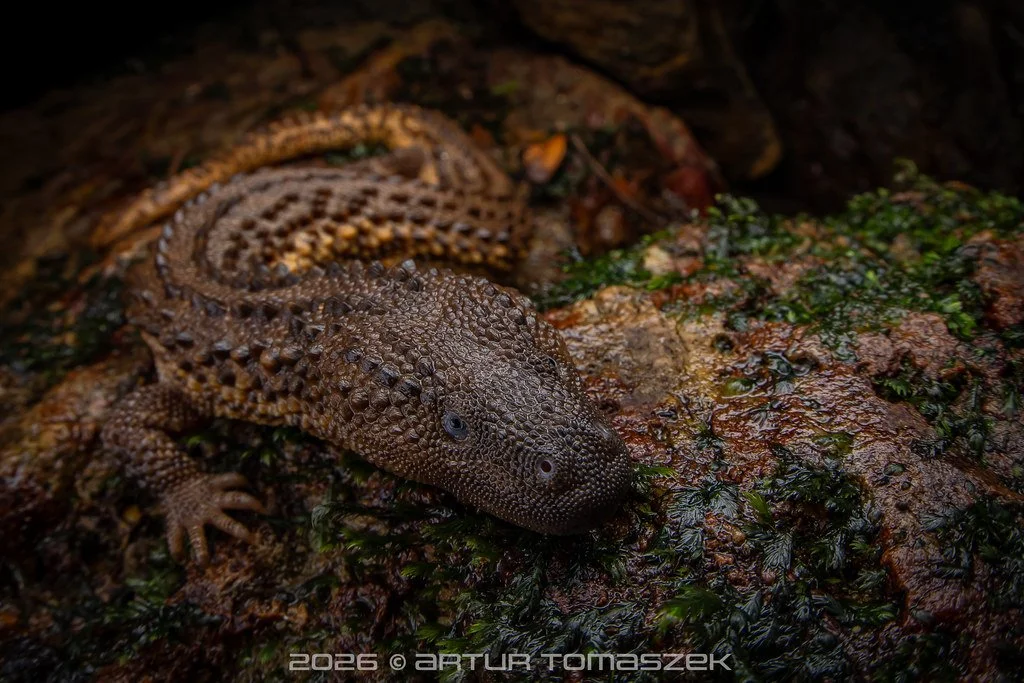
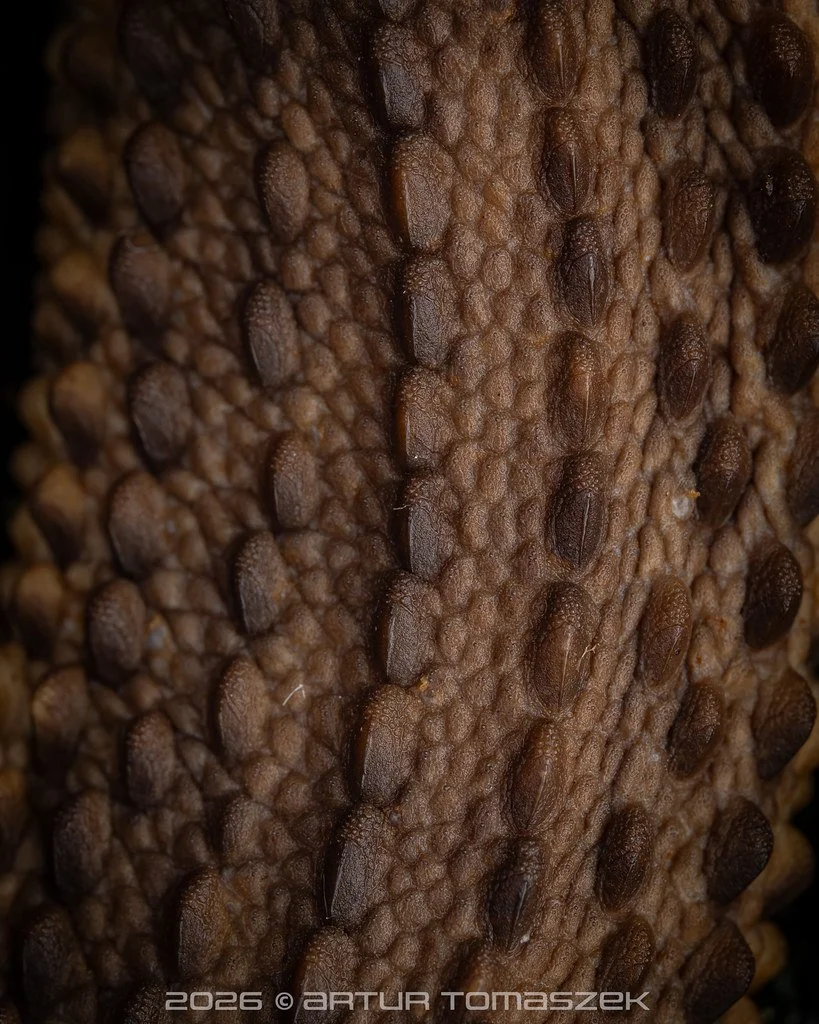
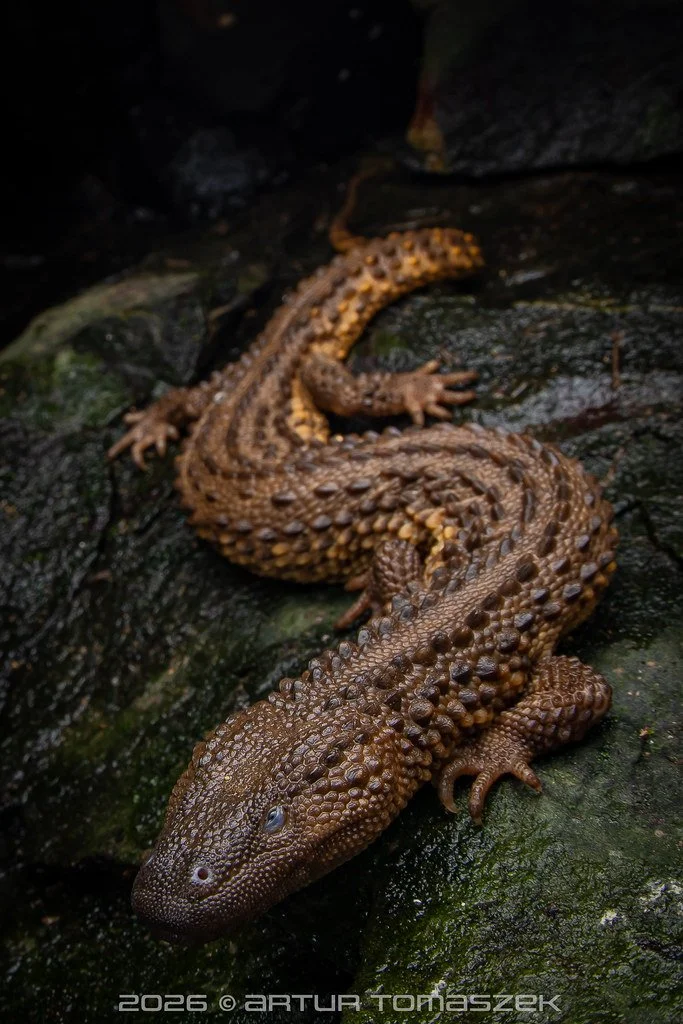
There are animals you hope to see, and then there are animals around which you build an entire journey. This was the latter, the single biggest target of our Indonesian trip and a species Artur had wanted to encounter for years.
The Bornean earless monitor is endemic to Borneo and is the only living member of the family Lanthanotidae. Although related to monitor lizards and beaded lizards, it sits alone on its own long evolutionary branch. It was described in 1878, yet for more than a century almost nothing was recorded about its behaviour in the wild. Even now, despite increased attention from researchers, much of its ecology remains unknown.
Everything about it seems designed for secrecy. It is nocturnal, semi-aquatic and partly fossorial, spending its days concealed beneath rocks, roots and stream banks before becoming active after dark. Its tiny eyes, lack of visible external ear openings, short limbs, strongly keeled scales and long body give it an appearance unlike almost any other living lizard. The name “earless” refers only to the absence of an external opening, but it is not actually deaf.
Wild observations indicate a close association with shallow, rocky streams and the damp ground around them. Its flattened body and powerful tail are well suited to moving through water and narrow spaces, but these same habits make it incredibly difficult to detect. An animal can disappear beneath a stone or into the edge of a stream within seconds, leaving almost no sign it was ever there.
Its elusiveness has also made it dangerously desirable in the wildlife trade. Exact localities are often kept secret, and with good reason. A species with a restricted distribution, specialised habitat and high value to collectors can be damaged very quickly when sites become known. Seeing one where it belonged, not in a box or on a conveniently arranged background, but in a beautiful rocky stream in the Bornean forest, was therefore especially meaningful to us.
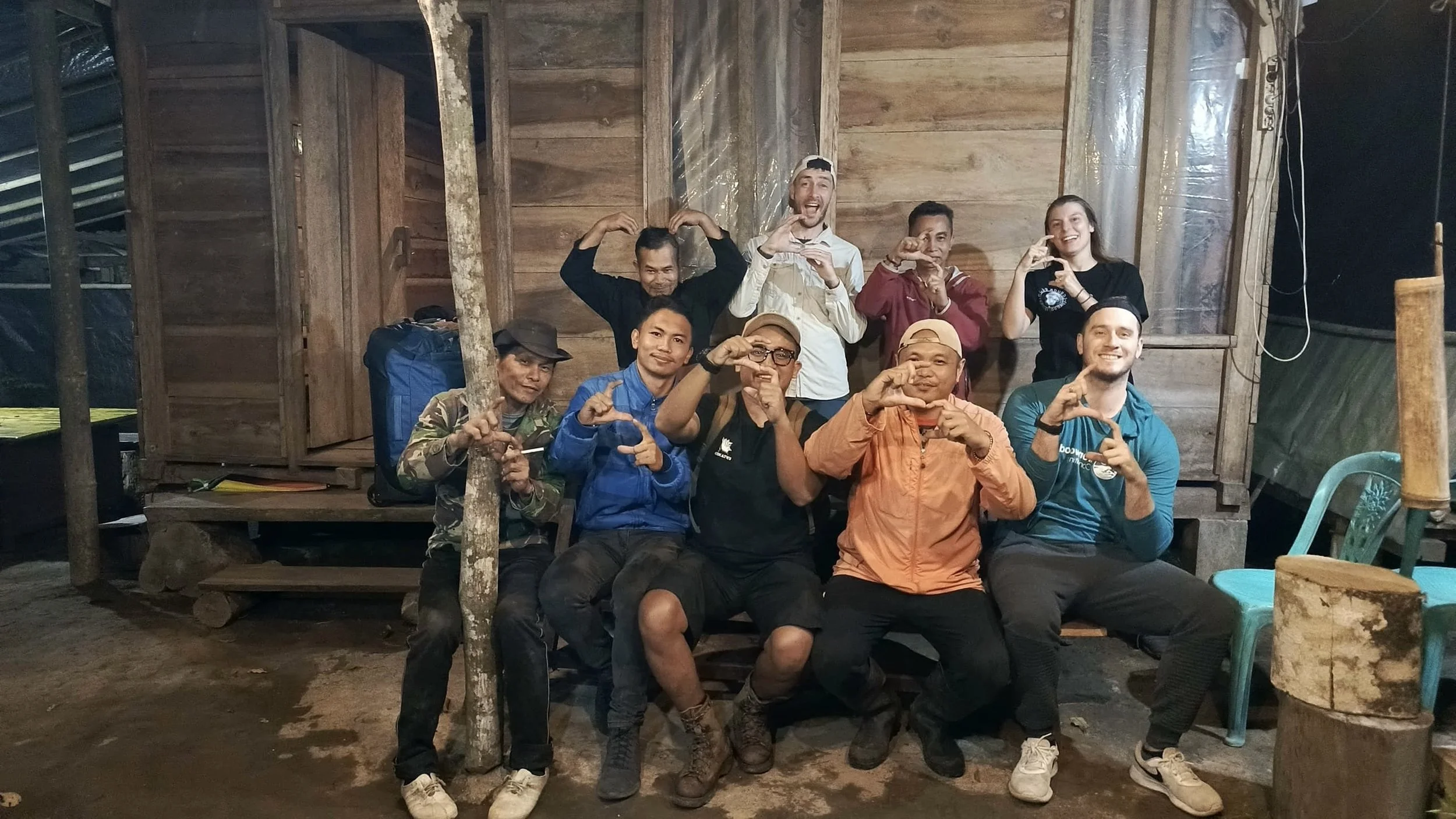
And that was the end of our Indonesian chapter. Five very different parts of the country had given us bleeding toads, dragon snakes, blue vipers, two Tropidolaemus laticinctus, more T. subannulatus than we could count and, finally, the Bornean earless monitor. There had also been dry forests, difficult conversations, wild durians and some genuinely brilliant people along the way.
We said goodbye to Jesse and Agus and flew to Malaysia, where we continued the adventure on our own. But that is a story for the next blog.