Some places are simply too good to visit only once a year. Fraser's Hill, and MCM Nature Discovery Villa, is definitely one of them!
In 2026, Artur visited Malaysian highlands twice. The first trip was a short holiday with Karolina in May, while the second was a four-night birthday adventure in September with a group of Chinese friends. Two completely different trips, both with excellent weather, interesting wildlife and plenty of fun!
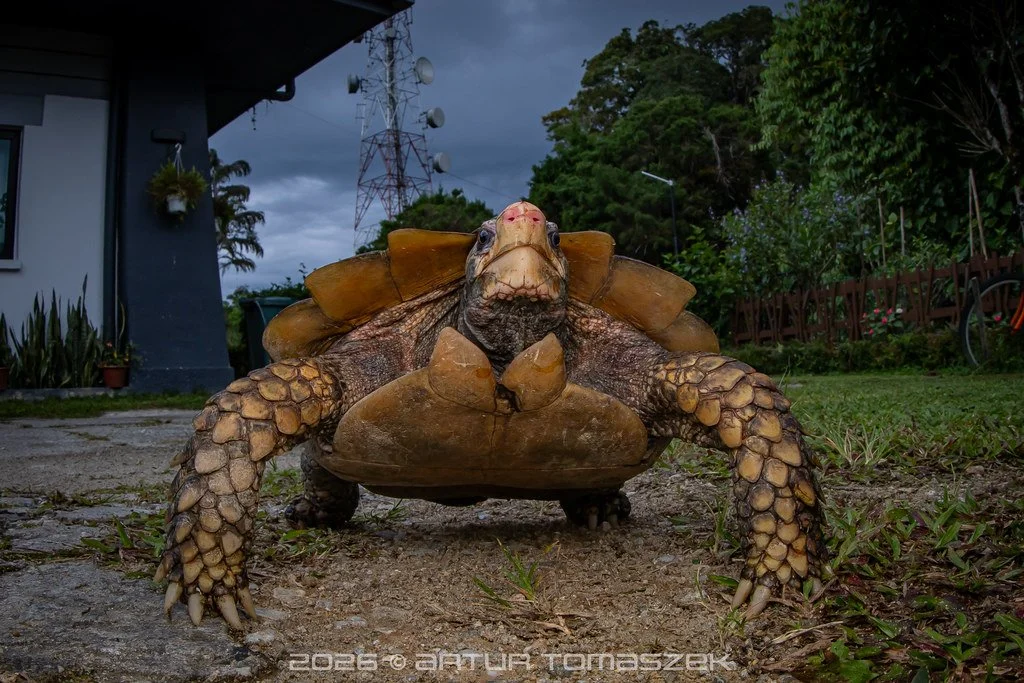
Manouria impressa
A relaxing holiday... or not? (May 2026)
In May, we headed to Fraser's Hill for a short, three-day holiday. For once, we had absolutely no herping targets. The plan was simple: relax, enjoy the cooler mountain weather and take a little break from our usual intense travelling. Naturally, that plan didn't work for long… 😂
Despite having no particular targets, we couldn't resist exploring the surrounding forests at night. The conditions were absolutely fantastic, but for some reason herping was dreadfully slow. Nevertheless, we still managed to encounter several familiar Fraser's Hill species, including Ahaetulla prasina, Asthenodipsas vertebralis, Calamaria schlegeli and Trimeresurus sabahi fucatus, alongside several other reptiles and amphibians.
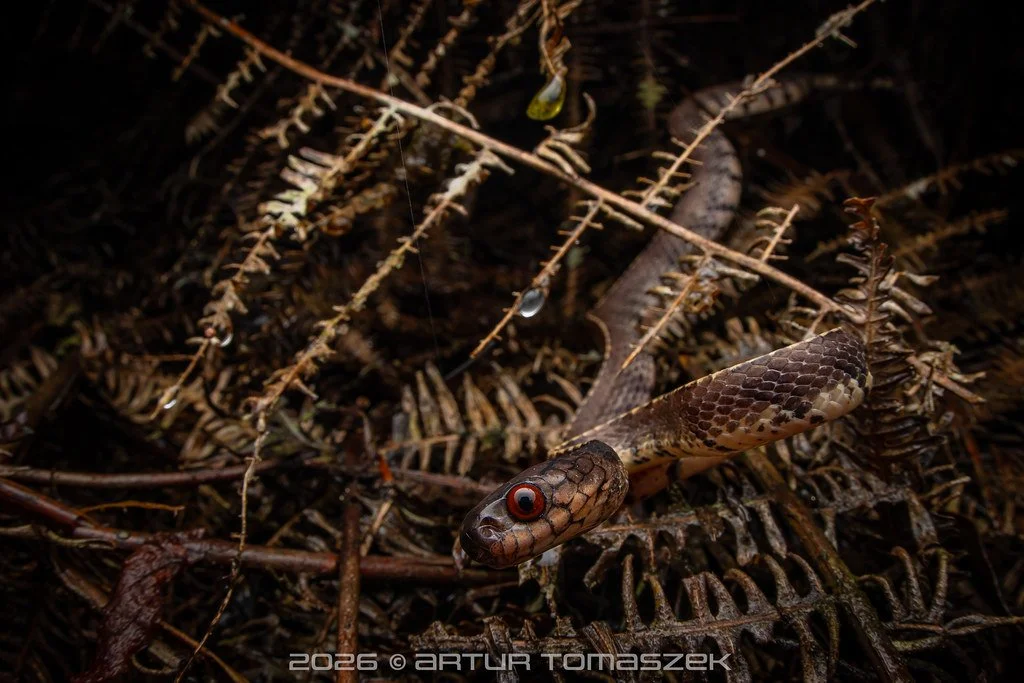
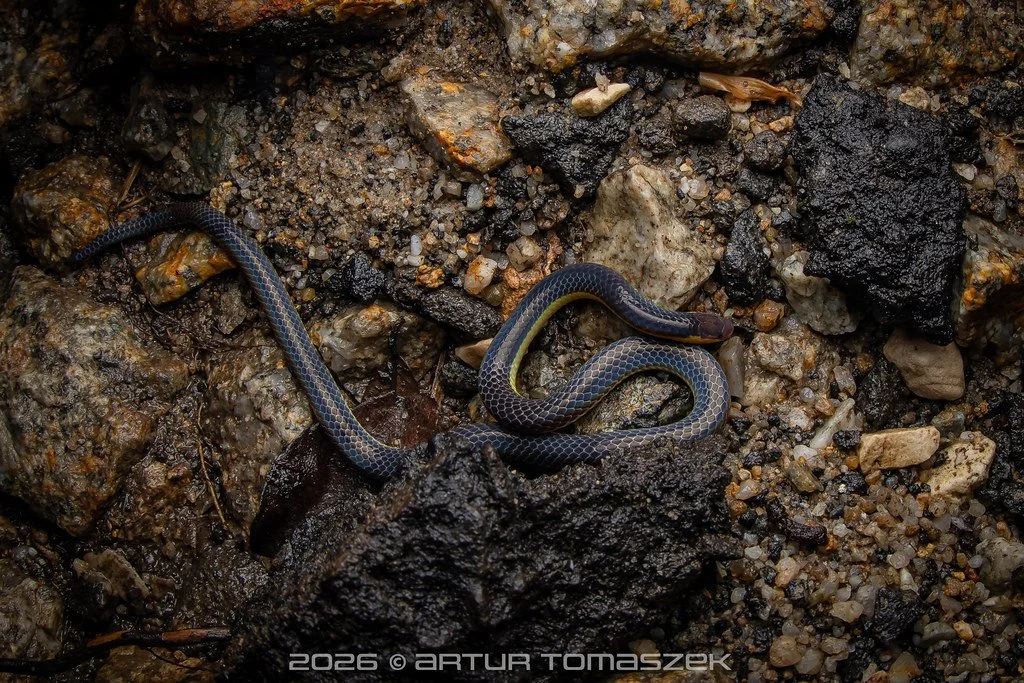
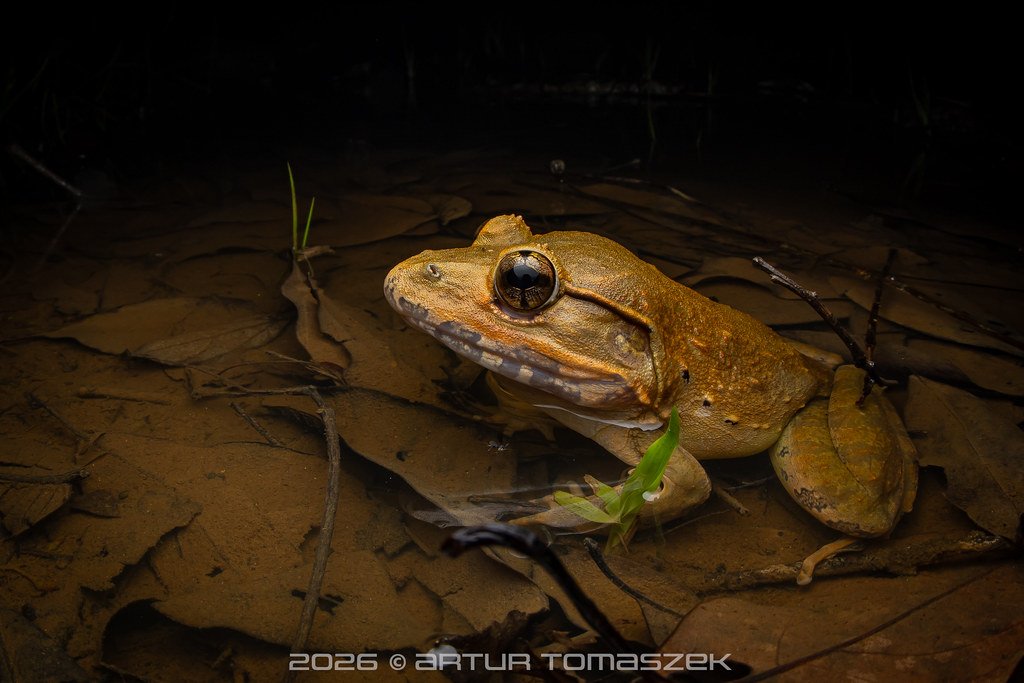
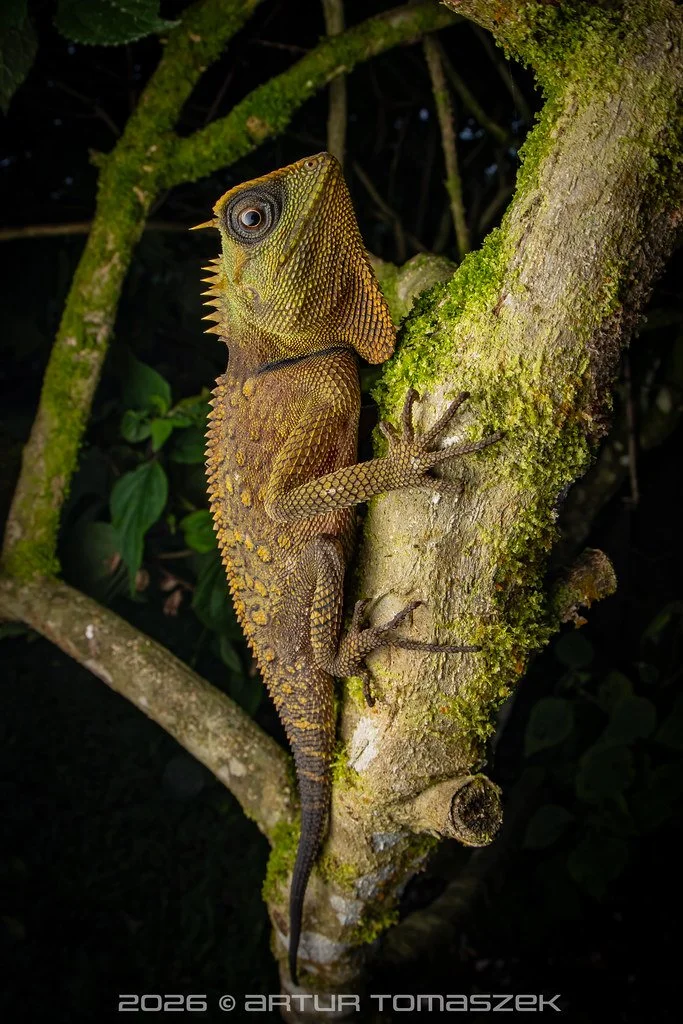
Nothing particularly unexpected, but considering this was supposed to be a relaxing holiday rather than a serious herping expedition, there was certainly no reason to complain!
And, in fact, one of the nicest surprises was waiting right where we were staying! We were incredibly lucky to encounter a male impressed tortoise (Manouria impressa) that had apparently taken up residence in the garden at MCM.
This remarkable tortoise inhabits forested highlands across parts of Southeast Asia. Unlike most tortoises, which feed primarily on vegetation, Manouria impressa has a strong preference for… mushrooms. Research has even suggested that these tortoises may play an ecological role in dispersing fungal spores through their forest habitats. Unfortunately, they are also classified as Endangered, with populations threatened by habitat loss and exploitation.
Encountering one so unexpectedly was certainly a fantastic surprise!
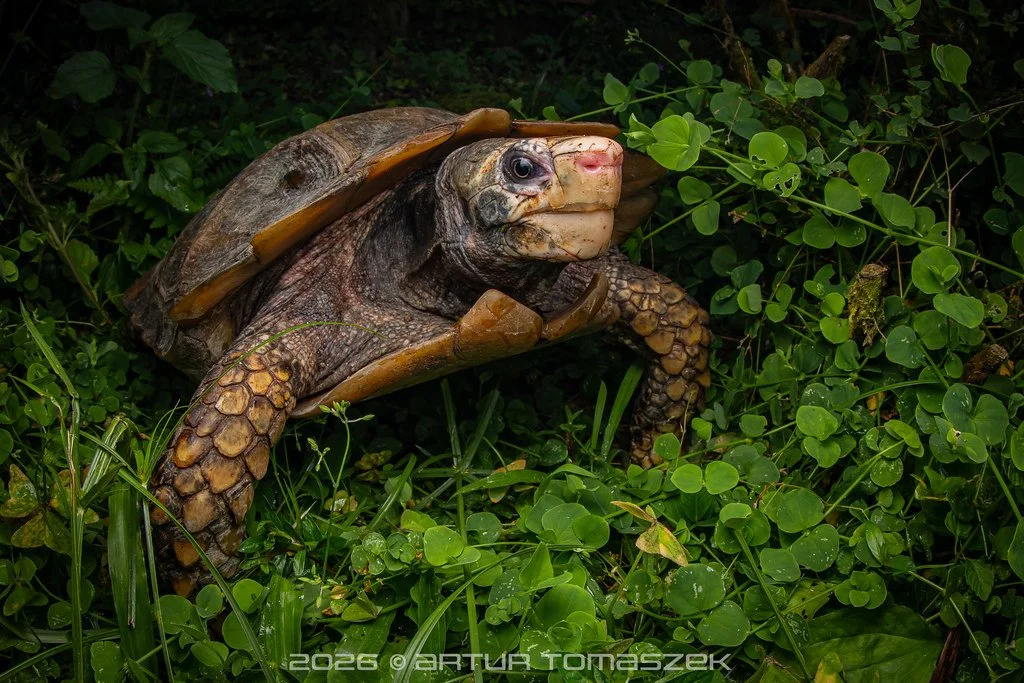
Manouria impressa
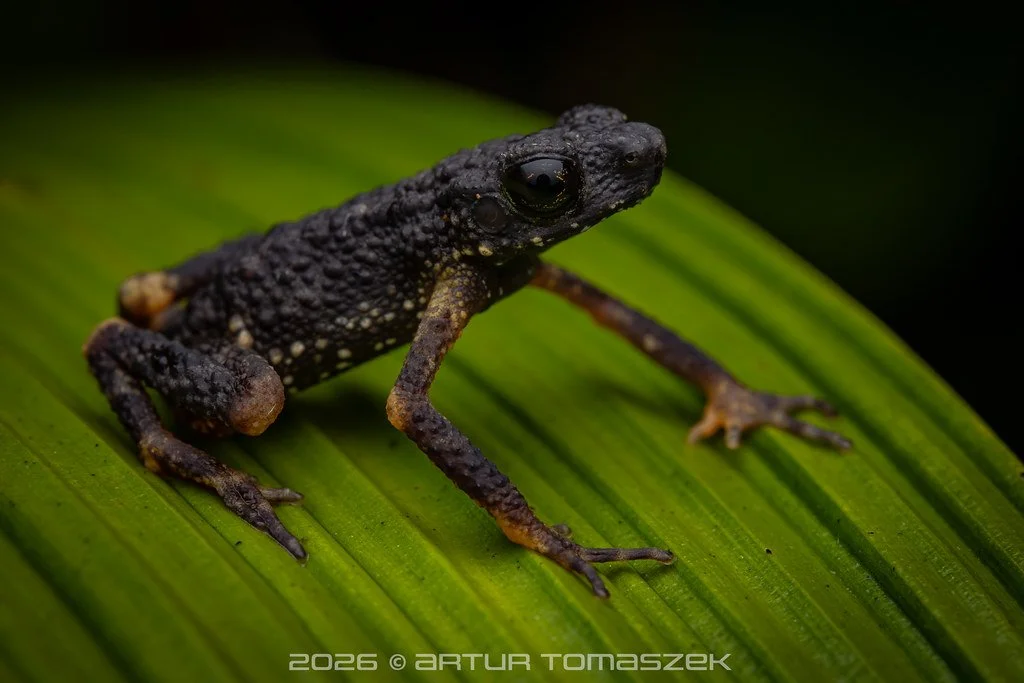
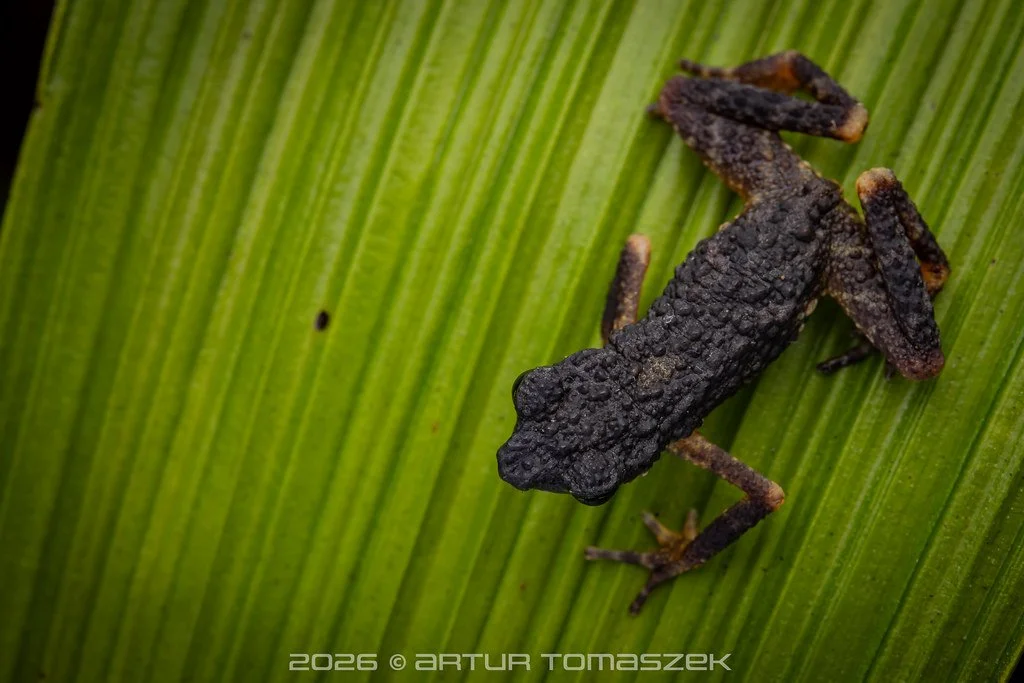
For Artur, however, the main herping success of the May trip was undoubtedly Ansonia jeetsukumarani.
This little torrent toad had been on his target list for quite some time. Despite searching for it during previous visits to Fraser's Hill, he had never managed to find one. This time, things finally worked out!
During one of their nighttime explorations, we discovered an excellent forest stream with what appeared to be a healthy population of these fascinating little amphibians. Interestingly, Fraser's Hill is the type locality of Ansonia jeetsukumarani. The species was formally described in 2008, based on specimens collected along Bishop's Trail. These small toads inhabit forested highlands and are closely associated with mountain streams. The original scientific description reported individuals resting on rocks and small leaves near streams at night. Their reproductive biology is not yet fully documented, although the streams they inhabit are presumed to serve as breeding sites.
After several unsuccessful attempts during previous visits, finally discovering a stream supporting multiple individuals was extremely satisfying. Sometimes, finding a tiny brown toad is all it takes to make an entire herping trip successful!
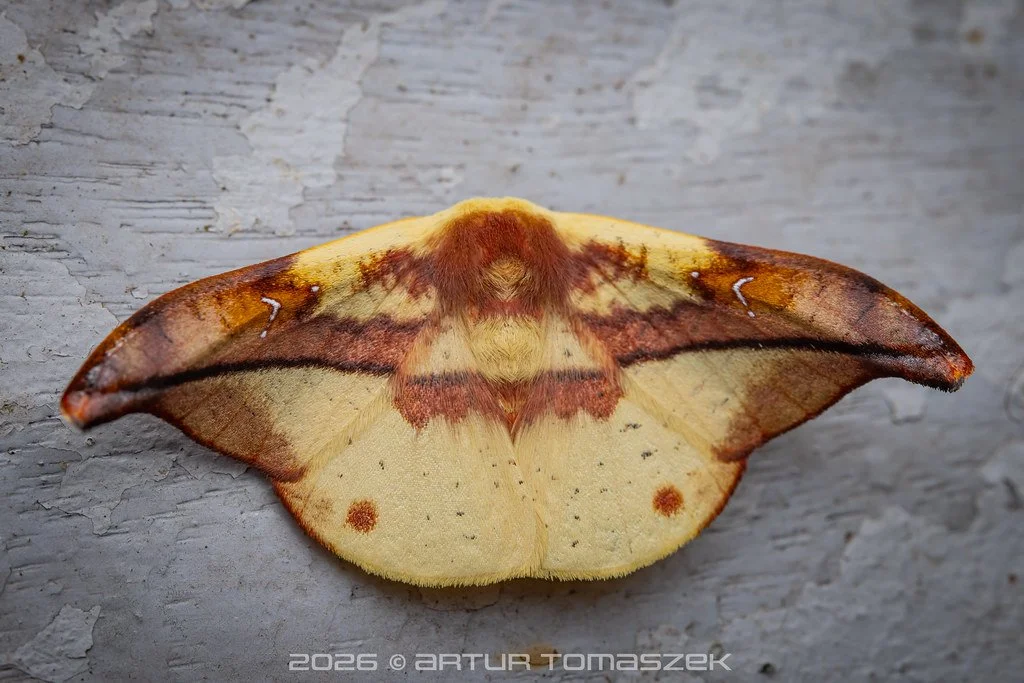
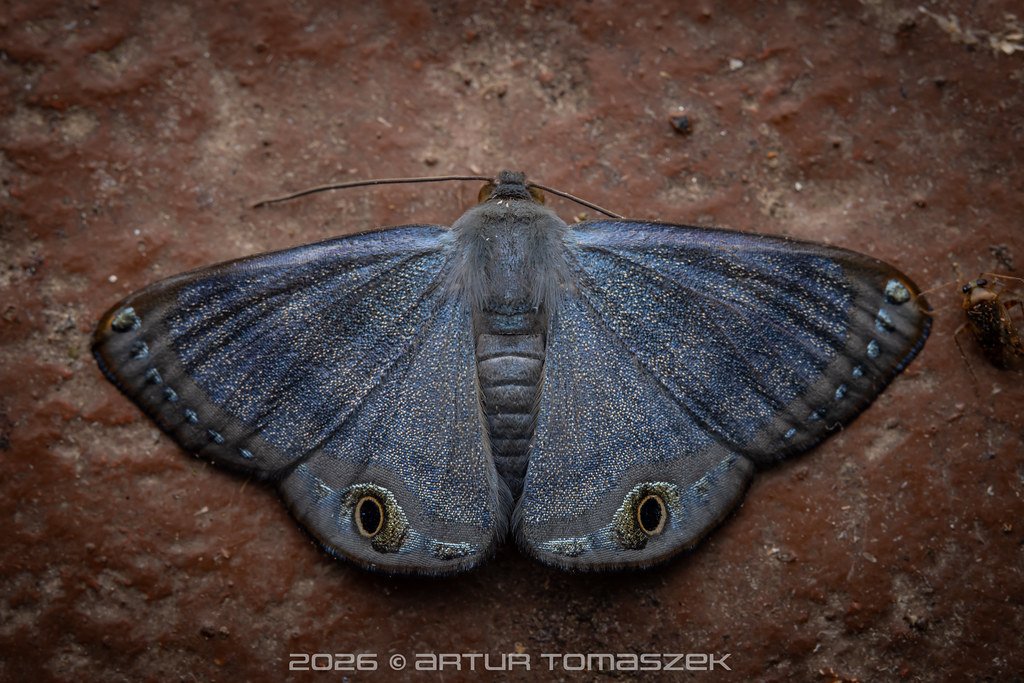
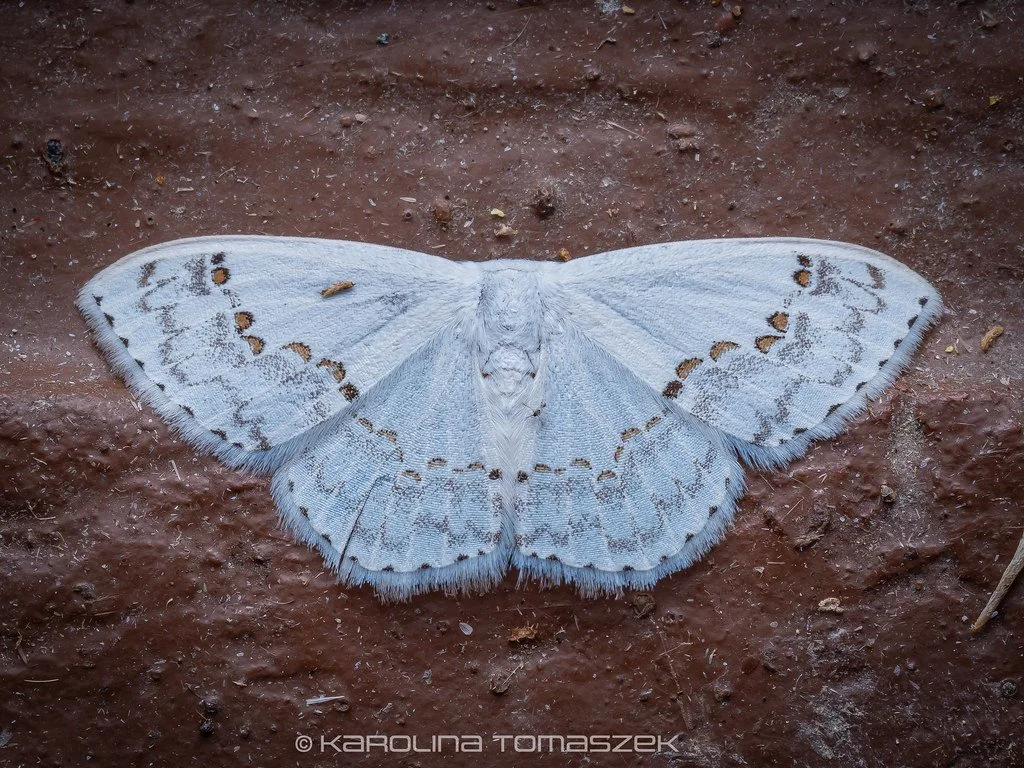
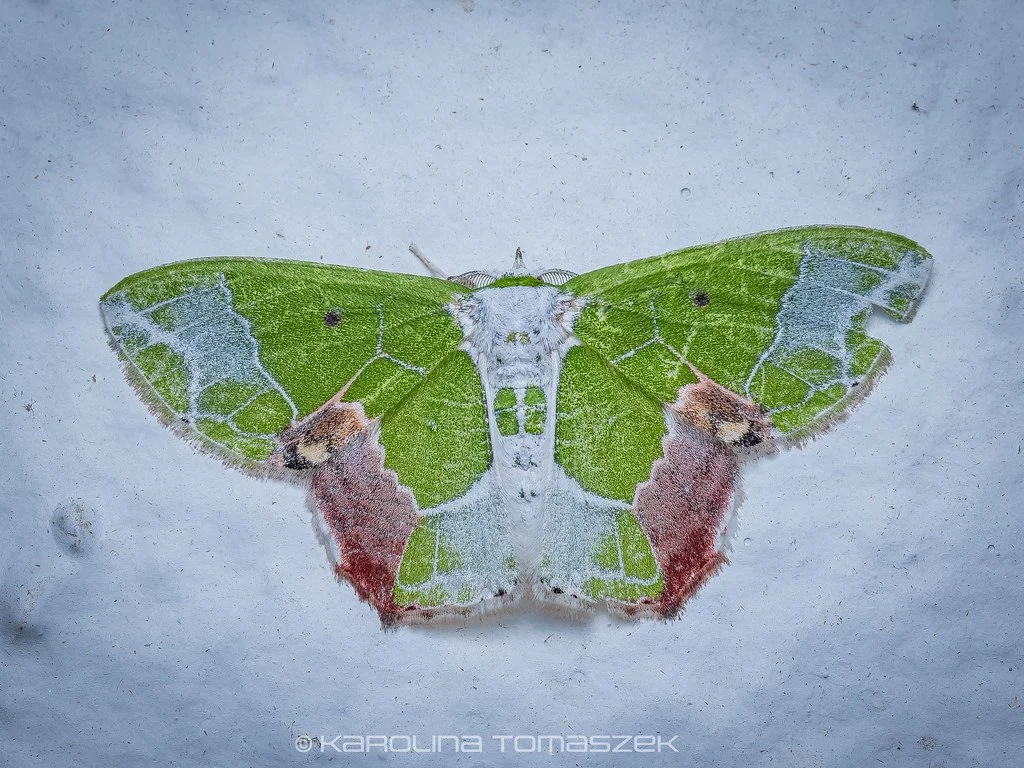
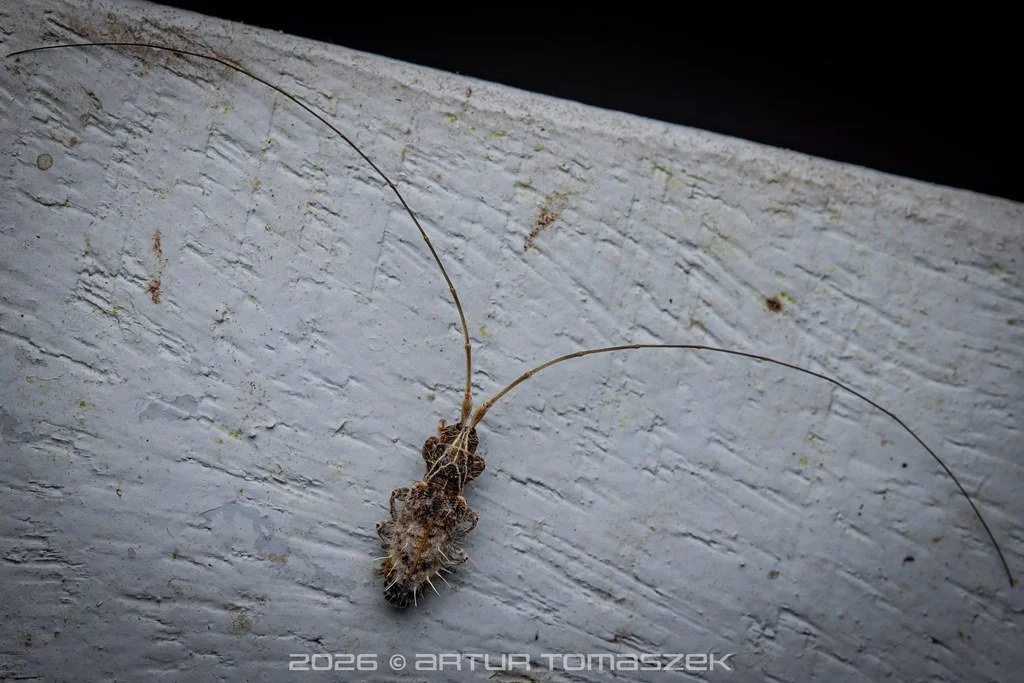
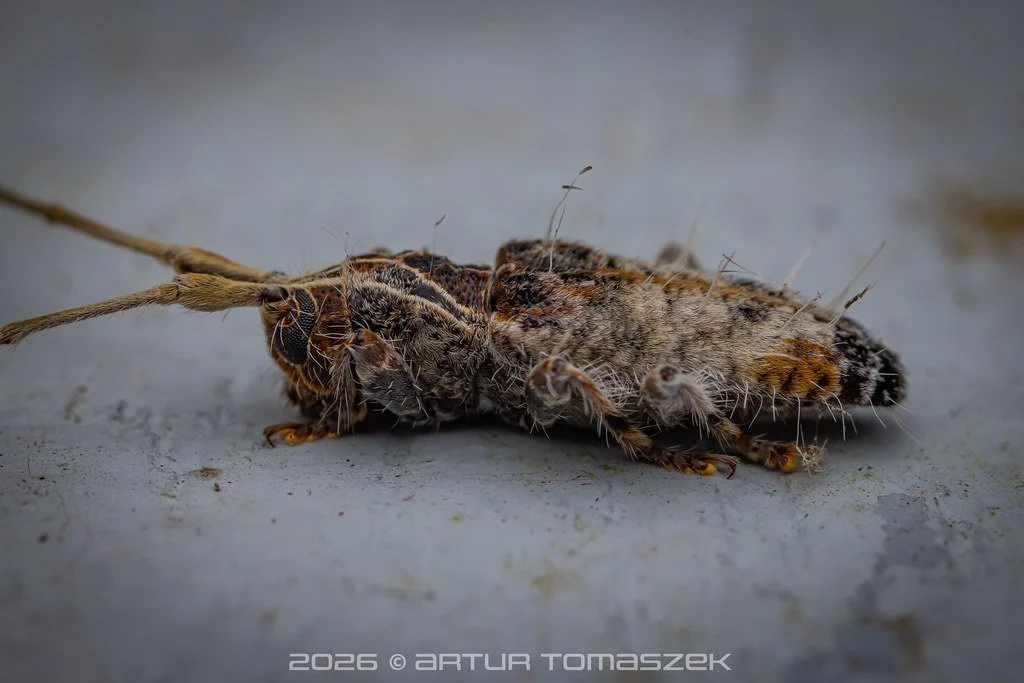
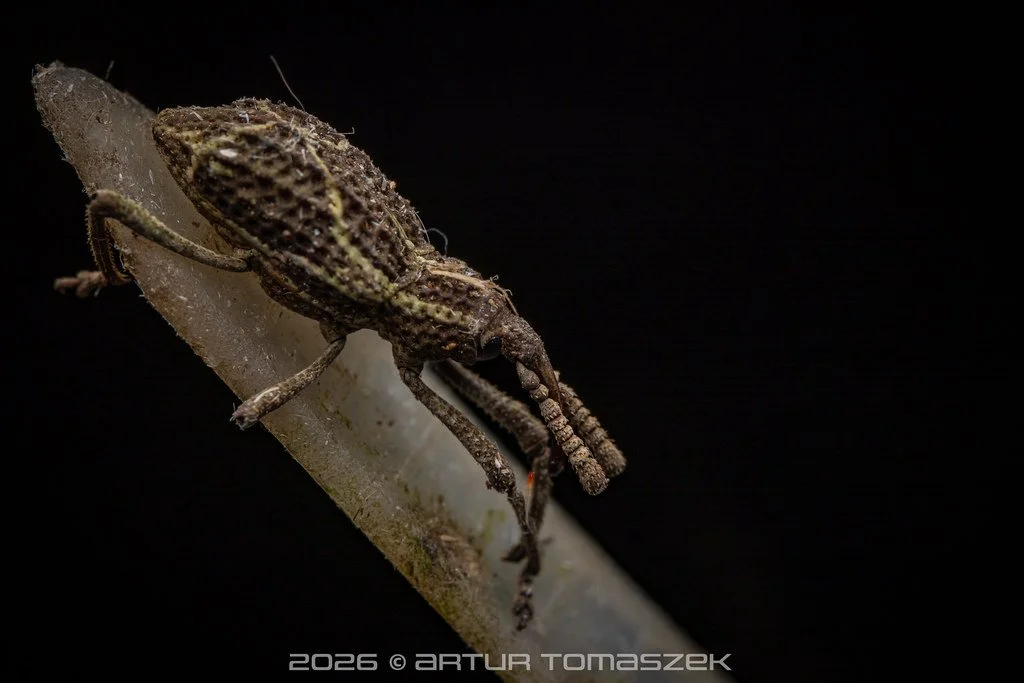
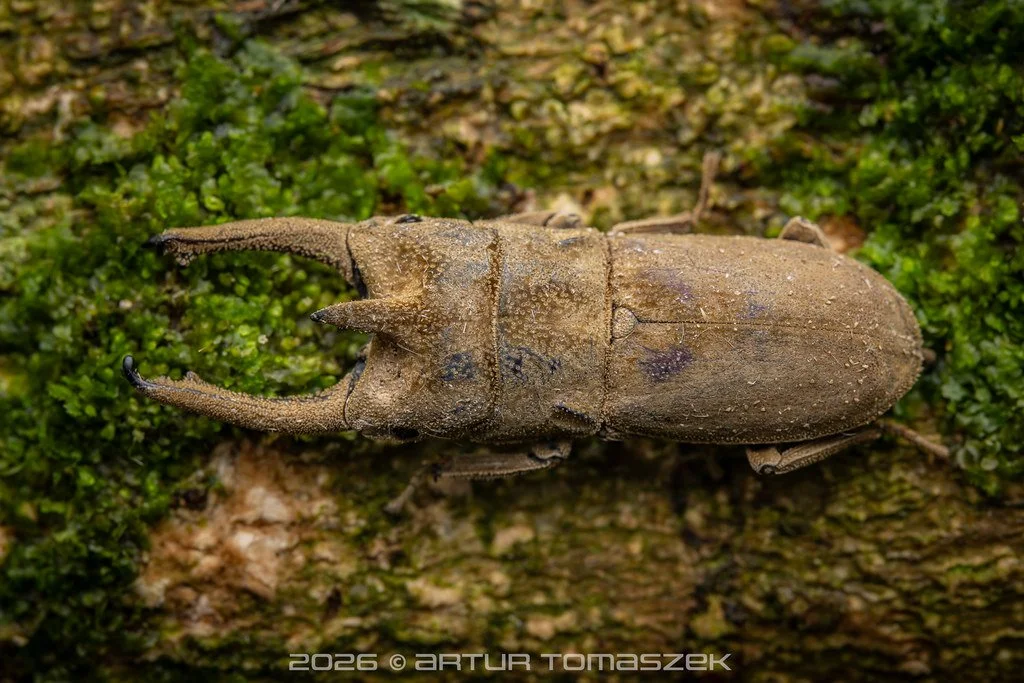
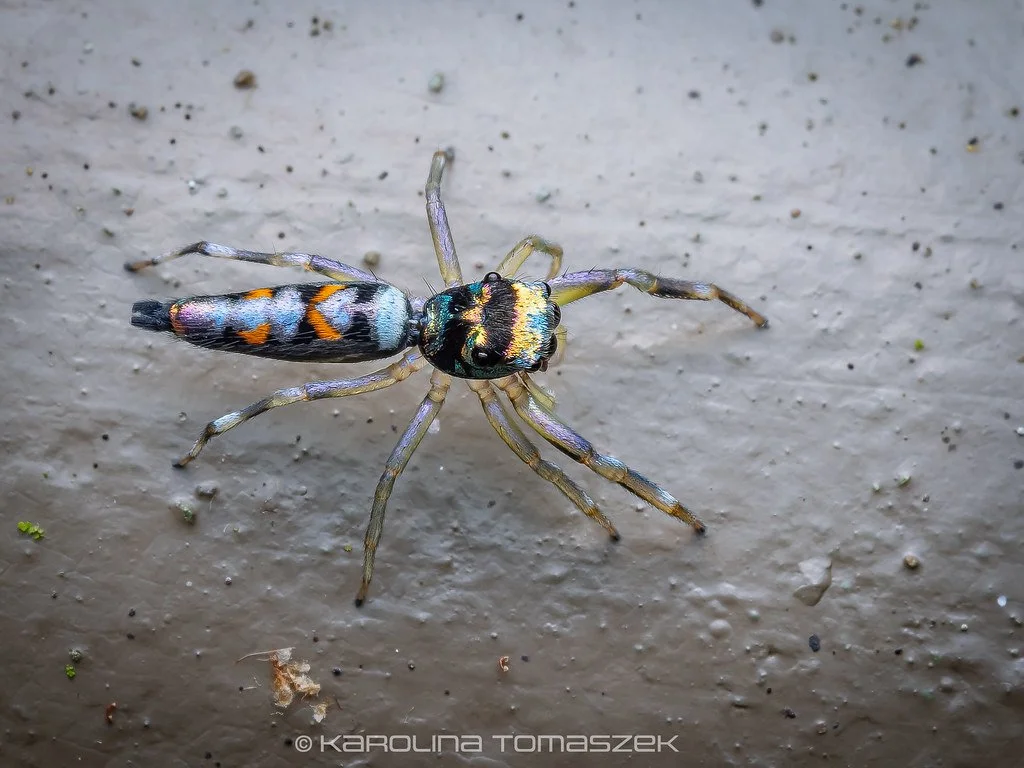
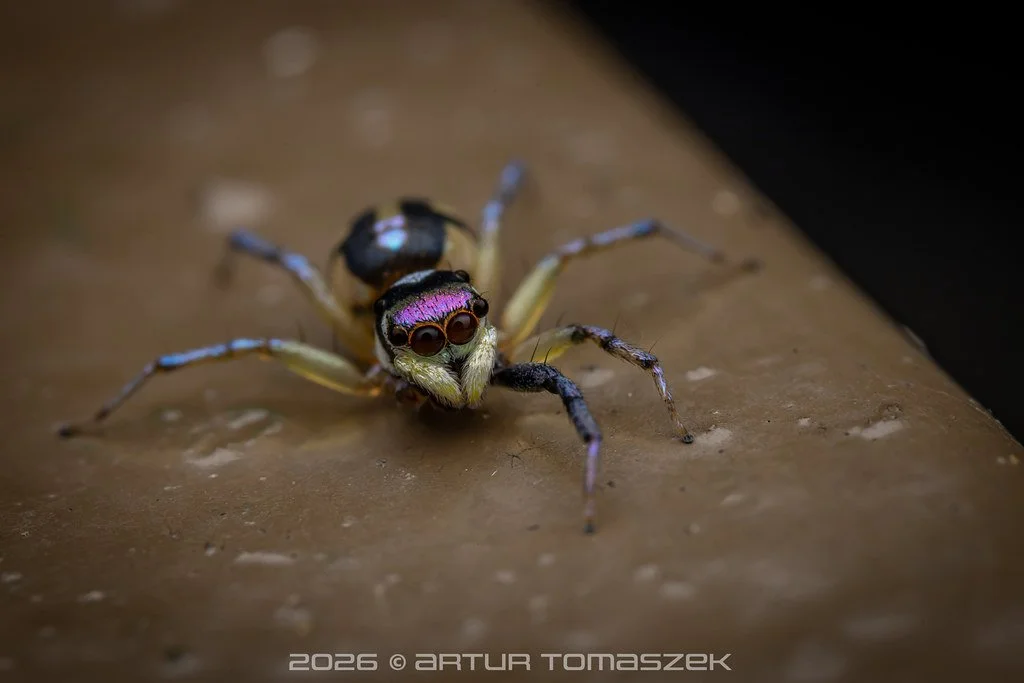
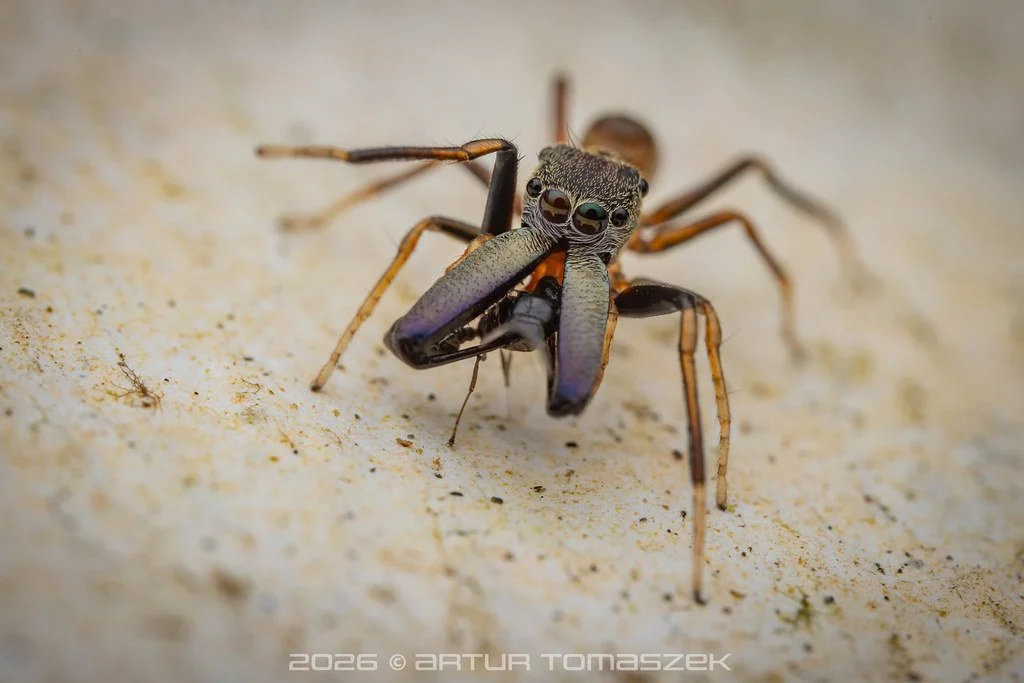
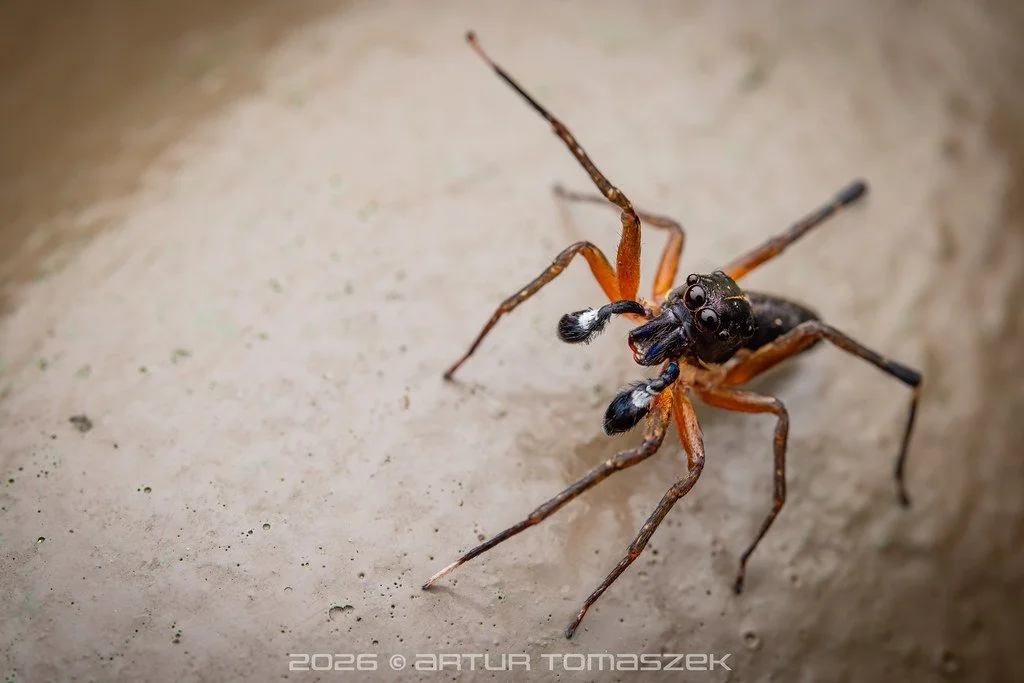
Since we were staying at MCM, we also had the opportunity to enjoy some excellent mothing. The light traps attracted an impressive variety of moths and other nocturnal insects, providing plenty of opportunities for macro photography. We also did a few day walks which produced some arthropods too.
And, most importantly, we finally encountered the stunning Picasso moth (Baorisa hieroglyphica) on this trip!
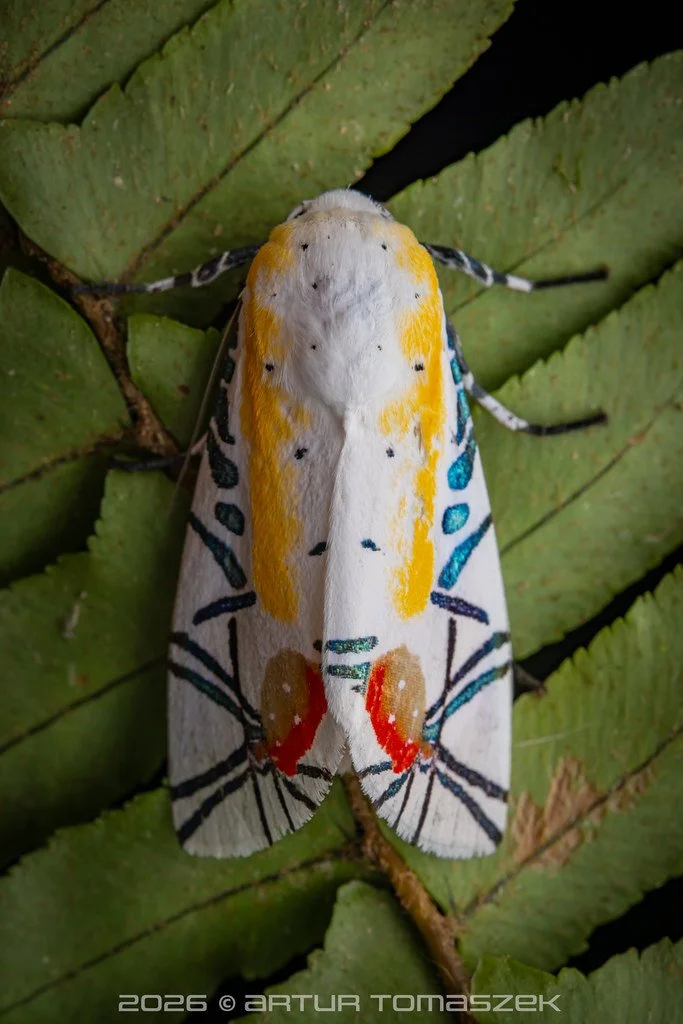
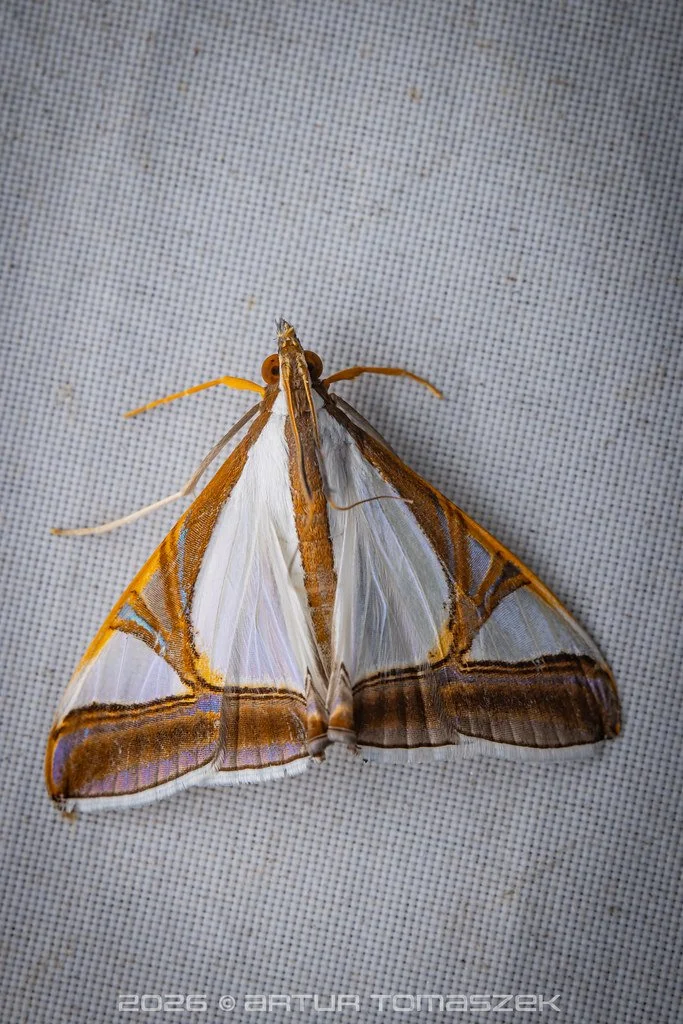
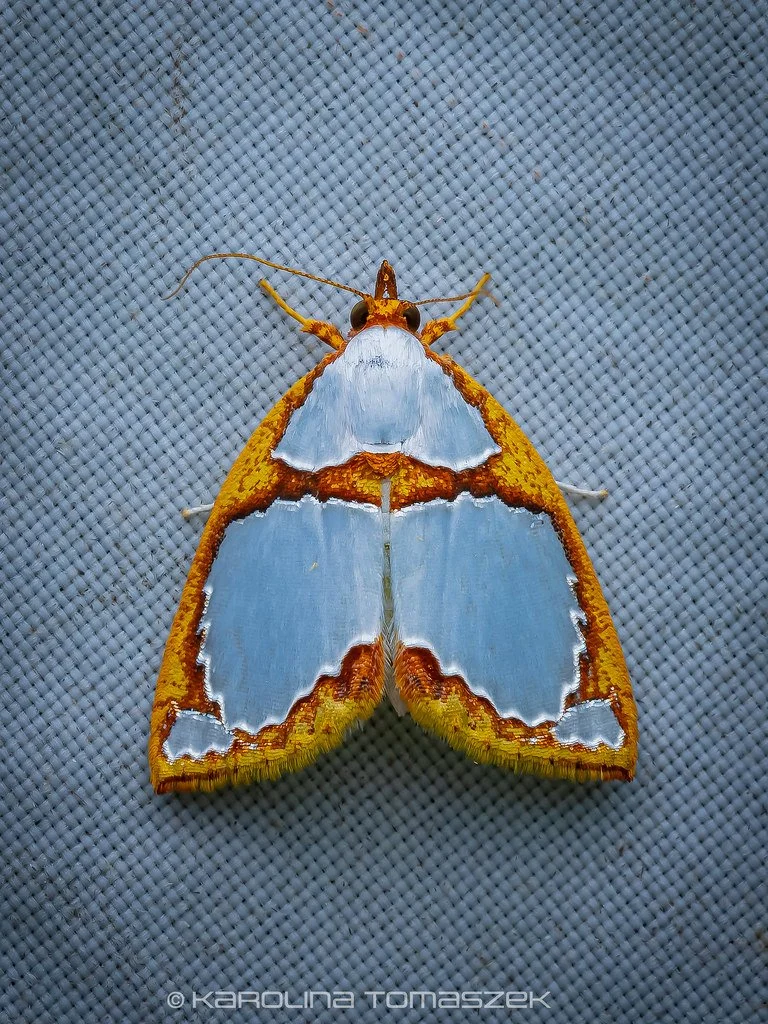
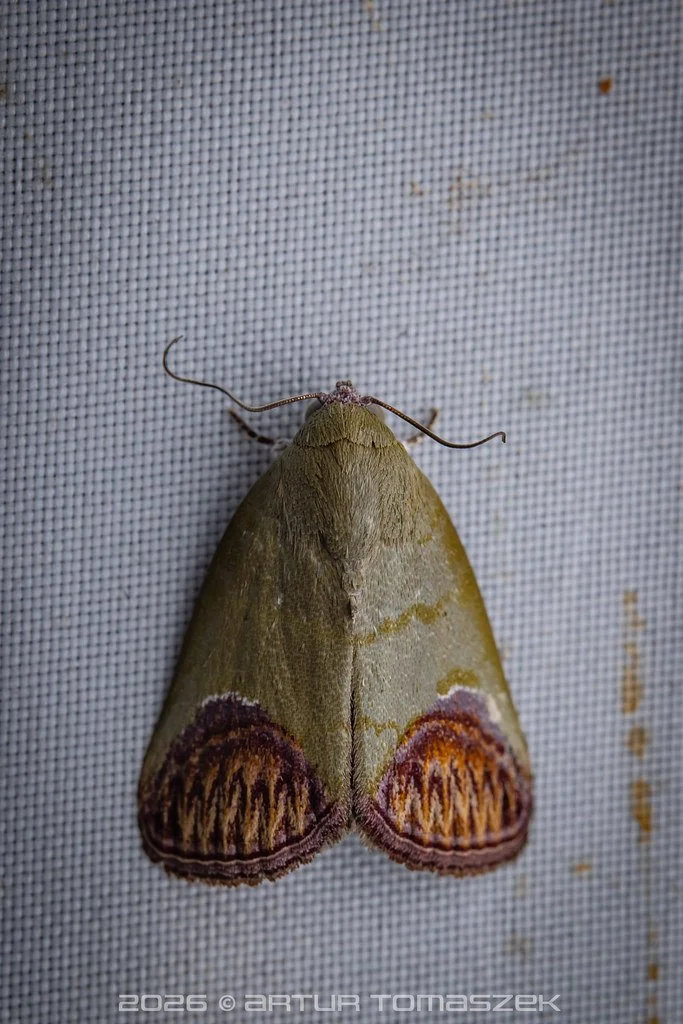
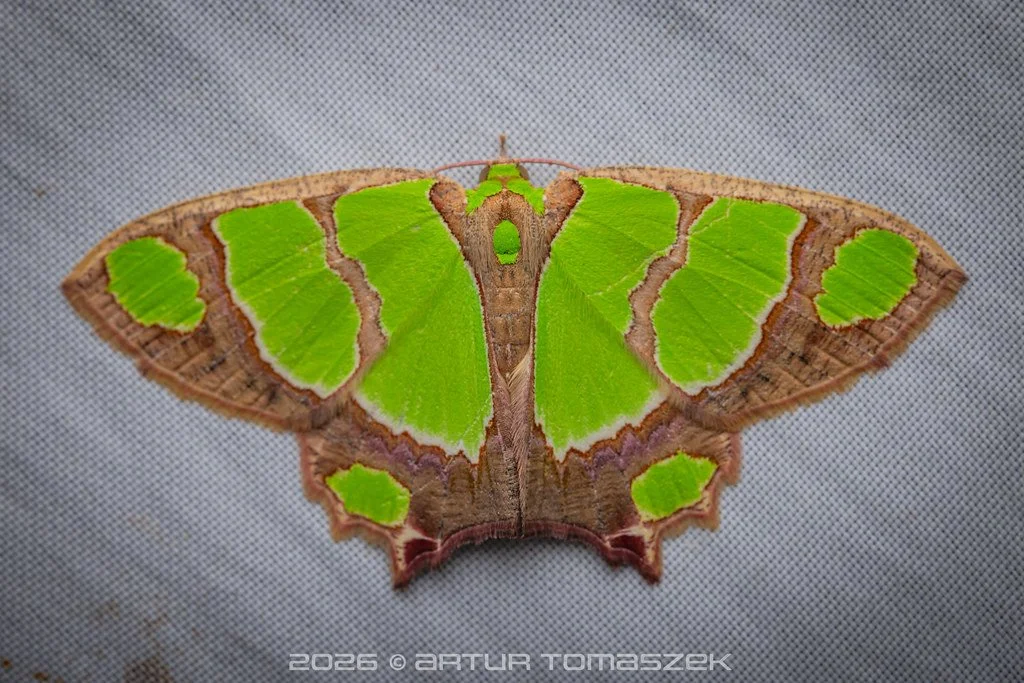
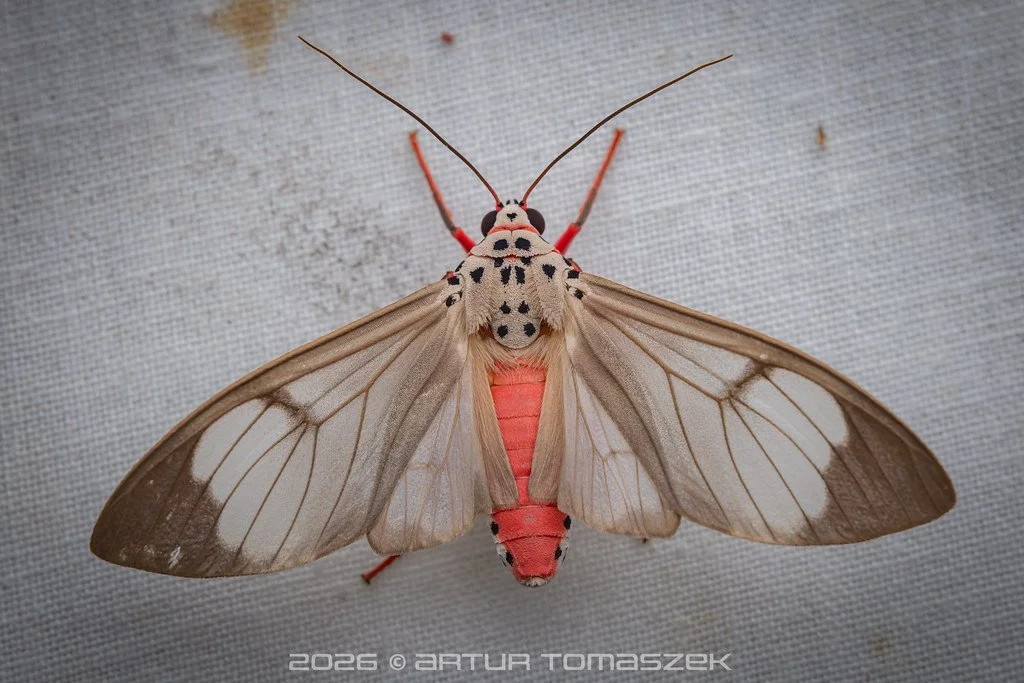
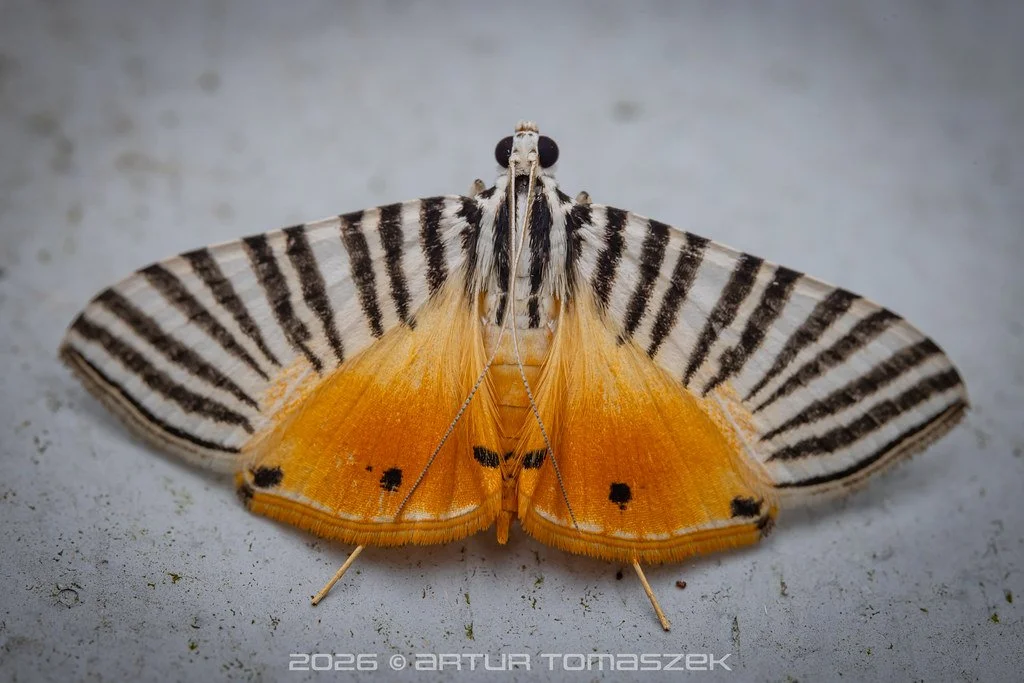
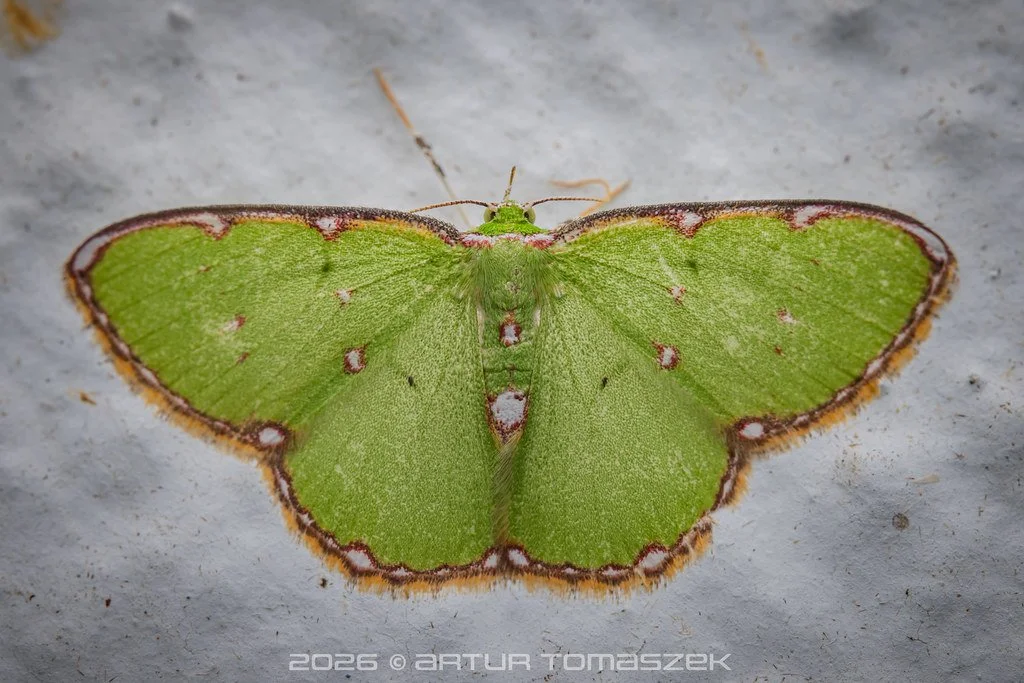
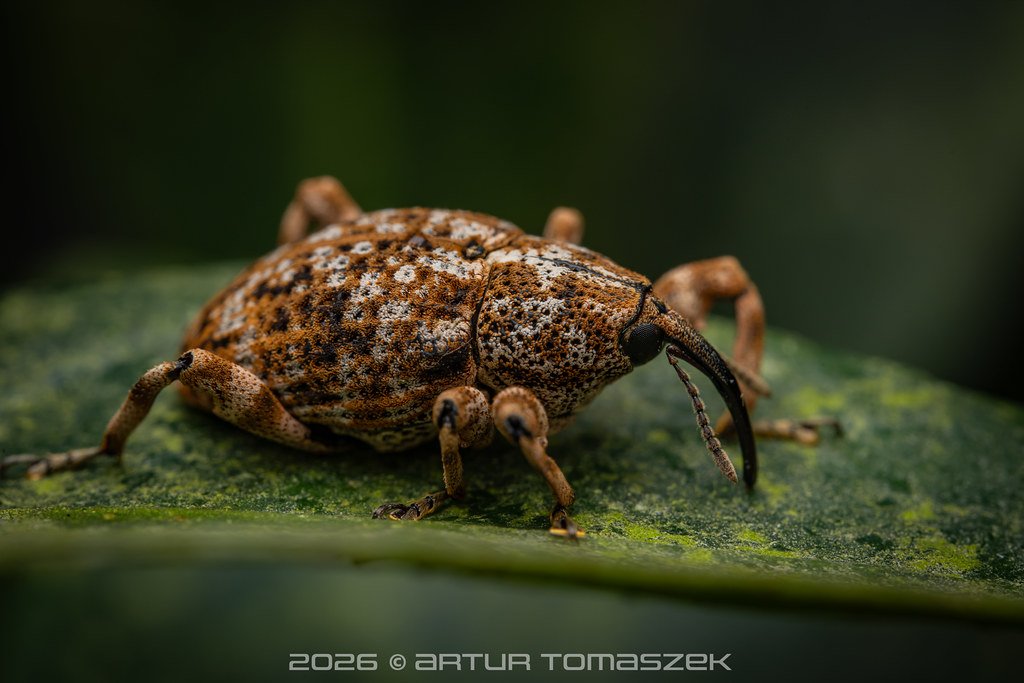
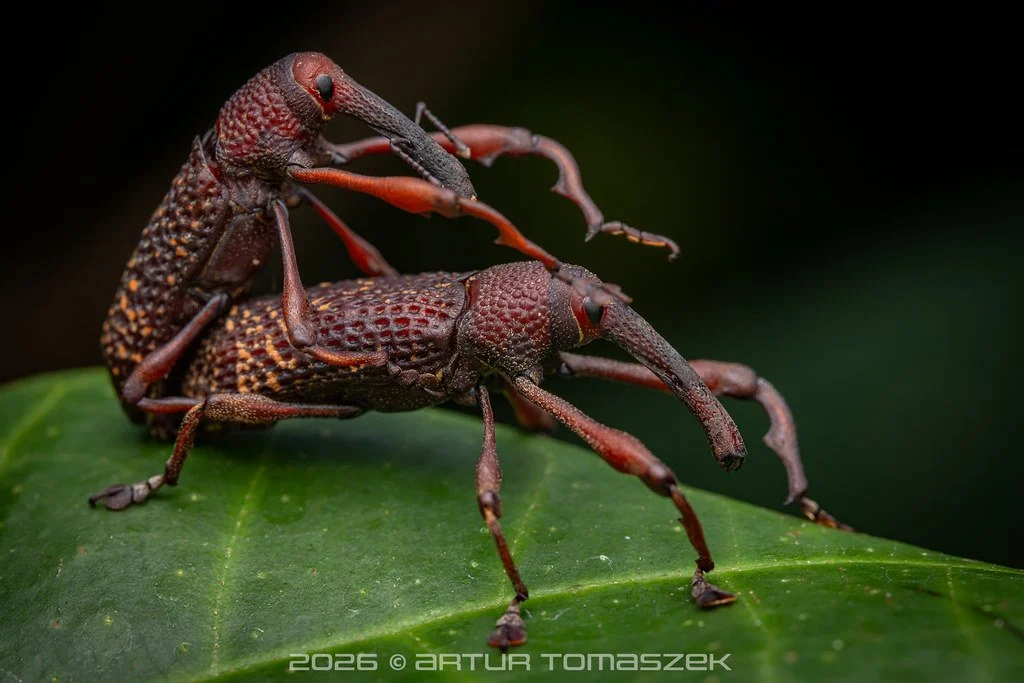
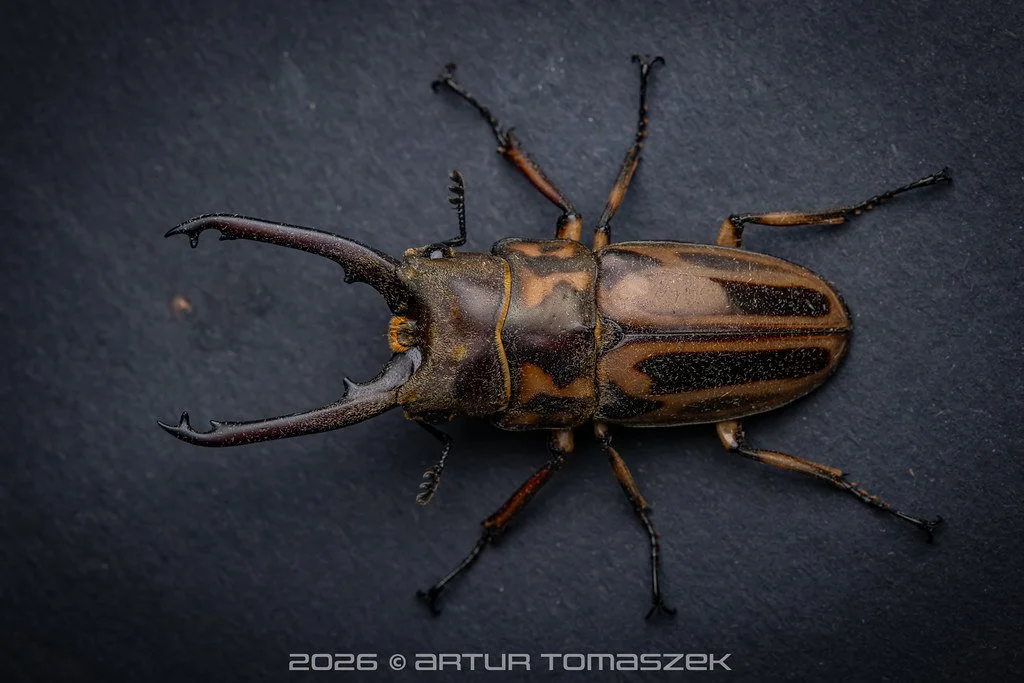
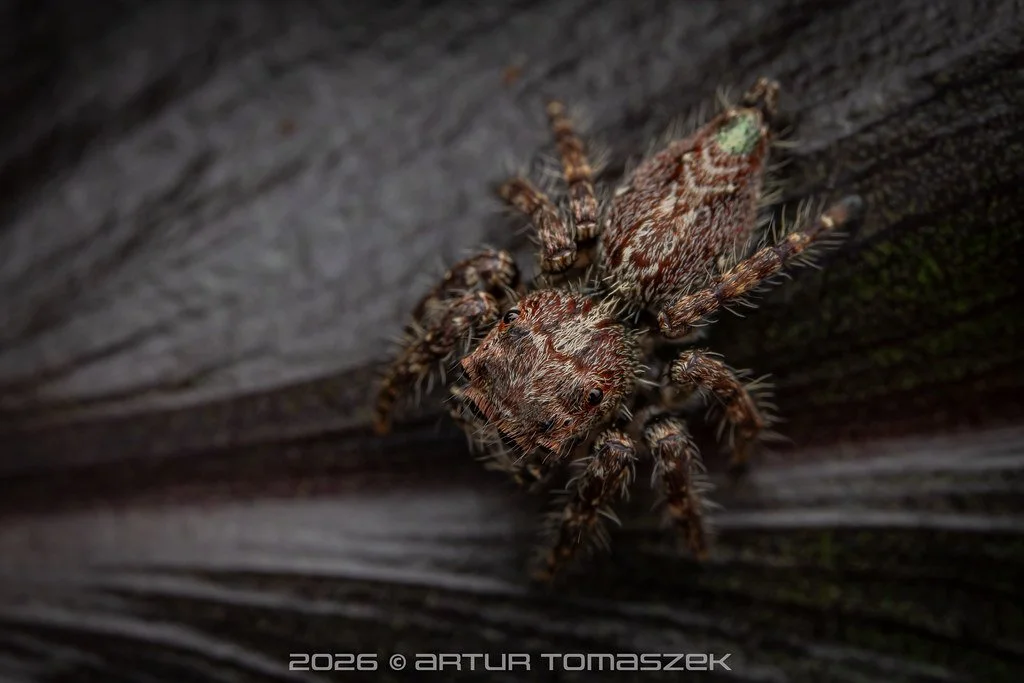
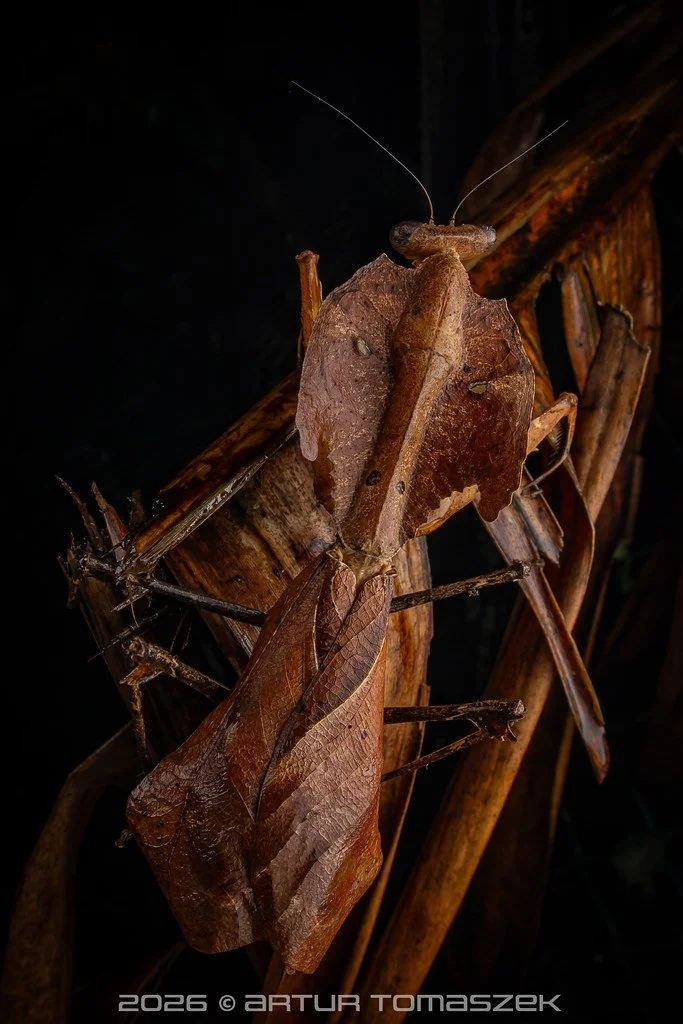
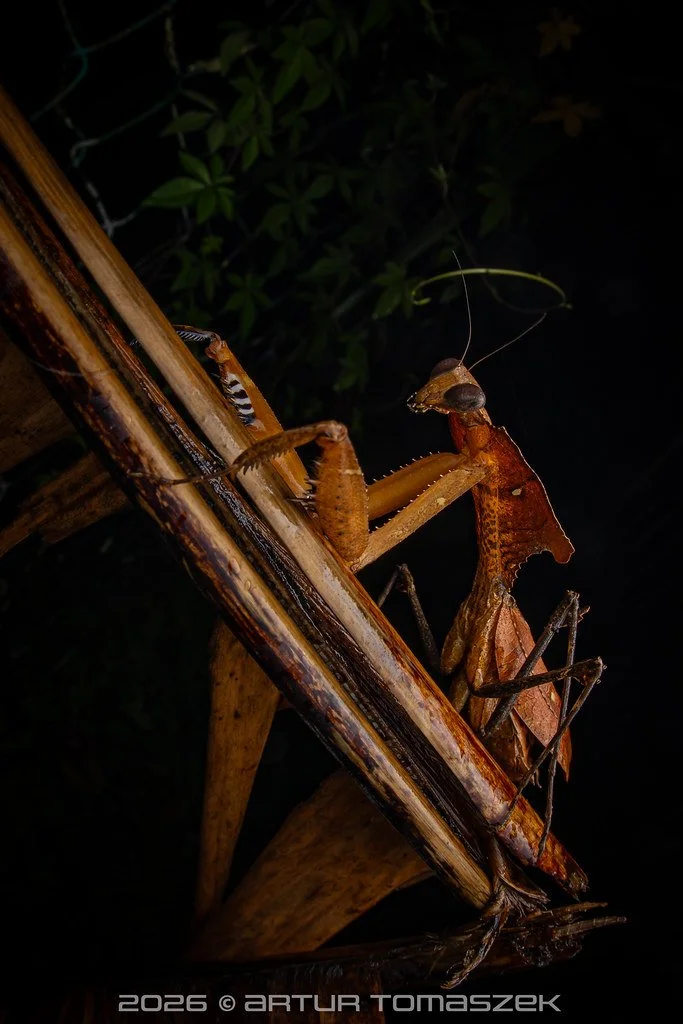
However, one particular encounter completely overshadowed everything else: Toxodera hauseri.
After hoping to encounter this extraordinary mantis for such a long time, we finally got our chance. And what an incredible insect it was! Toxodera hauseri belongs to a group of praying mantises commonly known as dragon mantises. Their extremely elongated bodies and unusual proportions make them some of the most spectacular predatory insects in Southeast Asia. The species was scientifically described in 2009 and closely resembles Toxodera fimbriata. One of the morphological characters distinguishing the two species is the shape and width of the expanded lobes on their middle legs. Like other praying mantises, dragon mantises are predators equipped with specialised front legs for capturing prey.
For somebody who enjoys macro photography as much as Artur, encountering a creature like this is every bit as exciting as finding a rare snake!
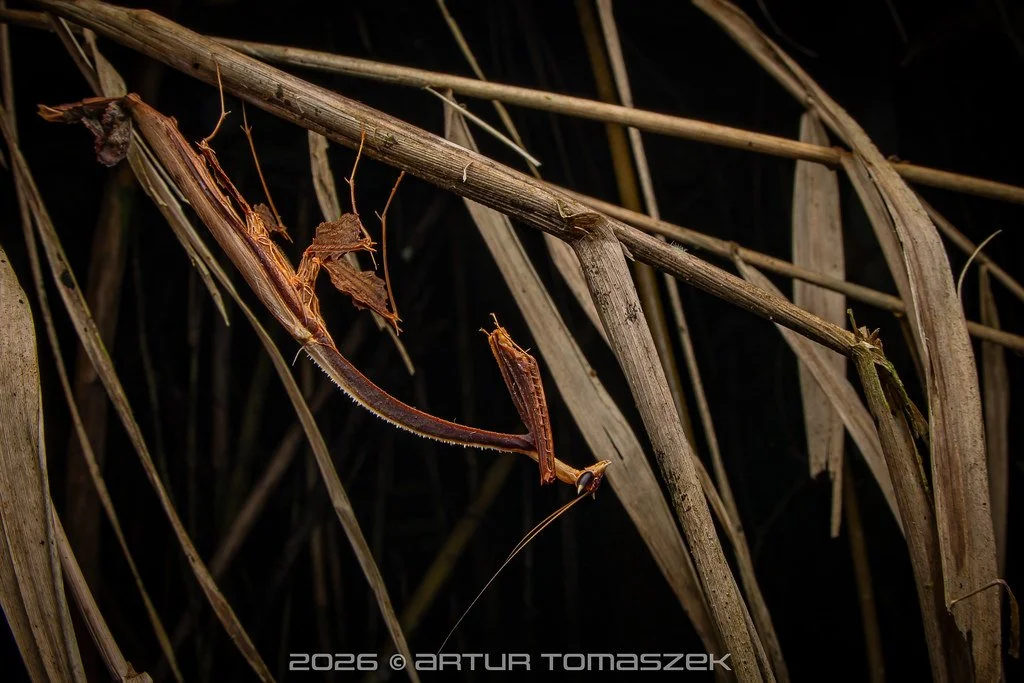
Toxodera hauseri
Our three-day trip might have been relatively quiet in terms of herping, but with a remarkable tortoise, a long-awaited torrent toad and an absolutely spectacular dragon mantis, we certainly were very happy.
Not bad for a supposedly relaxing holiday!
Birthday, snakes and durian (September 2026)
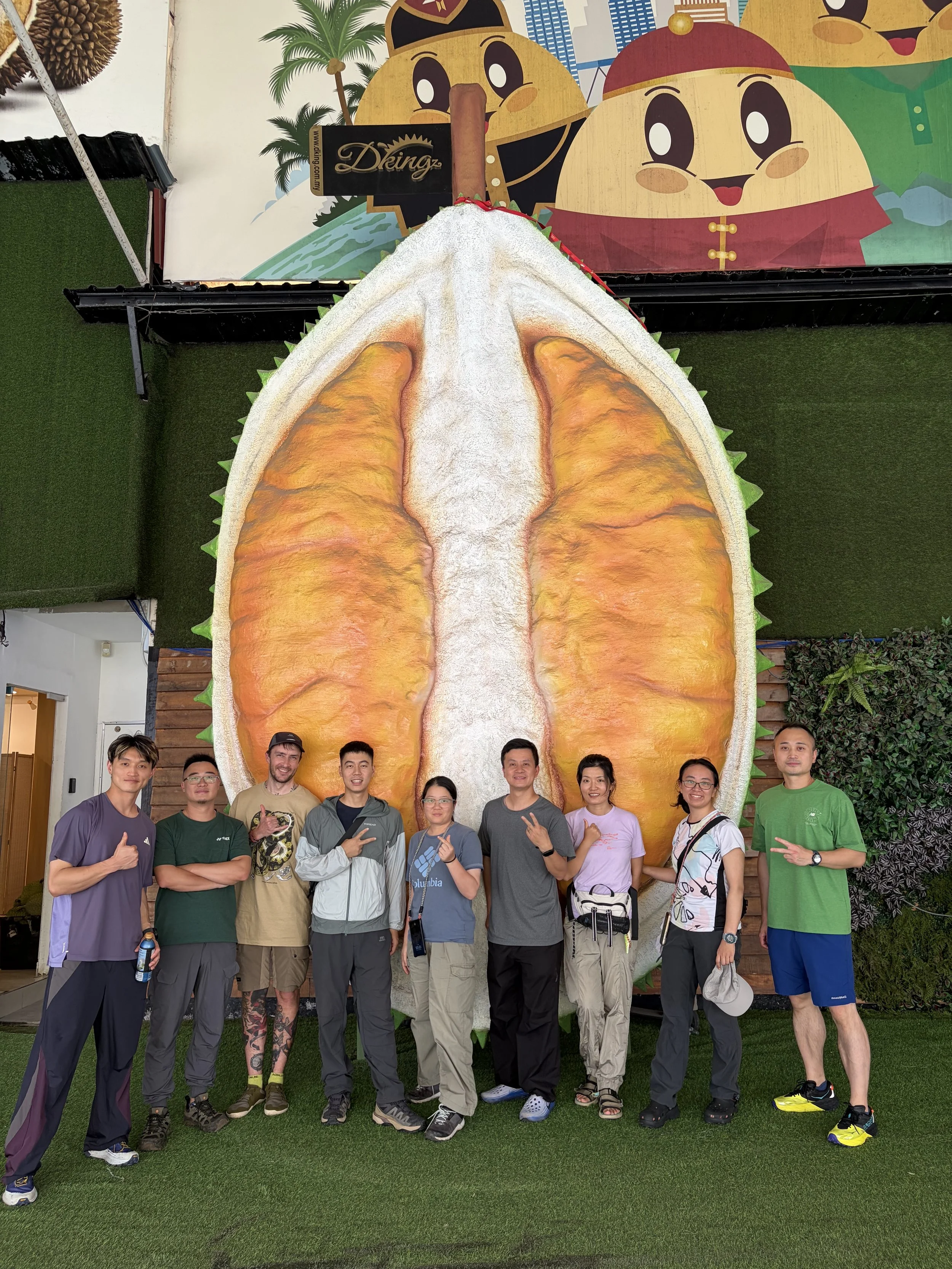
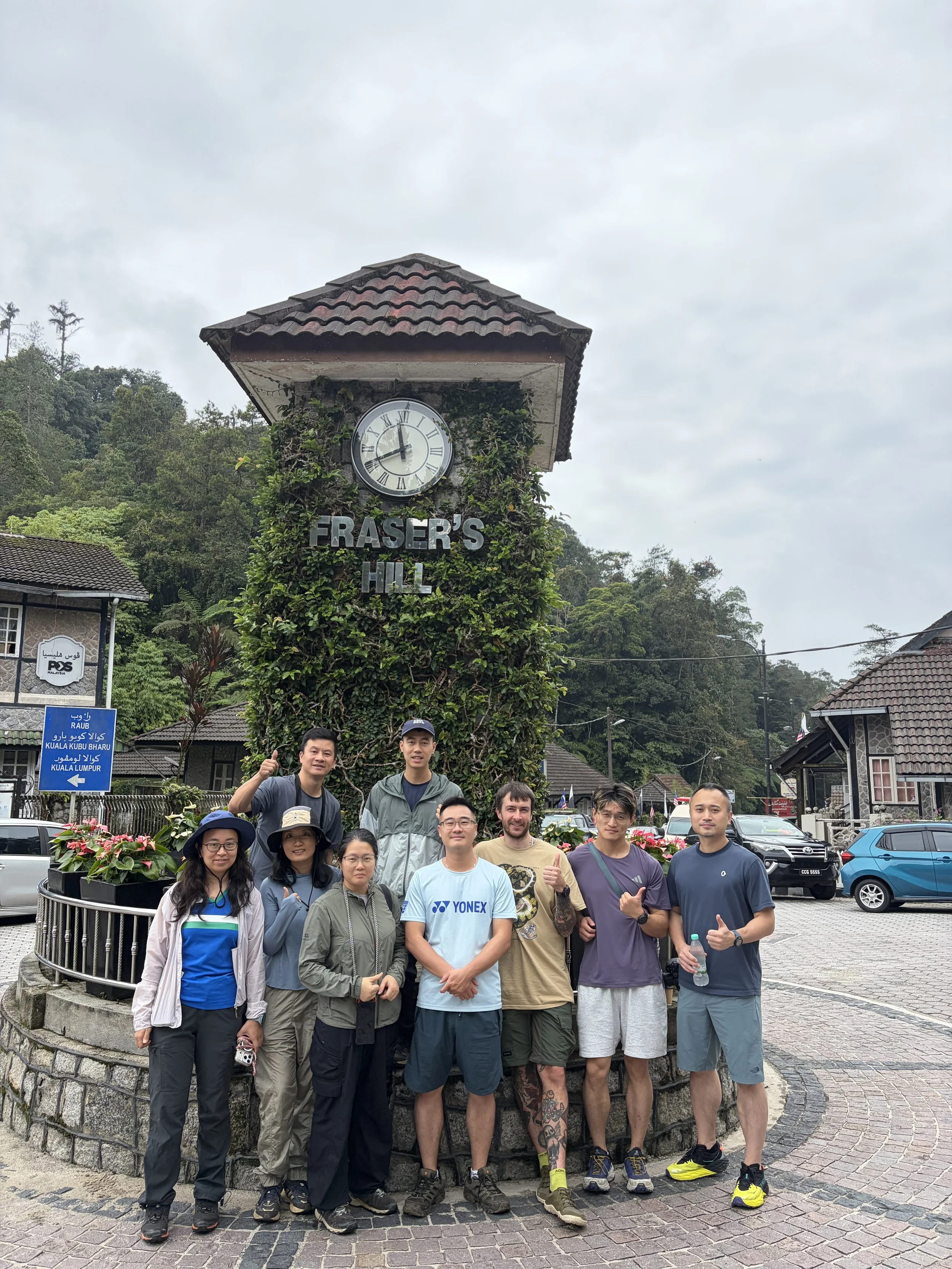
A few months later, Artur returned to Fraser's Hill for another adventure. This time, Karolina stayed in Hong Kong and Artur travelled with a small group of Chinese friends, including Zhou Hang and Yao Liang.
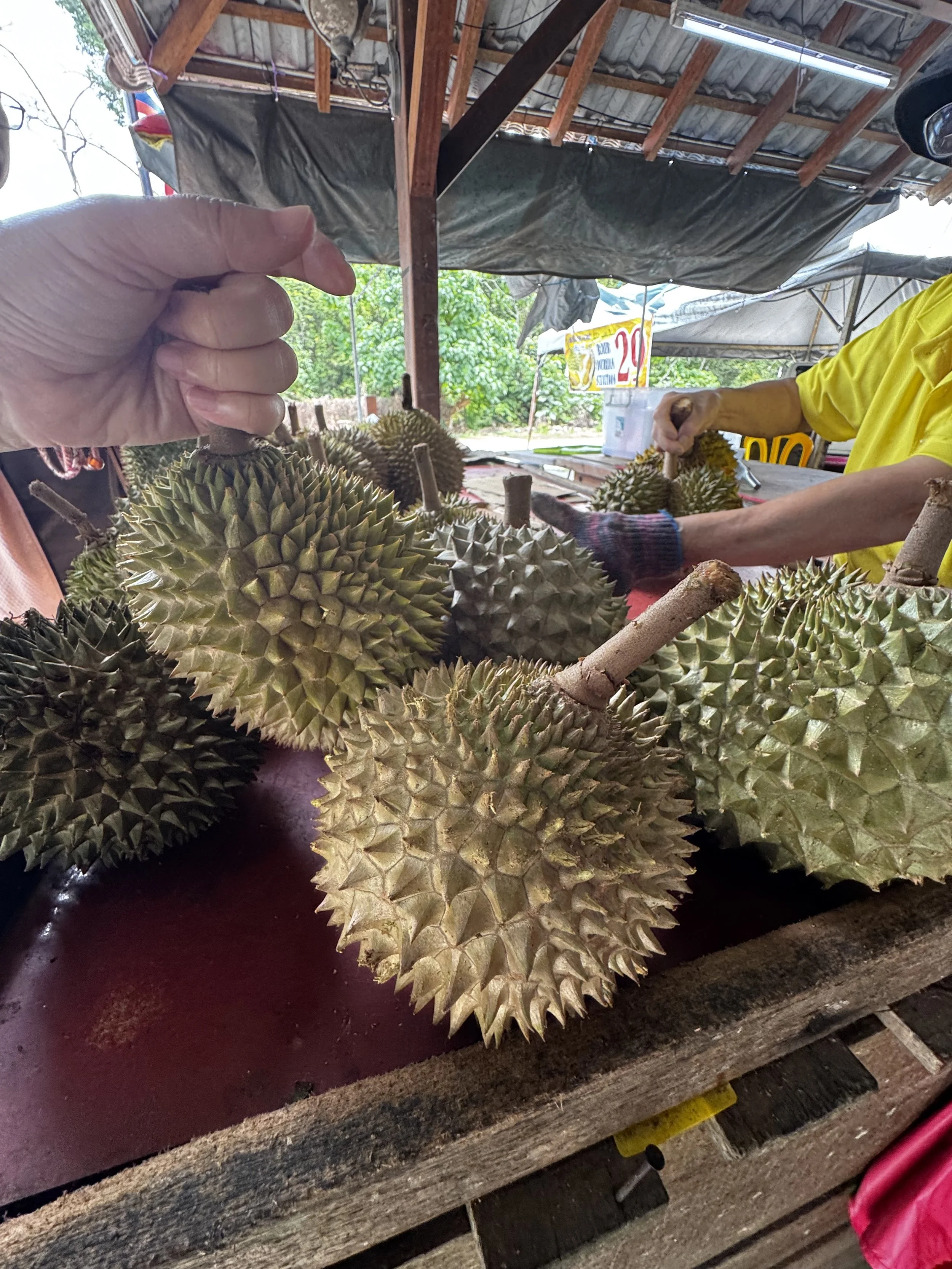
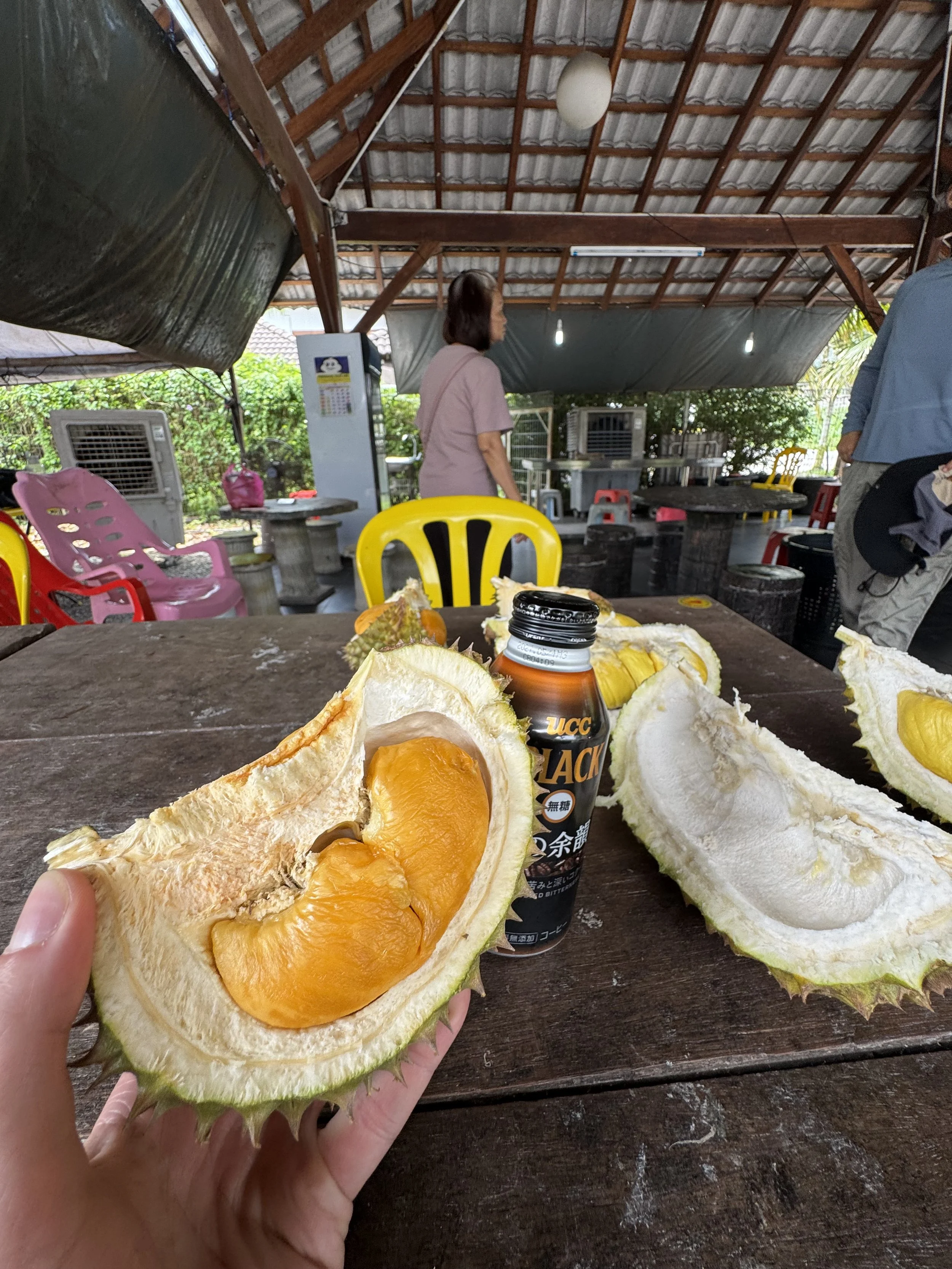
They had four nights, excellent weather conditions and some very important goals. For most of the team, the main target was the spectacular blue coral snake (Calliophis bivirgatus). Artur, however, had slightly different priorities. He wanted to eat as much durian as humanly possible. Everything else was just a bonus! 😂
Fortunately, Fraser's Hill delivered more than just the king of fruits. The weather was fantastic once again, and this time herping was considerably more productive. In fact, the adventure couldn't have started much better!
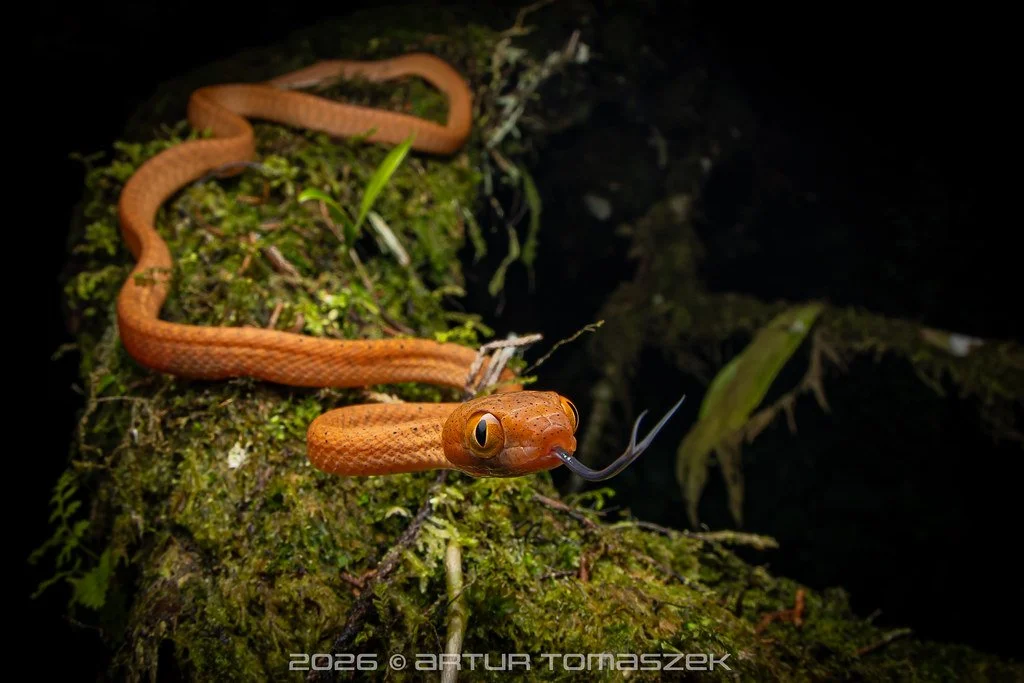
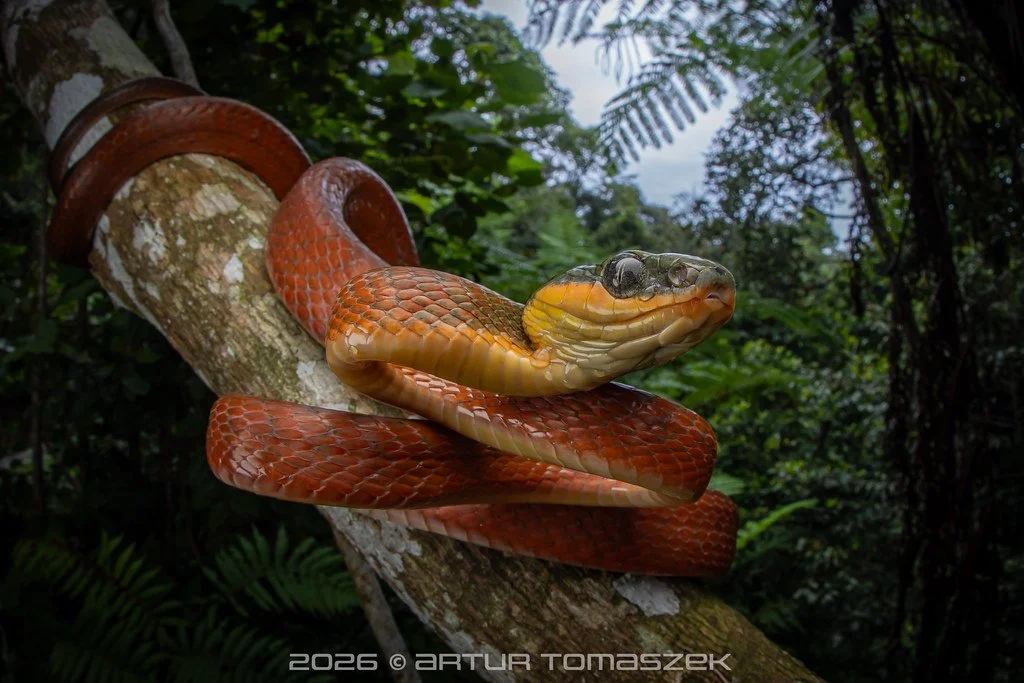
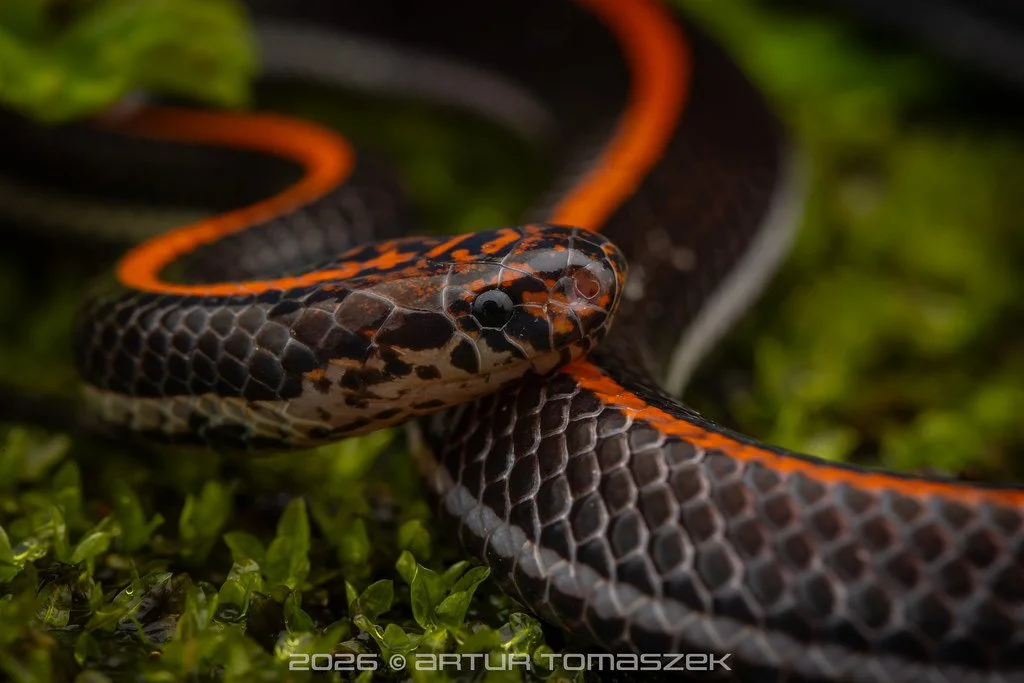
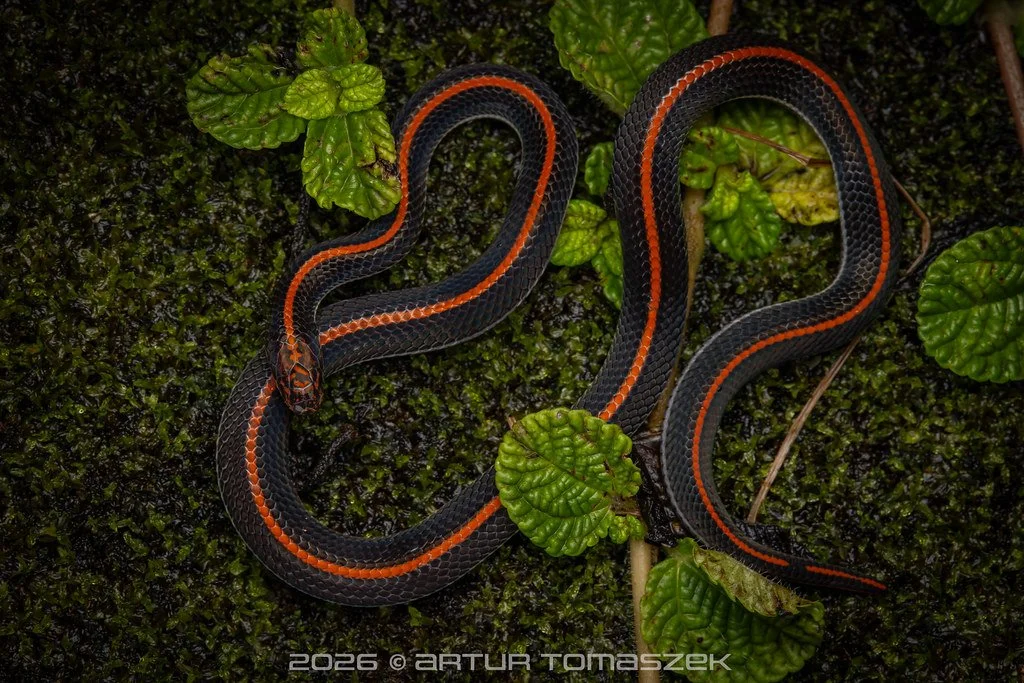
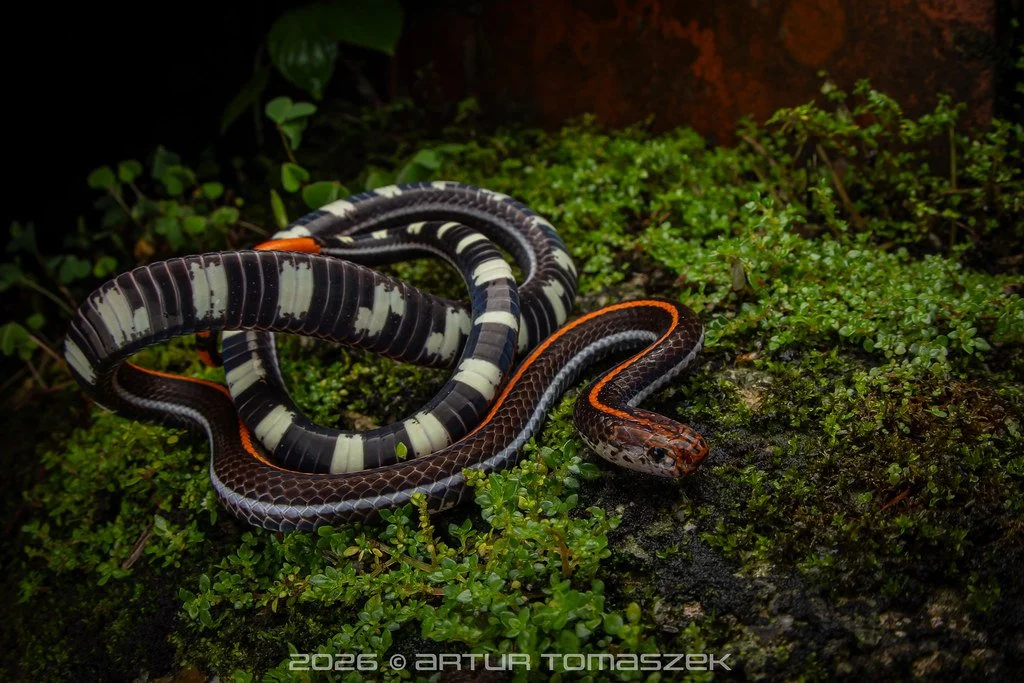
During the very first night, the group managed to encounter all three of Fraser's Hill's iconic venomous snakes: the blue coral snake (Calliophis bivirgatus), the red-headed krait (Bungarus flaviceps) and the Indo-Malayan mountain pit viper (Ovophis convictus). The famous Fraser's Hill trio, all in a single night!
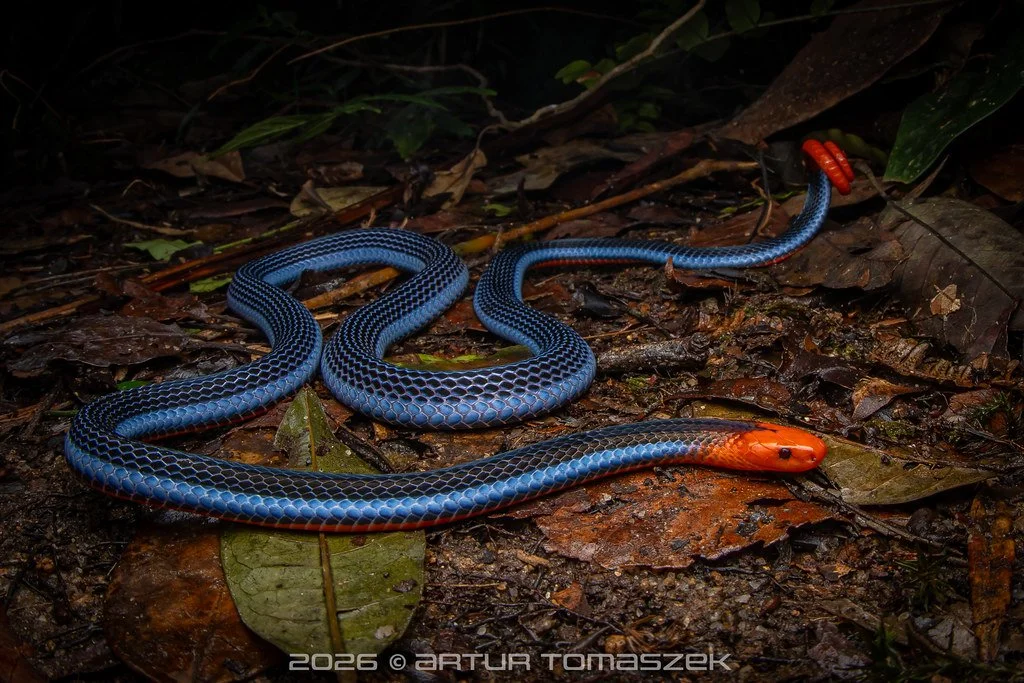
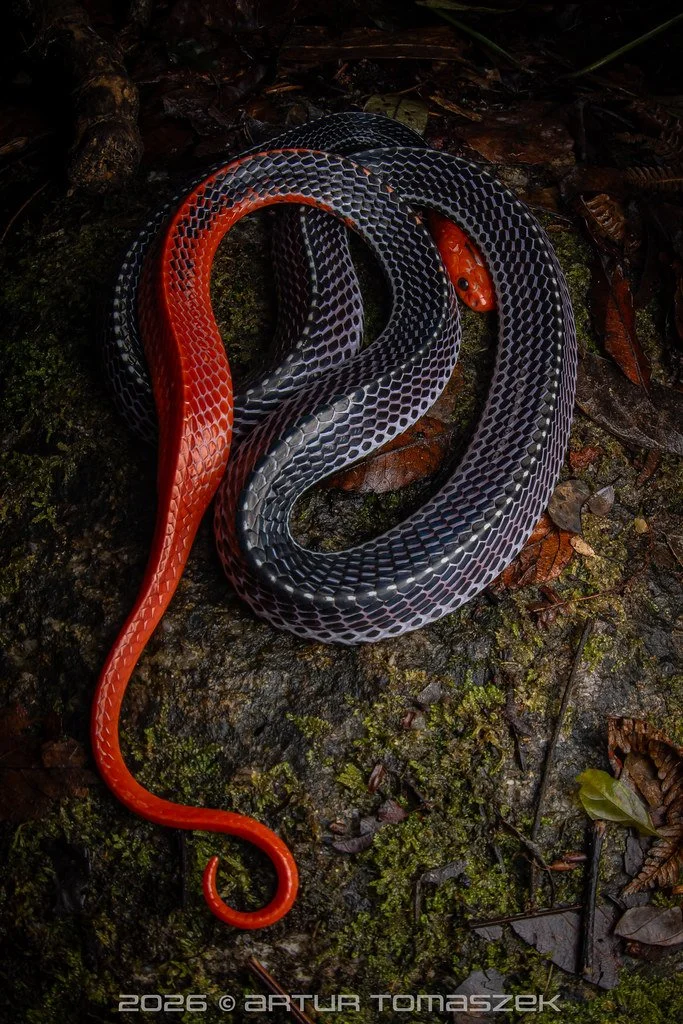
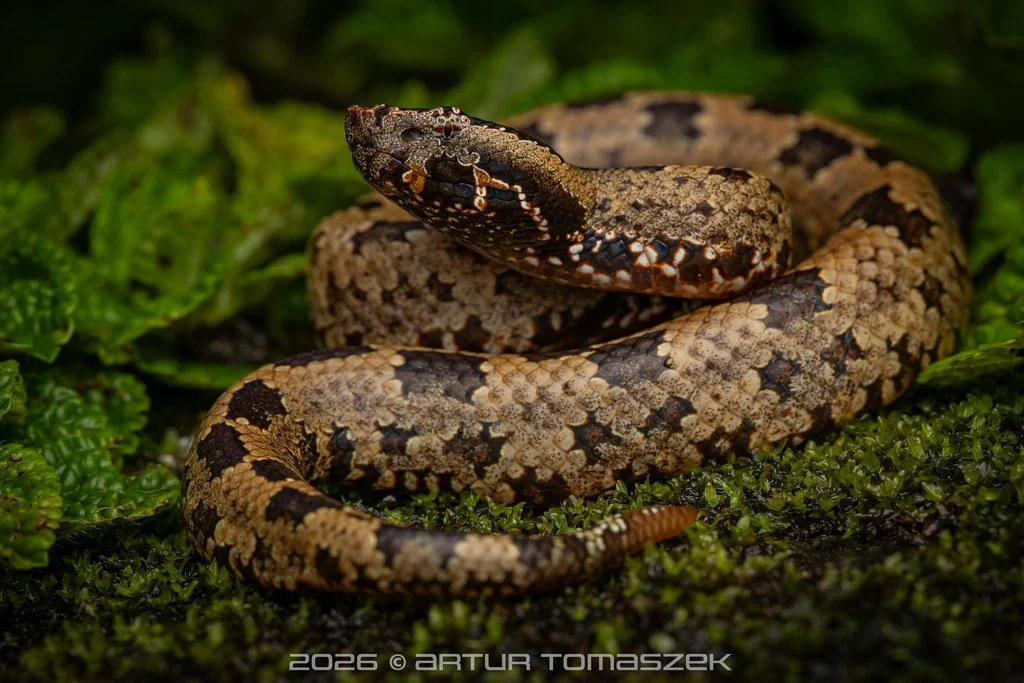
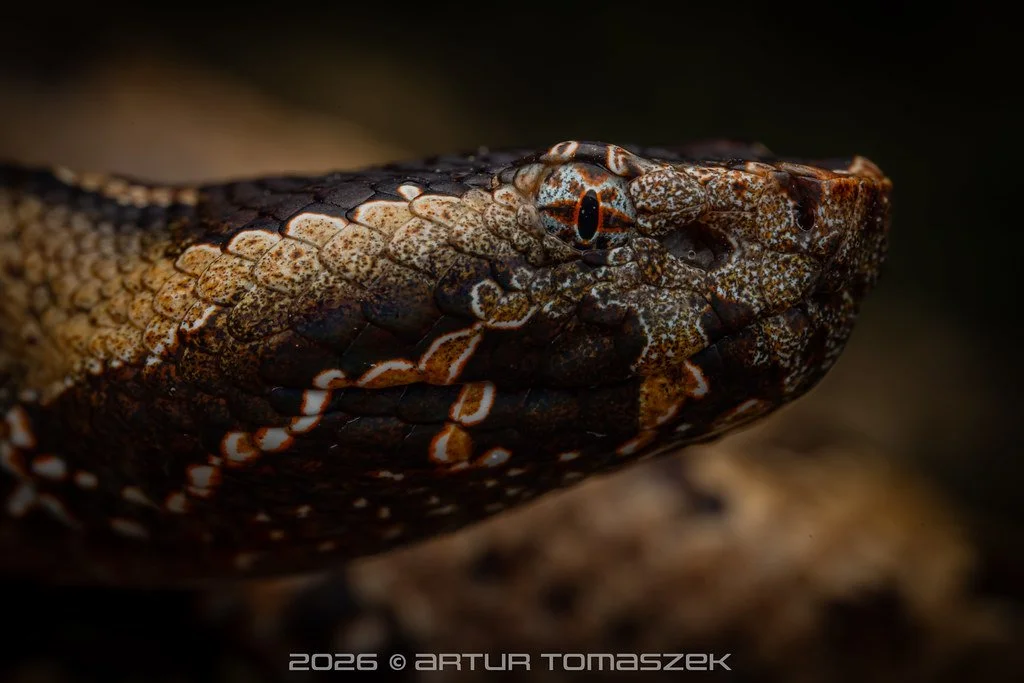
The blue coral snake was particularly exciting because it was one of the team's main targets. This spectacular species is not only famous for its striking colouration but also for its unusual venom. Researchers have identified a toxin known as calliotoxin, which affects sodium channels and produces spastic paralysis. An interesting evolutionary adaptation in a snake that specialises in hunting other snakes! Meanwhile, the red-headed krait is another unmistakable Southeast Asian elapid, with its characteristic red head and tail contrasting beautifully against its dark body. The third member of the trio, Ovophis convictus, is a terrestrial mountain pit viper whose brown coloration and distinctive pattern provide excellent camouflage among leaf litter.
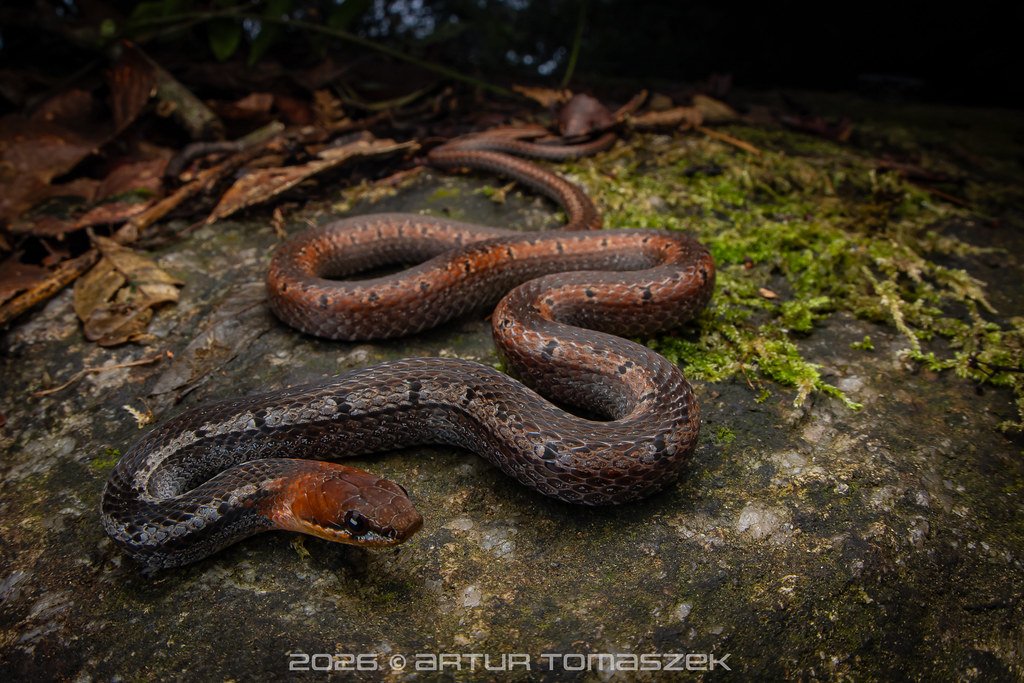
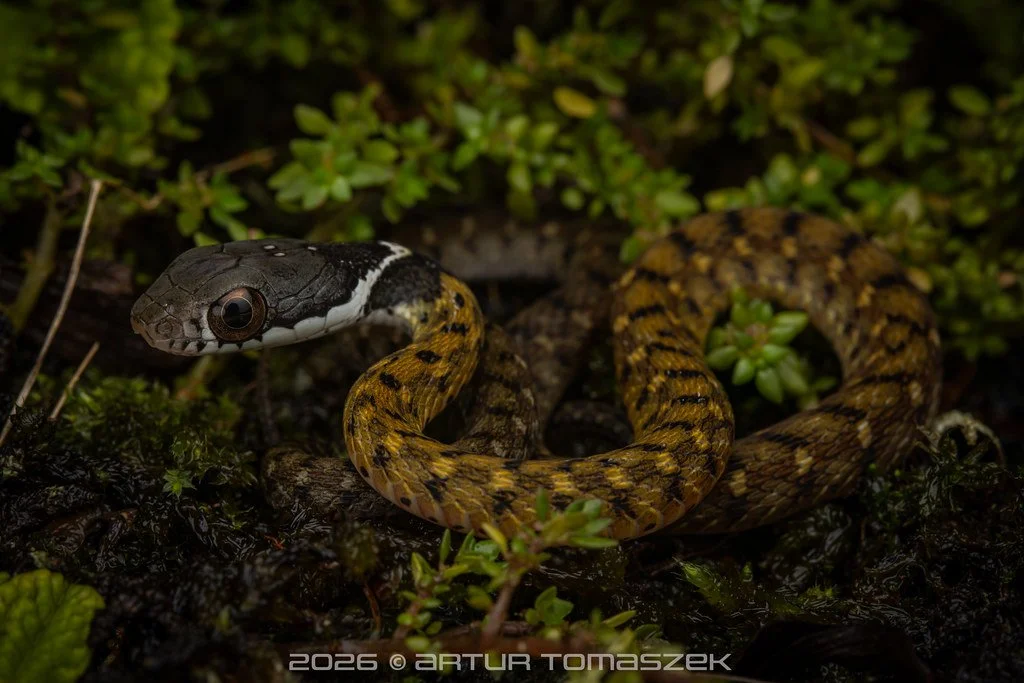
Three completely different snakes, each impressive in its own way. Seeing all three on the very first night was a fantastic result. Over the following nights, they continued exploring the surrounding forests and roads, eventually recording an excellent variety of snakes.
Across four nights, they recorded 18 snake species. Unfortunately, several individuals were found dead on the road (DOR), but they are included in the final trip records anyway.
1. Ahaetulla prasina
2. Aplopeltura boa (DOR)
3. Asthenodipsas vertebralis
4. Boiga cynodon (DOR)
5. Boiga nigriceps
6. Bungarus flaviceps
7. Calamaria schlegeli
8. Calliophis bivirgatus
9. Calliophis intestinalis
10. Dendrelaphis cyanochloris (DOR)
11. Oligodon purpurascens
12. Ovophis convictus
13. Psammodynastes pulverulentus
14. Ptyas fusca (DOR)
15. Ptyas korros (DOR)
16. Rhabdophis chrysargos
17. Sibynophis melanocephalus
18. Trimeresurus sabahi fucatus
Not a bad result for a trip supposedly organised around eating durian… But that’s not all. Snakes weren't the only animals keeping the group busy. With excellent conditions throughout the trip, they also encountered an impressive variety of amphibians while exploring Fraser's Hill's forests and mountain streams.
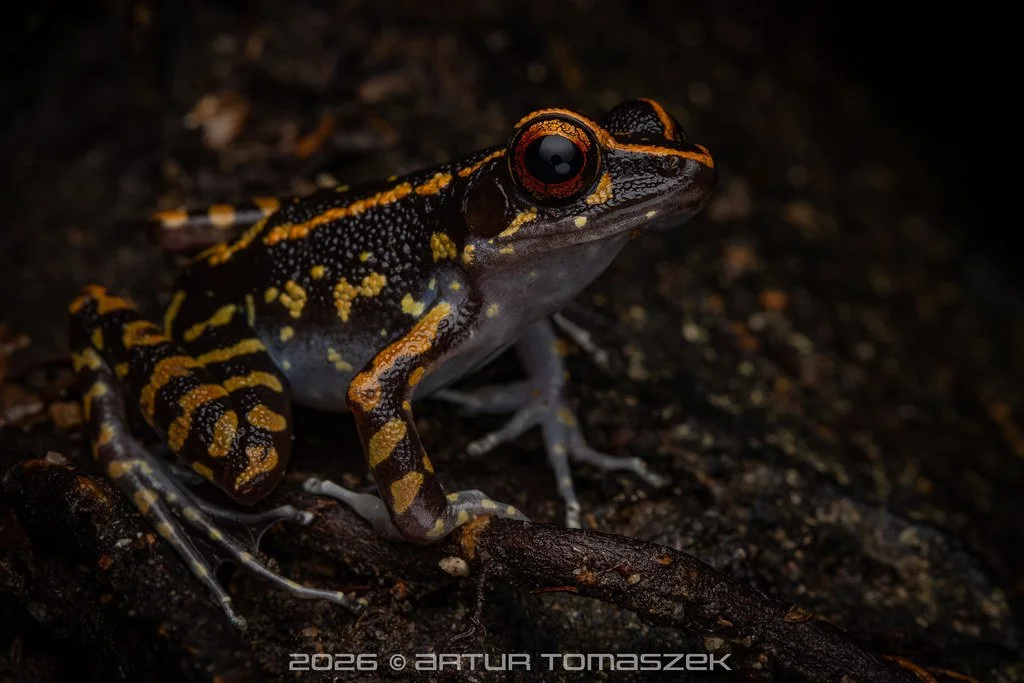
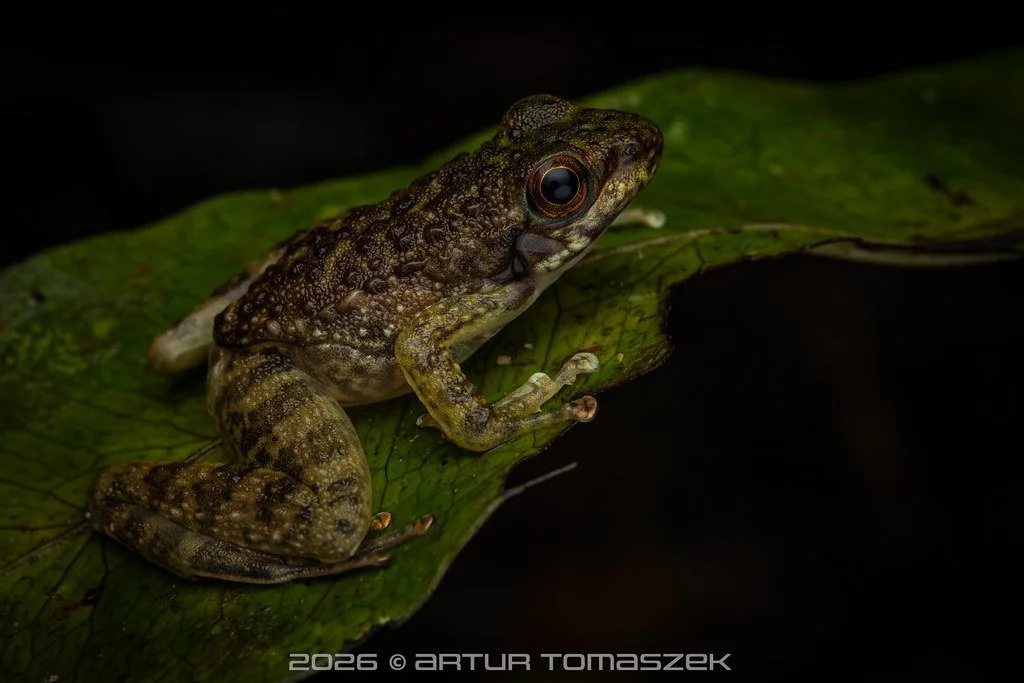
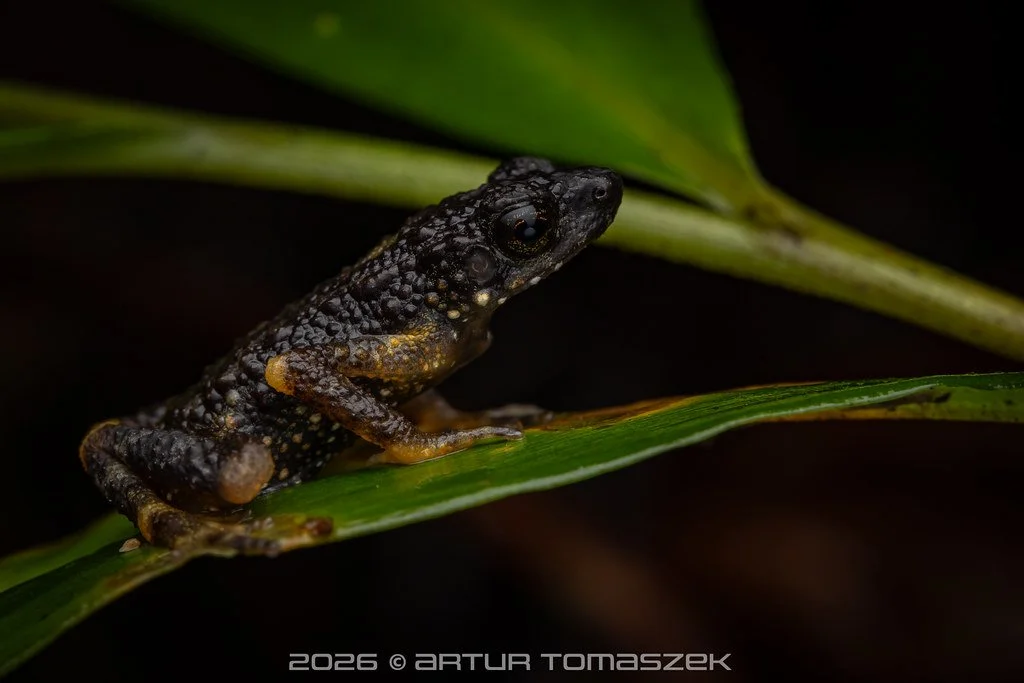
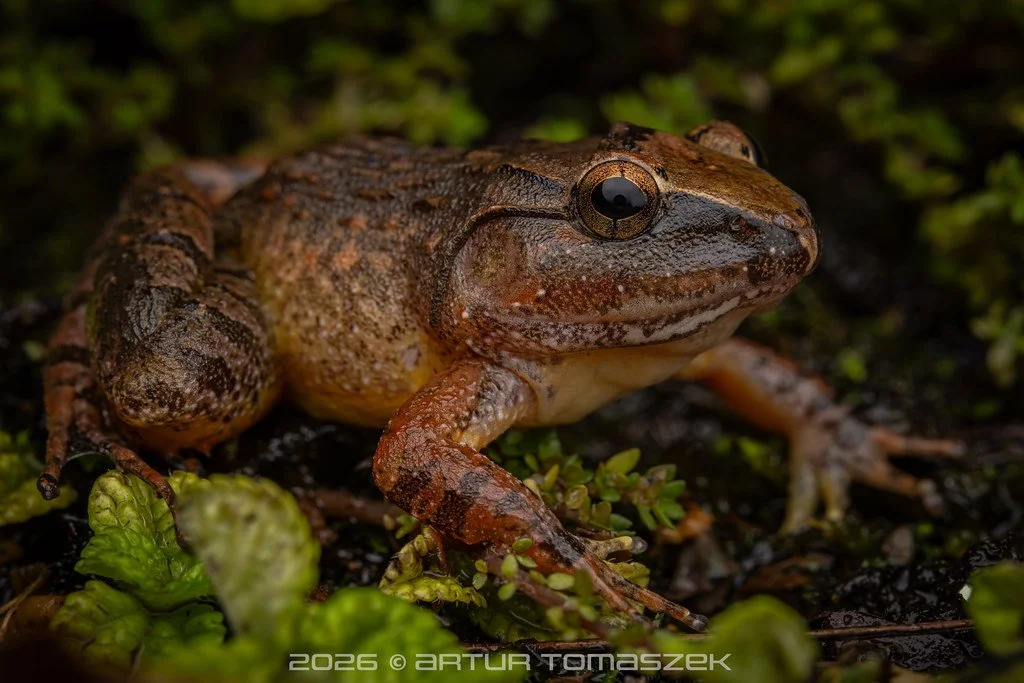
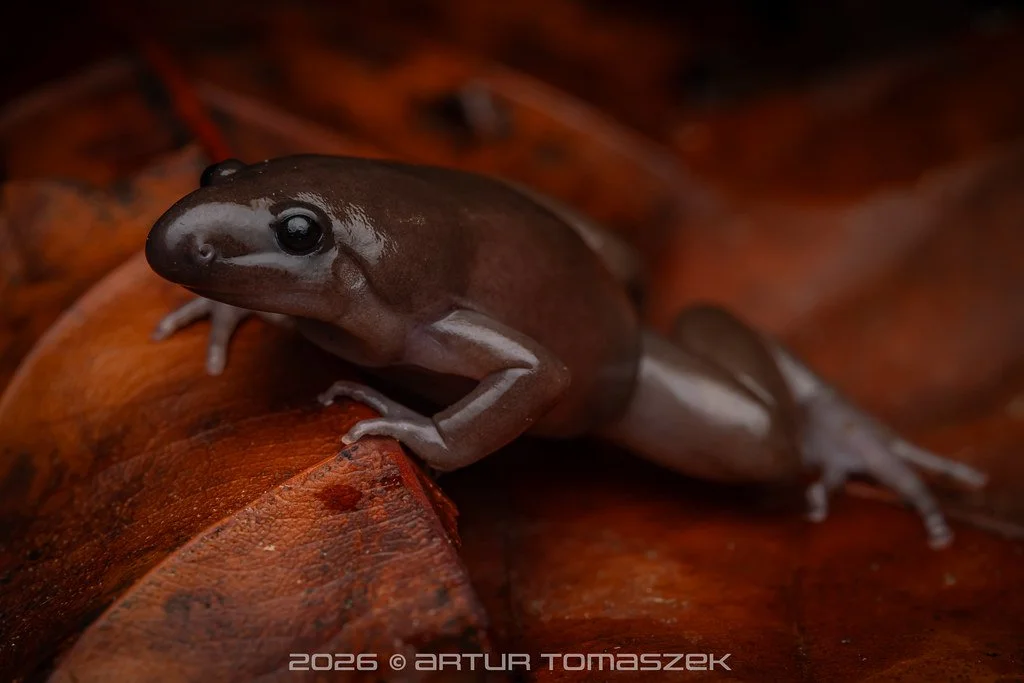
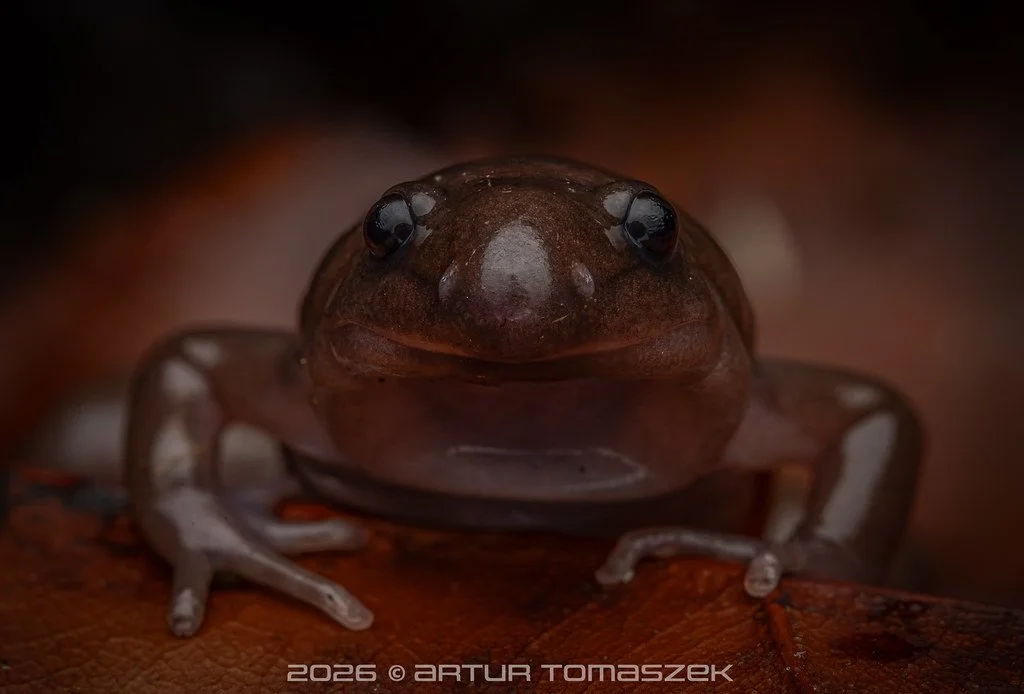
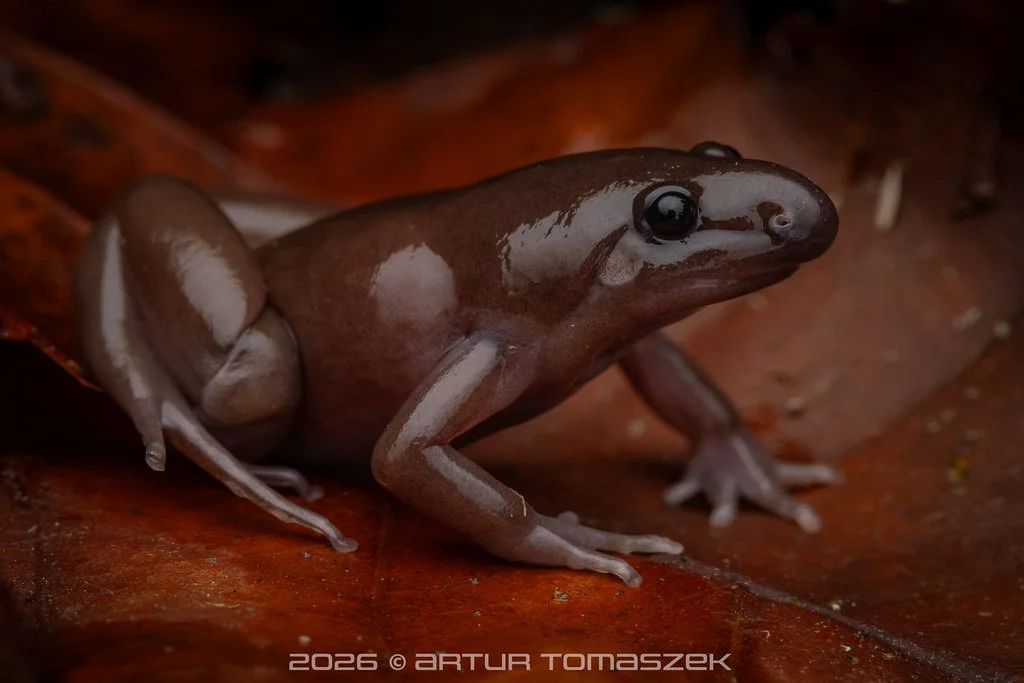
However, one tiny frog stood out from the rest: Gastrophrynoides immaculatus. Also known as Tung's narrow-mouthed frog, this fascinating little amphibian belongs to the family Microhylidae and was formally described in 2009. The genus Gastrophrynoides currently contains just two recognised species: G. immaculatus, which occurs in Peninsular Malaysia, and G. borneensis, found on Borneo.
One interesting feature of G. immaculatus is its relatively uniform greyish-brown colouration, which distinguishes it from the spotted G. borneensis. It also has a proportionally longer snout. The original specimens used to describe G. immaculatus were discovered in water-filled bamboo stems at elevations between approximately 800 and 1,400 metres.
Perhaps even more interesting is the evolutionary position of this genus. Molecular studies have placed Gastrophrynoides within the subfamily Asterophryinae, a group otherwise predominantly associated with New Guinea and the surrounding region. Its occurrence in Southeast Asia adds an interesting dimension to the evolutionary and biogeographical history of this group of frogs.
Despite its scientific significance, relatively little has been published about the natural history and reproductive biology of G. immaculatus. Finding and photographing this remarkable little amphibian was undoubtedly one of the highlights of the entire trip!
Interestingly, despite excellent weather, moth trapping during the September visit was nowhere near as productive as it had been in May. There were very few interesting insects around, so Artur spent most of his time concentrating on herping instead.
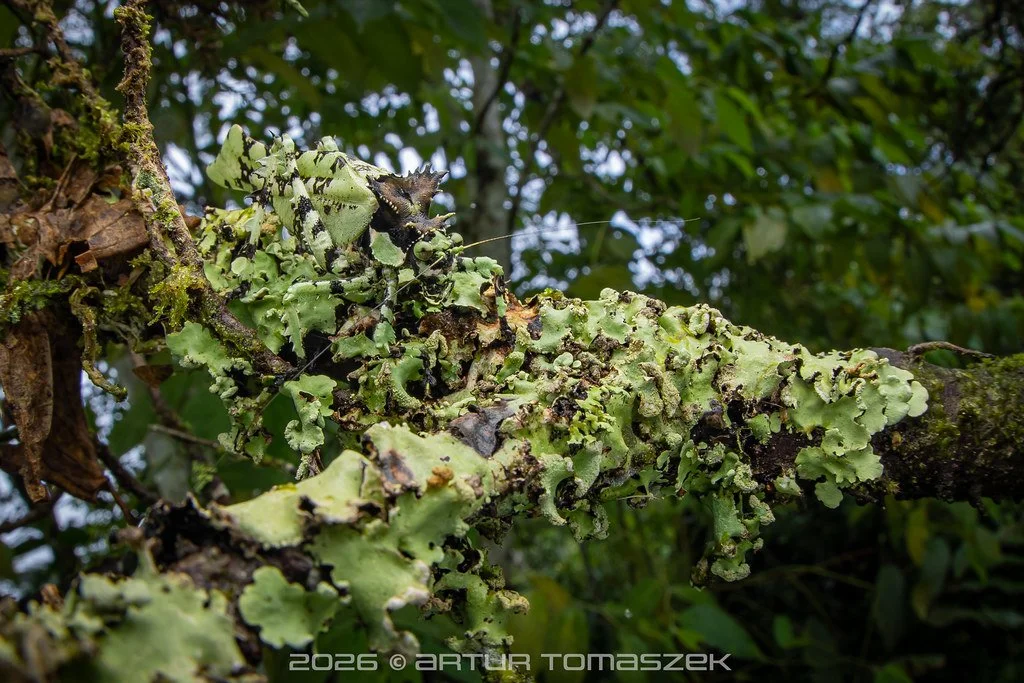
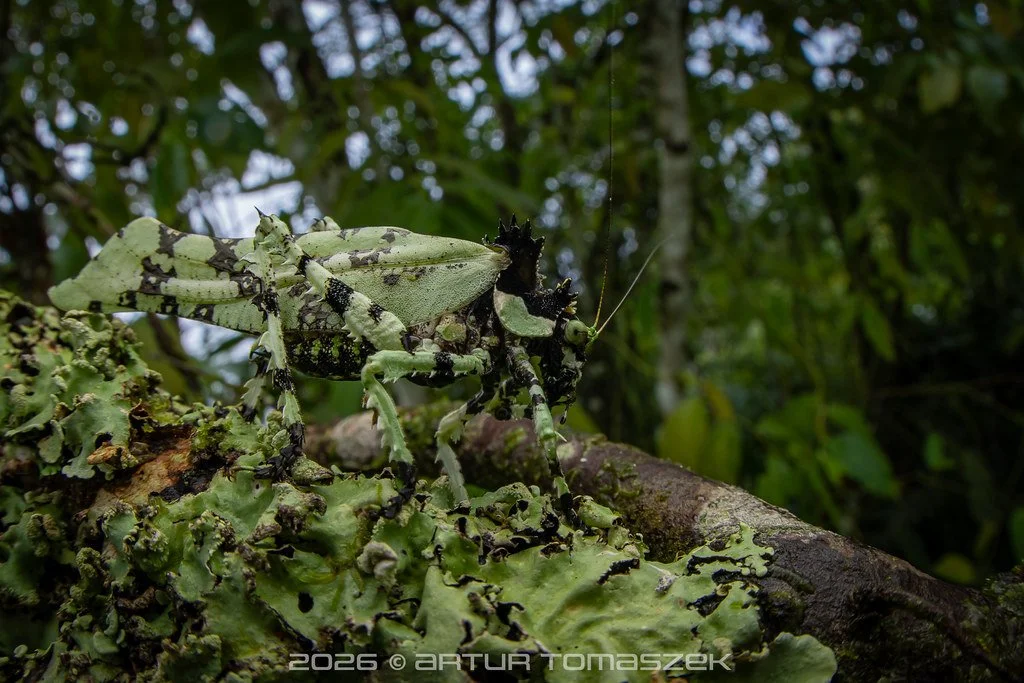
However, Fraser's Hill still had one final surprise waiting for him. On the very last night, the group discovered something rather spectacular on the trap, a Trachyzulpha fruhstorferi. This extraordinary katydid belongs to a genus renowned for its remarkable resemblance to lichens and other epiphytes. Its unusual greenish-white and dark colouration, together with its body structures, gives it an appearance quite unlike that of an ordinary katydid. The species was originally described in 1892 and has been recorded from several parts of Southeast Asia, including Peninsular Malaysia. Despite its spectacular appearance, detailed information about its natural history remains limited.
After several relatively disappointing nights of moth trapping, finding such a fascinating insect on the final night was an excellent way to finish the adventure!
And that was it!
Four fantastic nights filled with snakes, frogs, insects, plenty of laughter and, most importantly, lots of durian! The September adventure also happened to be Artur's birthday trip, making the whole experience even more enjoyable. Between the two visits, Fraser's Hill once again demonstrated why it remains one of our favourite destinations for short wildlife adventures. The May trip was relatively quiet in terms of herping, but it delivered several unforgettable encounters, including a long-awaited torrent toad and an absolutely spectacular dragon mantis. September was a completely different story, with an impressive snake list, excellent amphibian encounters and some unexpected invertebrates. Two trips, two completely different experiences and plenty of reasons to return.
As always, Fraser's Hill was an absolute pleasure to visit. And there's little doubt that we will be back very soon!